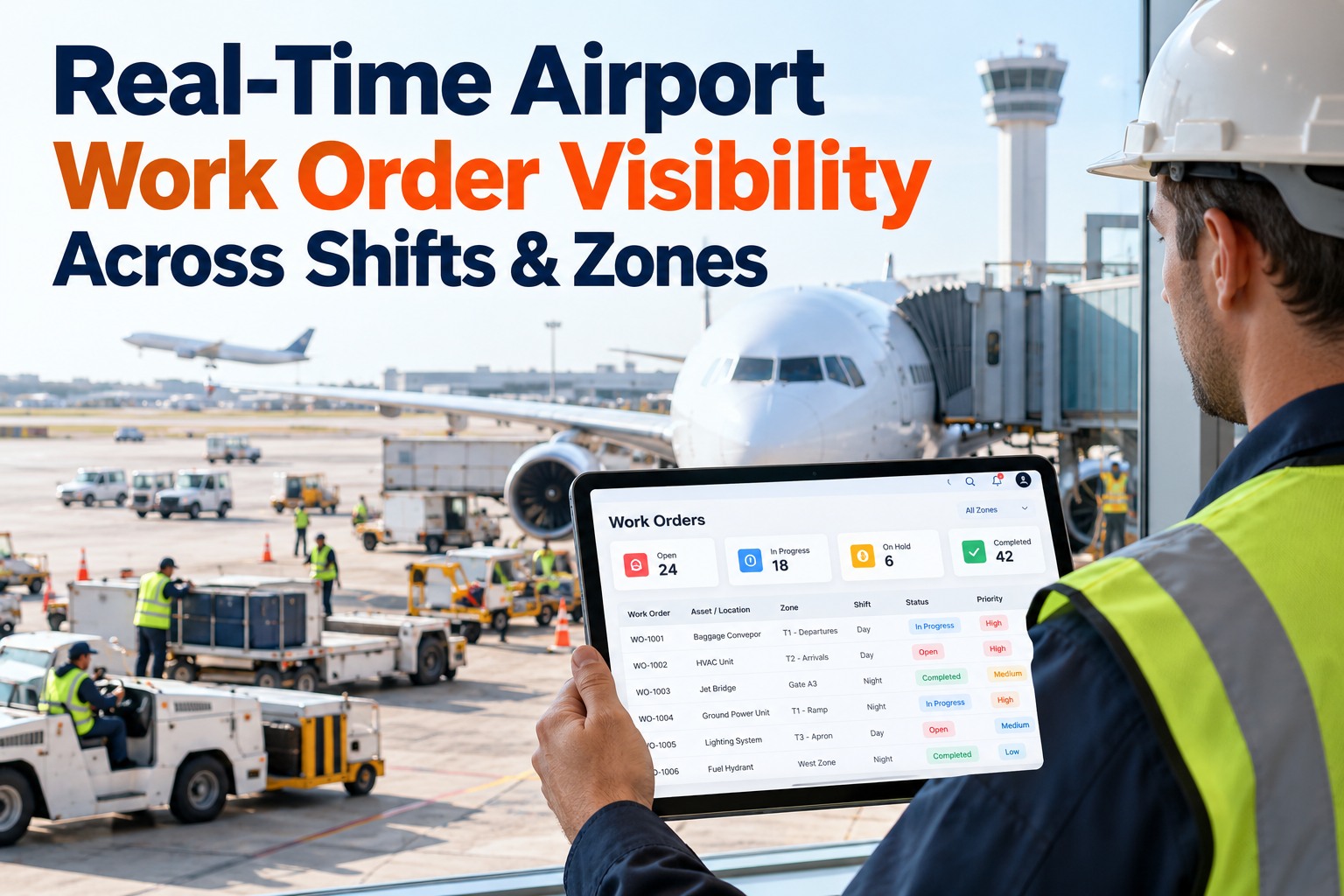
A regional airline's line maintenance station supporting a 34-aircraft narrowbody fleet had reached a service readiness ceiling. Job cards were piling up faster than technicians could close them, shift handovers were losing task context between crews, and qualification mismatches were stalling jobs that needed a specific certification. Sign Up Free to see how a connected CMMS restores task allocation discipline — after deploying Oxmaint's work order, team management, and shift logbook tools, the station cut its job-card backlog by 63%, lifted average wrench time from 42% to 64%, and reduced maintenance-attributable dispatch delays by 73% within 90 days.
Fix Task Allocation. Close the Job-Card Backlog. Improve Service Readiness in 90 Days.
Oxmaint connects job-card flow, qualification matching, and shift handovers in one mobile CMMS — giving line maintenance teams structured task allocation instead of whiteboard guesswork.
01 / The Operation
Line Maintenance. Multi-Shift Coverage. No Structured Task Allocation.
Operation Type
Single-base line maintenance station for a regional airline, supporting transit checks, daily checks, and overnight servicing across a 34-aircraft narrowbody fleet operating short-haul rotations.
Crew Scale
58 A&P-certified technicians and 6 shift leads across three rotating shifts, with a mixed qualification base spanning airframe, powerplant, and avionics endorsements.
Service Readiness Baseline
215 open job cards in active backlog. Average wrench time of 42% against scheduled labor hours. Maintenance-attributable dispatch delays averaging 6.2 events per month.
Shift Coverage
11 monthly coverage gaps driven by absenteeism with no structured cross-trained backfill process. 9 monthly incidents of lost task context at shift handover requiring rework or re-inspection.
Prior System
Paper job cards routed by hand, whiteboard shift handover notes erased at the start of each shift, and a manual roster spreadsheet with no link between technician qualification and task assignment.
Annual Overhead Exposure
Overtime running at 18% of total labor hours to compensate for backlog and coverage gaps, estimated at $310,000 annually. Dispatch delay cost exposure estimated at $540,000 annually across crew, passenger, and schedule recovery costs.
02 / The Challenge
Without Structured Task Allocation, Service Readiness Erodes One Shift at a Time
For a multi-shift line maintenance operation, service readiness depends on getting the right technician to the right job card before the next rotation lands. When task allocation runs on memory and whiteboard notes instead of a qualification matrix and live job-card flow, backlog accumulates quietly until it surfaces as a missed dispatch. Book a Demo to see how Oxmaint's job-card and crew availability tools close this gap in line maintenance environments.
215
Open job cards
Two hundred fifteen job cards sat in active backlog at any given time, with no visibility into which were waiting on parts, waiting on a qualified technician, or simply lost in the paper routing process between shifts.
42%
Average wrench time
Technicians spent less than half of scheduled labor hours on active repair work — the remainder consumed by searching for job cards, confirming qualifications, and re-establishing context lost at shift change.
6.2/mo
Dispatch delays
Six-plus maintenance-attributable dispatch delays per month, frequently traced back to a job card that sat unassigned because no one tracked which technician held the certification required to close it.
11/mo
Coverage gaps
Absenteeism created eleven monthly shift coverage gaps with no structured backfill process — shift leads scrambled to reassign work in real time, compounding the existing job-card backlog.
"We had technicians standing around looking for job cards while other job cards sat untouched because nobody knew who was qualified to sign them off. The backlog wasn't a labor problem — it was a visibility problem."
03 / The Solution
Oxmaint CMMS: Digital Job-Card Flow, Qualification-Matched Task Allocation, and Structured Shift Handovers
After evaluating maintenance management platforms against the station's readiness requirements, leadership selected Oxmaint for its work order management, team management, and shift logbook capabilities purpose-built for multi-shift technical operations. The priority was connecting technician qualification data directly to task assignment for the first time. Sign Up Free and put your first job card into structured flow today.
DIGITAL JOB CARDS
Job cards created, assigned, and tracked digitally from creation to signoff — replacing paper routing with live status visibility across all three shifts, so backlog volume and aging are visible the moment a card opens.
QUALIFICATION MATRIX
Technician certifications and endorsements mapped in Oxmaint's team management module, matching each open job card to qualified technicians automatically and flagging assignments that would create a certification mismatch.
SHIFT HANDOVER
Oxmaint's shift logbook replaced whiteboard notes with structured digital handover entries — open job cards, in-progress repairs, and flagged discrepancies carried forward automatically so incoming crews start with full context.
DISPATCH READINESS DASHBOARD
A live readiness view showing aircraft status, open job-card aging, and crew availability by qualification — giving shift leads the data to allocate tasks before a job card becomes a dispatch risk.
MOBILE WORKFLOW
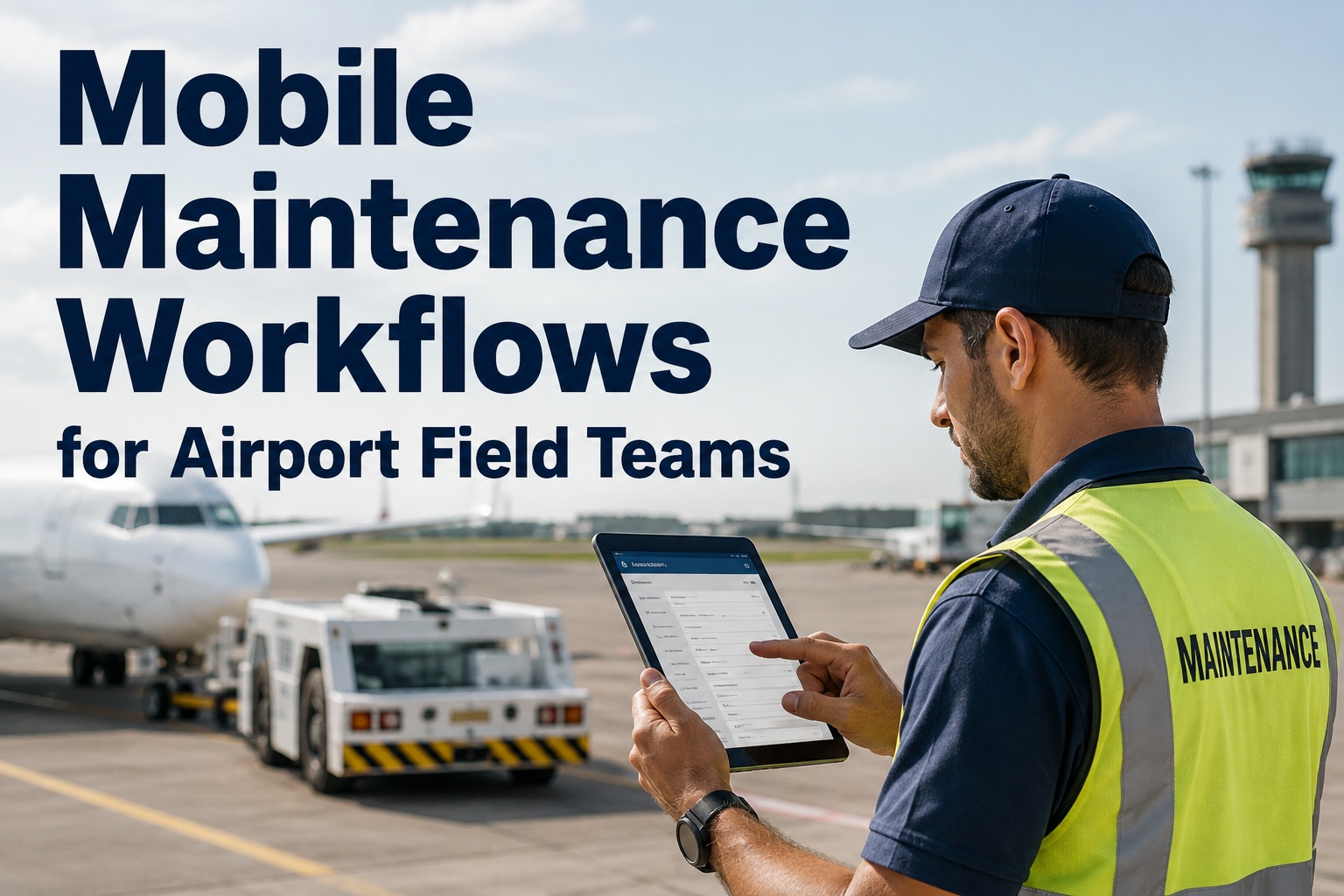
Mobile access to job cards, aircraft history, and shift logs at the point of work, letting technicians update task status and close cards from the ramp or hangar floor instead of returning to a shared terminal.
04 / Implementation
Digital Job Cards Live in 30 Days. Shift Handover Automation by Day 60. Dispatch Readiness Dashboard by Day 90.
Implementation moved through the technician roster, the job-card backlog, and shift processes in sequence rather than all at once, keeping daily operations stable. Book a Demo to walk through a phased rollout for your own station.
Days 1–15
Technician Roster Build and Qualification Matrix Setup
All 58 technicians and 6 shift leads loaded into Oxmaint's team management module with certifications, endorsements, and shift assignments. Existing job-card backlog imported and triaged by aging and qualification requirement.
Days 16–30
Digital Job-Card Rollout and Mobile App Deployment
Digital job cards activated across all three shifts with mandatory qualification checks at assignment. Mobile app deployed to all technician devices — within two weeks, 100% of new job cards were created and tracked digitally.
Days 31–60
Shift Logbook Activation and Handover Automation
Structured shift handover entries replaced whiteboard notes, carrying open job cards and flagged discrepancies forward automatically. Handover-related rework incidents dropped from 9 to 2 per month within the first 30 days of activation.
Days 61–90
Dispatch Readiness Dashboard and Task Allocation Rules Live
Live readiness dashboard rolled out to all shift leads, combining job-card aging, aircraft status, and qualification-matched crew availability. Structured task allocation rules covering the full technician roster achieved by day 90.
05 / Results
90 Days to Structured Task Allocation. Sustained Wrench Time Gains Across the Station.
The shift from whiteboard coordination to a connected job-card and qualification system produced measurable readiness gains within the first quarter. Sign Up Free to start building your own qualification matrix, or Book a Demo to see how these results map to your station's roster and fleet size.
| Metric |
Before Oxmaint |
After Oxmaint |
Change |
| Open job-card backlog |
215 cards |
79 cards |
−63% backlog reduction |
| Average wrench time |
42% |
64% |
+22 points |
| Maintenance-attributable dispatch delays |
6.2/month |
1.7/month |
−73% dispatch delays |
| Shift handover rework incidents |
9/month |
1/month |
−89% rework incidents |
| Absenteeism-driven coverage gaps |
11/month |
4/month |
−64% coverage gaps |
| Overtime as share of labor hours |
18% |
8% |
−10 points |
| Qualification-mismatched assignments |
Untracked |
Auto-flagged at assignment |
Zero mismatch closures |
| Job cards created and tracked digitally |
0% |
100% |
Full digital adoption |
| Annual overtime and delay cost exposure |
$850,000/year |
Estimated $310,000/year |
−64% cost exposure |
$540K
Annual savings recovered
"Shift leads now see qualification, availability, and job-card aging on one screen before they assign anything. We stopped reacting to the backlog and started planning around it."
06 / Key Business Impact
What Structured Task Allocation Protected Beyond Wrench Time
The readiness gains traced back to four operational shifts rather than one single fix. Book a Demo to see how each one applies to your own maintenance planning discipline.
01
The 215-card backlog was not a staffing shortfall — it was a routing and visibility failure. Once job cards carried live status and aging data, shift leads could see exactly where repair throughput was stalling instead of estimating from memory.
02
Qualification mismatches were not training gaps — they were data gaps. The station already had the right mix of certifications on staff; it simply had no system connecting those certifications to the job cards that required them at the moment of assignment.
03
Shift handover rework was the most expensive hidden cost in the operation. Every lost detail at crew change meant a technician re-inspecting work that was already done, consuming wrench time that should have gone toward new job cards.
04
Overtime pressure eased not because fewer hours were worked, but because the hours worked were better targeted — qualification-matched task allocation meant fewer reassignments, fewer delays, and fewer last-minute coverage scrambles during absenteeism events.
See How Structured Task Allocation Can Lift Your Service Readiness
Oxmaint's CMMS connects job-card flow, qualification matching, and shift handovers — delivering measurable wrench time and dispatch readiness gains within one quarter.
07 / FAQ
Frequently Asked Questions
How does a CMMS improve aircraft service readiness?
A CMMS gives shift leads live visibility into job-card aging, technician qualification, and crew availability — replacing memory-based task allocation with structured assignment that reduces backlog and dispatch delays.
How does Oxmaint match technicians to job cards by qualification?
Oxmaint's team management module tracks each technician's certifications and endorsements, then flags job-card assignments that would create a qualification mismatch before work begins.
Can Oxmaint reduce job-card backlog in line maintenance operations?
Yes. Digital job cards give full visibility into card age, status, and assignment, letting shift leads target the oldest or highest-risk cards first instead of working through a stack in arbitrary order.
How does Oxmaint support shift handovers in 24/7 maintenance operations?
Oxmaint's shift logbook captures structured handover entries automatically, carrying open job cards and flagged discrepancies forward so incoming crews start with complete context instead of relying on verbal notes.
Does Oxmaint help with absenteeism-driven coverage gaps?
Oxmaint's roster and qualification data lets shift leads quickly identify which available technicians can cover an open shift without creating a certification mismatch, reducing reactive scrambling.
What ROI can a line maintenance station expect from Oxmaint?
Stations with high job-card backlog and unstructured task allocation typically see measurable wrench time and overtime improvements within one quarter. This station estimated $540,000 in annualized savings within 90 days.
Can Oxmaint track wrench time and repair throughput across shifts?
Yes. Oxmaint's analytics and reporting tools measure wrench time, job-card throughput, and dispatch readiness by shift, giving maintenance leaders a forecasting basis for staffing and training-hour planning.
−63% Backlog. +22pt Wrench Time. Dispatch Readiness Live in 90 Days.
34 aircraft. 58 technicians. One connected CMMS for task allocation. See what Oxmaint delivers for your station.