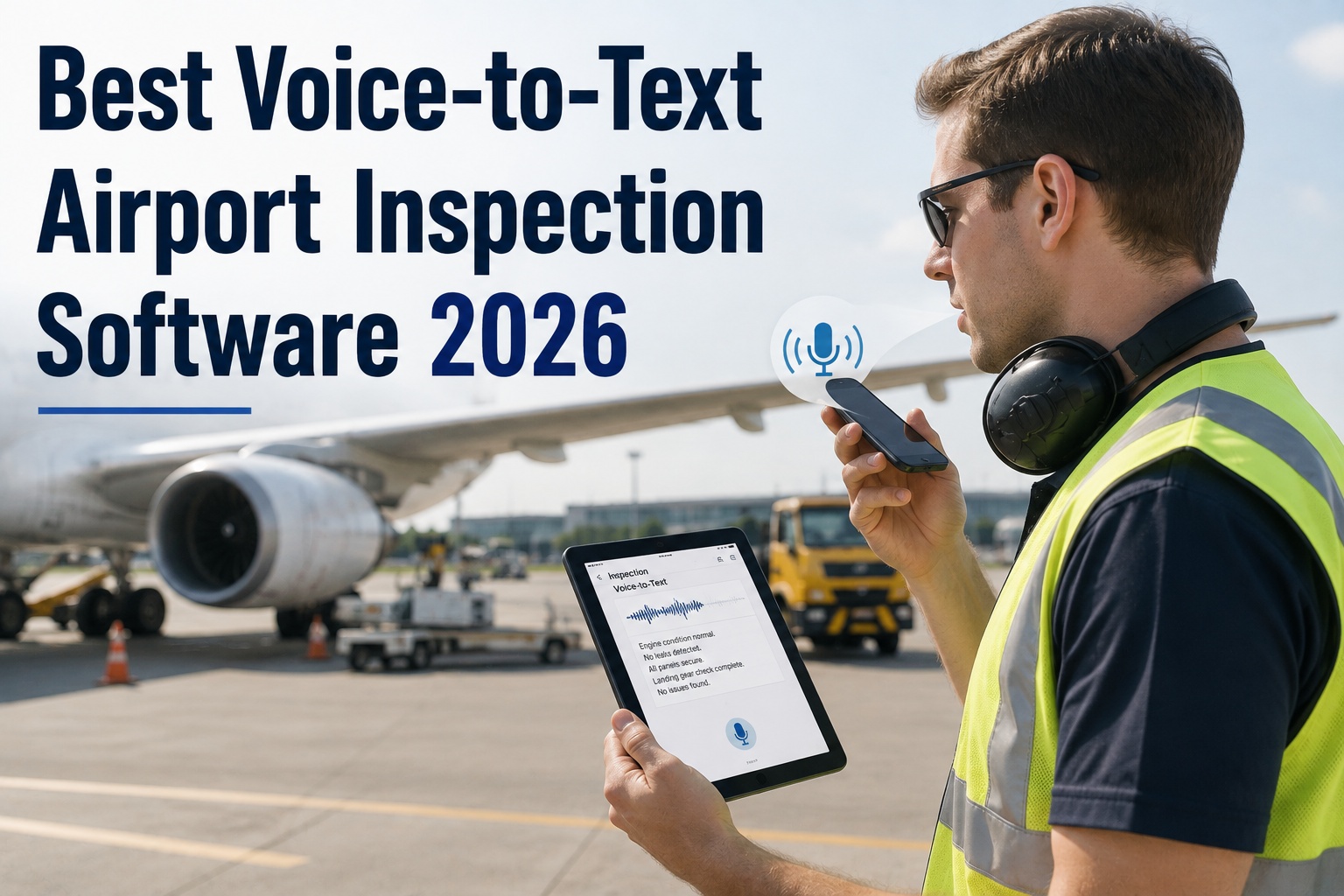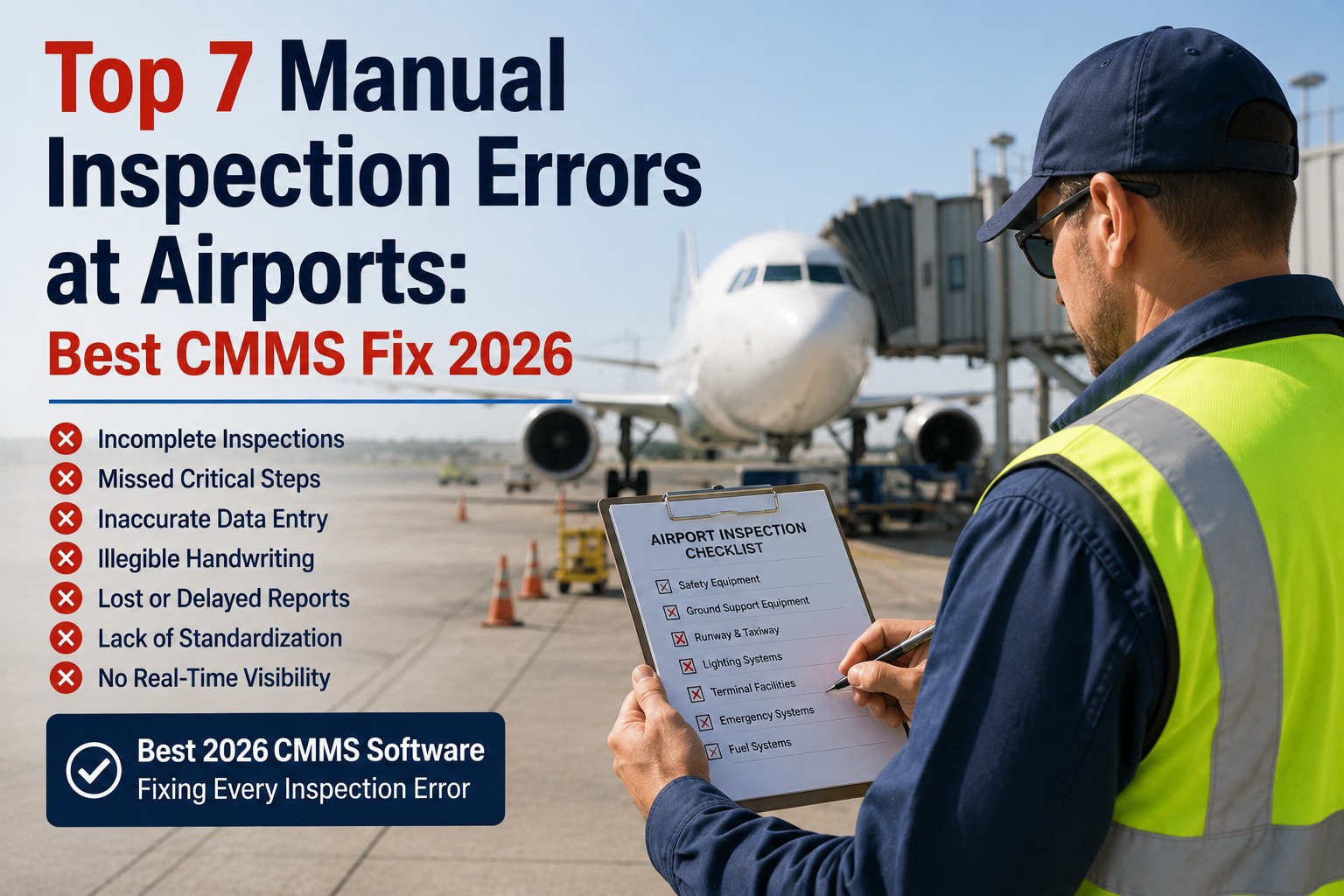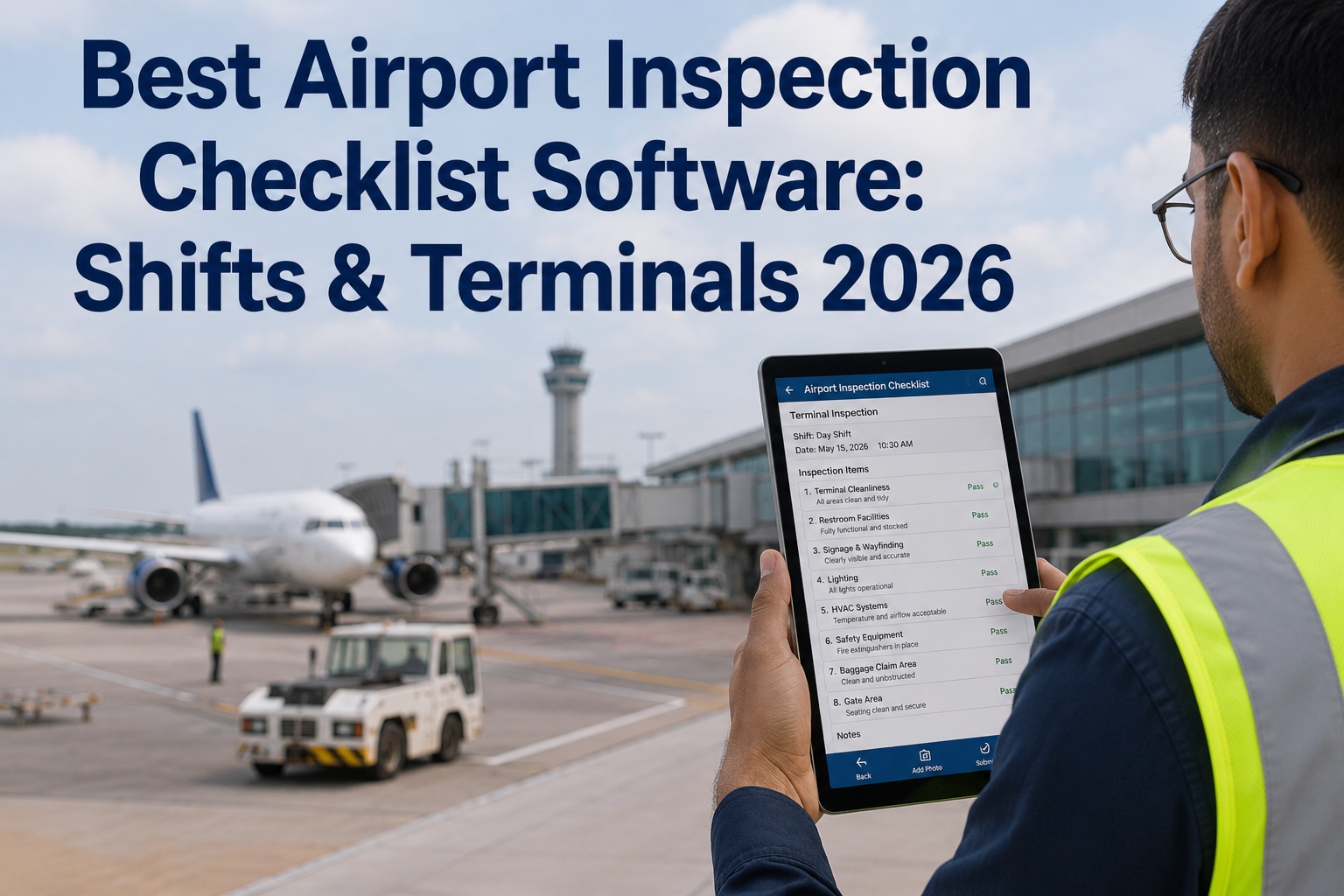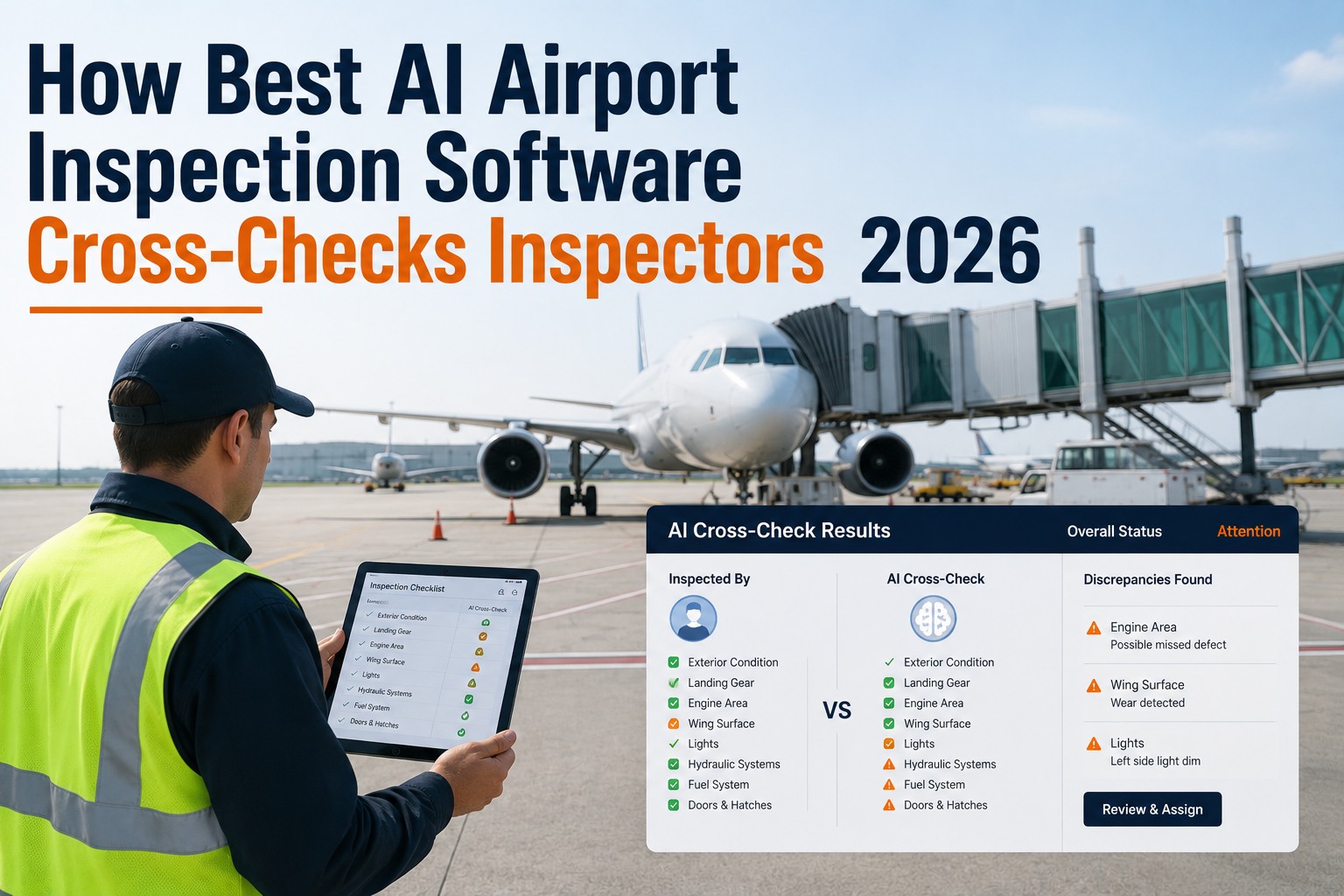
An experienced airfield inspector on hour six of a runway walk misses roughly a quarter of the defects they would catch on hour one. It is not incompetence; it is human physiology. Inspector accuracy degrades 15–25% after two hours of continuous visual attention. Different inspectors classify the same finding differently — inter-inspector agreement on defect severity is only 55–70%. And industry data puts the miss rate under real conditions at 20–30%. In an environment where a single 43 cm titanium strip destroyed Concorde flight 4590, those percentages are the difference between a routine sweep and the next headline. This is exactly the gap AI cross-check closes. The inspector walks the route. The AI reviews every photo the app captures, compares it against a trained model of what the runway, taxiway, sign, or light bar should look like, and flags anything the human eye may have overlooked — before the route closes. Oxmaint runs this cross-check as a second-pass verification layer sitting on top of the mobile inspection, achieving 94–98% detection accuracy on trained defect categories and surfacing up to 27% more defects than manual inspection alone. Start free and put AI cross-check on every airfield route this week, or book a demo to see AI defect detection running against your Part 139 self-inspection photos.
Aviation · AI Vision · Cross-Check Layer · 2026 Buyers Guide
How Best AI Airport Inspection Software Cross-Checks Inspectors 2026
Not a replacement for the human walk — a second-pair-of-eyes verification layer that catches the 20–30% of defects manual inspection routinely misses. Trained computer vision on FOD, pavement distress, marking degradation, lighting, and signage, integrated into the same inspection route the technician is already running.
-
27%
more defects identified with AI cross-check on top of manual inspection
-
95%+
AI detection accuracy vs 70–80% industry average for manual inspection
-
20–30%
of defects missed by skilled inspectors under real production conditions
-
$13B
annual aviation cost of FOD — the category AI cross-check catches best
The Human Limit
Why the Sixth-Hour Inspector Misses What the First-Hour One Catches
Human visual inspection has a documented attention curve. Peak in the first hour, measurable degradation after two, and miss rates in the final hours of a shift 15–25% higher than in the first. AI does not have a fatigue curve — its detection accuracy in hour six is identical to hour one. This is the working baseline that makes AI cross-check valuable: not because it replaces the inspector, but because it does not share the inspector's biological failure mode.
Inspector accuracy degrades 15–25% after 2 hours of continuous observation. Inter-inspector agreement on defect severity is only 55–70%. AI cross-check delivers consistent, quantifiable, repeatable detection across the full shift — the exact complement human inspection needs.
The Cross-Check Flow
Four Layers That Turn One Set of Eyes Into Two
AI cross-check is not a separate inspection. It is a verification layer wrapped around the same mobile inspection the technician is already running — so no route gets walked twice, and no additional labour hours are added. This is the working four-step flow Oxmaint runs on every photo captured against a Part 139 route.
-
01
Inspector Walks the Route
Technician runs the standard mobile inspection — mandatory photo on high-risk points, per-item pass/fail, GPS coordinate captured per checkpoint. Nothing changes about the walk itself.
-
02
AI Scores Every Photo
Trained computer-vision model reviews each image the inspector captured — FOD, pavement distress, marking degradation, sign damage, lighting outage — and returns a defect classification with confidence percentage and bounding box.
-
03
Discrepancy Alert
Where the human answer was "pass" and the AI flags a defect with high confidence, the route flags for supervisor review before it closes. The inspector sees the AI's evidence and either confirms the defect or dismisses with a reason.
-
04
Auto Work Order or Signed Close
Confirmed defect fires a corrective action work order with the AI-identified severity and location. Dismissed AI flag closes with the inspector's reason logged — model improves on that feedback for the next route.
Detection Accuracy by Category
What AI Cross-Check Catches Best on an Airfield
Not every defect type responds equally well to AI cross-check. Trained computer-vision models achieve their highest accuracy on visually consistent defect categories with clear boundaries — FOD, pavement crack, marking wear. Below is the working accuracy matrix per Part 139 inspection category, based on published production deployments.
| Defect Category | AI Precision | AI Recall | Cross-Check Value |
|---|---|---|---|
| FOD — fasteners, debris, wildlife remains | 95–98% | 90–94% | Highest — 27% more items caught vs manual alone |
| Pavement cracking & spalling | 94–97% | 88–92% | Very high — subtle defects night-shift eyes miss |
| Marking degradation & rubber buildup | 93–96% | 87–91% | Reflectivity below 70% threshold flagged automatically |
| Sign damage & missing signage | 92–95% | 85–90% | Missing holding-position signs flagged consistently |
| Lighting outage & PAPI misalignment | 94–97% | 89–93% | Per-fixture status logged with confidence score |
| Wildlife activity in movement area | 88–93% | 82–88% | Cross-check reinforces WHMP compliance |
| Standing water / drainage drift | 90–94% | 84–89% | Post-weather post-precip checks strongest |
When Human and AI Disagree
The Reconciliation Workflow — Who Wins, and Why It Matters
The point of cross-check is not to replace the inspector's judgement. It is to force a documented reconciliation whenever the two systems disagree. That reconciliation is where safety is actually protected — because a defect the human dismissed does not silently close, and an AI false positive does not silently generate a bad work order.
Both Agree: Pass
Inspector marks pass. AI confidence low or no defect detected. Route closes normally with per-user sign-off and photo evidence in the record.
Both Agree: Fail
Inspector marks fail. AI confirms defect. Corrective work order auto-fires with AI-scored severity and location. Highest-confidence outcome.
Human Pass, AI Fail
The critical case. Route flags for supervisor review before close. Inspector reviews AI evidence with bounding box and either confirms — creating the work order — or dismisses with a documented reason. Model learns from the dismissal.
Human Fail, AI Pass
Human judgement wins. Corrective work order still fires — because a trained inspector spotting a defect the AI missed is exactly the reason the human stayed in the loop. AI false-negative logged for model retraining.
A Single 43 cm Titanium Strip
Concorde Flight 4590 Is the Reason Cross-Check Exists
Foreign Object Debris costs the aviation industry up to $13 billion annually — and a single undetected fastener on a runway can destroy a jet engine in milliseconds. The Concorde disaster of 2000, caused by a single 43 cm titanium strip left on the runway, is the most devastating reminder that small debris carries enormous risk. AI cross-check is the second set of eyes trained specifically to see the objects a tired inspector at 4:00 AM will not.
The Feedback Loop
Why the AI Gets Sharper Every Route
A cross-check model that never learns from inspector overrides is a demo, not a system. The value compounds only if every dismissal, every confirmation, and every false positive feeds back into the model over time. This is what "continuous improvement" actually looks like in an airport AI CMMS.
-
1
Baseline Deployment
Model ships with 5,000–10,000 labelled images per defect class. Initial precision 94–97%, recall 88–92% at 95% confidence threshold.
-
2
Inspector Overrides Logged
Every "AI flagged, inspector dismissed" case captured with reason code. Every "AI passed, inspector caught" case captured as false-negative.
-
3
Threshold Tuning (Months 4–5)
False-positive rates typically fall below 0.5% after threshold tuning against local conditions — pavement colour, weather patterns, lighting quality specific to the airfield.
-
4
Model Retraining
Aggregated feedback used to retrain against airport-specific edge cases. Each retraining cycle narrows the gap between AI and best-inspector performance.
Built for Airports
How Oxmaint Runs AI Cross-Check End to End
-
On-Device Vision
Runs on the Inspector's Phone in Under 2 Seconds
Model inference happens on the mobile device, not in the cloud — so cross-check works in ramp dead zones with no latency dependence on connectivity.
-
Discrepancy Flagging
Route Cannot Close With an Unresolved AI Disagreement
"Human pass, AI fail" flags the route for supervisor review. The inspector reviews the AI's bounding-box evidence and confirms or dismisses with a documented reason — no silent close.
-
Auto CAPA
Confirmed Defects Become Tracked Work Orders
Every AI-confirmed defect fires a corrective work order with location, severity, and Part 139 citation. Safety-critical items flagged for closure or NOTAM before area reopens.
-
Feedback Learning
Every Override Improves the Next Route
Dismissed AI flags and human-caught false-negatives feed back into retraining. False-positive rates typically fall below 0.5% after months 4–5 of deployment.
-
Full Audit Trail
AI Decisions Logged the Same Way Human Ones Are
Every AI flag, every human override, every reconciliation stored with confidence score and reason — retrievable by filter for any FAA or internal audit.
-
Human Still Signs
Per-User Sign-Off Remains the Legal Record
The AI is a verification layer, not a signatory. §139.327 sign-off still requires per-user authentication — biometric or SSO — bound to the inspector who walked the route.
Measured Outcomes
What Cross-Check Delivers on a Real Airfield
-
+27%
More Defects Caught
AI cross-check surfaces up to 27% more defects than manual inspection alone — most in the categories human fatigue affects most (FOD, marking, pavement).
-
95%+
Detection Accuracy
Trained defect categories detected at 94–98% precision, versus the 70–80% industry average for manual inspection alone.
-
< 2 sec
Per-Photo Cross-Check Latency
On-device inference runs while the inspector is still walking — no cloud round-trip, no route delay, no dead-zone dependency.
-
$0
Free Forever Plan to Start
Airport operations teams start on the free plan, enable AI cross-check on a first route, and scale as the model matures against local conditions.
Frequently Asked
AI Cross-Check Questions
Does the AI replace the human inspector?
No. It is a second-pair-of-eyes verification layer. The human inspector still walks the route, still applies judgement, and still signs the record under §139.327. The AI catches the 20–30% of defects human fatigue routinely misses, and forces a documented reconciliation when the two systems disagree. Start free and see cross-check running alongside your inspectors today.
What happens when the AI is wrong?
Two things. The inspector dismisses with a reason code, so the false positive does not generate a bad work order. And the dismissal feeds back into model retraining. False-positive rates typically fall below 0.5% after threshold tuning in months 4–5 of deployment.
Does the cross-check work offline in ramp dead zones?
Yes. Inference runs on the inspector's mobile device — no cloud round-trip. Cross-check works fully offline, with results and discrepancy flags syncing on reconnection while preserving original capture time. Book a demo to see offline cross-check on your ramp.
Which Part 139 defect categories does cross-check handle best?
FOD, pavement cracking and spalling, marking degradation, sign damage, and lighting outage — the visually consistent defect classes with clear boundaries. Wildlife activity and standing water are also supported with slightly lower recall. Novel or unusual conditions still benefit from human judgement first.
Is there a free plan to prove cross-check on one route first?
Yes. Oxmaint offers a free forever plan — enough to enable AI cross-check on a single Part 139 self-inspection route, prove the defect-catch lift and the discrepancy workflow, and scale to the full airside programme when ready. Sign up for the free plan and enable cross-check on one route today.
Human · AI · Reconcile · Close
The Best Airport Inspection Runs Two Sets of Eyes on Every Photo
The inspector's judgement stays central. The AI catches what six hours of fatigue and shift-change hand-offs cause even skilled inspectors to overlook. Every disagreement forces a documented reconciliation before the route closes — and every reconciliation makes the next model retraining sharper. Deploy AI cross-check on your Part 139 routes and stop losing 20–30% of your defect data to the physiology of human attention.