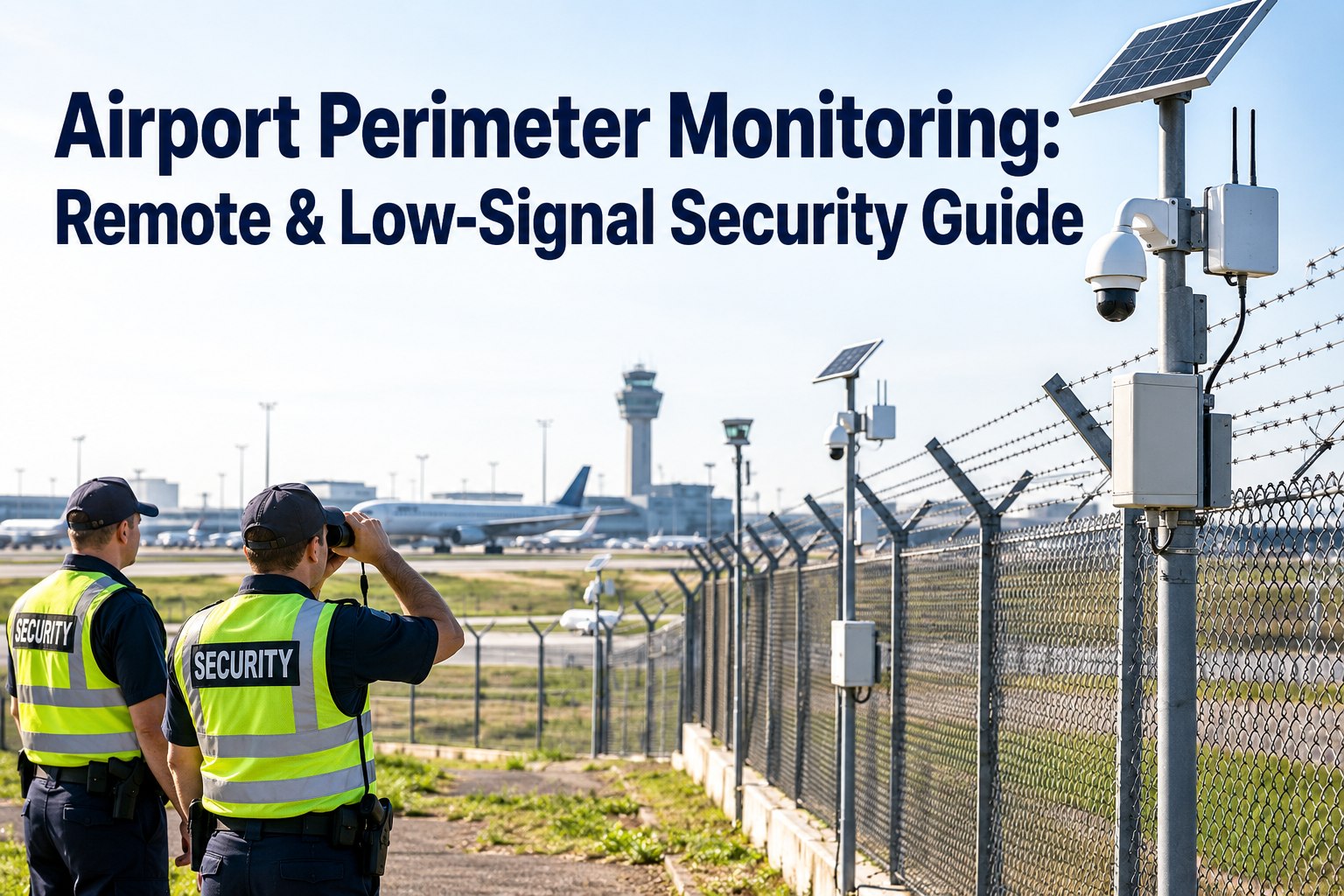
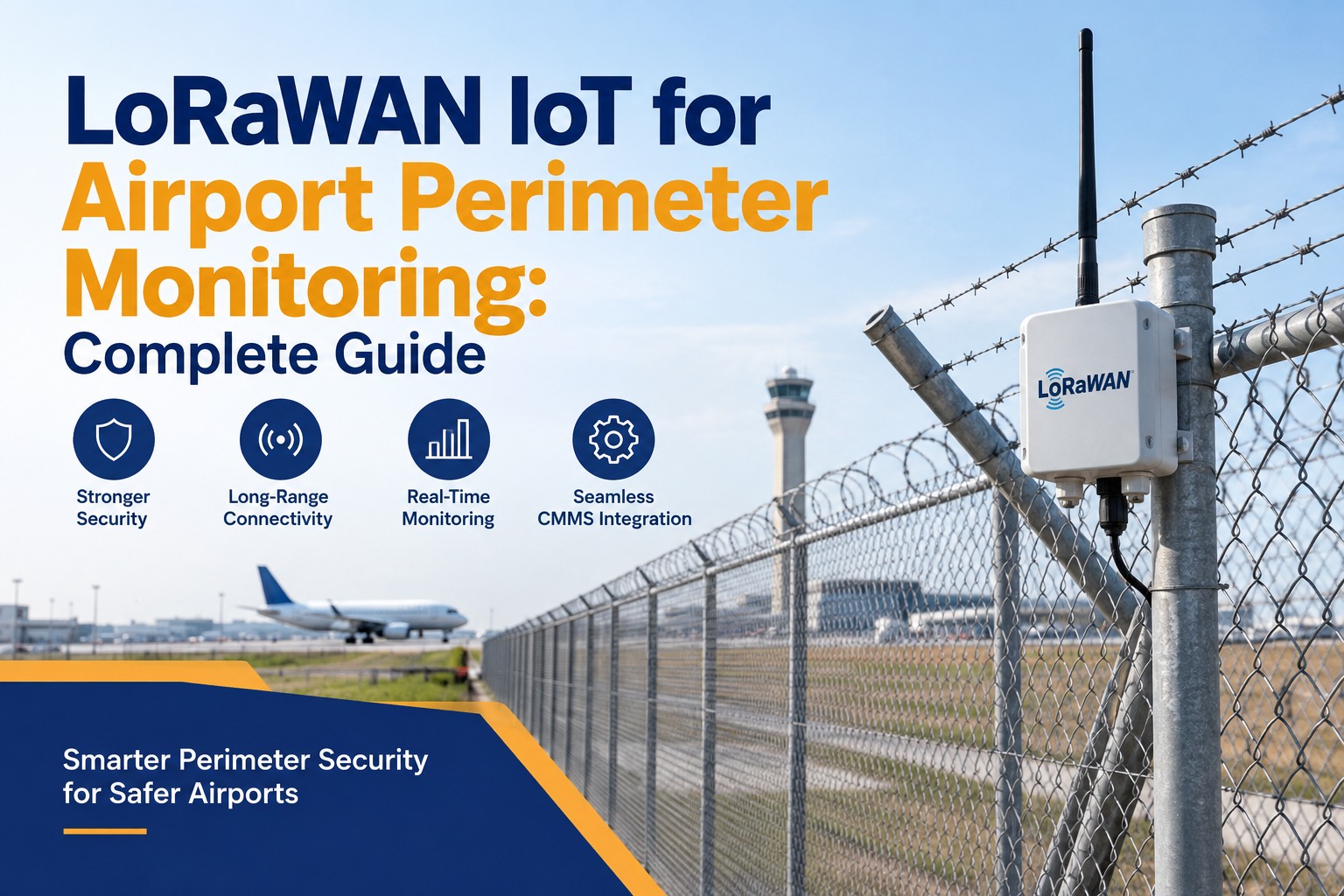
Securing airport perimeters spanning 20-30 kilometers with traditional WiFi? Your sensors are dead before the threat reaches the fence. WiFi's 100-meter range means you'd need hundreds of access points, each requiring power infrastructure that's nearly impossible to deploy along remote fence lines. Meanwhile, your security team is drowning in dead batteries and connectivity gaps. LoRaWAN changes everything—delivering 15km range on a single battery that lasts up to 10 years, with military-grade AES-128 encryption built in. One strategically placed gateway can cover what would take 50+ WiFi access points, dramatically reducing infrastructure costs while eliminating blind spots across runways, taxiways, and perimeter zones. Ready to see how it works for your facility? Book a free consultation with our team
Deploy low-power wide-area networks that cover your entire facility—from remote fence lines to runway sensors—without running power cables or replacing batteries monthly.
The Airport Perimeter Challenge
Large airports face unique security and monitoring challenges that traditional wireless technologies simply cannot solve.
International airports have perimeter fences stretching tens of kilometers—far beyond WiFi's 100m range
Over 1,000 human perimeter breaches occur at US airports every year, impacting operations and safety
Denver International has approximately 32 miles of physical perimeter fencing across 32,000 acres
Istanbul Grand Airport deployed 6,000 LoRaWAN modules covering 76 million square meters
Why Traditional WiFi Fails at Airport Scale
Airport Monitoring Applications
LoRaWAN enables comprehensive monitoring across your entire airport infrastructure with minimal equipment.
Perimeter Intrusion Detection
Deploy vibration sensors, motion detectors, and fence-mounted sensors across your entire perimeter without running power cables to remote fence lines.
- Fence vibration sensors for climb/cut detection
- PIR motion sensors with 11m range
- Magnetic field sensors for tampering
- Solar-powered with 10-year lifespan
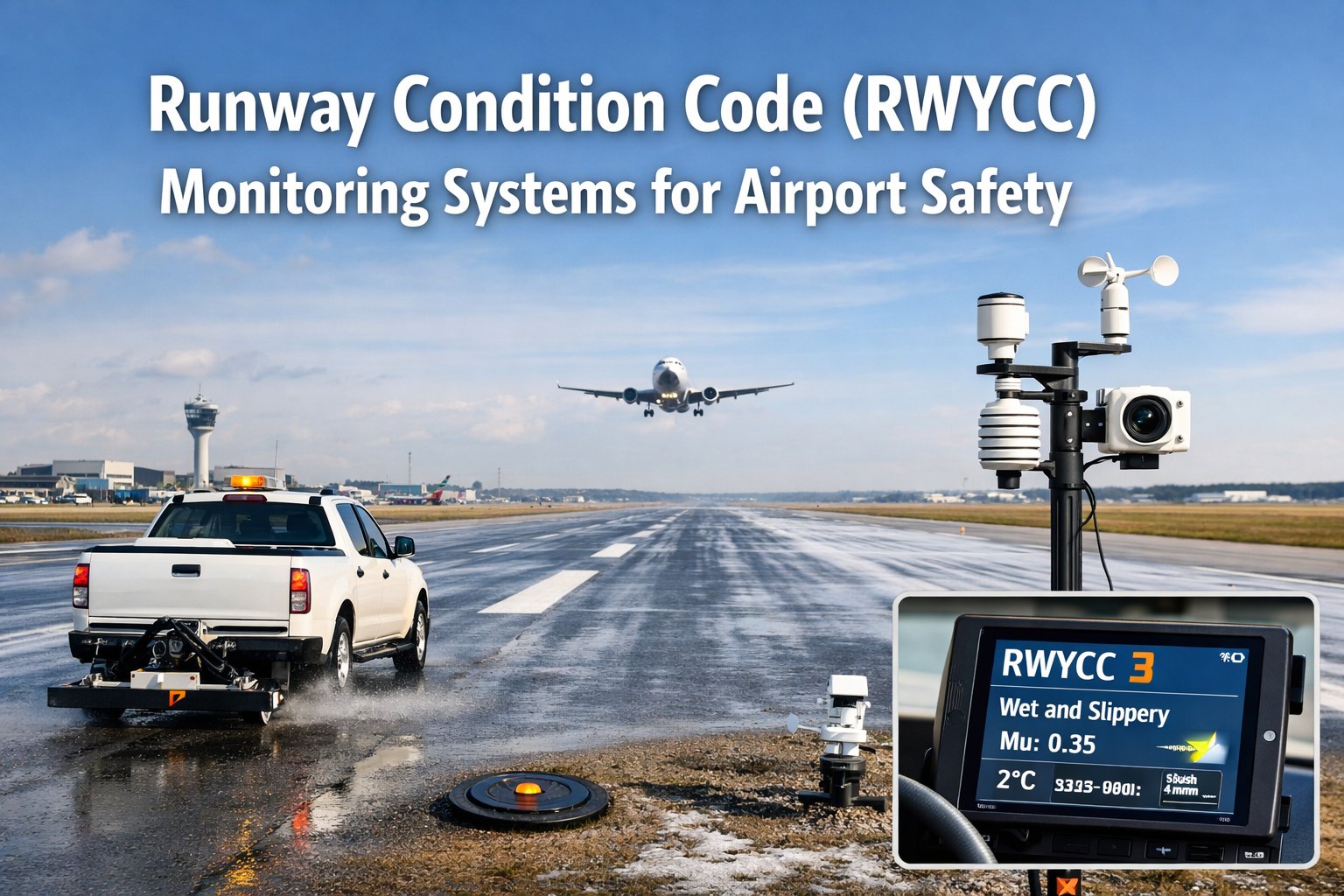
Runway Condition Monitoring
Monitor pavement temperature, ice formation, water accumulation, and surface conditions in real-time to ensure safe aircraft operations.
- Pavement surface temperature sensors
- Ice/snow/water detection sensors
- Freezing point temperature monitoring
- Chemical concentration tracking
Runway Lighting Systems
Monitor runway light status, predict failures, and ensure safe operations in low visibility conditions—92% of landing approach accidents occur due to slippery runways.
- Light beacon status monitoring
- Predictive failure detection
- Energy consumption tracking
- Automated maintenance alerts
Environmental Monitoring
Track weather conditions, air quality, and environmental factors across the airfield to support operations and regulatory compliance.
- Wind speed and direction sensors
- Visibility monitors
- Air quality sensors
- Precipitation detection
Asset & Vehicle Tracking
Track ground support equipment, luggage trolleys, and service vehicles in real-time across the entire airport grounds.
- GPS-enabled asset trackers
- Geofencing alerts
- Usage analytics
- Theft prevention
Drone Detection & Security
Deploy edge-processing perimeter alert systems with AI integration to detect unauthorized drones and aerial threats.
- Acoustic drone detection
- AI-powered threat classification
- Edge processing for low latency
- Integration with security systems
LoRaWAN Network Architecture
A simple, scalable architecture that covers your entire airport with minimal infrastructure.
End Devices
Battery-powered sensors deployed across perimeter, runway, and remote areas
LoRaWAN Gateways
Strategically placed on rooftops or towers for maximum coverage
Network Server
Manages communication, ensures data integrity and encryption
Application Server
Processes data, provides real-time alerts and CMMS integration
Gateway Placement & Coverage Planning
Coverage Calculation
Best Practices
- Elevation: Mount gateways at least 15m high for optimal coverage
- Antenna: Use 6 dBi omnidirectional for balanced coverage
- Redundancy: Plan for 2-3 gateways covering critical areas
- Power: Solar with 4-10 day battery backup for remote locations
- Backhaul: Cellular or fiber connection to network server
- Fade Margin: Design with 10-20 dB buffer for weather variations
Example: Mid-Size Airport
Sensor Selection Guide
Security & Encryption
LoRaWAN was designed with security as a foundational requirement—critical for airport and defense applications.
AES-128 Encryption
All data is encrypted using AES-128 at both network and application layers. Even if intercepted, data cannot be decrypted without the proper keys.
Mutual Authentication
Over-The-Air Activation (OTAA) ensures only genuine, authorized devices can join your network through a secure handshake process.
End-to-End Protection
Data remains encrypted from sensor to application server. Gateways cannot decrypt payloads—they're transparent bridges only.
Integrity Protection
AES-CMAC message authentication prevents unauthorized tampering or modification of data in transit.
Replay Attack Prevention
Frame counters ensure each message is unique. Retransmitted messages are automatically rejected by the network.
Physical Security
Military-grade devices include tamper-evident features that alert administrators if devices are physically manipulated.
Real-World Airport Deployments
Infrastructure monitoring, asset tracking, personnel tracking, energy monitoring, and health & safety systems across one of the world's largest airports.
End-to-end IoT deployment for luggage trolley tracking with 8 LoRaWAN gateways covering the entire airport grounds.
LoRaWAN technology for predictive maintenance of runway lighting systems, identifying potential failures before they impact safety.
Implementation Roadmap
Site Survey & Planning
Weeks 1-2- Perimeter assessment and mapping
- RF coverage simulation
- Gateway placement optimization
- Sensor requirements analysis
- Security risk assessment
Infrastructure Deployment
Weeks 3-5- Gateway installation at elevated positions
- Network server configuration
- Backhaul connectivity setup
- Initial coverage testing
- Security protocol configuration
Sensor Deployment
Weeks 6-10- Perimeter sensor installation
- Runway sensor deployment
- Asset tracker provisioning
- Device registration (OTAA)
- Coverage verification testing
Integration & Go-Live
Weeks 11-12- CMMS/security system integration
- Alert workflow configuration
- Dashboard customization
- Staff training
- Documentation and handover
Ready to Secure Your Airport Perimeter?
OxMaint integrates with LoRaWAN networks to provide unified monitoring and maintenance management across your entire airport infrastructure.
Frequently Asked Questions
How many gateways do I need for my airport?
For a typical mid-size airport with 15-20km perimeter, 3-5 strategically placed gateways provide full coverage with redundancy. Large international airports may require 8-15 gateways. We recommend a site survey to optimize placement.
Can LoRaWAN really achieve 10-year battery life?
Yes, for sensors transmitting small data packets every 15-60 minutes. Factors affecting battery life include transmission frequency, payload size, and environmental conditions. Higher-frequency sensors (like motion detectors) may have 3-5 year battery life.
Is LoRaWAN secure enough for airport applications?
LoRaWAN uses AES-128 encryption at multiple layers and was designed with security as a priority. It's used by military and defense organizations worldwide. Using OTAA activation and proper key management ensures enterprise-grade security.
How does LoRaWAN handle interference from airport equipment?
LoRaWAN operates on sub-GHz frequencies (915 MHz in US, 868 MHz in EU) separate from WiFi and most airport systems. Its spread-spectrum modulation resists interference, and the protocol includes adaptive data rate to maintain connectivity.
Can I integrate LoRaWAN with existing security systems?
Yes, LoRaWAN data can be integrated with existing CCTV, access control, and security management systems via APIs. OxMaint provides pre-built integrations with major security platforms and CMMS systems.
What happens if a gateway fails?
LoRaWAN networks are designed for resilience. Multiple gateways typically cover overlapping areas, so if one fails, others continue receiving data. Sensors automatically connect to the nearest available gateway.