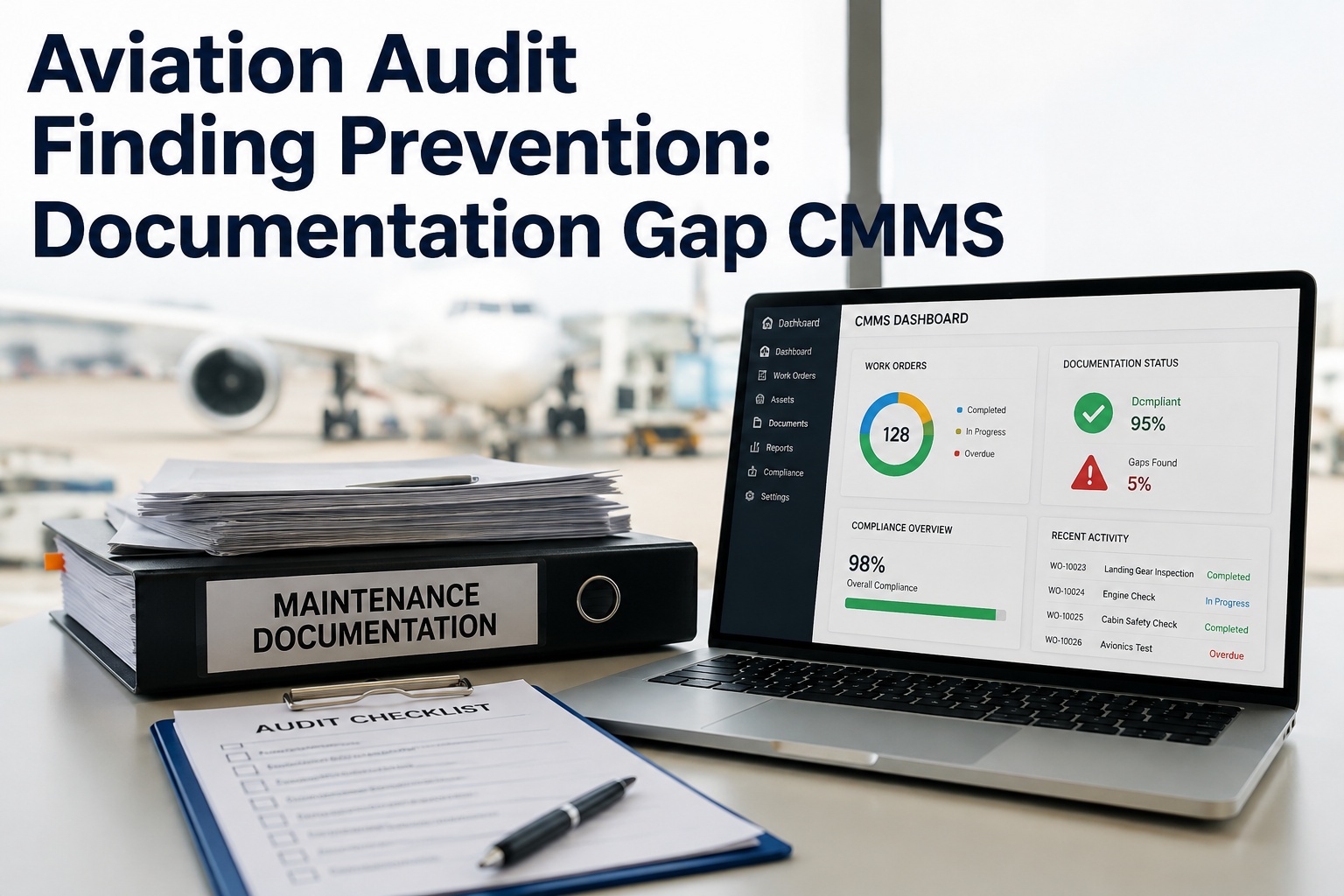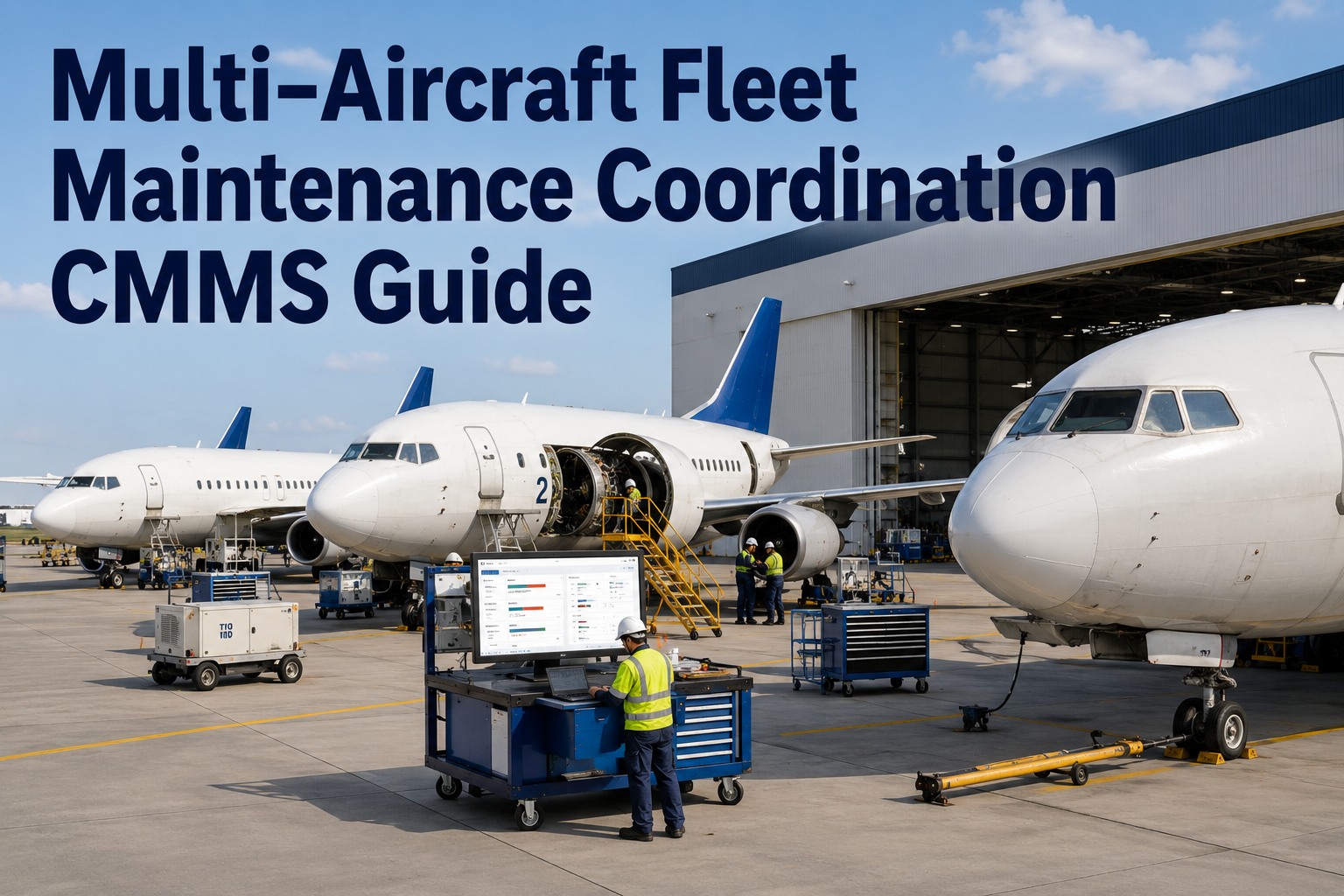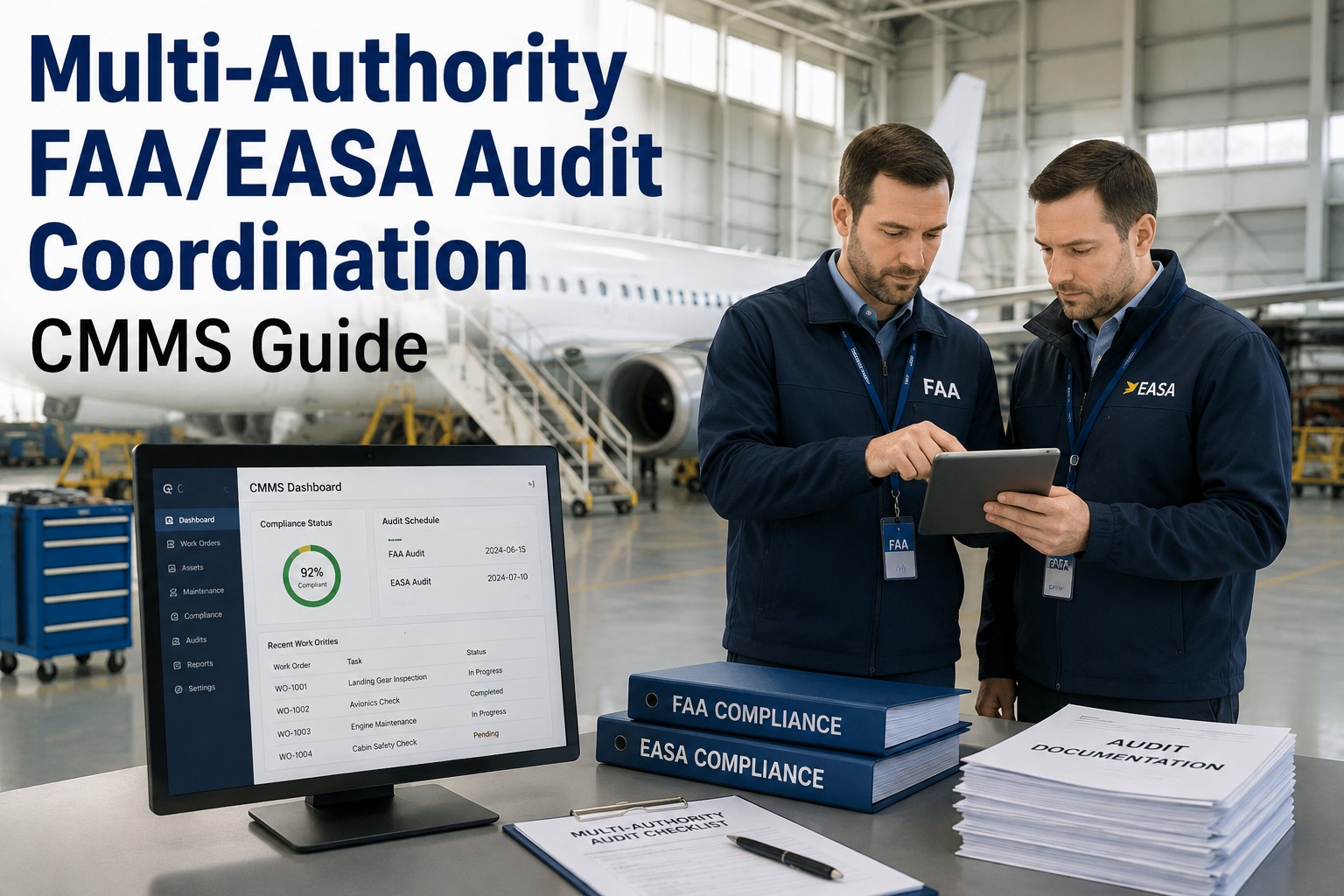
Multi-authority audit coordination under FAA, EASA, and CAA oversight is the single most resource-draining challenge for airline maintenance and reliability teams operating across jurisdictions. A purpose-built CMMS for multi-authority aviation compliance eliminates parallel evidence packaging, redundant document formatting, and duplicated corrective action tracking by maintaining a single auditable data layer mapped to each regulator's specific citation structure. Teams that deploy OxMaint for FAA EASA coordination typically cut audit preparation time by 40–60% while reducing findings related to documentation gaps by over half. You can Start Free Trial today or book a personalized walkthrough to see jurisdiction-specific formatting in action.
Multi-Authority Audit Coordination Guide 2026
Three regulators. One audit window. Zero duplicated effort.
When FAA, EASA, and CAA inspectors arrive in the same quarter, most airlines scramble to rebuild evidence packages three times in three formats. OxMaint's CMMS jurisdiction formatting engine outputs authority-ready packages from one dataset — cutting prep from weeks to hours.
Duplicate audit effort eliminated by unified evidence packaging across FAA Part 145, EASA Part-145, and CAA-AP variants
Why Parallel Audits Break Manual Systems
The hidden cost of uncoordinated multi-authority compliance
A mid-size airline operating under FAA and EASA simultaneously faces an average of 4.2 major audits per year — and without a multi-authority CMMS, each audit consumes 180–240 labor-hours of document retrieval, reformatting, and reconciliation.
"We were maintaining three separate evidence binders for the same A-check. One dataset, three formats — that's the problem CMMS jurisdiction formatting solves."
— Director of Maintenance, Part 145 MRO with FAA, EASA, and TCAA approvals
Cross-Authority Reconciliation
How CMMS jurisdiction formatting maps one record to three regulators
The core mechanism of audit coordination CMMS is a transformation layer: a single maintenance record — work order, inspection sign-off, discrepancy report — is stored once and rendered in the citation structure, field labels, and language each authority expects.
Unified data capture
Technicians complete one digital work order in OxMaint. The system timestamps, geolocates, and attaches e-signatures compliant with 14 CFR Part 43, EASA Part-145.A.50, and CAA equivalent requirements simultaneously — no re-entry.
Authority rule engine
OxMaint's rule engine evaluates the record against each authority's retention schedule, required fields, and formatting standards. Records are tagged with applicable jurisdiction codes (FAA, EASA, CAA-NZ, CAA-UK, CAAS) at the moment of completion.
Parallel evidence package generation
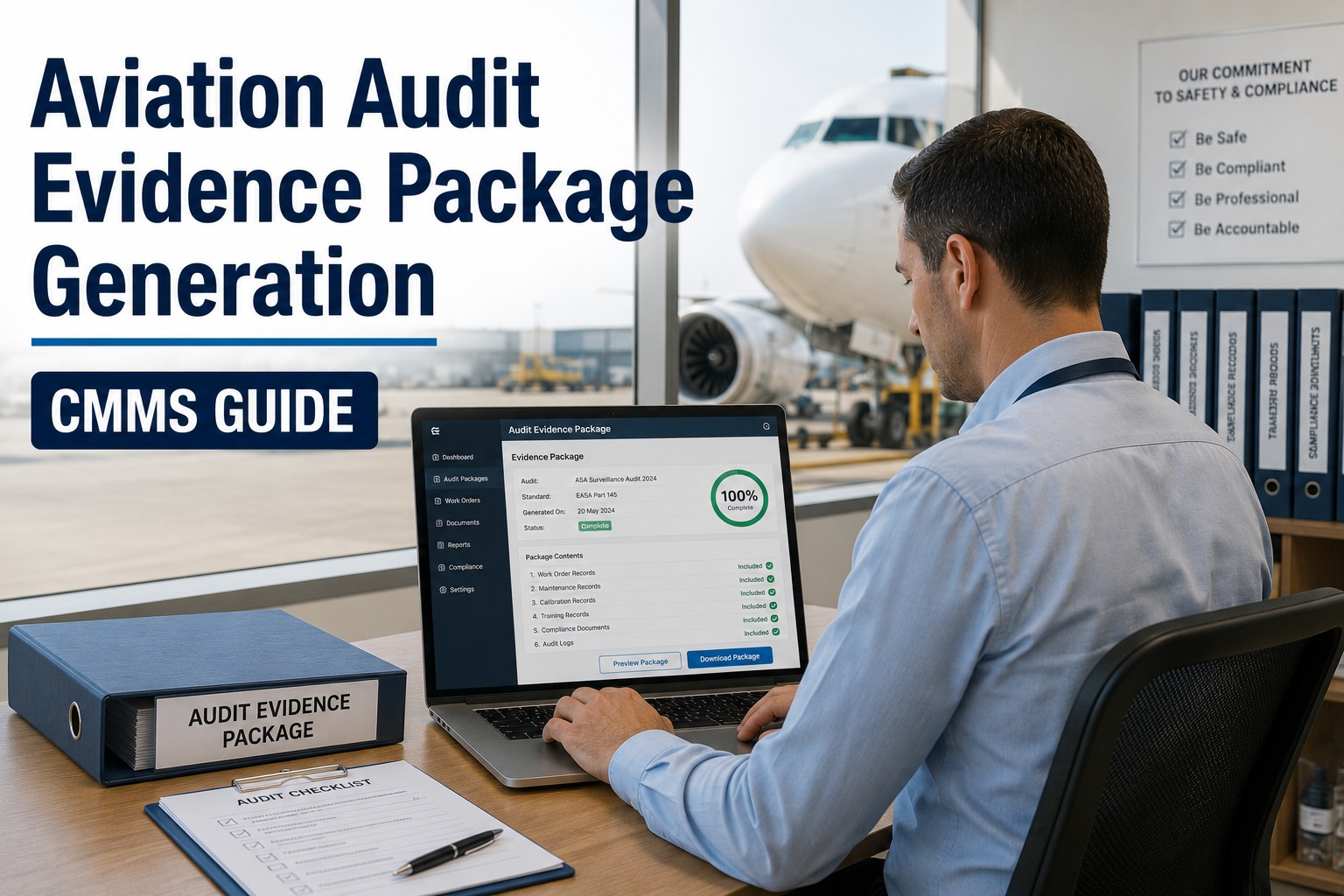
When an audit notice arrives, the CMMS generates three evidence packages from the same underlying records — each with the correct citation references, field ordering, language, and digital signature block format within minutes.
Cross-authority reconciliation report
A reconciliation layer flags any record where FAA and EASA retention or disposition requirements conflict — for example, a component with different overhaul intervals — so reliability teams resolve discrepancies before inspectors find them.
Format Requirements Compared
FAA vs EASA vs CAA: what your CMMS must format differently
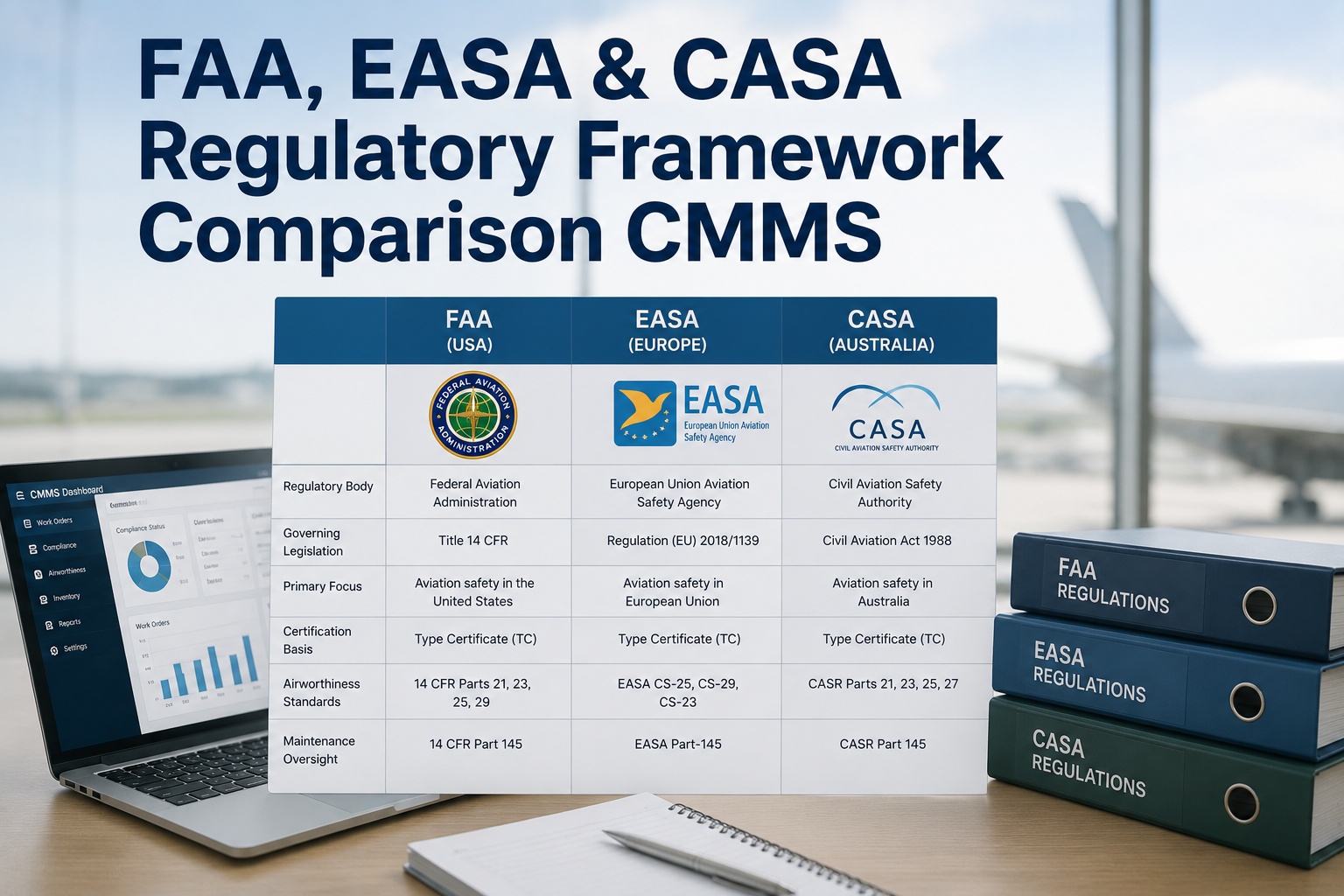
A multi-authority CMMS guide is incomplete without specifying exactly which fields, retention rules, and signature structures differ across regulators. Below is the reconciliation matrix OxMaint maintains automatically.
| Requirement | FAA (14 CFR) | EASA (Part-145) | CAA (e.g., UK CAA) |
|---|---|---|---|
| Work order retention | 1 year minimum (Part 145.219) | 3 years after aircraft withdrawal | 2 years or per bilateral |
| Signature block format | Mechanic cert number + rating | Part-145.A.50 sign-off + cert stamp | CAA Form 1 equivalent |
| Discrepancy reporting language | English | English + member state language | English (local where applicable) |
| Time-limit tracking unit | Flight hours + cycles | Flight hours, cycles, calendar | Flight hours, cycles, calendar |
| MEL disposition format | FAA MMEL derived | Operator MMEL approved by NAA | CAA-approved MMEL |
| Digital signature acceptance | AC 120-78 compliant | EASA Part-145.A.50(g) | CAA ATS requirement |
Reliability analysts spend 6–8 hours per audit manually reformatting work order exports into each authority's expected field order and citation style — and still miss cross-reference errors.
The same evidence package is generated in under 15 minutes with automatic citation mapping, cross-reference validation, and a reconciliation flag for any record that conflicts between jurisdictions.
How OxMaint Helps
Multi-authority audit coordination built into OxMaint CMMS
OxMaint is an AI-powered CMMS and EAM platform designed for maintenance and reliability teams that operate under multiple regulatory regimes. Here is how four core capabilities map directly to multi-authority audit coordination.
Jurisdiction-specific document formatting
OxMaint stores each maintenance record once and renders it in FAA, EASA, or CAA format on demand — correct citation references, field labels, signature blocks, and language — reducing document prep time by up to 90%.
Shared corrective action tracking
A single finding from any authority triggers a corrective action that is tracked against all applicable jurisdictional closure requirements — no more closing an FAA finding and forgetting the parallel EASA obligation.
Cross-authority reconciliation engine
OxMaint automatically flags records where retention periods, inspection intervals, or disposition rules differ between FAA and EASA — resolving conflicts before inspectors discover them and reducing findings by 50% or more.
AI-driven audit-readiness analytics
Predictive analytics forecast which assets, stations, or work-order categories are most likely to trigger findings in the next audit cycle — letting reliability teams remediate proactively instead of reacting to inspector requests.
Worked Example
A regional carrier with 22 aircraft operating under FAA Part 121 and EASA Part-145 approvals implemented OxMaint for multi-authority audit coordination. In their first parallel audit cycle, evidence package generation dropped from 3 weeks to 2 days. Cross-authority reconciliation flagged 14 records where EASA's 3-year retention conflicted with FAA's 1-year disposal — all resolved before either inspector arrived. The airline saved an estimated $185K in audit-prep labor and reduced documentation findings from 11 to 2.
Implementation Roadmap
How to deploy multi-authority CMMS in 90 days
A structured rollout ensures your team is audit-ready before the next inspection window opens. Here is the month-by-month path OxMaint customers follow to achieve full multi-authority compliance coverage.
Authority mapping & data migration
- Map existing maintenance records to FAA, EASA, and CAA citation structures
- Migrate paper and spreadsheet work orders into OxMaint's unified data model
- Configure jurisdiction-specific retention rules and signature workflows
Reconciliation & rule validation
- Run cross-authority reconciliation reports to identify existing conflicts
- Train reliability engineers on corrective action tracking across jurisdictions
- Conduct a mock parallel audit using historical records
Full audit-readiness go-live
- Enable automated evidence package generation for all active authorities
- Activate AI-driven audit-readiness forecasting dashboards
- Complete first live parallel audit cycle with CMMS-generated packages
See OxMaint generate FAA, EASA, and CAA evidence packages from one dataset
Book a 30-minute demo and watch your own maintenance records formatted for three authorities in real time.
Frequently Asked Questions
Multi-authority audit coordination CMMS: your questions answered
Can a CMMS really format the same record for FAA and EASA simultaneously?
Yes. OxMaint stores each maintenance record once in a unified data model, then applies jurisdiction-specific formatting rules — citation references, field labels, signature block structure, and retention metadata — at export time. The same work order can be rendered as an FAA Part 145.219-compliant package and an EASA Part-145.A.50-compliant package in under 15 minutes, with cross-reference validation built in.
How does OxMaint handle conflicting retention requirements between authorities?
The reconciliation engine evaluates every record against all applicable authority rules and flags conflicts automatically. If FAA requires 1-year retention but EASA requires 3 years, OxMaint applies the longer retention period and notifies your reliability team. You can Book a Demo to see the conflict-resolution dashboard on live data.
What does it cost to switch from spreadsheets to a multi-authority CMMS?
Most mid-size airlines recover the implementation cost within 4–6 months through reduced audit-prep labor alone. A 40-aircraft fleet typically spends $340K annually on redundant documentation — OxMaint eliminates 60–80% of that while adding predictive maintenance and spare-parts inventory capabilities. A 14-day free trial requires no credit card.
Does OxMaint support authorities beyond FAA and EASA?
Yes. The jurisdiction formatting engine supports CAA-UK, CAA-NZ, CAAS, TCCA, and other National Aviation Authorities through configurable rule sets. Each authority's citation structure, retention schedule, and signature requirements can be added or modified without custom development.
How long does implementation take for a multi-authority airline?
A typical rollout follows a 90-day roadmap: Month 1 covers authority mapping and data migration, Month 2 focuses on reconciliation and rule validation with a mock audit, and Month 3 goes live with automated evidence package generation. Teams migrating from an existing CMMS can often compress this to 60 days using OxMaint's AI-assisted data import tools. Start your Start Free Trial to begin the mapping process immediately.
Stop rebuilding evidence packages for every regulator
One dataset. Three authority formats. Zero duplicated effort. Join the airlines using OxMaint to dominate their next parallel audit cycle.
Free 14-day trial · No credit card