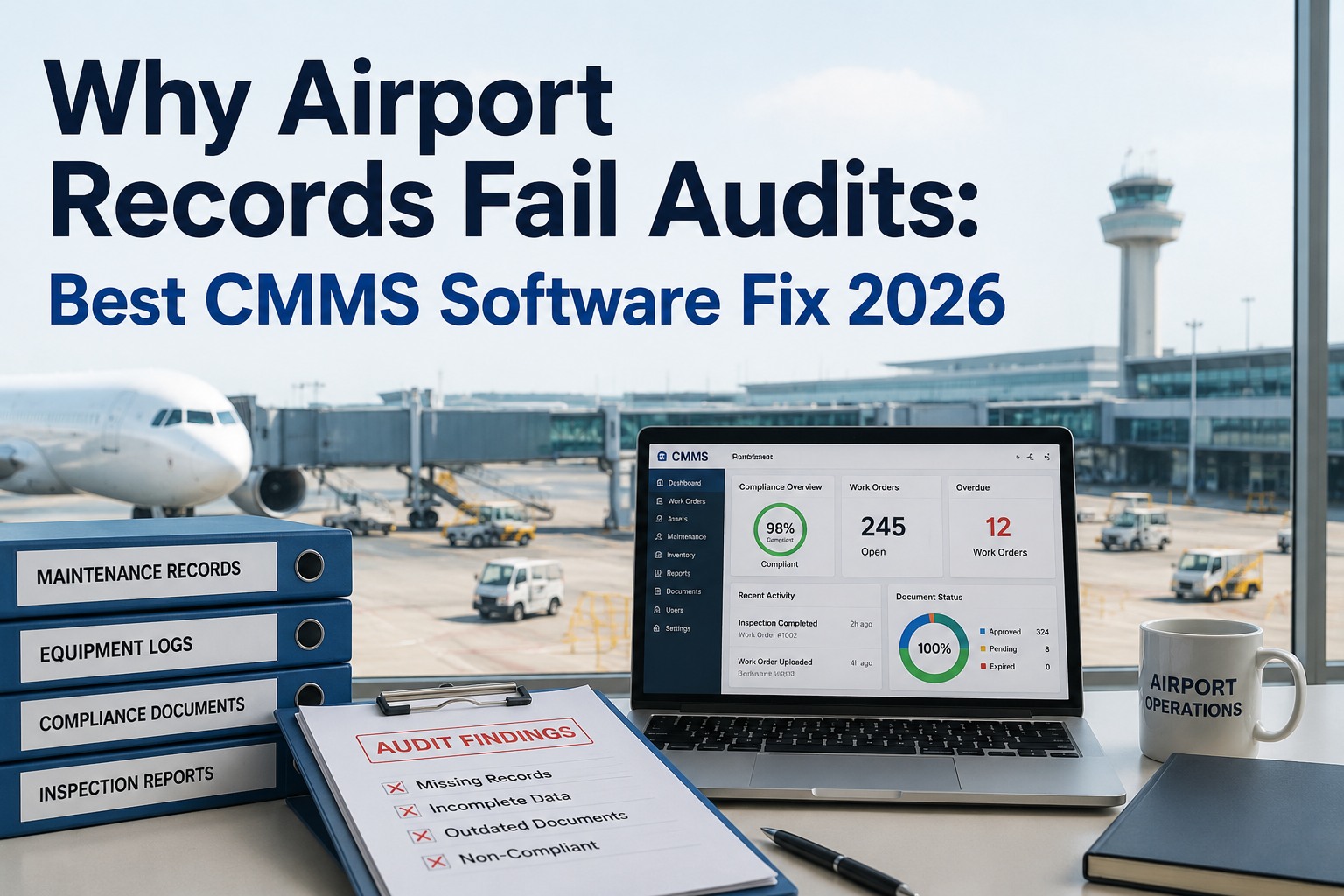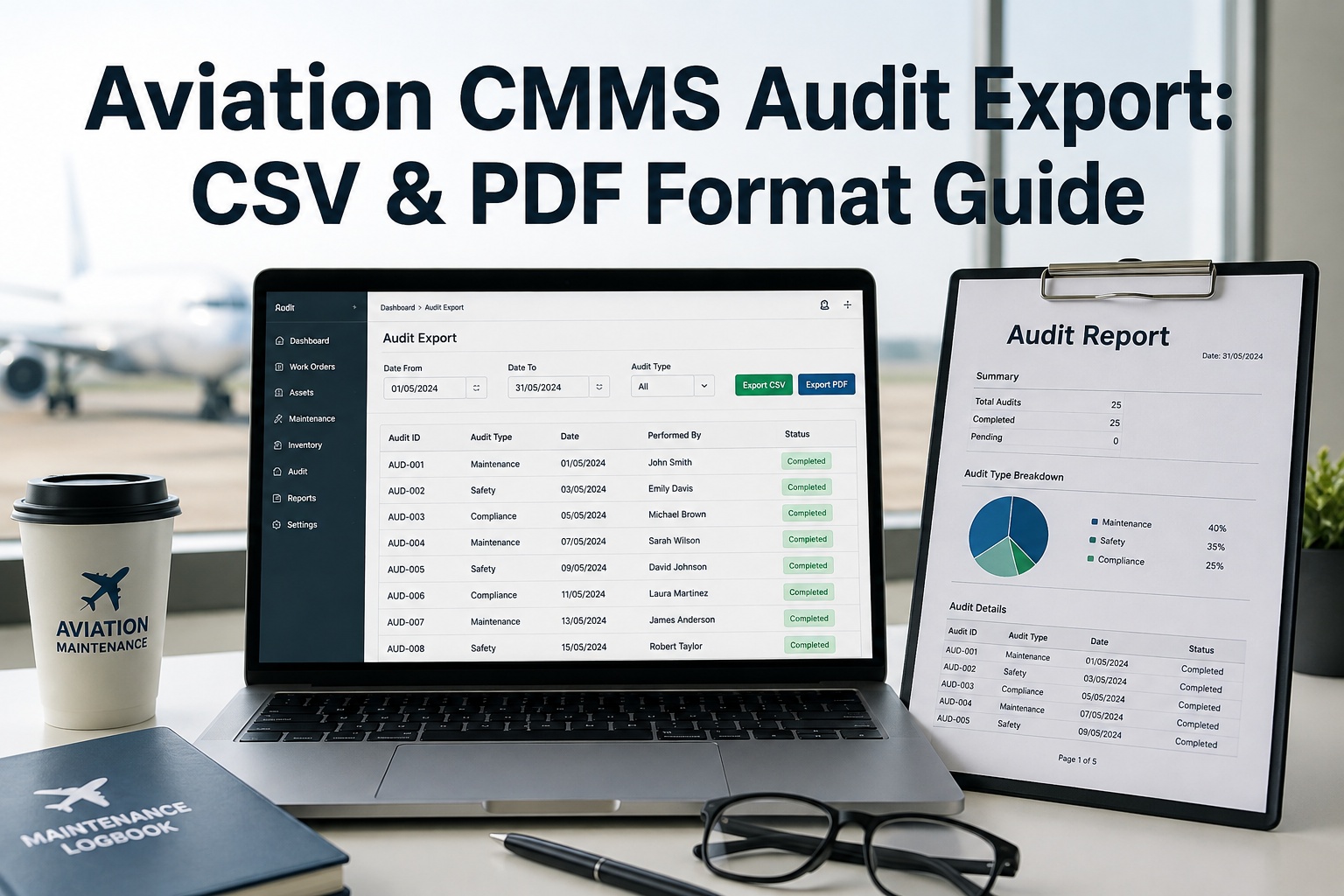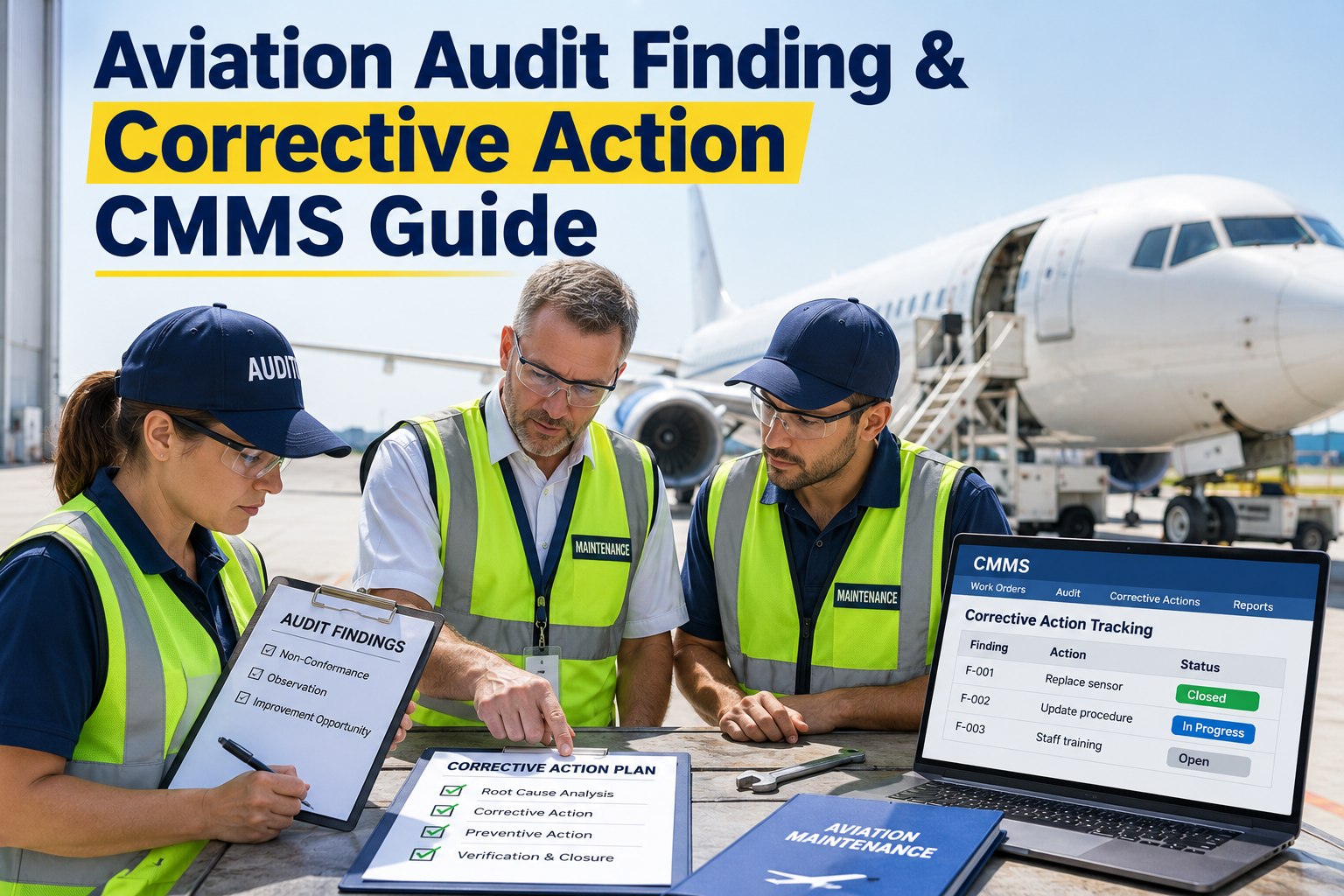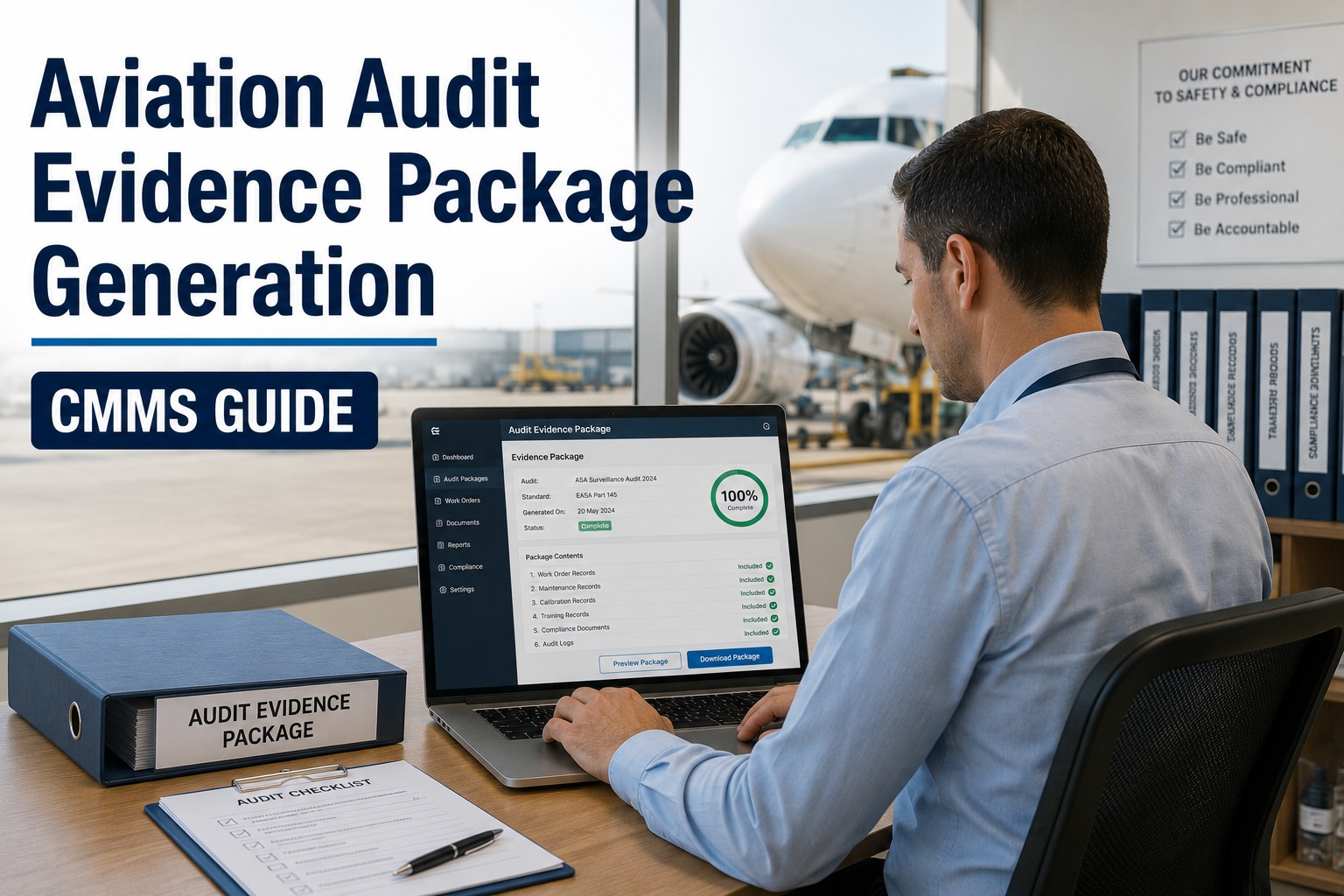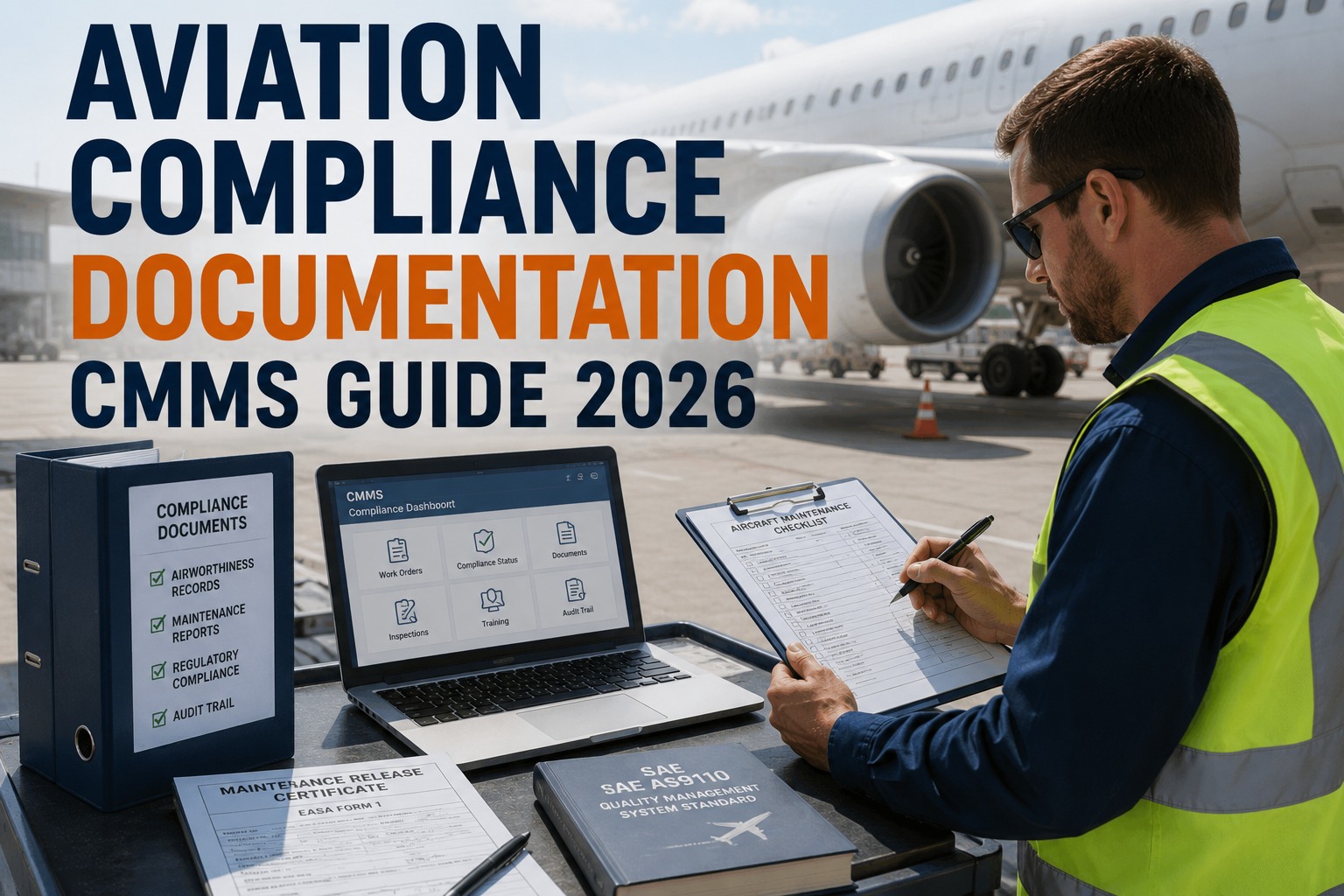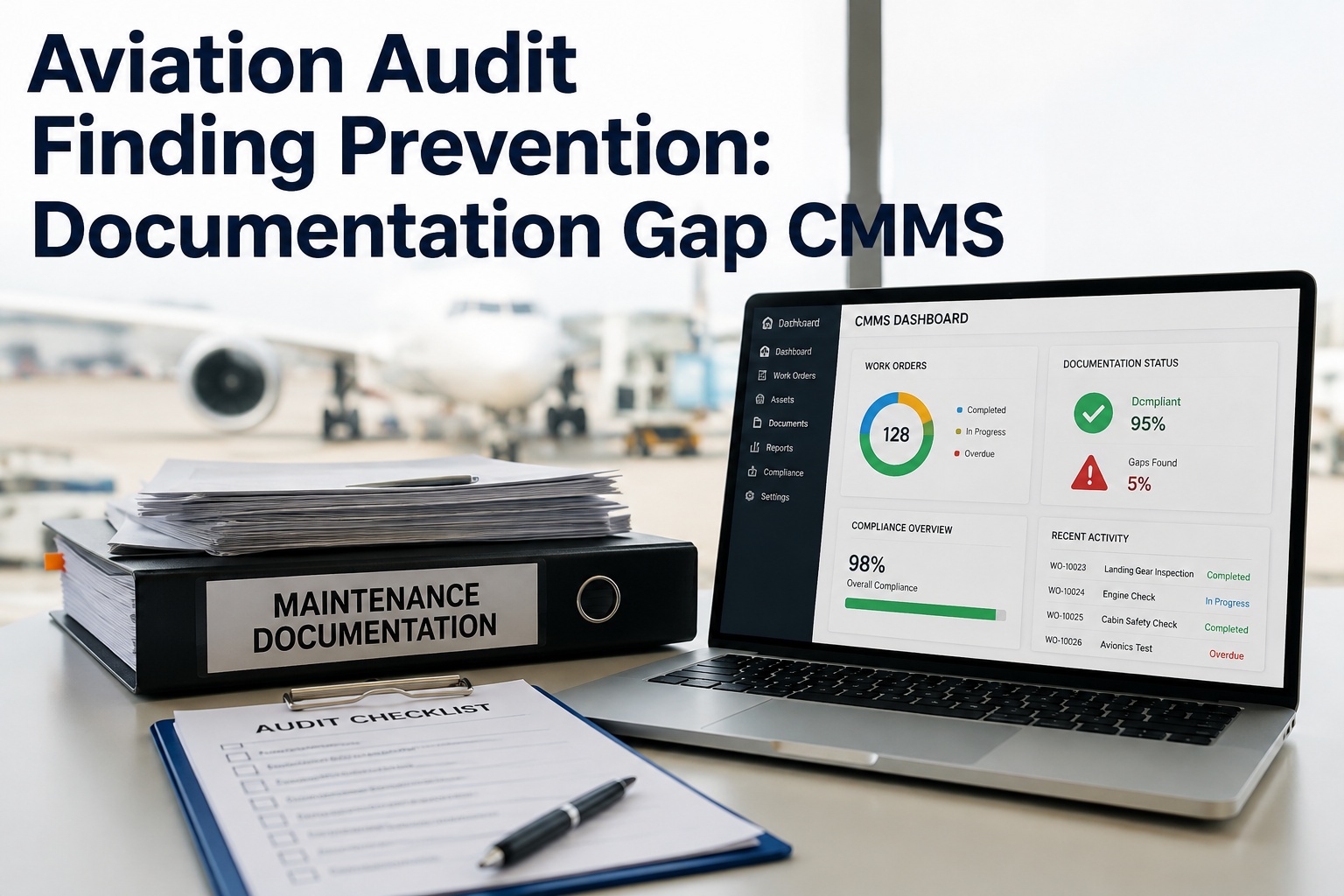
Aviation audit finding prevention starts with closing documentation gaps before auditors find them — and most gaps are preventable when a CMMS enforces signoff completeness, signature capture, and verification workflows in real time. Missing signatures, expired stamps, and tasks closed without independent verification account for the majority of regulatory findings across line maintenance, base maintenance, and CAMO operations. This 2026 finding prevention guide explains how a documentation gap CMMS like OxMaint uses missing-record alerts, deferred-item aging, and signoff completeness scoring to keep every work order audit-ready. If you want to see it on your own operation, you can Start Free Trial or book a personalized walkthrough below.
What if every audit finding was caught before the auditor arrived?
Most aviation documentation gaps — missing signatures, expired stamps, unverified task closures — are caught on paper, weeks too late. A CMMS with enforced workflow surfaces them the moment they happen, so your compliance team fixes them in hours, not after a finding lands.
Where aviation documentation gaps actually come from
Across EASA Part-145, FAA Part 145, and CAMO audits, the same four documentation failure modes appear year after year — and each one is detectable in real time with the right CMMS enforcement rules.
Missing or delayed signatures
Technicians complete a task but the certifying engineer signs off days later — or never. Auditors flag the gap between execution and certification as a loss-of-control finding.
Expired stamps & authorizations
A certifying staff member's authorization, type rating, or tool calibration stamp expires mid-cycle. Work signed under an expired credential is invalid until re-certified.
Tasks closed without verification
A work order is marked complete without independent inspection or required dual-signature. The system allowed closure without enforcing the verification step.
Deferred & aging MEL items
Deferred maintenance items pass their rectification interval with no escalation. Aging deferrals are a top-5 audit finding for line maintenance operations.
What a single documentation finding really costs an aviation operation
A documentation finding is rarely just paperwork — it triggers corrective action plans, downtime, re-inspection, and in regulated environments, potential operational restrictions that compound for weeks.
A 45-aircraft regional operator received a Level 1 finding during a Part-145 audit: 37 work orders had been closed without the required certifying-staff signature within the 72-hour window. The corrective action plan consumed 280 staff-hours over six weeks, 12 aircraft were grounded for re-inspection (averaging 6.5 hours each), and the operator faced a follow-up audit at the next cycle. Total direct cost: $87,000, plus the reputational drag of an open finding on the compliance record.
With CMMS enforced workflow, those 37 work orders would have triggered missing-signature alerts at hour 48 — inside the window — and the closures would have been blocked until signoff was captured. The entire finding category would have been eliminated.
| Cost Category | Per-Finding Range | Notes |
|---|---|---|
| CAPA staff time | $8K – $22K | Investigation, root-cause, documentation, evidence packages |
| Aircraft re-inspection | $3K – $15K | Ground time, technician hours, deferred revenue |
| Follow-up audit | $10K – $30K | Additional audit cycle, prep, auditor fees |
| Operational restriction | $5K – $50K | Revenue impact if aircraft grounded or scope limited |
| Total per finding | $26K – $117K | Before reputational and recurring-cycle costs |
How CMMS enforced workflow prevents audit findings in real time
The shift from reactive documentation review to proactive enforcement is what separates audit-ready operations from those that find gaps during the audit itself. Here is the prevention workflow, step by step.
Capture signatures at the point of execution
Technicians sign electronically on mobile devices the moment a task is complete. OxMaint validates the signer's authorization, type rating, and stamp expiry before accepting the signature — expired stamps are blocked automatically.
Enforce verification before closure
For safety-critical or inspection-required tasks, the work order cannot move to "Closed" until the required independent verification or dual-signature is captured. The system hard-stops incomplete closures.
For safety-critical or inspection-required tasks, the work order cannot move to "Closed" until the required independent verification or dual-signature is captured. The system hard-stops incomplete closures, eliminating the most common audit finding category.
Alert on missing records within hours
If a work order reaches 48 hours without required signoff, OxMaint fires a missing-record alert to the certifying engineer and compliance manager — not a weekly report, an immediate notification.
Track deferred-item aging with auto-escalation
Deferred maintenance and MEL items age in real time. At 75% of the rectification interval, OxMaint escalates to maintenance control; at 100%, it flags a compliance risk and blocks further deferral without engineering review.
Score signoff completeness before audit day
A live signoff completeness score shows what percentage of closed work orders have full signature chains, verification records, and valid stamps — so compliance officers walk into audits knowing exactly where they stand.
How OxMaint closes aviation documentation gaps before auditors find them
OxMaint is built for maintenance and reliability teams who cannot afford a finding. These four capabilities map directly to the most common documentation failure modes — each with a measurable compliance outcome.
Missing-signature prevention
Electronic signatures with authorization, stamp-expiry, and type-rating validation — captured at the point of execution, not days later. Missing-signature alerts fire at configurable thresholds.
Expired-stamp enforcement
OxMaint tracks every certifying staff member's authorization, stamp expiry, and currency. Signatures from expired credentials are rejected at entry — not discovered during an audit.
Verification enforcement
Configurable closure rules require independent inspection, dual-signature, or RII verification before a work order can close. Incomplete records are blocked and routed back automatically.
Compliance analytics & scoring
Live dashboards show signoff completeness scores, deferred-item aging, and documentation gap trends — so compliance officers can close gaps in the days before an audit, not after.
Documentation gap audit checklist: 12 controls your CMMS should enforce
Use this checklist to evaluate whether your current CMMS — or one you are considering — can actually prevent documentation findings, not just record work orders after the fact.
- Electronic signatures validated against live authorization database
- Expired stamps blocked at signature entry, not flagged later
- Type-rating and scope-of-work validation per task type
- Dual-signature enforcement for safety-critical items
- RII verification gating on inspection-required tasks
- Missing-signature alerts at configurable time thresholds
- Deferred-item aging dashboard with rectification deadline tracking
- Auto-escalation at 75% of deferral interval
- Signoff completeness score updated in real time
- Work order closure blocked without required verification
- Audit-ready evidence export (PDF, structured records)
- Gap-trend analytics for continuous compliance improvement
CMMS vs spreadsheets: documentation gap prevention compared
Most operations still relying on spreadsheets, shared drives, or paper logbooks discover documentation gaps during the audit itself. Here is how enforced CMMS workflow changes the timeline.
| Capability | Spreadsheets / Paper | OxMaint CMMS |
|---|---|---|
| Signature capture timing | Hours to days after task | At point of execution, validated |
| Expired-stamp detection | Manual review, often missed | Automatic, blocks invalid signatures |
| Verification enforcement | Process-dependent, no hard stop | System blocks closure without verification |
| Missing-record alerts | Weekly or monthly reports | Real-time alerts at configurable thresholds |
| Deferred-item aging | Manual tracking, prone to drift | Live dashboard with auto-escalation |
| Audit evidence export | Days of manual compilation | One-click structured records |
| Signoff completeness visibility | Unknown until audit | Live score, always available |
What changes when documentation gaps are caught in real time
Operations that enforce documentation controls in their CMMS don't just reduce findings — they fundamentally change the compliance posture and the cost of audit readiness.
"Before OxMaint, we'd find missing signatures during audit prep — sometimes weeks after the task. Now the system won't let a work order close without a valid signoff, and we get alerts if anything is lagging. Our last audit had zero documentation findings for the first time in six years."
See OxMaint enforce documentation controls on your operation
Book a 30-minute demo and we'll show you exactly how missing-signature alerts, expired-stamp enforcement, and signoff completeness scoring would work on your work orders, your assets, and your audit cycle.
Aviation audit finding prevention: frequently asked questions
Real questions from maintenance and compliance teams evaluating CMMS for documentation gap prevention.
What is a documentation gap in aviation maintenance audits?
A documentation gap is any missing, incomplete, or invalid record between task execution and audit — missing signatures, expired stamps, tasks closed without verification, or deferred items past their rectification interval. These gaps are the single largest source of audit findings in Part-145 and CAMO operations, and most are preventable with CMMS enforced workflow that validates records in real time.
How does a CMMS prevent missing signatures in aviation work orders?
A CMMS like OxMaint requires electronic signature capture at the point of task completion, validates the signer's authorization and stamp currency, and blocks work order closure until all required signatures are present. If a signature is missing past a configurable threshold, the system sends a real-time alert to the certifying engineer and compliance manager — closing the gap inside the window, not after the audit. You can see this in action when you Book a Demo.
Can CMMS enforce expired stamp and authorization prevention?
Yes. OxMaint maintains a live database of every certifying staff member's authorizations, type ratings, and stamp expiry dates. When a signature is entered, the system checks currency in real time and rejects signatures from expired or out-of-scope credentials. This eliminates the "signed under an expired stamp" finding category entirely, because the invalid signature never enters the record.
What is signoff completeness scoring and how does it help audit readiness?
Signoff completeness scoring is a live metric that tracks what percentage of closed work orders have full, valid documentation chains — signatures, verification records, valid stamps, and complete evidence packages. Compliance officers use it to spot documentation gaps before auditors do, prioritizing remediation in the days or weeks before an audit rather than discovering gaps during the audit itself. Operations using OxMaint typically cut audit-prep time by 60–80%.
How long does it take to implement OxMaint for aviation documentation compliance?
Most aviation operations are live on OxMaint's core documentation enforcement — electronic signatures, stamp validation, closure rules, and missing-record alerts — within 2 to 4 weeks. Asset import, work order templates, and custom compliance dashboards are configured during onboarding. You can start with a free trial or book a demo to see a tailored implementation plan for your operation.
Stop finding documentation gaps during audits
OxMaint enforces signatures, blocks expired stamps, verifies closures, and scores completeness in real time — so your next audit starts with confidence, not a scramble.
Free 14-day trial · No credit card