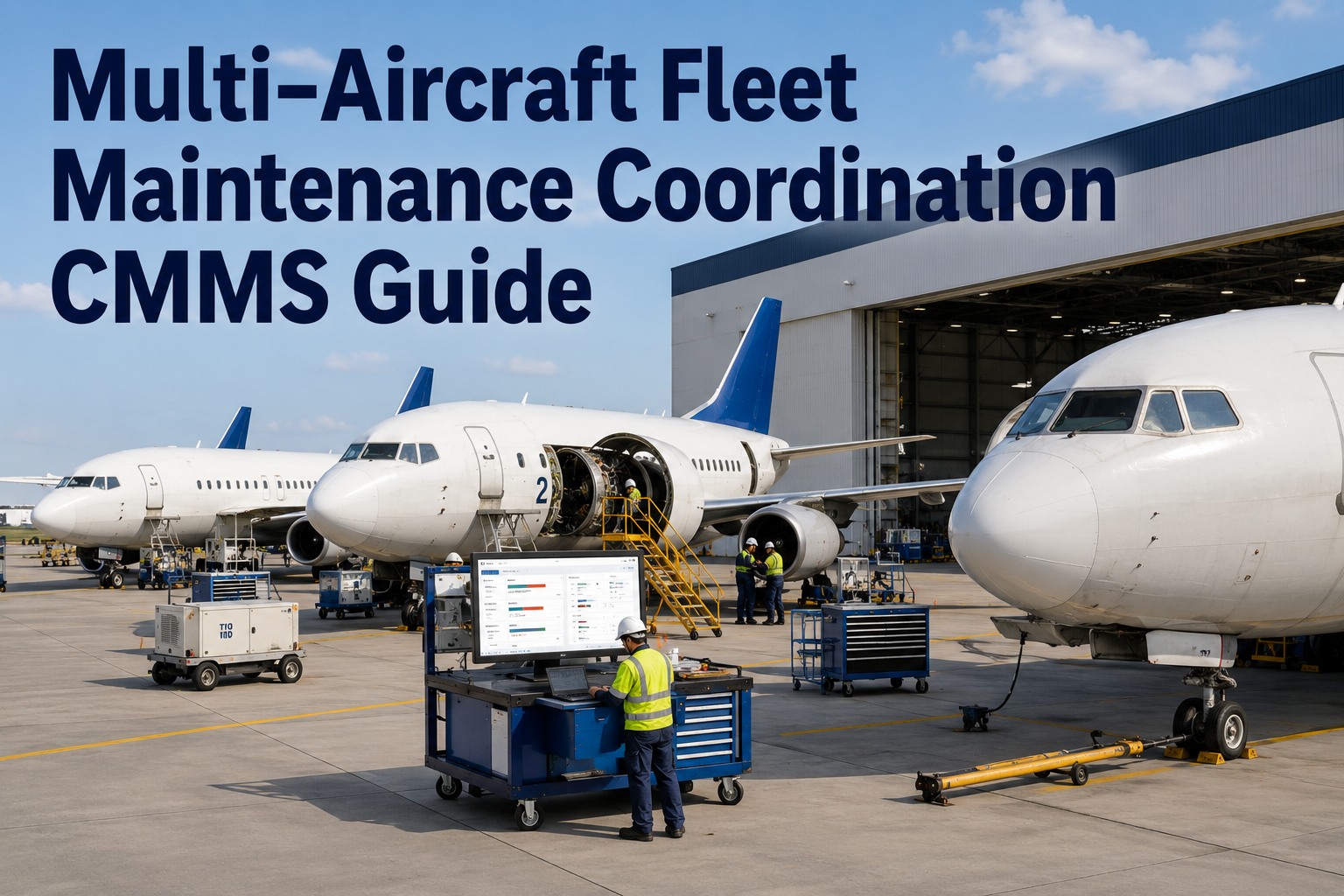
Multi-aircraft fleet maintenance coordination is the process of synchronizing scheduled and unscheduled maintenance across multiple tail numbers while managing shared crews, hangar bays, and spare parts inventories. When aviation maintenance planners attempt multi-aircraft scheduling using spreadsheets or legacy systems, a single hangar bay conflict or misplaced rotable part can ground an entire fleet segment and cost an airline millions in AOG delays. A modern fleet maintenance calendar built on a CMMS platform eliminates these bottlenecks by automating simultaneous scheduling, forecasting parts demand, and preventing resource collisions. By unifying work orders, asset tracking, and predictive analytics, an AI-powered solution like OxMaint transforms complex multi-aircraft coordination into a streamlined, audit-ready workflow. Explore how upgrading your maintenance strategy can reduce ground time, or Start Free Trial to see the platform in action.
Is a single hangar bay conflict grounding your entire fleet schedule?
Coordinating simultaneous maintenance checks across dozens of tail numbers requires flawless resource allocation. When shared crews, parts, and bays overlap, delays cascade. OxMaint's fleet maintenance calendar prevents collisions before they happen — keeping every aircraft airworthy and on time.
Why multi-aircraft fleet maintenance scheduling breaks down
A 50-aircraft narrow-body fleet generates over 1,200 scheduled maintenance events annually. Without dedicated CMMS fleet coordination, planners face a cascading failure loop of overlapping due dates and depleted shared inventories.
A regional carrier operating 32 aircraft was losing 110 flight hours monthly to scheduling overlaps. By migrating to a CMMS fleet calendar with real-time hangar bay conflict alerts, they recovered 85% of those hours within the first quarter.
How to coordinate multi-aircraft maintenance scheduling with a CMMS
Effective multi-aircraft coordination moves beyond basic calendar blocking. Airline maintenance planners use a structured, CMMS-driven sequence to synchronize fleet-wide forecasting, resource optimization, and opportunistic task packaging.
Consolidate the fleet maintenance calendar
Ingest all tail numbers, MPLs (Maintenance Planning Letters), and CAMM requirements into a single fleet calendar CMMS. The system automatically flags upcoming A, B, and C-checks against individual aircraft flight cycles, creating a unified 12-month rolling view of all multi-aircraft maintenance obligations.
Run simultaneous scheduling and resource leveling
Execute simultaneous scheduling across the fleet. The CMMS fleet scheduling engine matches required man-hours against available technician shifts, tooling kits, and hangar bay slots. It automatically prevents over-allocation and generates conflict warnings before work orders are approved.
Automate hangar bay conflict prevention
Visualize physical hangar space digitally. If two heavy checks require Bay 3 on the same day, the system triggers a CMMS hangar conflict alert, allowing planners to stagger check induction dates or redirect an aircraft to an alternate bay without disrupting downstream line maintenance.
Package opportunistic maintenance tasks
When an aircraft enters the hangar for an unplanned MEL resolution, the CMMS instantly queries all deferred and upcoming due-tasks for that tail number. Planners package opportunistic ADs (Airworthiness Directives) and SBs (Service Bulletins) into the existing ground time, maximizing fleet availability.
Forecast shared spare-parts inventory
Multi-aircraft fleets share rotables and expendables. The CMMS tracks serialized parts across the fleet and uses AI predictive maintenance analytics to forecast when landing gear components or APUs will need replacement, pre-positioning inventory in the correct hangar before an aircraft even arrives.
How OxMaint solves multi-aircraft CMMS coordination
OxMaint replaces reactive spreadsheet management with AI-powered EAM and CMMS tools designed specifically for high-density fleet operations. Here is how our platform maps directly to your multi-aircraft maintenance challenges.
Unified Fleet Maintenance Calendar
View every tail number's maintenance schedule on one interactive Gantt chart. Drag-and-drop scheduling automatically resolves CMMS hangar conflicts and optimizes bay utilization.
AI-Powered Parts Forecasting
Our EAM platform tracks shared spare-parts inventory across all bases. Predictive algorithms forecast component failure windows based on actual flight cycle data, ensuring critical rotables are in stock.
Opportunistic Work Order Bundling
When an aircraft enters unscheduled maintenance, OxMaint automatically suggests pending preventive tasks and ADs due within the next 100 flight hours, allowing planners to bundle them instantly.
Real-Time Hangar Bay Management
Digital twin visualization of your hangar floor prevents physical space conflicts. The system alerts you if a scheduled C-check induction overlaps with an ongoing heavy maintenance visit.
CMMS fleet coordination: The cost of inaction vs. ROI
A 180-asset airline spending $4.2M annually on maintenance coordination loses an estimated $860K to scheduling inefficiencies, parts stockouts, and redundant labor. Quantifying the payback of a CMMS multi-aircraft upgrade requires looking at three core metrics.
| Coordination Metric | Spreadsheet / Legacy System | OxMaint CMMS Platform | Annual Savings |
|---|---|---|---|
| AOG Events (Fleet-wide) | 24 events / year | 9 events / year | $2.25M |
| Hangar Bay Conflicts | 3-4 per month (manual resolution) | 0 (automated prevention) | $310K |
| Spare Parts Holding Cost | $1.8M (safety stock heavy) | $1.2M (AI forecasted) | $600K |
| Unplanned Labor Overtime | 18% of maintenance budget | 6% of maintenance budget | $420K |
Stop letting spreadsheet errors ground your fleet
See how OxMaint's multi-aircraft CMMS coordinates simultaneous scheduling, prevents hangar bay conflicts, and forecasts shared inventory — all in one platform.
Multi-aircraft fleet maintenance coordination FAQs
What is multi-aircraft fleet maintenance coordination in a CMMS?
It is the centralized management of scheduled and unscheduled maintenance across multiple aircraft using a single CMMS platform. A fleet maintenance calendar tracks every tail number's due dates, manages shared resources like hangar bays and technicians, and prevents scheduling conflicts. This ensures compliance with aviation regulations while maximizing fleet availability.
How does a CMMS prevent hangar bay conflicts?
A CMMS digitally maps your physical hangar space and maintenance schedule. When a planner assigns an aircraft to a bay, the system checks for overlapping work orders, required tow times, and space constraints. If a conflict exists, it triggers an alert and suggests alternative bays or staggered induction times, eliminating physical bottlenecks.
Can OxMaint handle simultaneous scheduling for a large airline fleet?
Yes. OxMaint is built for enterprise-scale EAM and CMMS operations. Our fleet scheduling engine easily manages hundreds of tail numbers simultaneously, balancing A-checks, C-checks, and AD compliance across multiple bases. To see how it scales to your specific operation, Book a Demo with our aviation specialists.
How does CMMS fleet scheduling improve spare parts inventory management?
By integrating work orders with inventory tracking, the CMMS forecasts parts demand based on upcoming scheduled maintenance and predictive failure analytics. When multiple aircraft require the same rotable, the system ensures adequate stock is pre-positioned, reducing parts-related AOG delays by up to 40%.
Is it difficult to migrate from spreadsheets to a multi-aircraft CMMS?
No. OxMaint offers structured onboarding that imports your existing maintenance data, aircraft profiles, and parts lists directly into the platform. Most aviation maintenance teams are fully operational on the new fleet calendar within 30 days. You can Start Free Trial today to explore the migration tools.
Ready to achieve zero-slip multi-aircraft maintenance coordination?
Join the airlines and MROs using OxMaint to streamline fleet-wide scheduling, prevent hangar conflicts, and keep every tail number in the air.
Free 14-day trial · No credit card