Digital Shift Logbooks for Airport Operations – Oxmaint
By Jordan Blake on January 23, 2026
It's 6:47 AM. The night shift supervisor is rushing through a handover while the morning team waits with coffee cups in hand. A runway inspection note from 2 AM gets mentioned verbally but never written down. Three hours later, a maintenance crew discovers the issue—after a flight delay has already cascaded through six departures. This scenario plays out at airports worldwide every single day. Research shows that while startup, shutdown, and changeover periods account for less than 5% of operations staff time, over 40% of plant incidents occur during these transitions. For airport operations centers running 24/7/365 with over 44,000 daily flights handled by the FAA alone, paper logbooks and verbal handoffs aren't just inefficient—they're operational liabilities waiting to trigger the next delay, safety incident, or compliance violation.
The Hidden Cost of Paper Shift Logbooks
15+ min
Average paper-based handover time per shift change
40%
Of incidents occur during shift transitions
$100.76
Cost per minute of aircraft delay for U.S. airlines
Critical information buried in illegible handwriting
No searchable history for audits or investigations
Verbal handoffs create accountability gaps
Compliance documentation scattered across binders
Why Airports Are Abandoning Paper Logbooks
Airport operations centers are the nerve center of modern aviation—coordinating gate assignments, security monitoring, maintenance dispatches, and emergency responses around the clock. With global passenger traffic reaching 9.5 billion in 2024 according to Airports Council International, the pressure on operations teams has never been higher. When shift teams change every 8-12 hours, the quality of information transfer directly impacts everything from on-time performance to passenger safety. Paper logbooks create information silos where critical context gets lost between shifts, buried in filing cabinets, or simply forgotten in the rush of a busy handover. Operations teams that schedule a demo discover how digital shift logs eliminate these communication gaps while cutting handover time dramatically.
Paper vs. Digital: The Shift Handover Difference
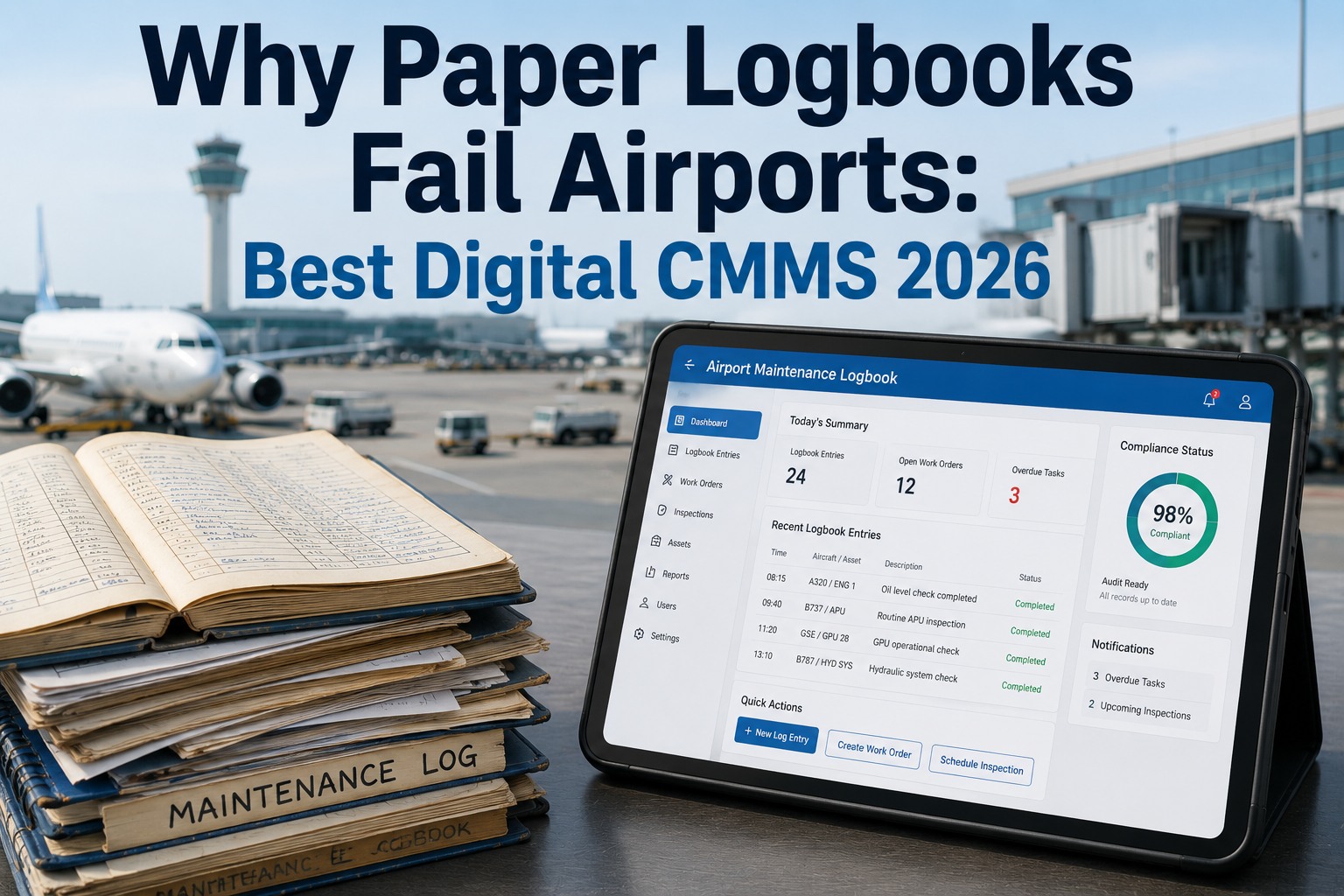
Paper Logbooks
15-20 minute handover meetings
Information lost to illegible writing
Manual search through binders
No real-time visibility for managers
Compliance gaps during audits
VS
Digital Logbooks
3-minute structured handovers
AI-generated shift summaries
Instant search across all entries
Real-time dashboards for all shifts
Audit-ready documentation always
How Digital Shift Logbooks Transform Airport Operations
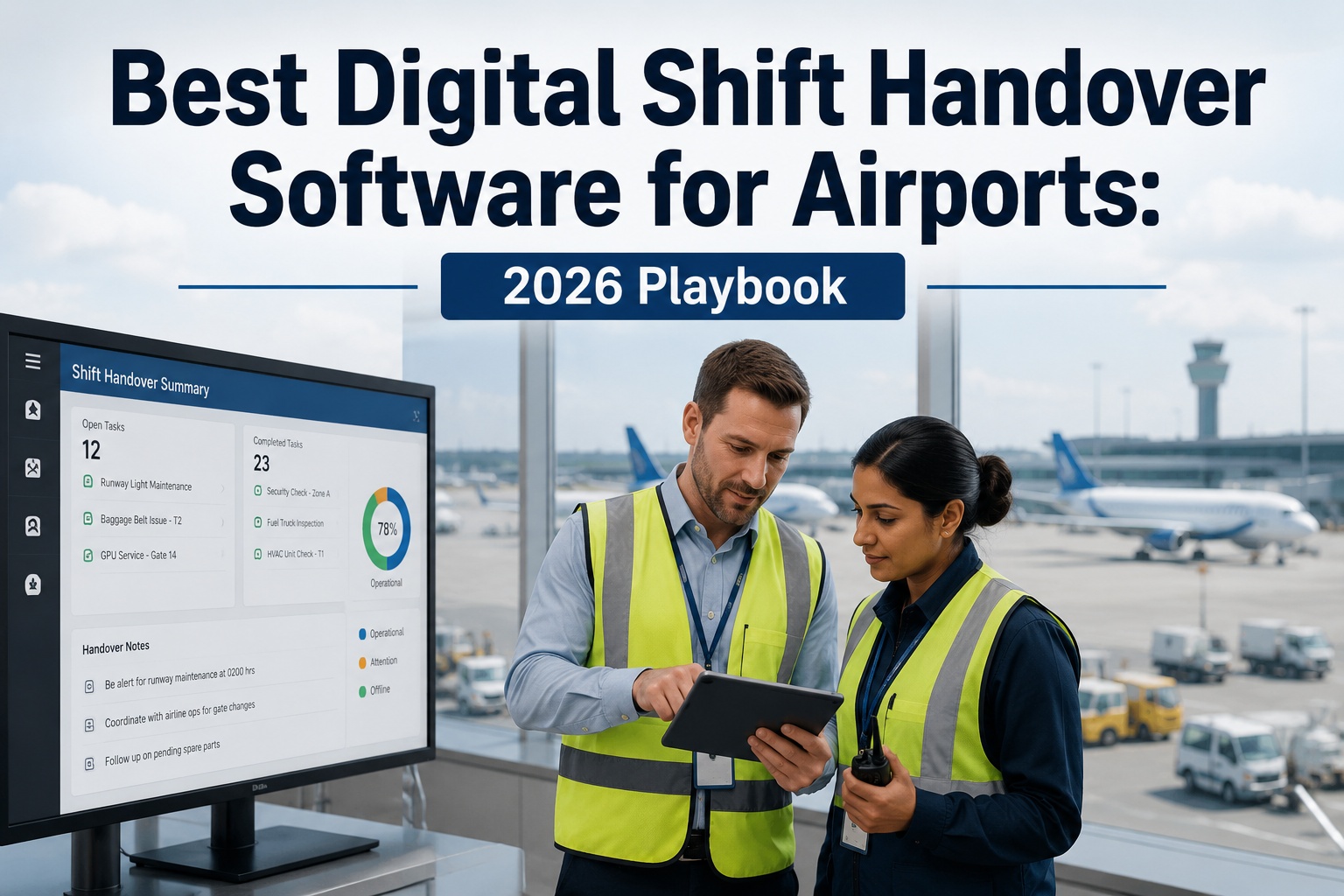
Digital shift logbooks replace scattered paper trails with a centralized platform where every operational event, incident, and handover note is captured in real-time. Instead of deciphering handwritten scrawls or chasing down the previous shift supervisor, incoming teams access structured digital records that provide instant situational awareness. The airport digital transformation market reached $6.8 billion in 2024 and is projected to grow at 16.2% CAGR through 2033, driven largely by the need for seamless operational coordination. AI-powered summaries highlight critical issues, open tasks carry forward automatically, and every entry is time-stamped with full accountability. Airport teams ready to modernize their shift communication can start their digital transformation today and experience the difference within their first shift change.
Digital Shift Logbook Capabilities
Structured Handover Templates
Pre-built forms ensure every critical category is covered—equipment status, open issues, safety notes, pending tasks
Management dashboards show live shift activity across all terminals, enabling proactive decision-making
Mobile & Offline Access
Field teams log entries on tablets or phones—even without connectivity—with automatic sync when online
The Shift Handover Workflow: Before and After
The transformation from paper to digital isn't just about technology—it's about fundamentally changing how information flows between teams. With digital shift logbooks, outgoing supervisors complete structured entries throughout their shift, not just in a rushed final handover. Incoming teams review AI-generated summaries before they even arrive, hitting the ground running with full situational awareness. Open issues carry forward with clear ownership, and nothing falls through the cracks between shifts.
Digital Handover in Action
From shift start to seamless transition
Throughout Shift
1
Log Events in Real-Time
Equipment issues, incidents, observations captured as they happen—not reconstructed at shift end
30 Min Before
2
AI Generates Summary
System auto-compiles shift highlights, critical issues, and pending actions into concise report
Shift Change
3
Incoming Team Reviews
New shift acknowledges handover digitally—creating audit trail and confirming information transfer
Ongoing
4
Open Items Carry Forward
Unresolved issues automatically transfer to next shift with full context and ownership
Ready to Eliminate Shift Handover Gaps?
See how digital logbooks cut handover time from 15+ minutes to under 3 minutes while ensuring nothing falls through the cracks.
The shift handover is the most vulnerable moment in any 24/7 operation. Unlike other high-risk activities that can be automated or engineered out, handovers rely entirely on human communication. Research from the process industry shows that every second incident or accident is related to communication errors that occurred during shift handovers. Digital logbooks don't just digitize paper—they fundamentally restructure how critical information transfers between teams, ensuring that verbal context becomes documented accountability and scattered notes become searchable operational intelligence.
Operational Continuity
AI summaries ensure incoming teams understand context immediately, eliminating the "what did last shift mean by this?" confusion.
Audit Readiness
Time-stamped, searchable records replace binders of handwritten notes—compliance teams can retrieve any entry in seconds.
Accountability Chain
Digital acknowledgments create clear documentation of who knew what and when—critical for incident investigations.
Airport operations teams implementing digital shift logbooks consistently report dramatic improvements in handover efficiency and information retention. The 3-minute average digital handover replaces 15+ minute paper-based processes, while real-time visibility enables management to monitor all shifts and sites simultaneously. With the airport operation control centers market projected to reach $6.38 billion by 2032, the investment in digital coordination tools is becoming essential for competitive operations. Teams that create their free account today typically see ROI within 4-6 months through time savings and reduced errors alone—before counting the value of prevented incidents and improved compliance posture.
Key Benefits for Airport Operations Teams
80%
Faster Handovers
3-minute digital vs 15+ minute paper process
100%
Audit Trail
Every entry time-stamped and searchable
Zero
Lost Information
Open issues carry forward automatically
24/7
Visibility
Real-time dashboards for all shifts
The Financial Case for Digital Logbooks
$60B+
Annual cost of flight disruptions globally
4-6 mo
Typical ROI timeline for digital implementation
78%
Of international airports using automation by 2025
For airport operations centers managing complex 24/7 environments, the transition from paper to digital shift logbooks represents more than an efficiency upgrade—it's a fundamental shift toward operational excellence. When every shift change transfers complete, accurate, and actionable information, the cascading effects of miscommunication disappear. Delays decrease. Safety improves. Compliance becomes effortless. And operations teams finally have the visibility they need to manage proactively rather than reactively. Ready to see how it works? Schedule a personalized walkthrough to watch the complete digital handover workflow in action.
Transform Your Airport's Shift Operations
Join forward-thinking airports using digital shift logbooks to eliminate paper chaos and ensure operational continuity across every shift change.
What is a digital shift logbook and how does it work for airports?
A digital shift logbook is a centralized platform where airport operations teams record events, incidents, equipment status, and handover notes in real-time throughout their shifts. Unlike paper logbooks, digital versions offer structured templates, automatic time-stamping, searchable archives, and AI-powered summaries that compile critical information for incoming shifts. The system ensures nothing gets lost between shifts by automatically carrying forward open issues and creating clear accountability trails for every entry.
How much time does a digital shift handover actually save?
Most airport operations teams report reducing handover time from 15-20 minutes with paper processes to approximately 3 minutes with digital logbooks. This dramatic reduction comes from AI-generated summaries that compile shift highlights automatically, structured templates that ensure consistent information capture, and the ability for incoming teams to review handover reports before arriving. Over a year of shift changes, this time savings translates to hundreds of hours recovered for actual operations work.
Can digital logbooks work offline for field operations?
Yes. Modern digital shift logbooks are designed for airport environments where connectivity may be intermittent. Field teams can log entries on tablets or mobile devices even without internet access—entries are stored locally and automatically sync to the central system when connectivity is restored. This ensures that ramp operations, runway inspections, and terminal walkthroughs can all be documented in real-time regardless of network availability.
How do digital logbooks help with regulatory compliance?
Digital shift logbooks create comprehensive audit trails with time-stamped entries, digital acknowledgments, and searchable archives. During regulatory audits or incident investigations, compliance teams can instantly retrieve any entry based on date, shift, equipment ID, or issue type—eliminating the hours typically spent searching through paper binders. The system also embeds standard operating procedures into workflows, ensuring that required checks and documentation are consistently completed.
What ROI can airports expect from implementing digital shift logbooks?
Most facilities see positive ROI within 4-6 months through direct time savings and improved operational efficiency. The 80% reduction in handover time, elimination of information loss between shifts, and decreased incident rates from better communication all contribute to measurable returns. With aircraft delay costs averaging $100.76 per minute for U.S. airlines, even preventing a single delay cascade through better shift communication can justify significant investment in digital coordination tools.