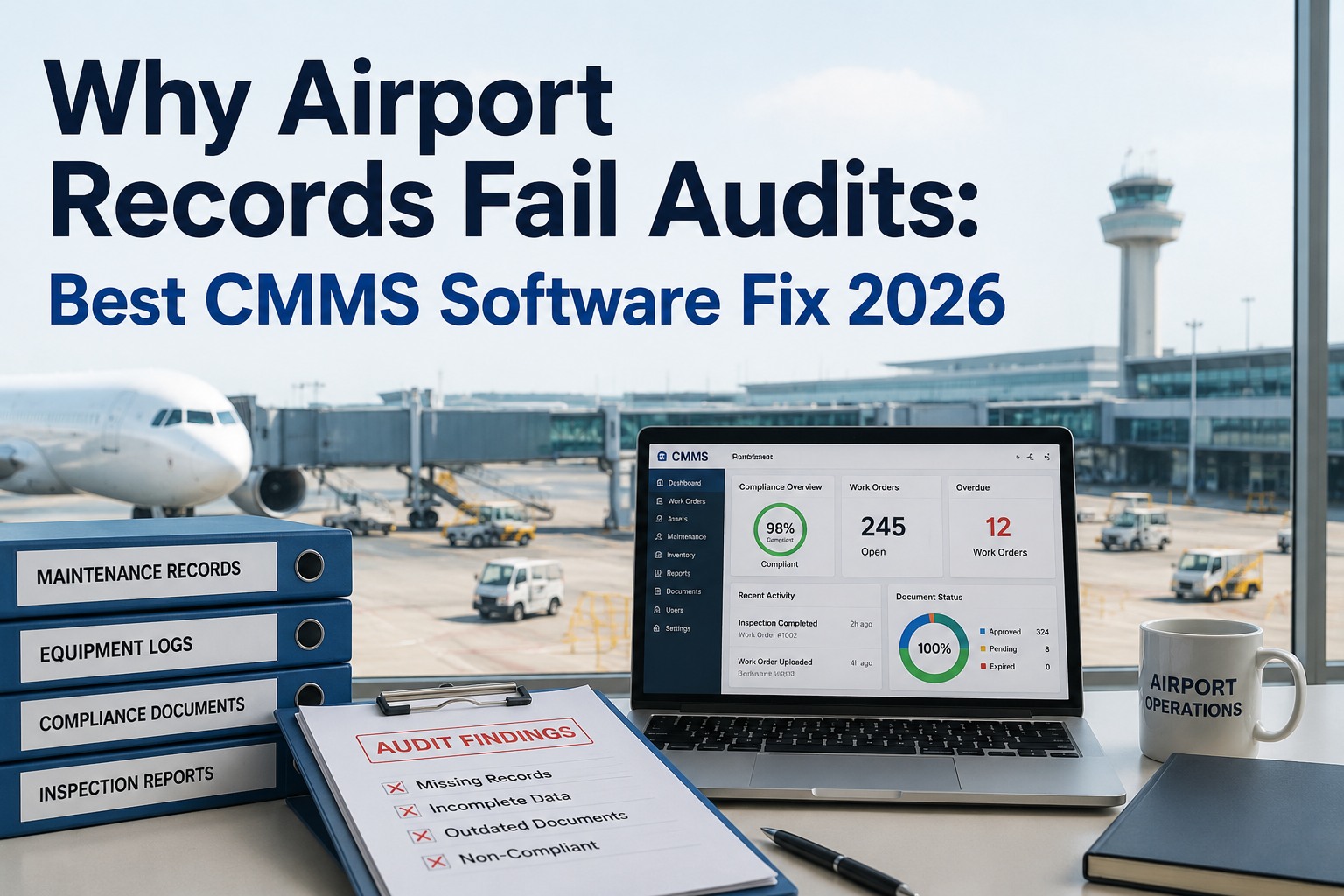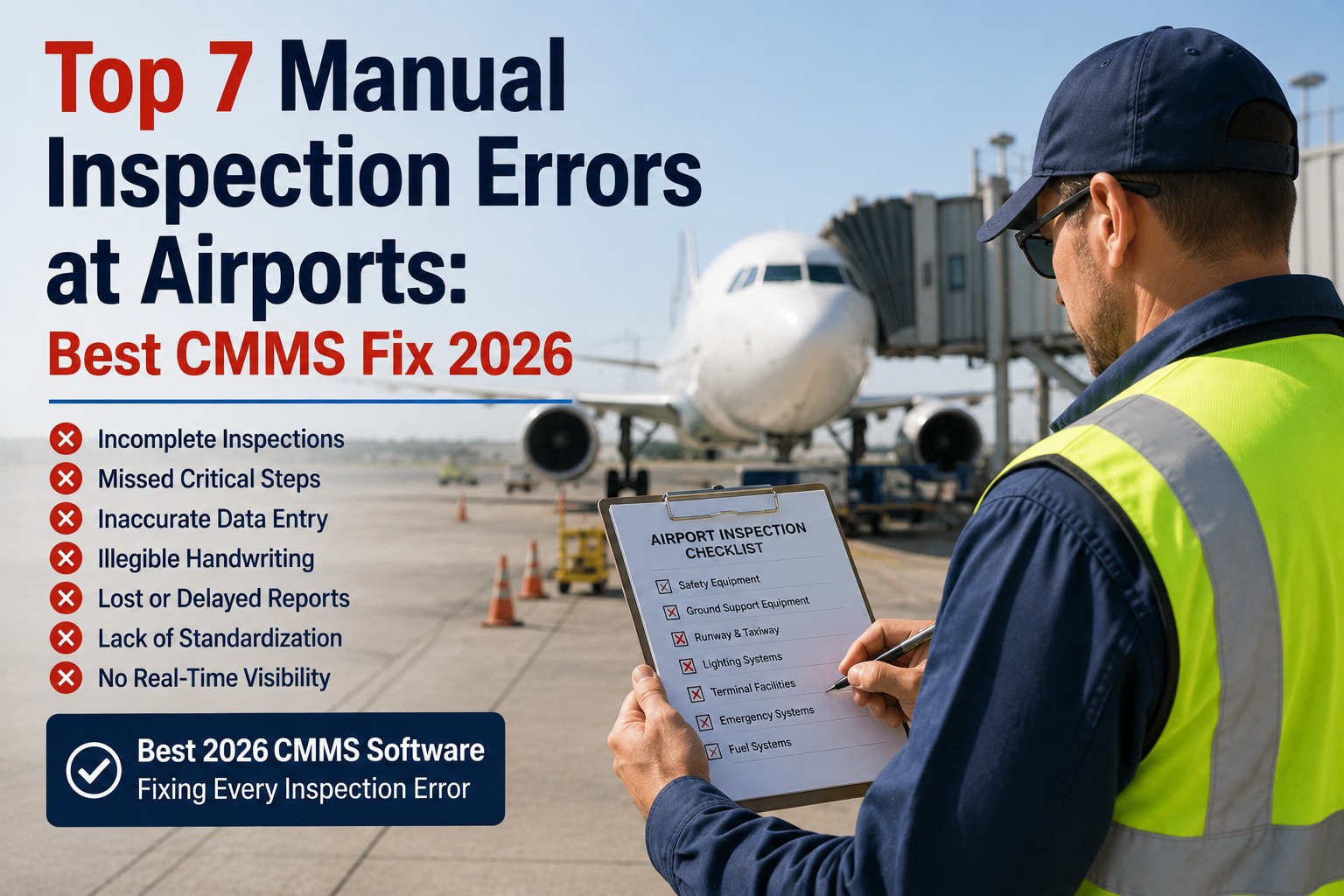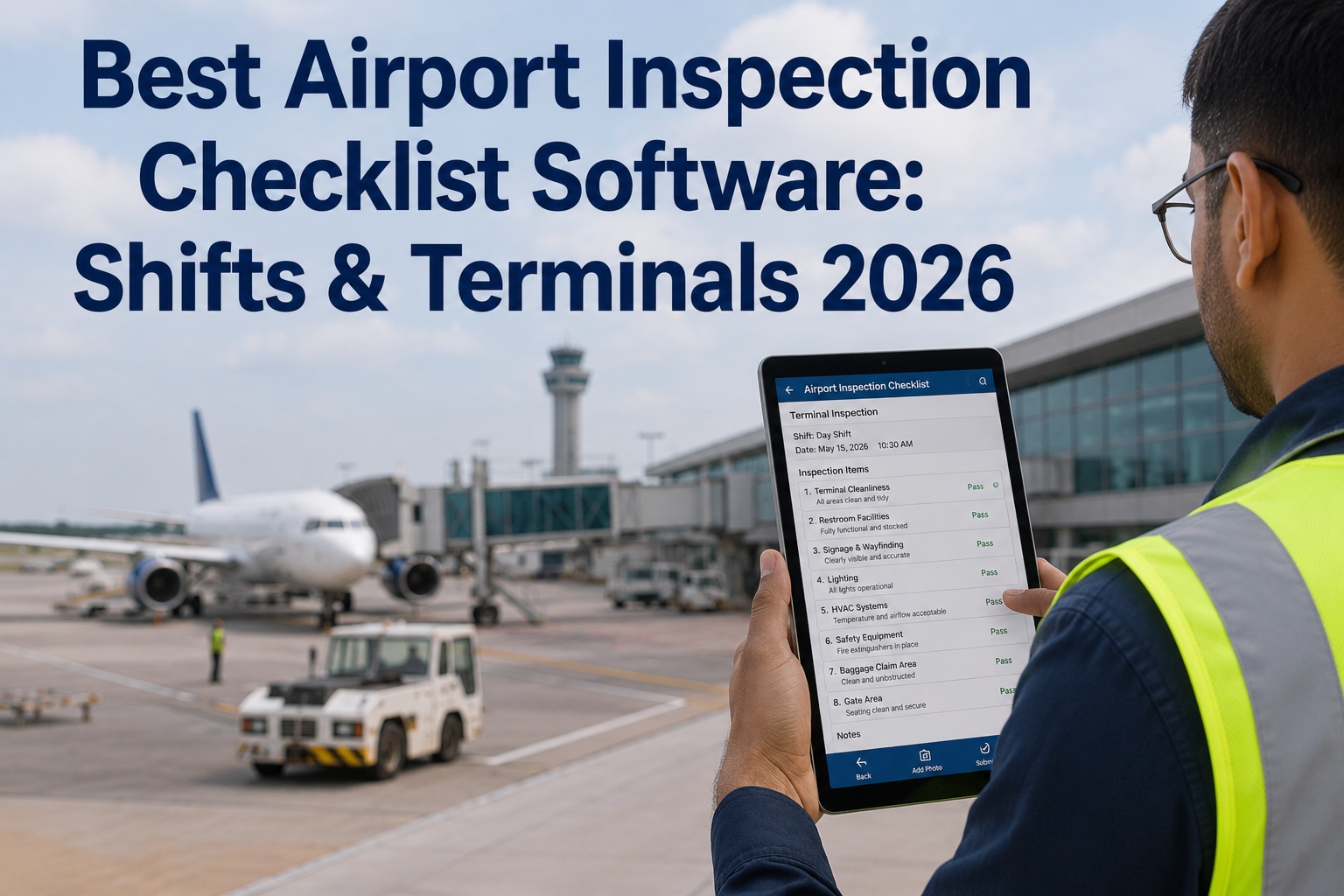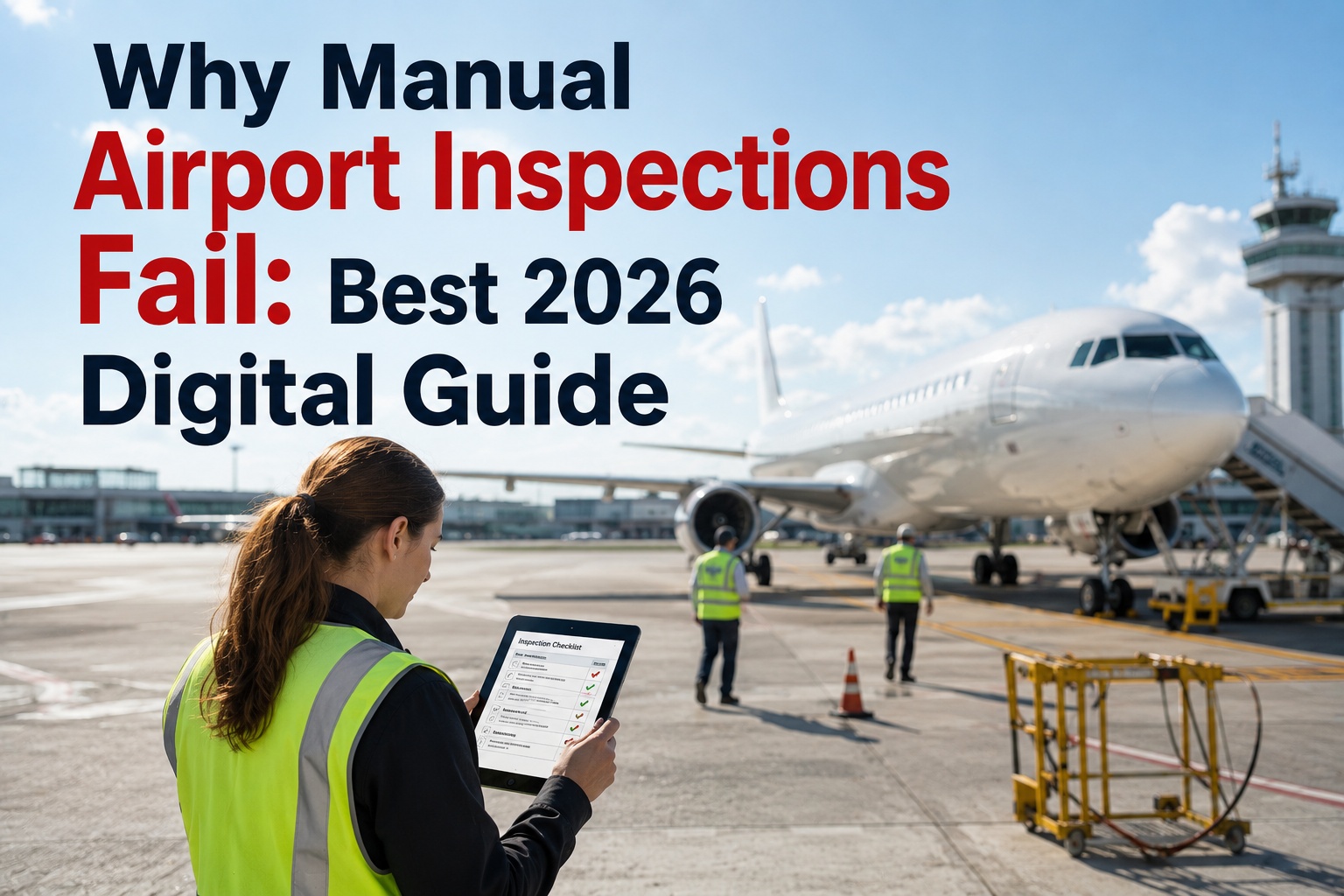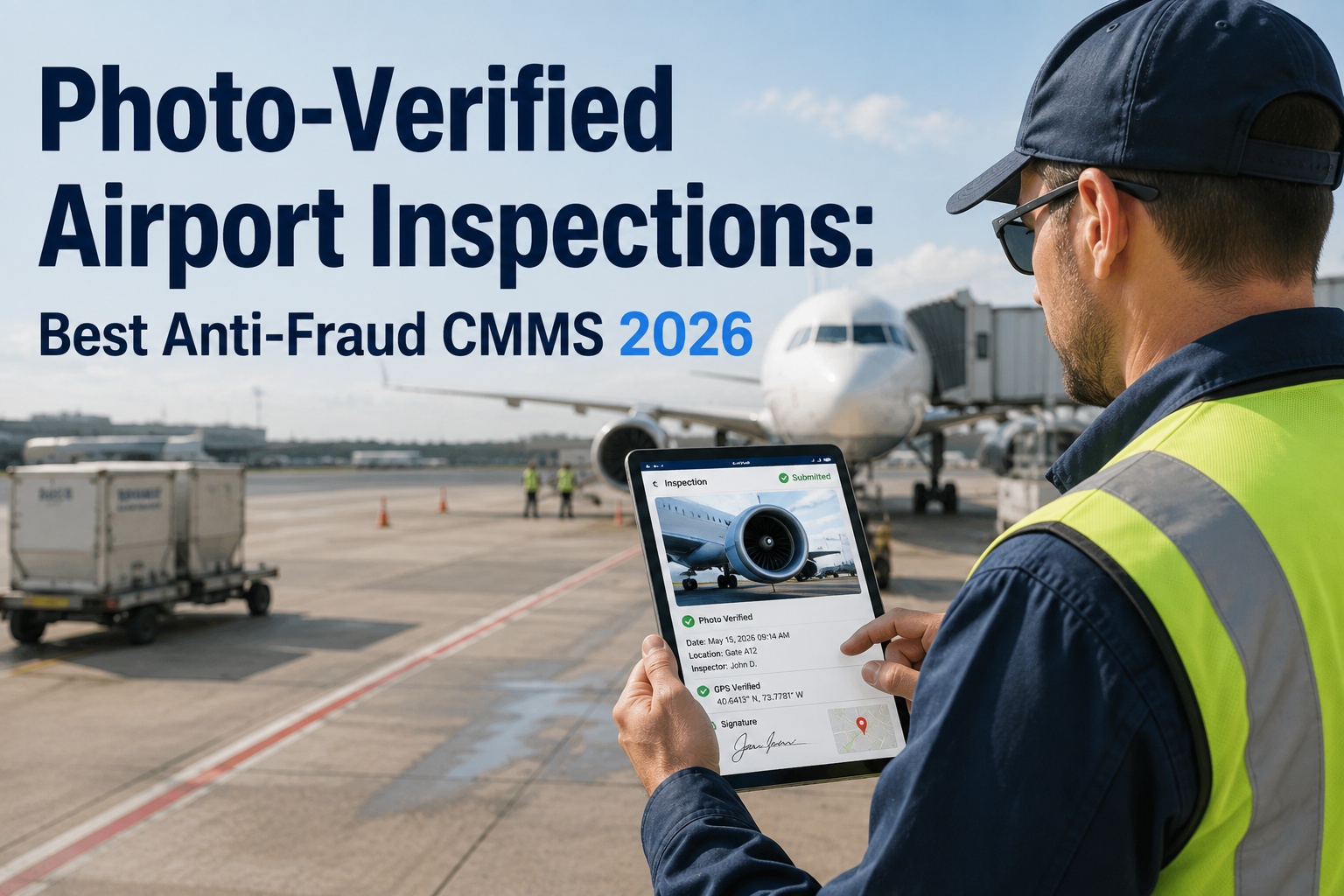
Inspector sign-off fraud — the industry calls it "pencil-whipping" — is the airport safety failure that never announces itself. A ramp inspector who clocks a completed FOD walk without leaving the vehicle. A lighting technician who signs off six approach lights without checking that the bulbs are lit. A perimeter fence walk logged as complete on a device sitting in the break room. None of it shows up until a NOTAM has to be issued, a Letter of Correction lands, or an event forces the audit trail into a courtroom. As of February 2026, the FAA revised its Airport Certification Manual guidance to replace Part 139.115 falsification requirements with 14 CFR Part 3, Subpart D — tightening the falsification rule for airport records at exactly the moment paper clipboards are their most exposed. The best 2026 anti-fraud CMMS closes this gap with mandatory GPS coordinates, timestamped photo evidence per inspection point, and per-technician sign-off that cannot be spoofed from a break-room desk. Start free and put photo-verified inspections on every airfield route this week, or book a demo mapped to your Part 139 self-inspection schedule and TSA perimeter routes.
Aviation · FAA Part 139 · TSA 49 CFR 1542 · 2026 Buyers Guide
Photo-Verified Airport Inspections: Best Anti-Fraud CMMS 2026
The evaluation criteria, the vendor capabilities that separate audit-grade platforms from paperwork wrappers, and the 2026 regulatory context — 14 CFR Part 3 Subpart D falsification tightening, FAA Advisory Circular guidance, TSA Airport Security Program documentation. Everything an airport authority needs to pick a CMMS that survives an unannounced FAA visit.
-
Feb 2026
FAA revised ACM to replace Part 139.115 with 14 CFR Part 3, Subpart D falsification rule
-
12 mo
minimum record retention under FAA Part 139.301 — 3 years recommended
-
60%
faster audit response for airports using CMMS-based inspection programs
-
< 10 min
to produce complete compliance reports filterable by date, asset, or regulation
The Fraud Surface
Five Ways Paper Inspections Get Falsified — and How Digital Closes Each
Sign-off fraud is rarely one big lie. It is a chain of small shortcuts that a clipboard cannot detect and a CMMS with real anti-fraud controls stops at each step. This is the working map — the shortcut, the risk it creates for the airport, and the specific digital control that closes it.
"Windshield" Inspection
Inspector logs the FOD walk without leaving the vehicle. Real defects go unseen.
Digital control: mandatory GPS coordinates per inspection point plus a required walking-pace track between points.
Backdated Sign-Off
Missed inspection completed on paper after the fact with a plausible timestamp.
Digital control: tamper-proof server timestamps on every field submission; no user-editable date.
"OK" Without Evidence
Every item marked pass with no supporting photo or reading — undetectable at audit.
Digital control: mandatory photo capture on every high-risk inspection point; missing photo blocks work-order closure.
Re-Used Old Photos
Same "pass" photo of a light bar submitted week after week.
Digital control: in-app camera only (no gallery upload), EXIF timestamp and GPS baked into every image.
Shared Sign-Off
One inspector's ID used across a team's routes — no personal accountability chain.
Digital control: per-user authentication, biometric or SSO, plus device fingerprint per submission.
2026 Evaluation Scorecard
Ten Anti-Fraud Capabilities Every Airport CMMS Must Score On
Buyers-guide checklists that focus on generic CMMS features miss what actually matters for airport inspection integrity. This is the anti-fraud scorecard — the ten capabilities that separate a platform that survives an FAA inspection from one that collapses under it. Score each vendor against these before buying.
- 01
Mandatory in-app photo capture
No gallery uploads. Camera opens inside the app; EXIF timestamp and GPS baked in.
- 02
GPS coordinates on every submission
Latitude and longitude of the submitting device stored per inspection point, not per route.
- 03
Tamper-proof server timestamps
Client clock never trusted; server sets the record time on receipt, no user editing.
- 04
Per-user authentication
Individual sign-in with biometric or SSO. No shared kiosk accounts across a team.
- 05
Mandatory fields that block closure
Reading, photo, or note fields configurable as required — work order cannot close if empty.
- 06
Auto work-order on defect
Any "fail" answer generates a corrective work order with owner, due date, and Part 139 citation.
- 07
Offline capture with sync integrity
Works in ramp dead-zones; sync preserves original capture time, does not stamp upload time.
- 08
Immutable audit log
Every edit, override, and reopen recorded with user, before-value, after-value, and reason.
- 09
Filter-by-date compliance export
Complete inspection package for any date range or asset produced in under 10 minutes.
- 10
3-year retention with legal hold
Retention aligned to FAA guidance and TSA ASP requirements; legal hold on any record under review.
Vendor Capability Comparison
Paper vs Generic CMMS vs Airport-Ready Anti-Fraud CMMS
Three tiers dominate the current market. Paper clipboards cannot enforce anti-fraud controls at all. Generic CMMS platforms handle work orders but rarely bake in the airport-specific controls that Part 139 and TSA 1542 evidence packs actually require. An airport-ready anti-fraud CMMS scores on every row of the matrix below.
| Capability | Paper Clipboard | Generic CMMS | Anti-Fraud CMMS (Oxmaint) |
|---|---|---|---|
| Mandatory in-app photo | Not possible | Often gallery upload | In-app camera only, EXIF preserved |
| GPS on every submission | None | Route-level only | Per-inspection-point |
| Tamper-proof timestamps | Manually written | Client clock trusted | Server-set on receipt |
| Per-user auth & device fingerprint | Shared clipboard | Shared kiosk accounts common | SSO or biometric per user |
| Auto WO on defect | Handwritten note | Manual creation | Auto with Part 139 citation |
| Offline sync integrity | N/A | Timestamps upload time | Preserves capture time |
| Immutable edit log | Whiteout / rewrite | Silent edits common | Full before/after audit trail |
| Under-10-min compliance export | Days of assembly | Custom-report writing | Filter and export in minutes |
The Regulatory Anchor
What Part 139, TSA 1542, and 14 CFR Part 3 Actually Require
A CMMS is only "anti-fraud" if the evidence it produces satisfies the actual regulation. Below is the working map of the four regulatory sources every US airport authority must serve, and what each one asks the CMMS to deliver.
Self-Inspection Program
Daily and continuous self-inspections of the airport operating area, with documented findings and corrective actions. FAA Advisory Circulars provide acceptable methods and procedures.
CMMS delivers: daily route generation, timestamped photo evidence, auto corrective actions
Record Retention
Minimum 12 consecutive calendar months retention. FAA program guidance and most Airport Certification Manuals recommend at least 3 years to support certification renewals and incident investigations.
CMMS delivers: configurable retention with legal-hold on records under investigation
Falsification (Feb 2026)
The FAA revised the Sample Airport Certification Manual in February 2026 to replace Part 139.115 falsification requirements with 14 CFR Part 3, Subpart D — tightening the record-integrity rule.
CMMS delivers: tamper-proof server timestamps, immutable audit log, per-user attribution
Airport Security Program
Commercial airports must maintain an ASP that includes documented inspection of all perimeter security elements — fencing, gates, CCTV, access control. Verbal assurances do not satisfy the rule.
CMMS delivers: GPS-tagged fence-line walks, gate cycle logs, timestamped photo evidence per zone
The Cost of a Windshield Inspection
Deficiencies Affecting Safety Must Be Corrected Before the Area Reopens — Or a NOTAM Issued
FOD on a runway, a missing holding position sign, a failed approach light bar — any of these found late means the area cannot reopen without a restricting NOTAM. An inspection that missed the defect the first time is why late-discovery happens, and it is exactly the failure mode a photo-verified digital walk prevents. Oxmaint puts a mandatory in-app camera and GPS-tagged coordinate on every high-risk inspection point so the defect surfaces on the walk, not on the incident report.
The Photo-Verified Route
What a Fraud-Proof Airport Inspection Actually Looks Like
Below is the exact digital execution model an airport-ready CMMS runs against every scheduled inspection. Every step is enforced by the app, not by the honour system — which is why the resulting record survives an FAA inspection instead of collapsing under it.
-
01
Scheduled Route Dispatched
Daily route auto-generated per Part 139 self-inspection program. Assigned to a specific technician's device by user ID.
-
02
Per-Point GPS Arrival
Technician arrives at inspection point; app captures device GPS and confirms geofence match before enabling the checklist.
-
03
In-App Photo Capture
Mandatory photo taken from the in-app camera. EXIF timestamp and GPS baked into the file; no gallery upload path.
-
04
Pass / Fail with Evidence
Fail on any item — FOD, damaged sign, failed light — auto-generates a corrective work order with the Part 139 citation attached.
-
05
Server-Timestamped Sign-Off
Route closed with per-user authentication. Server sets the timestamp on receipt; client clock never trusted.
-
06
Immutable Audit Record
Any later edit, override, or reopen recorded with user, before/after values, and reason. The chain is retrievable in seconds.
Built for Airports
How Oxmaint Scores on Every Anti-Fraud Row
-
In-App Camera Only
EXIF Timestamp and GPS Baked Into Every Image
No gallery upload path. The photo cannot be re-used, back-dated, or captured from a break room. The image itself carries the anti-fraud evidence.
-
Per-Point GPS
Coordinate Stored Against Every Inspection Item
Not route-level, not check-in — the exact latitude and longitude of the submitting device stored with each individual inspection point.
-
Server Timestamps
Client Clock Never Trusted for Record Time
Server-set on receipt. Offline captures preserve original capture time on sync; user cannot edit the date. Directly addresses the 14 CFR Part 3 Subpart D falsification rule.
-
Immutable Log
Every Edit, Override, and Reopen Recorded
Full before/after audit trail per record with user, timestamp, and required reason. Silent edits — the primary paper-CMMS failure — are impossible.
-
Auto CAPA
Any Fail Becomes a Work Order With Part 139 Citation
Corrective action fires the moment the fail is submitted, routed to the responsible owner with severity and due date. Deficiencies affecting safety flagged for immediate closure or NOTAM.
-
10-Minute Export
Filter by Date, Asset, or Regulation and Export
Complete FAA and TSA audit packages produced in under 10 minutes — technician signatures, GPS coordinates, and photo evidence included. No manual assembly.
Measured Outcomes
What Airport Operations Teams Gain With Photo-Verified Inspections
-
Zero
Un-Evidenced "Pass" Records
Mandatory in-app photo capture on high-risk points means no inspection closes without visual evidence — the primary fraud vector for pencil-whipping is closed.
-
60%
Faster FAA / TSA Audit Response
Airports on digital CMMS-based inspection programs complete audits 60% faster with zero documentation gaps versus paper.
-
< 10 min
Audit Package Export Time
Filter by date range, asset class, or Part 139 citation and export a complete PDF pack — technician signatures, GPS, photos, corrective actions.
-
$0
Free Forever Plan to Start
Airport operations teams start on the free plan, digitise a core self-inspection route library, and scale into the full platform as scope grows.
Frequently Asked
Photo-Verified Airport Inspection Questions
What is the FAA falsification rule change in effect for 2026?
The FAA revised the Sample Airport Certification Manual in February 2026 to replace Part 139.115 falsification requirements with 14 CFR Part 3, Subpart D. The change tightens the record-integrity rule that airport inspection evidence must satisfy — server-timestamped, per-user-attributed digital records now materially outperform paper for defensibility. Start free and stand up 14 CFR Part 3 aligned inspection records today.
Why does in-app camera capture matter more than gallery upload?
Because a gallery upload lets an inspector select an old photo, or one taken from anywhere. An in-app camera enforces that the image was captured live, on device, at the moment of the inspection — with EXIF timestamp and GPS baked in and no editing path. That is the difference between photo evidence and photo theatre.
How long must airport inspection records be retained?
FAA Part 139.301 requires a minimum of 12 consecutive calendar months. FAA program guidance and most Airport Certification Manuals recommend at least 3 years to support certification renewals, insurance audits, and incident investigations. Oxmaint's retention is configurable to align, with legal-hold for records under review. Book a demo to see retention and legal-hold configured for your ACM.
Does the platform work in ramp GPS or Wi-Fi dead zones?
Yes. Inspections work fully offline in the ramp, perimeter, and vault areas — photos, readings, and pass/fail results are captured locally and sync automatically on reconnection. Critically, the app preserves the original capture time; it does not stamp the upload time, so the audit trail stays honest.
Is there a free plan for smaller airport operators?
Yes. Oxmaint offers a free forever plan — enough to digitise a core Part 139 self-inspection route library and TSA perimeter walk, with photo evidence per asset. Scale into the full platform when scope, retention, or multi-terminal rollout expands. Sign up for the free plan and stand up your first photo-verified inspection today.
Photo · GPS · Signature · Time
The Inspector's Sign-Off Is Only as Honest as the Evidence Behind It
The buyers-guide scorecard above is the framework. Oxmaint is the airport-ready anti-fraud CMMS that scores on every row — mandatory in-app photo, per-point GPS, server-set timestamps, immutable audit log, and 10-minute FAA/TSA audit export. Replace clipboards with evidence-grade digital execution before the next unannounced inspection.