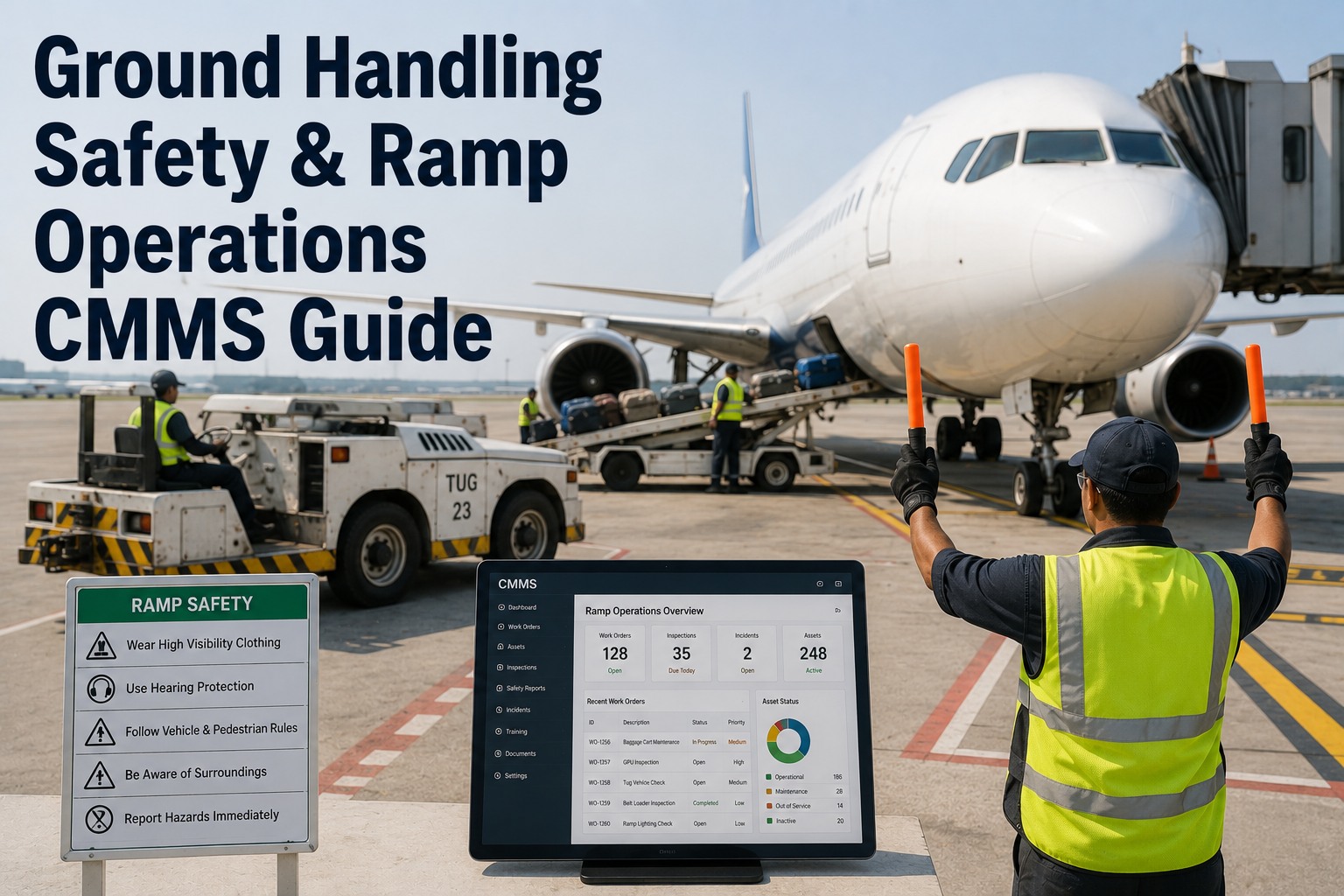
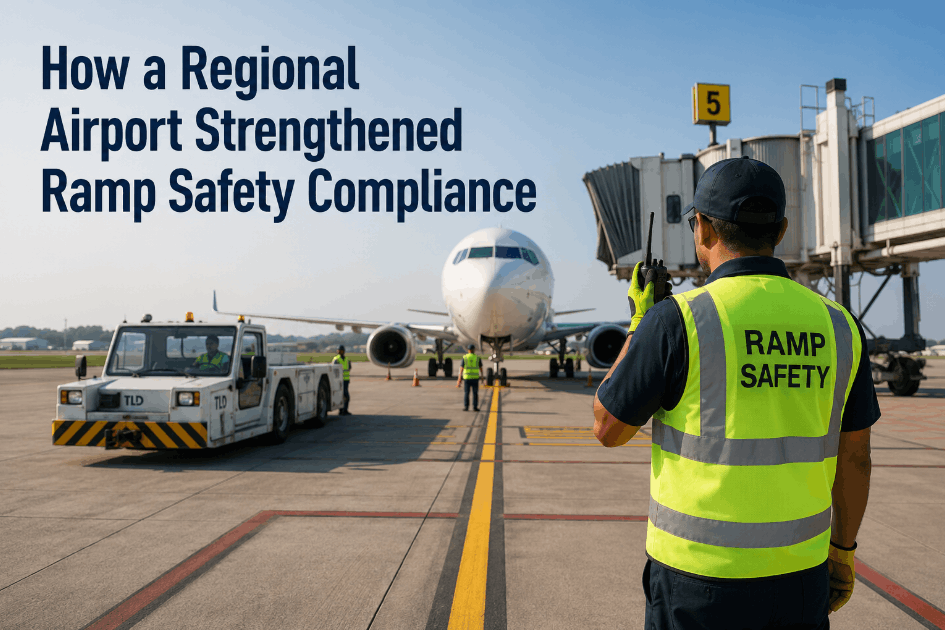
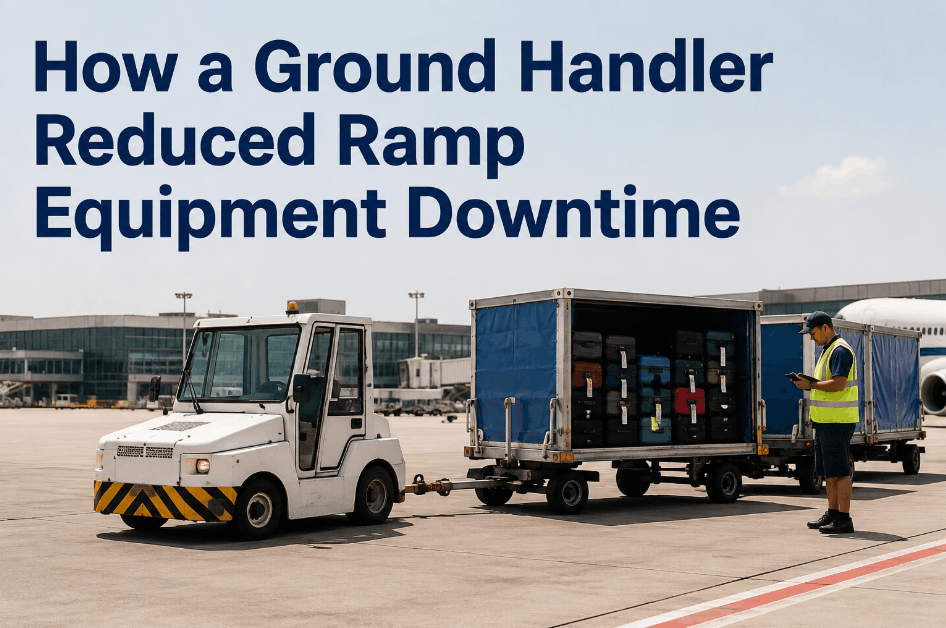
Ramp safety observation programs are only as effective as the corrective action system built behind them. Ground operations teams that collect hazard observations consistently but lack a structured process for tracking corrective closure, identifying repeat hazard patterns, and verifying that controls are in place before the next aircraft movement end up with a safety record that looks active on paper but allows the same risks to recur across shifts and seasons. The gap is not observation volume — it is the absence of a closed-loop system that connects what is seen on the apron to what actually changes in the operational environment. Sign Up Free to see how Oxmaint structures ramp safety observation tracking and corrective action closure for airside ground operations — or Book a Demo with a ground safety specialist.
Ramp Safety · Hazard Observations · Corrective Action Closure
Close Safety Observations Before the Next Aircraft Movement Reopens the Risk
Hazard observation logging, repeat risk pattern analysis, corrective action assignment, and closure verification — Oxmaint gives airside ground operations the safety management structure to convert observations into verified operational controls.
Operations Profile
The Challenge: Safety Observations That Get Filed but Never Drive Operational Change
Ground Safety Environment
Operation TypeAirside ramp operations — mixed aircraft movements, ground support equipment activity, multi-contractor apron environment
Observation Volume80–140 safety observations logged per month across 6 apron zones, 3 gate clusters, 2 cargo areas
TeamRamp agents, GSE operators, safety officers, shift supervisors, airside safety coordinators
Prior TrackingPaper safety log forms, email-based corrective action routing, monthly safety meeting summaries
Oxmaint FeaturesSafety Observation Logging · Hazard Trend Analysis · Corrective Action Assignment · Closure Verification · Repeat Risk Flagging · Audit Trail · Airside Compliance Tracking · Shift Safety Reporting
Baseline Pressure Points
47%
Of logged ramp safety observations had no verifiable corrective action record within 30 days of submission
3.3×
Average repeat observation rate for the same hazard category within 60 days — indicating corrective actions were not effective or not implemented
38%
Of safety findings submitted during audit periods required manual reconstruction of corrective action evidence from email archives and paper logs
Root Cause Analysis
Why Ramp Safety Observations Stop Short of Corrective Closure — and Why Hazards Repeat
A structured review of 90 days of safety observation logs, corrective action records, and audit findings identified four structural gaps driving the disconnect between hazard identification and operational risk reduction. The observation culture was intact — staff were submitting reports at volume. The failures were systemic: no corrective action assignment structure linked to observation records, no repeat hazard flagging that surfaced pattern data to supervisors, no closure verification requirement before findings were considered resolved, and no audit trail connecting safety observations to verifiable operational controls. Sign Up Free to identify your own safety observation closure gaps — or Book a Demo to see how Oxmaint builds closed-loop corrective action tracking into your ramp safety program.
41%
No Corrective Action Assignment Linked to Observation Records
Safety observations were logged and forwarded by email — but corrective action ownership was informal, not linked to the observation record, and not tracked for completion. Findings without named accountability and a tracked due date frequently aged without resolution and were not visible to supervisors outside the original email thread.
28%
No Repeat Hazard Pattern Flagging Across Observation Records
Safety observations were stored individually with no aggregation logic. Supervisors reviewing monthly safety meeting summaries could not identify which hazard categories were recurring without manually reviewing every submission — allowing repeated observations in the same zone or equipment category to accumulate without triggering a targeted response.
20%
No Closure Verification Required Before Findings Were Considered Resolved
Corrective actions were marked complete by the assigned party without a verification step. Safety coordinators had no mechanism to confirm that controls were actually in place on the apron before closing the finding — creating a false closure state that left underlying hazards unaddressed while the observation record showed resolved status.
11%
No Audit Trail Connecting Observations to Verifiable Operational Controls
When regulatory or internal auditors requested corrective action evidence, the connection between observation, assigned action, and verified closure had to be reconstructed manually from email threads and paper logs. The audit trail existed in fragments across communication channels — not as a traceable record linked to the original safety finding.
The Solution
How Oxmaint Closes the Loop Between Ramp Safety Observations and Verified Corrective Action
Oxmaint was deployed across the airside safety program without replacing the observation culture or restructuring the safety officer team. The platform digitized observation logging with structured hazard categorization, introduced corrective action assignment with named ownership and due date tracking linked directly to each observation record, configured repeat hazard flagging that surfaced pattern data to supervisors in real time, and required a verification step before corrective action closure was accepted. Every safety observation — from submission to corrective closure — was captured as a traceable record with a complete audit trail accessible to coordinators and auditors without manual reconstruction. Book a Demo to see how Oxmaint transforms ramp safety observations from filed reports into verified operational risk reductions.
01
Corrective Action Assignment With Named Ownership and Due Date Tracking
Each safety observation triggered a corrective action assignment workflow — capturing a named owner, a defined due date, and action description linked to the original observation record. Open corrective actions were visible to supervisors across all apron zones, with overdue items escalating automatically without requiring a manual follow-up request.
02
Repeat Hazard Pattern Flagging Visible to Supervisors in Real Time
Observation records were aggregated by hazard category, zone, and equipment type — with repeat pattern alerts triggered when the same hazard category recurred within defined thresholds. Supervisors received real-time visibility into which risk categories were accumulating without waiting for monthly safety review meetings to surface the pattern.
03
Closure Verification Step Required Before Safety Finding Resolution
Corrective action closure required a verification confirmation from a safety coordinator or supervisor — separate from the completing party's self-report. The verification step confirmed that controls were in place on the apron before the finding was marked resolved, eliminating the false closure state that had allowed hazards to persist behind a resolved status marker.
04
Complete Audit Trail From Observation Submission to Verified Closure
Every safety observation carried a timestamped record of submission, assignment, corrective action, verification, and closure — accessible to auditors from a single record view. Regulatory and internal audit requests for corrective action evidence were satisfied without manual reconstruction from email archives or paper log searches.
Results at 90 Days
Ramp Safety Observation Performance Metrics Three Months After Deployment
81%
Drop in safety observations without a corrective action record within 30 days of submission
76%
Reduction in repeat hazard observations within 60 days — pattern flagging enabled targeted corrective intervention
94%
Of corrective action closures now require and carry a verified confirmation step before resolution
+66%
Increase in corrective actions closed within defined due date — from 53% to 89% on-time closure rate
100%
Of safety observations carry a complete traceable audit trail — no manual reconstruction required for audit requests
-71%
Reduction in audit preparation time for safety observation corrective action evidence requests
| Metric |
Before Oxmaint |
90 Days After |
Change |
| Observations without corrective action (30-day) |
47% of submissions |
9% of submissions |
-81% |
| Repeat hazard observations (60-day window) |
3.3× recurrence rate |
0.8× recurrence rate |
-76% |
| Closures with verified confirmation |
~18% |
94% |
+76% |
| On-time corrective action closure rate |
53% |
89% |
+66% |
| Audit trail completeness (no reconstruction needed) |
62% of findings |
100% of findings |
Full compliance |
| Audit prep time for safety evidence requests |
Avg 14 hrs |
Avg 4 hrs |
-71% |
Key Business Impact
What Closing Ramp Safety Observation Loops Means for Airside Operations
"The ramp safety programs that fail aren't the ones where people don't care about safety — they're the ones where the system around safety observations doesn't create accountability. You can have a crew that diligently reports every slip, every near-miss, every equipment positioning issue. If those reports go into a log that no one is held responsible for acting on, if there's no structure that flags when the same hazard comes back three times in 60 days, if a corrective action is marked complete by the person who was supposed to fix it with no verification that anything actually changed on the apron — you don't have a safety management system. You have a safety reporting system. Those are not the same thing. The difference is corrective accountability: named ownership, due date tracking, verified closure, and pattern intelligence that prevents the same risk from cycling through your observation log indefinitely. That's what makes a safety observation program into an actual risk reduction program."
Simone Achebe, Airside Safety Management and Ground Operations Risk Specialist
18 years airport ground operations safety · Former airside safety manager, international cargo and passenger hub · Specialist in ramp hazard observation programs, corrective action governance, and regulatory audit preparation
Hazard Accountability · Corrective Closure · Audit Readiness
Replace Filed Safety Reports With Verified Corrective Action Records
Named corrective ownership, due date tracking, repeat hazard pattern flagging, verified closure steps, and complete audit trails — Oxmaint gives airside safety programs the closed-loop structure that converts observations into operational risk reduction.
FAQs
Frequently Asked Questions
How does Oxmaint improve corrective action closure for ramp safety observations?
Oxmaint assigns named ownership and due date tracking to each corrective action linked to its safety observation — with overdue escalation and supervisor visibility replacing the informal email follow-up model that left findings unresolved without accountability.
Can Oxmaint identify repeat hazard patterns across ramp safety observation records?
Yes. Observations are aggregated by hazard category, zone, and equipment type — with repeat pattern alerts triggered when the same hazard recurs within defined thresholds, giving supervisors actionable pattern intelligence without manual log review.
Does Oxmaint require a verification step before safety corrective actions are closed?
Yes. Corrective action closure requires confirmation from a safety coordinator or supervisor separate from the completing party — verifying that controls are in place on the apron before the finding is marked resolved.
Can Oxmaint provide a traceable audit trail for ramp safety corrective action evidence?
Yes. Every observation carries a timestamped record from submission through verified closure — accessible to auditors from a single record view without manual reconstruction from email archives or paper logs.
How quickly does ramp safety corrective action performance improve after deploying Oxmaint?
Named ownership and due date tracking are active from the first observation logged. Repeat pattern flagging produces actionable trend data typically within 30 days of deployment as the observation record builds.
Every Verified Closure Is a Risk Removed From the Apron
Give Your Ramp Safety Program the Corrective Action Structure It Needs
Oxmaint brings structured observation logging, corrective action accountability, repeat hazard pattern intelligence, verified closure workflows, and complete audit trails to airside ground safety programs — with no additional safety headcount required.