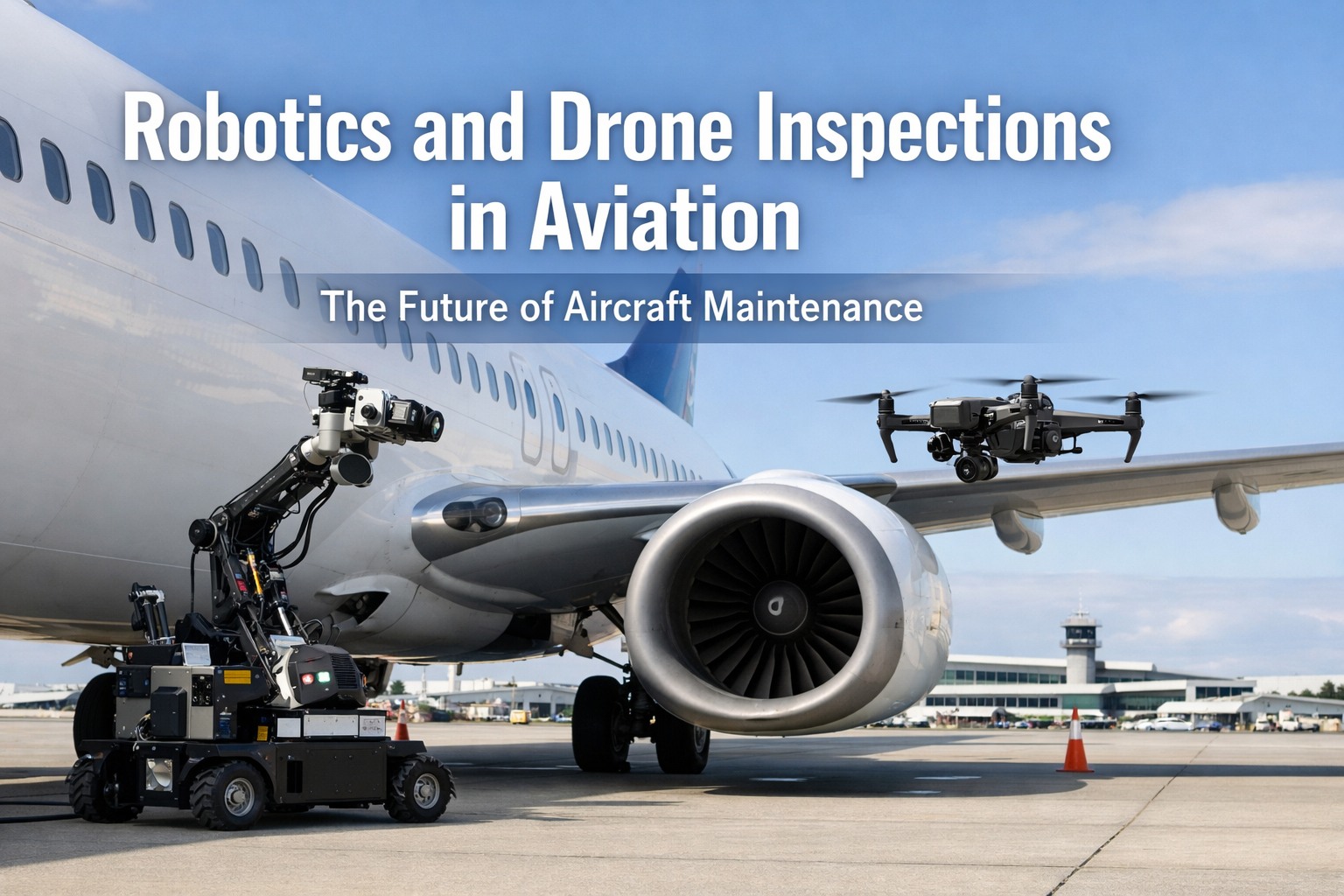
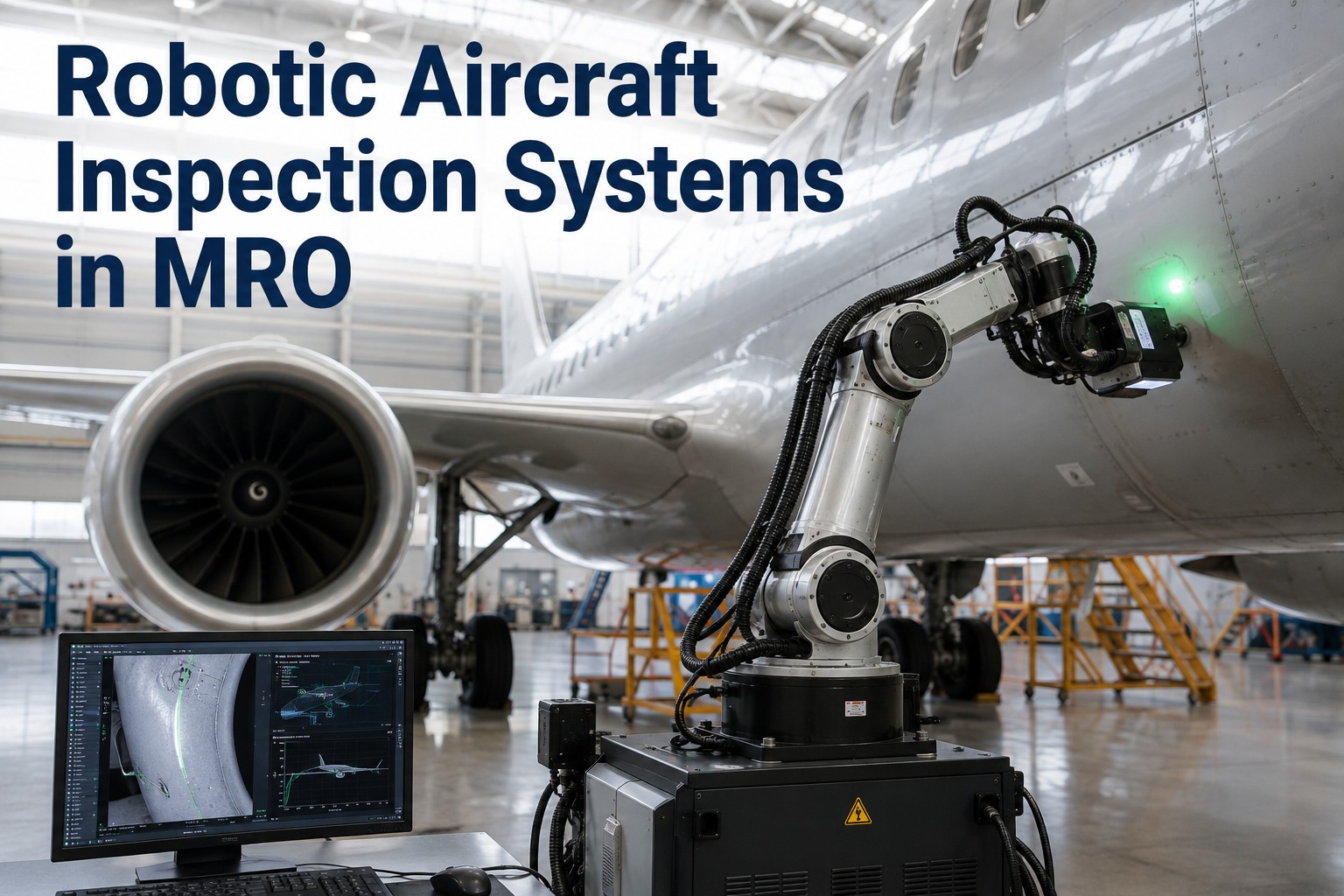
For decades, aircraft inspection has meant a technician on scaffolding with a flashlight—scanning thousands of square feet of fuselage at heights of 20 meters, for hours on end. That era is ending. Drones now photograph entire narrowbody aircraft in under 90 minutes. Robotic crawlers detect subsurface cracks invisible to the naked eye. AI processes hundreds of inspection images while a human reviewer is still on the first dozen. In 2025, major OEMs, airlines, and regulators are not just testing these technologies—they are certifying them for production use. Schedule a demo to see how OXmaint connects robotic inspection findings to digital maintenance workflows.
Why the Industry Is Moving Beyond Manual Inspection
Manual visual inspection is not going away, but it is reaching fundamental limits. The aviation MRO market hit $84.2 billion in 2025 and is projected to reach $134.7 billion by 2034. At this scale, the constraints of human-only inspection create bottlenecks that ripple across global fleet operations.
89%
MRO workforce reduction in Western Europe during COVID—the recovery exposed how dependent the industry was on manual labor
17,000+
Aircraft backlog for narrow and widebody deliveries—more planes means more inspections with the same workforce
60%
Reduction in external inspection time reported by major airlines using drone-based inspection systems
Sources: Research and Markets, Aviation Week, Aerogility MRO Trends 2026
The Technology Landscape: What Is Actually Being Deployed
Robotic inspection is not a single technology. It is an ecosystem of drones, crawlers, fixed systems, and AI processing layers—each solving a different inspection challenge. Here is what is actually flying and crawling in hangars today.
Aerial
Autonomous Inspection Drones
Fully automated drones navigate pre-programmed paths around the aircraft using onboard laser positioning—no GPS, no beacons, no pilot. High-resolution cameras capture every surface including hard-to-reach upper fuselage, wing tops, and tail sections. Flight is 100% automated with collision avoidance and geofencing. Captures images of objects as small as 1mm.
Deployed by: Donecle, Mainblades, Near Earth Autonomy
Swarm
Multi-Drone Swarm Systems
Multiple drones deployed simultaneously with coordinated flight paths, paired with ground rovers and AI hardware. Korean Air's swarm model uses four drones at once, reducing inspection time by 75% compared to a single drone. Built-in redundancy means remaining drones complete the inspection if one malfunctions.
Pioneered by: Korean Air (first in the world for multi-drone aircraft inspection)
Surface
Robotic Crawlers & Wall Climbers
Robots that attach to aircraft surfaces using magnetic adhesion, suction, or vortex technology. Equipped with ultrasonic, eddy current, or thermographic NDT sensors, they detect subsurface cracks, corrosion, and delamination that cameras cannot see. Ideal for fuselage panels, composite structures, and confined spaces.
Used in: Heavy maintenance checks, composite structure inspection, engine nacelle scanning
Internal
AI-Powered Borescope Robots
Miniaturized robotic systems for internal engine and confined-space inspection. AI analyzes borescope video of turbine blades, combustion chambers, and compressor stages in real time. GE Aerospace's AI-enhanced Blade Inspection Tool cut engine inspection duration by 50% while improving defect consistency.
Deployed by: GE Aerospace, Pratt & Whitney (Percept tool on V2500 engines)
Scanning
3D Laser & LiDAR Scanning
Photogrammetry and laser tools capture exact digital models of entire airframe sections. Technicians overlay scanned models with original blueprints to measure deviations down to fractions of a millimeter. Embraer achieved 30% faster damage assessment rates using 3D scanning in 2024.
Used by: Embraer, Airbus Hangar of the Future, major MRO facilities
Speed Comparison: Robotics vs. Manual Inspection
The time savings are not incremental—they are transformational. Here is how robotic inspection systems compare to traditional manual methods across the most common inspection tasks.
| Inspection Task |
Manual Method |
Robotic / Drone Method |
Time Saved |
| Narrowbody Exterior GVI |
4–16 hours |
Under 90 minutes (drone) |
Up to 90% |
| Widebody Exterior GVI |
10+ hours |
4 hours (drone swarm) |
~60% |
| Engine Borescope Analysis |
2–3 hours |
50% faster (AI-enhanced) |
~50% |
| Lightning Strike Inspection |
Hours + scaffolding setup |
30 min drone scan |
80%+ |
| Full Fuselage Scan |
Full shift + cherry pickers |
Under 15 min (autonomous) |
95%+ |
| Structural Damage Assessment |
Manual measurement + paperwork |
3D scan + digital overlay |
30% |
Sources: Delta Air Lines, Korean Air, Donecle, GE Aerospace, Aviation Week, Embraer
The Regulatory Breakthrough: 2025 Is the Tipping Point
For a decade, regulatory approval was the biggest barrier to drone inspection adoption. That barrier is falling. Here is the current state of certifications and approvals that are making production-scale deployment possible.
2024
Delta Air Lines receives FAA authorization
Authorized for drone inspections on its Airbus and Boeing aircraft fleet. Narrowbody scans completed in under 90 minutes vs. 16 hours manually. The airline credits frequent early engagement with regulators as key to approval.
2024
Jet Aviation approved by Swiss FOCA
Authorized for GVI and lightning strike inspections across all aircraft types handled—Airbus, Boeing, Bombardier, Dassault, Embraer, and Gulfstream—making it one of the broadest drone approvals in MRO.
2024–25
OEM maintenance manual inclusion
Airbus approved Donecle and Mainblades drones for A320 family. Boeing incorporated drone inspections into the 737 aircraft maintenance manual. These AMM inclusions are the critical enabler for MRO-wide adoption.
2025
Singapore CAAS authorizes ST Engineering
Authorized for drone-based visual inspections, signaling Asia-Pacific regulatory momentum. Airlines across the region report being fully booked for years and are seeking drone inspections to increase throughput capacity.
2026
Scaling year: production ramp-up expected
Donecle CEO projects all key players will have all key approvals for all aircraft and all tasks. Higher-volume drone production planned throughout 2026 as the technology moves from certification phase to scaling phase.
When drone and robotic inspections find defects, OXmaint ensures every finding becomes a tracked, resolved work order—with annotated images, severity scoring, and audit-ready documentation.
Start Free
Beyond the Drone: How Data Flows from Robot to Technician
A drone can photograph every square centimeter of an aircraft in minutes. But photographs alone do not fix anything. The real operational value depends on how inspection data flows from the robotic system into your maintenance workflows. Without this link, you have expensive photography—not actionable maintenance intelligence.
1
Robot Captures
Drone, crawler, or borescope captures hundreds of high-resolution images. Thermal and NDT sensors add subsurface data. Every image is GPS-tagged to the exact aircraft location.
2
AI Analyzes
Computer vision classifies defects by type and severity. Images are stitched into 3D aircraft models. Findings are compared against digital history to track damage progression over time.
3
CMMS Acts
Prioritized work orders auto-generated with annotated images, location coordinates, severity scores, and SRM references. Assigned to the right technician with parts and compliance docs attached.
4
Loop Closes
Technician completes repair, captures post-repair photos, signs off digitally. Resolution data feeds back into the AI model. Full audit trail locked and exportable for regulatory compliance.
Who Is Deploying at Scale Right Now
These are not lab experiments or conference demos. These are production deployments by major airlines and MRO providers, with regulatory approval and measurable results.
Delta Air Lines
FAA-authorized for drone inspections on Airbus and Boeing fleets. Narrowbody scans in under 90 minutes, widebody in under 2 hours. Deployed drones to inspect multiple aircraft simultaneously after severe storms—something impossible with manual inspection crews.
Korean Air
World's first drone swarm aircraft inspection system. Four drones simultaneously inspect a fuselage, reducing time by 60% vs. manual and 75% vs. single-drone methods. Cameras detect 1mm defects. Planning airport demonstrations in 2027 and third-party service offering.
Airbus Hangar of the Future
Integrated concept combining drones, collaborative robots, sensors, and data analytics with aircraft documentation. Advanced drone can inspect an entire aircraft in 30 minutes. Drones cross-reference images with digital aircraft models to localize anomalies across the full airframe.
Donecle
Only drone provider accepted by both FAA and EASA in aircraft maintenance manuals. 30+ drones operating worldwide. Raised $6M in 2024 to open U.S. subsidiary in Chicago. 100% automated flight with patented laser positioning—no GPS, no pilot, no beacons.
Boeing
Incorporated drone inspections into 737 maintenance manual. Working with Near Earth Autonomy on 5G-connected drone inspections for military aircraft since 2021. Autonomous inspection combined with automatic damage detection software saves 17+ hours per airplane on 737 production lines.
Lufthansa Technik
Rolled out mobile inspection drone system in collaboration with startup Unisphere in January 2025, enabling exterior inspections during night turnaround cycles. Mainblades partnership expanding from Philippines to other global locations.
The Safety Case: Why Robots Protect People
Robotic inspection is not just faster—it fundamentally reduces risks to maintenance personnel and improves inspection quality in ways that directly enhance aircraft safety.
Eliminates work at height—no scaffolding, cherry pickers, or climbs to 20-meter fuselage tops
Removes exposure to confined spaces during internal inspections
Reduces risk of impact damage from ground support equipment used to reach high areas
Enables inspections in adverse weather, nighttime, or post-storm conditions without exposing crew
Consistent image quality regardless of hour, lighting, or inspector fatigue
Detection of 1mm defects that are invisible to the naked eye at inspection distance
Permanent digital records enable damage tracking across the aircraft's entire lifetime
Repeatable, auditable inspection paths eliminate subjective variation between inspectors
What Comes Next: The Smart Hangar Vision
The endgame is not a single drone flying around an aircraft. It is the smart hangar—where drones, crawlers, fixed sensors, and AI work as an integrated system that transforms heavy maintenance from days to hours.
Now
Drone-Assisted Inspection
Drones and robots augment human inspectors. AI flags findings for human review. Regulatory approvals expanding rapidly. Technology scaling from pilot to production use across major airlines and MROs.
2027–30
Integrated Robotic Workflows
Multi-robot coordination: drone swarms, crawlers, and fixed NDT cells working in parallel. AI makes preliminary disposition decisions. Digital twins receive real-time inspection data for lifecycle tracking. Korean Air plans airport demonstrations of swarm technology.
2030+
The Autonomous Smart Hangar
Fully instrumented hangars where robotic systems autonomously inspect, diagnose, and generate work packages. Real-time data feeds predictive models. Human experts focus on complex repairs and engineering decisions while robots handle routine scanning.
Trajectory based on EASA AI Roadmap, Airbus Hangar of the Future, industry deployment timelines
The Robots Find the Defects. OXmaint Makes Sure They Get Fixed.
Connect drone and robotic inspection outputs to digital work orders, mobile technician workflows, parts management, calibration tracking, and audit-ready compliance documentation—in a single cloud-native platform built for aviation maintenance.
Frequently Asked Questions
Are drone inspections approved by FAA and EASA for production use?
Yes. Delta Air Lines received FAA authorization for drone inspections on its Airbus and Boeing fleet. Jet Aviation received Swiss FOCA approval covering all aircraft types. Donecle is listed in both Airbus and Boeing aircraft maintenance manuals with FAA and EASA acceptance. Singapore's CAAS has authorized ST Engineering. Industry experts expect all major players to have comprehensive approvals across all aircraft types by end of 2025, with production-scale deployment ramping through 2026.
How fast can a drone inspect a commercial aircraft?
A single autonomous drone can scan a narrowbody exterior in under 90 minutes and a widebody in under 2 hours. Donecle's autonomous system can complete a full fuselage scan in under 15 minutes. Korean Air's four-drone swarm system reduces widebody visual inspection from 10 hours to 4 hours. These times compare to 4–16 hours for traditional manual inspection with scaffolding and cherry pickers.
Will robotic inspection replace human inspectors?
No. Robots handle the repetitive, fatigue-prone scanning and image capture work. Human inspectors focus on expert judgment, complex diagnosis, and final disposition decisions. Current regulatory frameworks position robotic systems as tools that augment human capability. The EASA AI roadmap does not anticipate fully autonomous inspection decisions without human oversight before 2035 at the earliest. Field staff who can operate the systems and respond to unexpected situations remain essential.
What happens to the inspection data after a drone captures it?
Drone images are processed by AI to detect and classify defects, then stitched into 3D aircraft models for comprehensive damage mapping. Findings need to flow into a CMMS to generate traceable work orders—otherwise the data sits unused. OXmaint automatically converts inspection findings into prioritized work orders with annotated images, technician assignments, and audit-ready documentation.
Book a demo to see this closed-loop workflow.
Can drones inspect aircraft outdoors or only inside hangars?
Both. Most current approvals are for indoor hangar operations, but outdoor authorizations are expanding. Delta has outdoor approval, KLM has outdoor approval in Amsterdam, and cross-border applications are progressing across Europe and Asia. Outdoor inspections are especially valuable for unscheduled checks after storms or lightning strikes, when hangar space may not be available. Approximately 20 airports worldwide currently have outdoor drone inspection authorization.
Ready to Connect Robotic Inspection to Your Maintenance Workflows?
OXmaint gives aviation maintenance teams the digital backbone that makes drone and robotic inspection actionable—from AI-detected defect to completed, auditable work order.