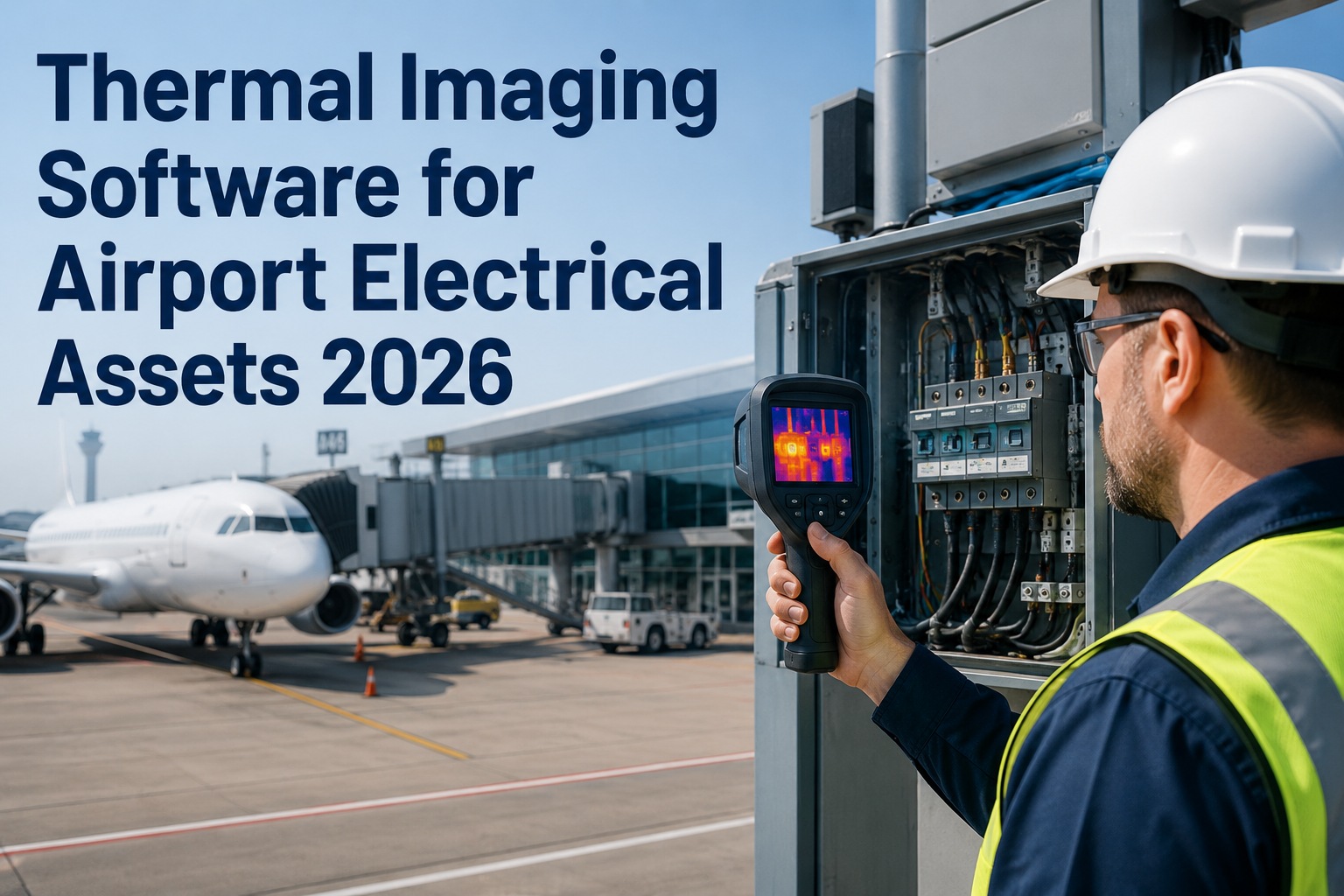
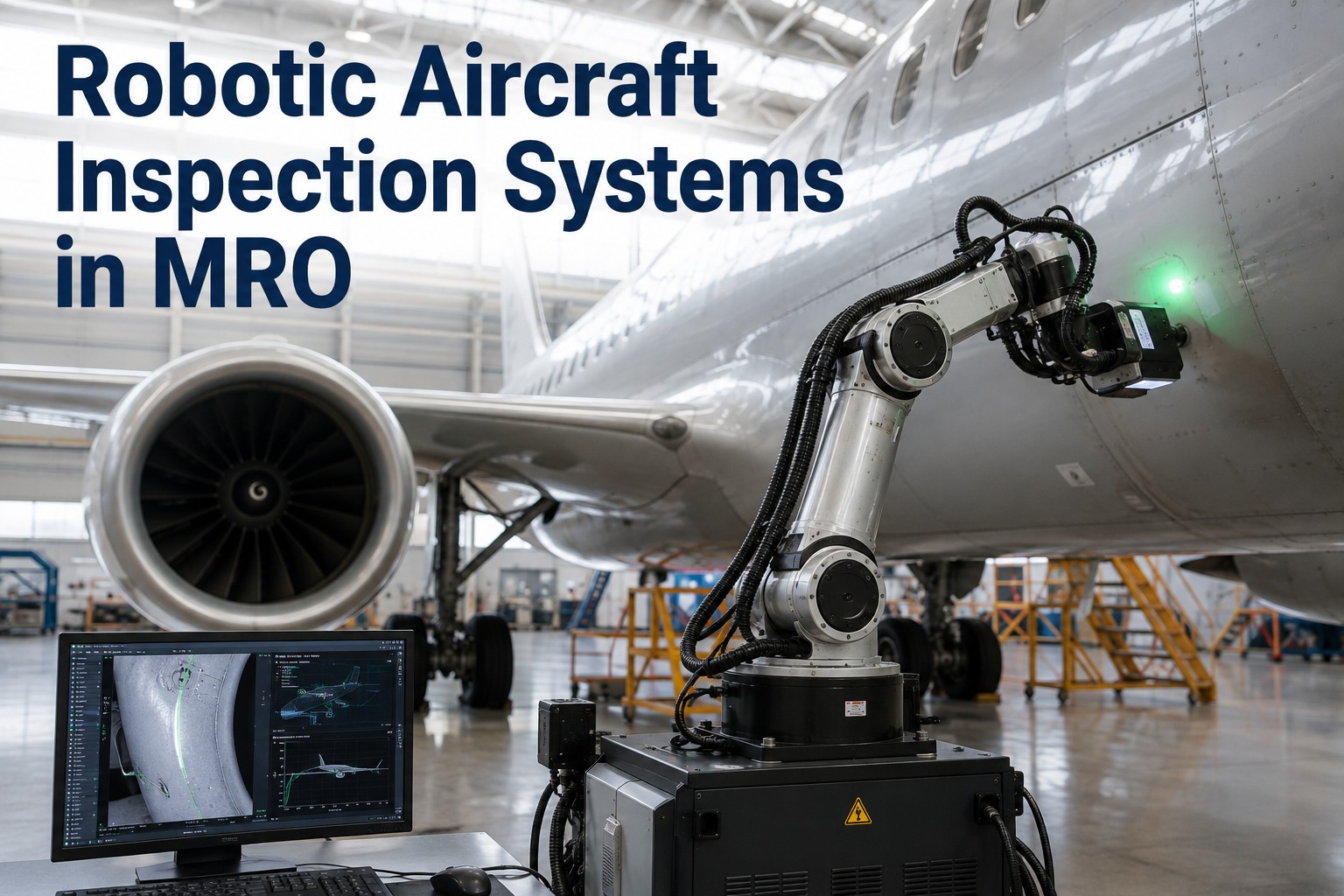
Aircraft electrical systems contain over 150 miles of wiring per airframe — and a single undetected hotspot can cascade into a catastrophic fault. Thermal imaging robots are changing how MRO facilities identify overheating connections, arc-fault risks, and insulation failures before they become AOG events. Want to see how Oxmaint's Electrical Maintenance Module ties these inspection workflows into a single audit-ready platform? Start a free trial today or book a demo to see it live.
68%
of in-flight electrical failures trace back to connection hotspots detectable via IR imaging
4.8x
higher cost of reactive electrical repairs vs. thermally-detected preventive fixes
92%
fault detection accuracy rate for thermal NDT robots in wiring harness inspections
40%
reduction in electrical system inspection time using robotic thermal scanning vs. manual crews
Thermal Detection. Smarter Electrical Maintenance.
Oxmaint's Electrical Maintenance Module connects thermal inspection findings directly to work orders, asset records, and CapEx forecasts — turning IR data into decisions.
What Is Thermal Imaging Robotic Inspection for Aircraft Electrical Systems?
TECHNICAL DEFINITION
Infrared Robotic NDT for Avionics and Wiring
Thermal imaging robotic inspection is a non-destructive testing (NDT) method where autonomous or semi-autonomous robots equipped with infrared cameras navigate aircraft electrical bays, avionics racks, and wiring harness corridors to detect anomalous heat signatures — indicating resistance faults, loose terminations, overloaded circuits, or insulation degradation — without disassembling the aircraft or exposing technicians to confined-space hazards.
Sensor Type
Uncooled LWIR (Long-Wave Infrared), 320x240 to 640x512 resolution
Temperature Sensitivity
As low as 0.05°C differential (NETD)
Standards Referenced
FAA AC 43.13-1B, EASA Part-145, MIL-HDBK-787
Reporting Format
Radiometric JPEG/TIFF with GPS-tagged location metadata
Core Concepts: How Thermal NDT Works on Aircraft Wiring
IR
Passive Thermography
No external heat source needed. The robot scans while the aircraft is under normal electrical load — live circuits emit their own heat. Resistive faults appear as bright spots against cooler surroundings. Best for bus bars, junction boxes, and circuit breaker panels.
ACT
Active Thermography
An external stimulus (pulsed heat, eddy current, or ultrasonic excitation) is applied and the robot captures the differential cooling pattern. Used for detecting delamination in composite wiring conduit and hidden corrosion beneath protective insulation wrap.
DT
Delta-T Analysis
The robot's onboard AI compares real-time temperatures against a known-good thermal baseline for each wire gauge and connector type. A Delta-T exceeding 10°C on a connector triggers an immediate alert; above 30°C flags it as critical per IPC-A-620 guidelines.
MAP
Thermal Mapping and 3D Overlay
Robots stitch individual IR frames into a full thermal map of the electrical bay or wiring run. The resulting image is overlaid onto the aircraft's digital maintenance manual (AMM) schematic, so technicians see exactly which circuit number and frame station is affected.
ML
Machine Learning Fault Classification
Trained on thousands of labeled thermal anomalies, onboard ML models classify hotspots by fault type: loose terminal (ring-shaped pattern), overloaded conductor (linear gradient), arc tracking (pitting with concentrated peak), or moisture ingress (diffuse irregular bloom).
LOG
Audit-Ready Digital Logging
Every robot scan generates a timestamped, GPS-tagged thermal report with radiometric data, fault severity classification, and the technician ID who initiated the inspection — fully compliant with FAA 14 CFR Part 43 record-keeping requirements and EASA Form 1 traceability.
Where Electrical Inspection Breaks Down Without Thermal Robotics
01
Invisible Pre-Failure States
A corroded terminal at 25°C above ambient looks identical to a healthy one visually. By the time resistance climbs high enough to trip a breaker, the insulation is already charred. Thermal imaging catches it at 8-10°C differential — weeks before failure.
02
Confined Access Zones
P-channels, belly fairing bays, and wing root junction boxes require panel removal, confined-space entry permits, and specialized PPE. A robot with a 45mm profile accesses these areas in minutes — no permit, no entry, no risk.
03
Inspection Coverage Gaps
Manual technicians cover 15-20 connection points per hour in cramped electrical bays. A thermal robot covers 200+ per hour with no fatigue degradation. An A320 has over 400 connectors in the forward avionics bay alone — manual coverage is statistically incomplete.
04
No Trending or Baseline History
Without digital thermal records, maintenance teams cannot trend whether connector C0342 is warming up 2°C per month — a pattern that predicts failure in 60 days. Paper-based inspections capture a snapshot; thermal robots build a continuous thermal history per asset.
05
Ground Time Overhead
Traditional wiring audits add 8-14 hours to a C-check just for electrical bay inspection. Robotic thermal scanning completes the same coverage in 2.5 hours while the aircraft is still in its maintenance dock, before other tasks begin. Every hour saved is revenue recovered.
06
Disconnected Finding Records
A technician writes "warm connector — monitor" on a paper log. The next inspector never sees it. Three months later, the same connector fails mid-flight. Without a CMMS-linked digital record, thermal findings have no downstream action — they just disappear.
How Oxmaint Closes the Loop on Thermal Inspection Findings
Detecting a hotspot is only half the job. The other half is ensuring that finding triggers the right work order, gets assigned to the right technician, and updates the asset's maintenance history — automatically. That is what Oxmaint's Electrical Maintenance Module delivers.
FINDING CAPTURE
Direct Thermal Report Ingestion
Import radiometric JPEG and XML reports from any thermal robot platform. Oxmaint parses the fault classification, temperature delta, and GPS location — then auto-populates the work order with finding details, no manual transcription.
ASSET LINKAGE
Component-Level Asset Hierarchy
Every connector, harness segment, and junction box lives in Oxmaint's asset registry under the correct aircraft tail, system, and ATA chapter. A thermal finding auto-links to the exact component record — no ambiguity, full traceability.
WORK ORDER AUTOMATION
Severity-Based WO Triggering
Delta-T thresholds are configurable per circuit type. A 10°C anomaly creates a "monitor" task. A 25°C anomaly generates an immediate corrective work order with priority assignment, parts list pre-population, and technician notification — all in under 30 seconds.
TREND ANALYTICS
Thermal Trend Monitoring Per Asset
Oxmaint plots each connection point's temperature history across inspection cycles. A connector trending up 3°C per month generates a predictive alert 45 days before it crosses the critical threshold — shifting action from reactive to condition-based.
COMPLIANCE DOCS
Audit-Ready Digital Signatures
Every thermal inspection task closes with a digital signature, timestamp, and the attached thermal report as a PDF. Generates the complete EASA Form 1 / FAA 8130-3 documentation trail automatically — ready for authority audit within seconds.
CAPEX FORECASTING
Wiring Replacement CapEx Planning
When thermal data indicates a harness segment has reached end-of-service thermal condition, Oxmaint flags it in the 5-10 year CapEx model — giving MRO planners and ownership groups visibility into rewiring costs before they become emergency expenditures.
MRO facilities running thermal inspection programs without a connected CMMS are leaving the most valuable part of the data on the table. The thermal image tells you where the problem is. Oxmaint tells you what to do about it — and tracks whether it was done. Ready to connect inspection data to action? Start a free trial and connect your first inspection workflow in under 24 hours, or book a demo to see the full electrical maintenance module in action.
Manual Inspection vs. Thermal Robotic Inspection: Side-by-Side
Inspection Parameter
Manual Visual / Multimeter
Thermal Imaging Robot + Oxmaint
Connections inspected per hour
15 - 20
200+
Pre-failure detection capability
Only after breaker trips
8-10°C Delta-T warning
Confined bay access
Requires confined-space permit
Robot entry, no permit needed
Fault classification accuracy
Subjective, experience-dependent
92% ML classification accuracy
Historical trend data
None (paper snapshots)
Per-connector thermal history
Work order generation
Manual, often delayed 24-48hr
Auto-triggered in under 30 seconds
Audit documentation
Paper log, manually filed
Digital signature + PDF report
A320 avionics bay coverage time
8-14 hours
2.5 hours
ROI and Results: What Thermal Robotic Inspection Delivers
40%
Reduction in electrical bay inspection man-hours per C-check cycle
92%
Thermal fault detection accuracy vs. 61% for manual multimeter testing in controlled trials
4.8x
Cost multiplier of reactive electrical repair vs. thermal-detected preventive intervention
78%
Fewer unscheduled electrical AOG events at MRO facilities running thermal monitoring programs
MRO Facility, Southeast Asia
Deployed thermal robots across narrow-body line maintenance. Identified 14 critical connector faults over 90 days that manual inspection had missed over 6 prior checks. Zero AOG electrical events in the following 12 months.
0 AOG events post-deployment
Regional Airline, Europe
Thermal scanning integrated with Oxmaint reduced time-to-work-order for electrical findings from 38 hours average (paper process) to 22 minutes. C-check electrical inspection labor reduced by 42% across a fleet of 28 aircraft.
42% labor reduction on C-check electrical
Frequently Asked Questions
Can thermal imaging robots detect all types of aircraft electrical faults?
Thermal imaging excels at resistive faults: loose terminals, corroded connections, overloaded conductors, and arc-tracking degradation — which account for over 70% of reported wiring-related aircraft incidents. It does not detect open-circuit breaks in unpowered wiring or intermittent faults that only appear under specific load conditions. Best practice is to use thermal inspection as the primary screening tool and combine with continuity testing for dormant circuits.
What temperature differential signals a real fault vs. normal operational heat?
Industry guidelines derived from IPC-A-620 and FAA AC 43.13-1B recommend treating Delta-T of 10-15°C above ambient as a "monitor and recheck" condition, 16-30°C as a corrective action required within the next scheduled check, and above 30°C as an immediate corrective action before further flight. Oxmaint allows facilities to configure these thresholds per aircraft type, circuit amperage class, and connector material — so alerts are calibrated to your specific fleet.
How does Oxmaint integrate with existing MRO CMMS and ERP systems?
Oxmaint connects via REST API to major MRO platforms and can receive thermal inspection data files (radiometric JPEG, XML, CSV) from all major robot vendors. Work orders, parts consumption, and finding records sync bidirectionally with SAP PM, TRAX, and AMOS through standard integration connectors. Implementation typically takes 2-4 weeks with no heavy onboarding fees.
Start a free trial to test integrations with your existing stack.
Is thermal robotic inspection compliant with FAA and EASA maintenance regulations?
Yes. Thermal imaging is recognized as an approved NDT method under FAA AC 43.13-1B (Acceptable Methods, Techniques, and Practices for Aircraft Inspection and Repair). EASA Part-145 allows thermography as a supplementary inspection technique when documented in the approved maintenance program. Oxmaint's audit trail — timestamped thermal reports, digital signatures, technician credentials, and finding disposition records — satisfies documentation requirements for both authorities.
Turn Every Thermal Finding into a Closed Work Order
Oxmaint's Electrical Maintenance Module connects your thermal inspection robots to asset records, work orders, compliance docs, and CapEx forecasts — in one platform built for aviation MRO operations.