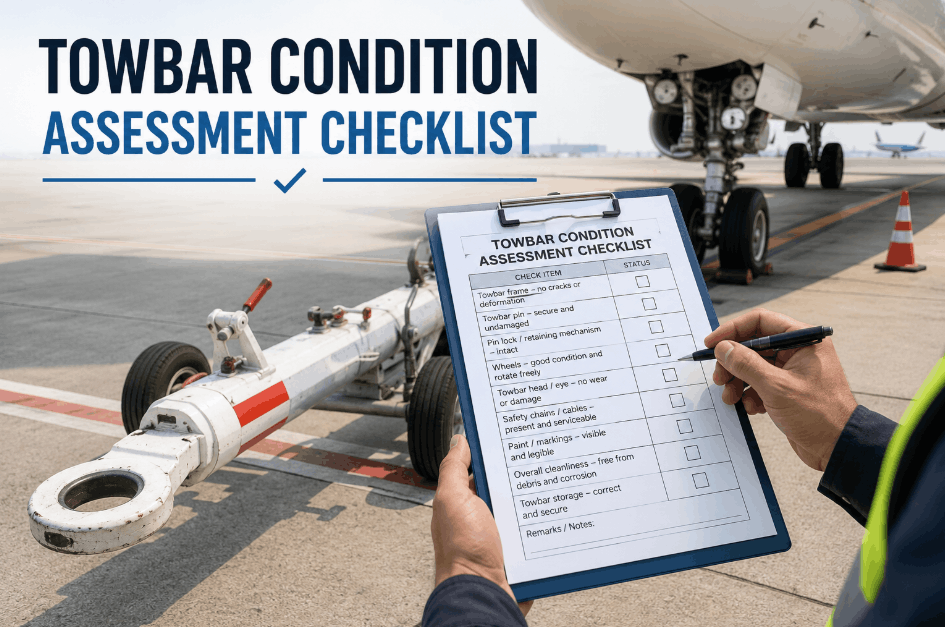
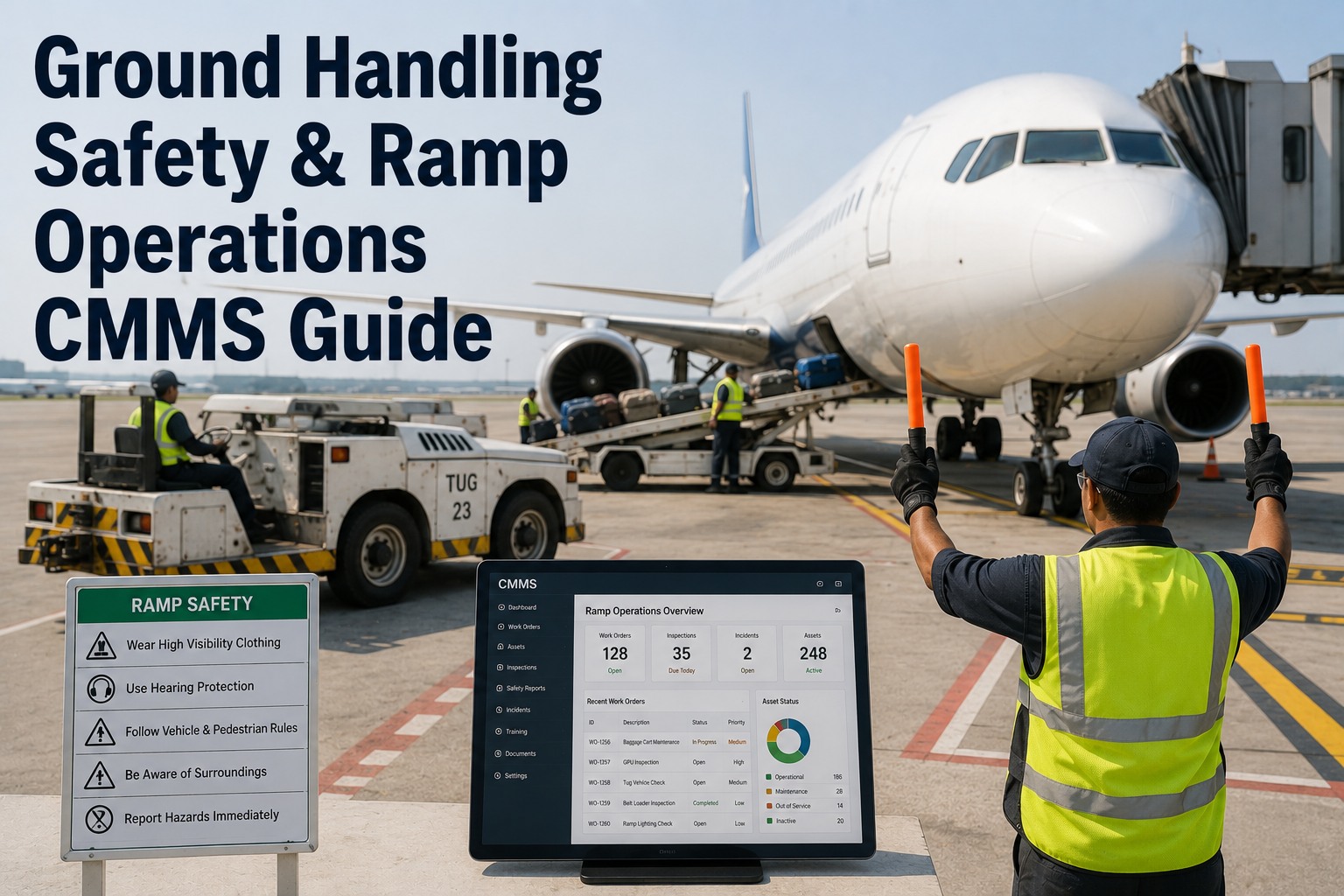
A towbar condition assessment checklist confirms that every coupling pin, shear pin, and tow head used to push back or reposition an aircraft is verified for wear before it's connected to a nose gear. A worn coupling or a damaged shear pin can fail mid-tow, putting both the towbar operator and the aircraft at risk, which is why a structured condition check belongs in every ramp maintenance program. Sign Up Free on Oxmaint to log towbar condition, pin wear measurements, and storage handling records against every unit in the fleet. Book a Demo to see how Oxmaint turns towbar inspection into a documented, trackable program instead of a visual glance before each tow.
Stop Guessing at Towbar Wear
Log pin measurements, frame condition, and storage handling against every towbar before the next pushback.
1. Coupling & Pin Condition
The coupling point carries the full load of the tow — this is where wear shows up first.
2. Structural Frame & Weld Integrity
A coupling can be in spec while the frame underneath it is developing a failure point.
3. Hydraulic & Steering Function
Powered towbars add hydraulic and steering systems that need their own dedicated checks.
4. Storage & Handling Practices
Damage from poor storage handling is preventable and shows up as premature coupling and frame wear.
5. Documentation & Replacement Tracking
Wear data only protects the operation if it's logged and acted on before the next tow.
Build a Documented Towbar Wear Record
Oxmaint tracks coupling, frame, and hydraulic condition, then routes every failed item to a work order.
Frequently Asked Questions — Towbar Condition Assessment Checklist
1. What does a towbar condition assessment checklist cover?
It covers coupling and pin wear, structural frame and weld integrity, hydraulic and steering function, storage handling, and the documentation needed to track replacement timing.
2. How often should towbar coupling pins be inspected?
Coupling pins and shear components are typically checked before each shift or use, with a more detailed measured inspection on a recurring scheduled interval.
3. Why does towbar storage practice affect coupling wear?
Towbars left on the apron rather than racked accelerate corrosion and debris contamination at the coupling point, leading to premature pin and bushing wear.
4. What happens if a shear pin doesn't match the rated capacity?
An incorrectly rated shear pin can either fail prematurely under normal load or fail to protect the nose gear during an overload event.
5. How does Oxmaint support towbar condition tracking?
Oxmaint logs pin wear measurements, inspection findings, and storage handling records against every towbar, then converts failed items into assigned work orders.
Ready to Track Towbar Condition by the Numbers?
Oxmaint connects pin measurements, inspection history, and work orders into one record for your towing fleet.