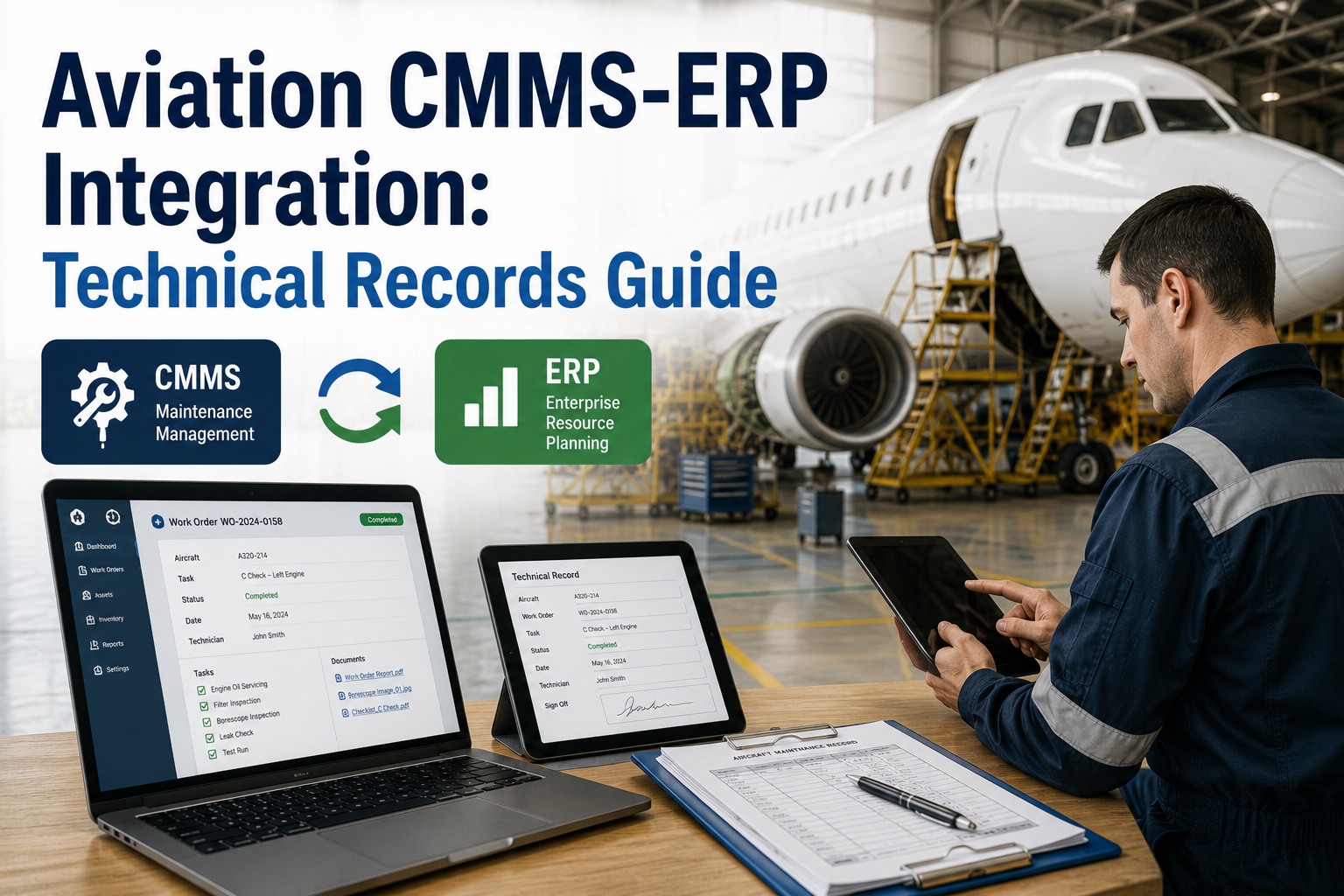
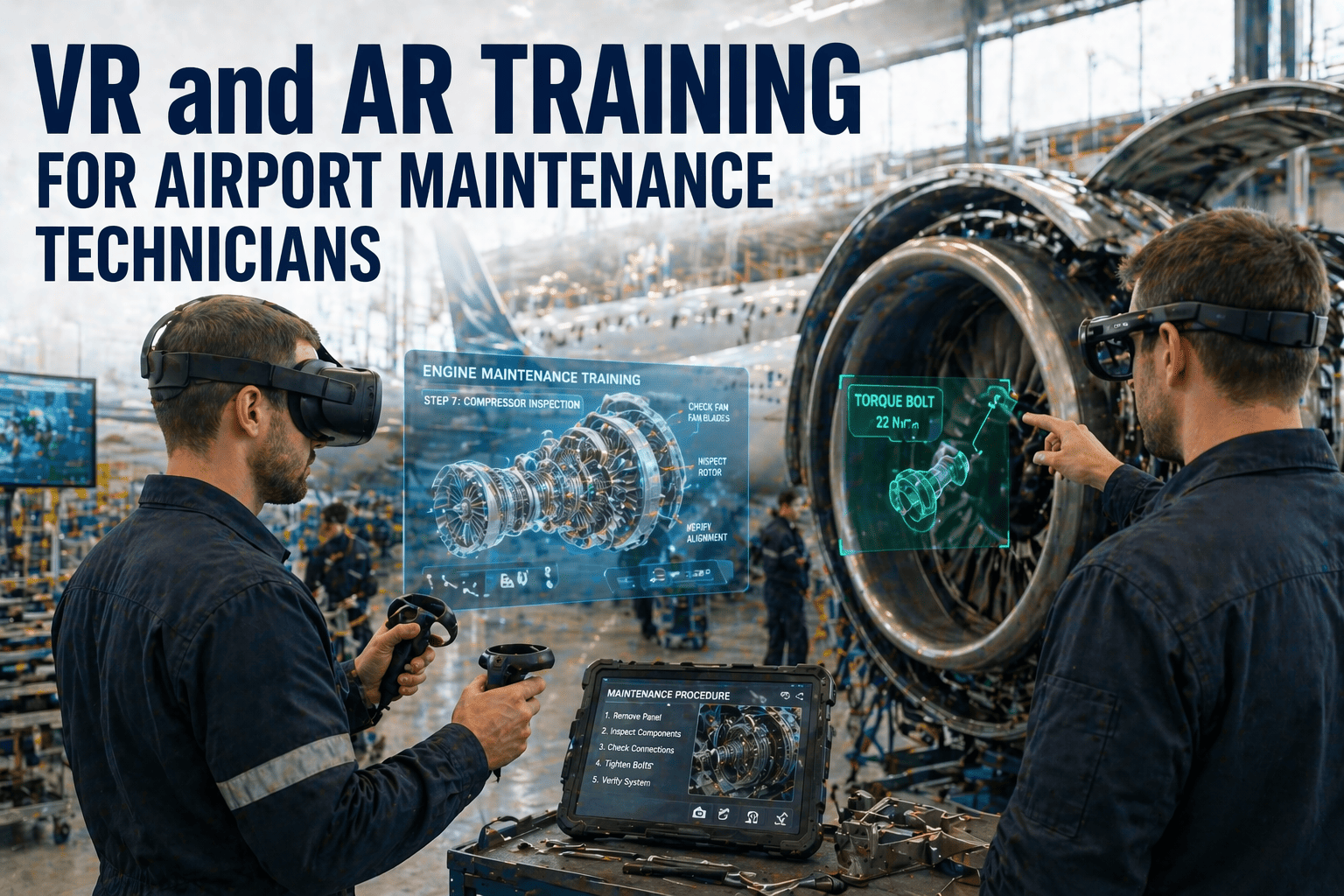
A Boeing 737 contains over 3,600 individual maintenance tasks per C-check — and the technician performing them carries a torque wrench in one hand, a tablet in the other, and a paper manual tucked under their arm. Wearable technology is ending that balancing act. Smart glasses, biometric monitors, haptic gloves, and connected PPE are converting the human body into a data node — giving aviation maintenance technicians real-time guidance, hands-free documentation, and physiological awareness that paper-based workflows could never deliver. Want to see how Oxmaint connects wearable device data into work orders, compliance records, and asset histories? Start a free trial today or book a demo and see it live in under 30 minutes.
34%
reduction in task errors when technicians use AR-guided step-by-step overlays vs. paper manuals
2.1x
faster inspection sign-off speed using voice-activated wearable documentation vs. manual entry
$480K
average annual savings per MRO facility from reduced rework tied to wearable-assisted inspections
61%
of MRO directors cite technician documentation errors as their top compliance risk — wearables directly address this
Connected Technicians. Faster Sign-Offs. Zero Paperwork.
Oxmaint's Wearable Device Integration connects smart glasses, biometric sensors, and voice interfaces directly into work orders, asset records, and audit-ready compliance docs — closing the loop from hands to platform in real time.
What Is Wearable Technology for Aviation Maintenance?
OPERATIONAL DEFINITION
Connected Worker Technology for MRO Environments
Wearable technology for aviation maintenance refers to body-worn electronic devices — smart glasses, biometric vests, haptic gloves, smartwatches, and connected hard hats — that deliver real-time data, task guidance, and physiological monitoring to technicians without requiring them to step away from the work surface. In an MRO context, wearables serve three functions: they push information to the technician (AMM steps, torque values, annotated diagrams), they pull data from the technician (task completions, voice notes, biometric status), and they relay both streams to the maintenance platform — automatically updating work orders, asset records, and compliance logs with zero manual transcription.
Primary Device Types
Smart glasses, biometric vests, haptic gloves, connected helmets, smartwatches
Connectivity Standards
Bluetooth 5.2, Wi-Fi 6, 5G private networks, UWB for precision location
Regulatory Context
FAA AC 120-78B, EASA Part-145, CAA CAP 562 for electronic technical records
Integration Points
CMMS, ERP, AMM digital systems, IoT sensor networks, CapEx forecasting
The Core Wearable Stack: Eight Technologies Reshaping the Hangar Floor
AR
Augmented Reality Smart Glasses
Overlay AMM steps, wire diagrams, and torque specifications directly onto the technician's field of view. Hands stay on the aircraft. The most mature wearable category in aviation — over 47 MRO facilities globally had active AR glass deployments by end of 2024, with documented 28-34% error rate reductions per Boeing and Airbus trial data.
BIO
Biometric Monitoring Vests
Track heart rate, skin temperature, hydration index, and physical exertion levels in real time. When a technician's cognitive load or fatigue score crosses a safety threshold — especially during confined-space tasks near fuel systems — the system alerts the crew chief and flags the work order for supervisor check before sign-off.
HAP
Haptic Feedback Gloves
Deliver vibration pulses to guide torque application, warn of over-tightening, and confirm task completions without audio in high-noise environments. Embedded sensors log grip force and tool position — enabling CMMS platforms to verify that a fastener was applied correctly, not just that the work order step was marked complete.
VOI
Voice-Activated Documentation
Noise-cancelling microphones with aviation-domain NLP allow technicians to dictate findings, part numbers, and discrepancy notes directly into the CMMS work order — hands-free, in real time. Reduces documentation lag from hours to seconds. Particularly high-value in engine run environments where typing is impossible.
UWB
Ultra-Wideband Location Tracking
Tracks technician position within 10cm accuracy across a hangar bay — confirming that a technician physically visited the correct zone of the aircraft before signing off a task. Eliminates proximity-certification fraud and provides a geospatial audit trail for every inspection event, timestamped to the second.
CAM
Wearable Body Cameras
Chest-mounted or helmet-mounted cameras capture a continuous first-person video record of the work performed. Frames are tagged with the work order ID, technician credentials, and timestamp — creating an irrefutable visual audit trail that satisfies EASA Part-145 documentation requirements without any post-task filing effort.
ENV
Environmental Exposure Sensors
Detect ambient gas concentrations, radiation levels, and chemical exposure in real time — particularly critical during fuel tank entry, composite material repair (respirable dust), and battery maintenance tasks. Exposure readings log automatically to the technician's health record and the work order's hazard documentation file.
EXO
Exoskeleton Assist Devices
Passive and active exoskeletons reduce musculoskeletal load during overhead work on wing assemblies, fuselage panels, and engine nacelles. MRO facilities using upper-body exosuits report up to 40% reduction in shoulder and lumbar injury rates — directly cutting workman's compensation claims and unplanned technician absences that disrupt maintenance schedules.
Where Hangar Operations Break Down Without Wearables
01
The Three-Step Documentation Tax
A technician finishes a task, walks to a terminal, recalls the details from memory, types the finding. On average this cycle consumes 18-22 minutes per complex task — across a C-check with 400+ tasks, that is over 120 hours of pure documentation overhead per aircraft, per check.
02
Memory-Dependent Task Execution
Technicians working from paper manuals or mental recall make sequence errors at a rate of 1 in 14 complex tasks — per NASA human factors research on aviation maintenance. Each sequence error generates rework, re-inspection, and potential airworthiness exposure that would never arise with step-by-step AR guidance.
03
Fatigue Invisibility
Night-shift technicians performing critical structural checks at hour 10 of a 12-hour shift show measurable cognitive degradation — but there is no mechanism to detect or flag it. The sign-off still goes through. Biometric wearables are the only tool that can make fatigue-state visible in real time, before the wrong step gets certified.
04
Skill Gap During Knowledge Transfer
Over 30% of the global aviation maintenance workforce will reach retirement age by 2030. Junior technicians inheriting critical tasks without expert oversight make errors at 2.4x the rate of experienced staff. AR-guided overlays and remote expert annotation through smart glasses narrow this gap dramatically — and immediately.
05
No Geospatial Proof of Inspection
A technician signing off a confined-bay inspection on a tablet from the break room is indistinguishable from one who physically performed it. Without location-verified sign-offs, MRO facilities have no audit trail proving that a human being was at the correct frame station at the correct time — a direct compliance exposure under EASA Part-145.
06
Disconnected Tooling Data
Calibrated torque wrenches, digital multimeters, and precision gauges generate readings that a technician notes on paper — and transcribes later, introducing error at both steps. Connected tooling interfaced with a CMMS via wearables eliminates transcription entirely: the tool's reading is the work order's recorded value, with no human intermediary.
How Oxmaint Connects Wearable Data to Maintenance Operations
Wearables generate data. The value is not in the data — it is in what happens to that data immediately after it is captured. Oxmaint's Wearable Device Integration ensures every biometric alert, every voice note, every AR-confirmed task step, and every location-verified sign-off flows directly into the work order, asset record, and compliance trail without any manual intervention.
TASK DELIVERY
AMM Steps Pushed to Smart Glasses
Oxmaint pushes work order task cards, AMM step sequences, and annotated diagrams directly to paired smart glasses. As the technician completes each step, a voice command or gesture confirmation updates the work order in real time — creating a continuous, timestamped task log without a terminal visit.
VOICE CAPTURE
Real-Time Voice-to-Work-Order
Aviation-domain NLP converts spoken discrepancy notes, part numbers, and measurements directly into structured work order fields. No free-text dump — Oxmaint's parser classifies the input and routes it: part numbers go to parts consumption, measurements go to condition records, findings go to discrepancy logs.
LOCATION VERIFICATION
UWB-Confirmed Sign-Off
Integration with UWB anchor systems means Oxmaint can require location-verified sign-off as a configurable rule per task type. A structural inspection sign-off is only accepted when the technician's wearable confirms they were within 1.5 meters of the correct frame station — eliminating desk-based certification fraud.
SAFETY ALERTS
Biometric-Triggered Supervisor Flags
Biometric data from connected vests feeds a fatigue and stress scoring model inside Oxmaint. When a technician crosses a configurable threshold during a critical task, the platform flags the supervisor in real time and marks the task as requiring dual sign-off — adding a second layer of certification before the work order can close.
TOOL INTEGRATION
Connected Tool Readings Auto-Logged
Torque wrenches, digital calipers, and gauges connected via Bluetooth log their readings directly to the relevant work order task field when the technician confirms application via haptic glove or voice. The asset's measurement history updates automatically — eliminating transcription error and providing a precise tool-reading audit trail.
COMPLIANCE DOCS
Wearable-Assembled Audit Packages
Body-cam footage timestamps, UWB location logs, biometric state records, voice-captured finding notes, and digital signatures are automatically assembled into an EASA Form 1-compliant audit package when the work order closes — with zero post-task filing effort from the technician or quality manager.
The pattern across every MRO that has deployed wearables without a connected CMMS is the same: data is collected, never acted on. Oxmaint closes that gap. Every signal from the wearable stack becomes a structured input to a work order, asset record, or compliance document — making the technology actually worth the investment. Ready to see this in action for your facility? Start a free trial and connect your first wearable workflow in under 48 hours, or book a demo to walk through the full integration stack with our MRO team.
Traditional MRO Workflow vs. Wearable-Connected MRO: Side by Side
Workflow Parameter
Traditional Paper / Terminal
Wearable-Connected + Oxmaint
Task guidance delivery
Paper AMM, mental recall
AR overlay, step-by-step on glasses
Finding documentation time
18-22 min per task (walk to terminal)
Under 60 seconds via voice capture
Fatigue detection
None — invisible to supervisors
Real-time biometric threshold alerts
Location-verified sign-off
Not possible — trust-based only
UWB-confirmed within 1.5m accuracy
Torque / measurement logging
Paper, manual transcription, error-prone
Auto-logged from connected tooling
Task error rate
1 in 14 complex tasks (NASA HF data)
34% reduction with AR step guidance
Audit package preparation
2-4 hours post-check manual assembly
Auto-assembled at work order close
Remote expert assistance
Phone call, email, wait for travel
Live AR annotation via glasses stream
ROI and Results: What Wearable-Connected MRO Delivers
34%
Fewer task execution errors with AR-guided step overlays vs. paper manual workflows
2.1x
Faster inspection sign-off cycles using voice documentation vs. terminal entry
40%
Reduction in musculoskeletal injury rates at facilities deploying upper-body exoskeleton assist
$480K
Average annual savings per MRO facility from rework reduction tied to wearable-assisted inspections
Wide-Body MRO, Middle East
Deployed AR smart glasses across a 14-bay heavy maintenance facility. C-check documentation overhead fell by 38% within the first quarter. Rework events linked to documentation error dropped from 22 per check cycle to 6. Audit preparation time for GCAA inspections fell from 3.5 hours to under 40 minutes.
38% documentation overhead reduction
Regional MRO, Northern Europe
Integrated biometric vests with Oxmaint's fatigue-flagging module on night-shift structural inspection teams. In the 6 months following deployment, zero safety incidents occurred on night shifts where biometric thresholds were crossed and dual sign-off was triggered. Prior 12-month period: 3 rework incidents directly attributed to fatigue-state technicians.
0 fatigue-related incidents post-deployment
Frequently Asked Questions
Are smart glasses and wearables approved for use in certified aviation maintenance environments?
Yes, with conditions. FAA AC 120-78B explicitly permits the use of electronic flight bags and electronic technical records, which establishes the framework for wearable-delivered AMM content. EASA Part-145 allows electronic documentation tools provided they maintain an auditable record equivalent to paper. The key requirement is that the CMMS receiving data from the wearable must generate the same audit-quality output as a paper-based process — which Oxmaint is specifically designed to do. Individual facility approvals depend on the quality manual and applicable national authority; most MRO quality departments can secure approval within one to two revision cycles.
How does Oxmaint handle wearable data from multiple different device vendors?
Oxmaint's Wearable Device Integration uses a vendor-agnostic data ingestion layer that accepts standard Bluetooth, Wi-Fi, and REST API data streams from all major wearable hardware platforms including RealWear, Google Glass Enterprise, Vuzix, Honeywell Connected Worker, and custom IoT builds. Device-specific SDKs are not required — Oxmaint maps incoming data fields to work order task structures and asset records regardless of the originating hardware.
Start a free trial to test your existing device stack against the integration layer before committing to full deployment.
What happens to biometric data collected from technicians — how is privacy protected?
Biometric data collected by wearables is processed under configurable data governance rules within Oxmaint. Individual heart rate and physiological readings are used only to generate anonymized fatigue-state scores that trigger operational flags — raw biometric readings are not stored against individual technician identities by default. Facilities can configure data retention periods, anonymization levels, and access permissions per their local labor law requirements (including GDPR for European facilities and applicable US state privacy laws). Data sovereignty options ensure biometric records remain within the facility's own infrastructure or a designated regional cloud zone.
What is a realistic deployment timeline for wearable integration with Oxmaint?
For a single-bay pilot deployment using AR smart glasses and voice documentation, most MRO facilities reach operational status within 3-4 weeks — covering device pairing, CMMS integration, work order template mapping, and initial technician training. Full fleet-wide deployment across a multi-bay facility with biometric vests, UWB location infrastructure, and connected tooling typically takes 8-12 weeks. Oxmaint's implementation approach requires no heavy professional services engagement — the integration configuration is handled through the platform's admin interface, with dedicated onboarding support included. No long-term contract or large upfront implementation fee is required to begin.
Your Technicians Carry the Data. Oxmaint Turns It Into Action.
Connect smart glasses, biometric sensors, voice interfaces, and connected tooling directly into work orders, asset records, and compliance documentation — all in one platform built for aviation MRO operations. No paperwork. No terminal walks. No certification gaps.