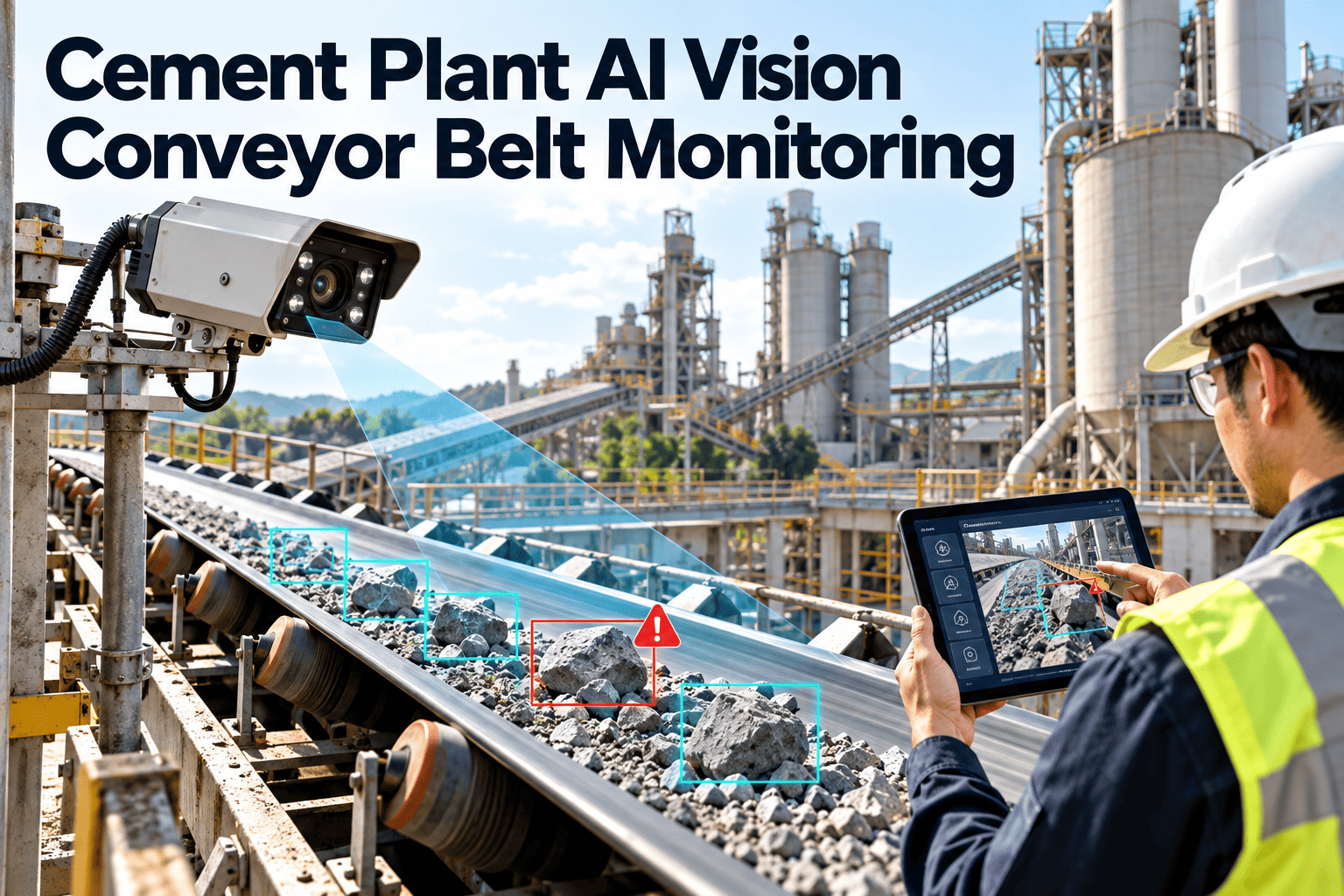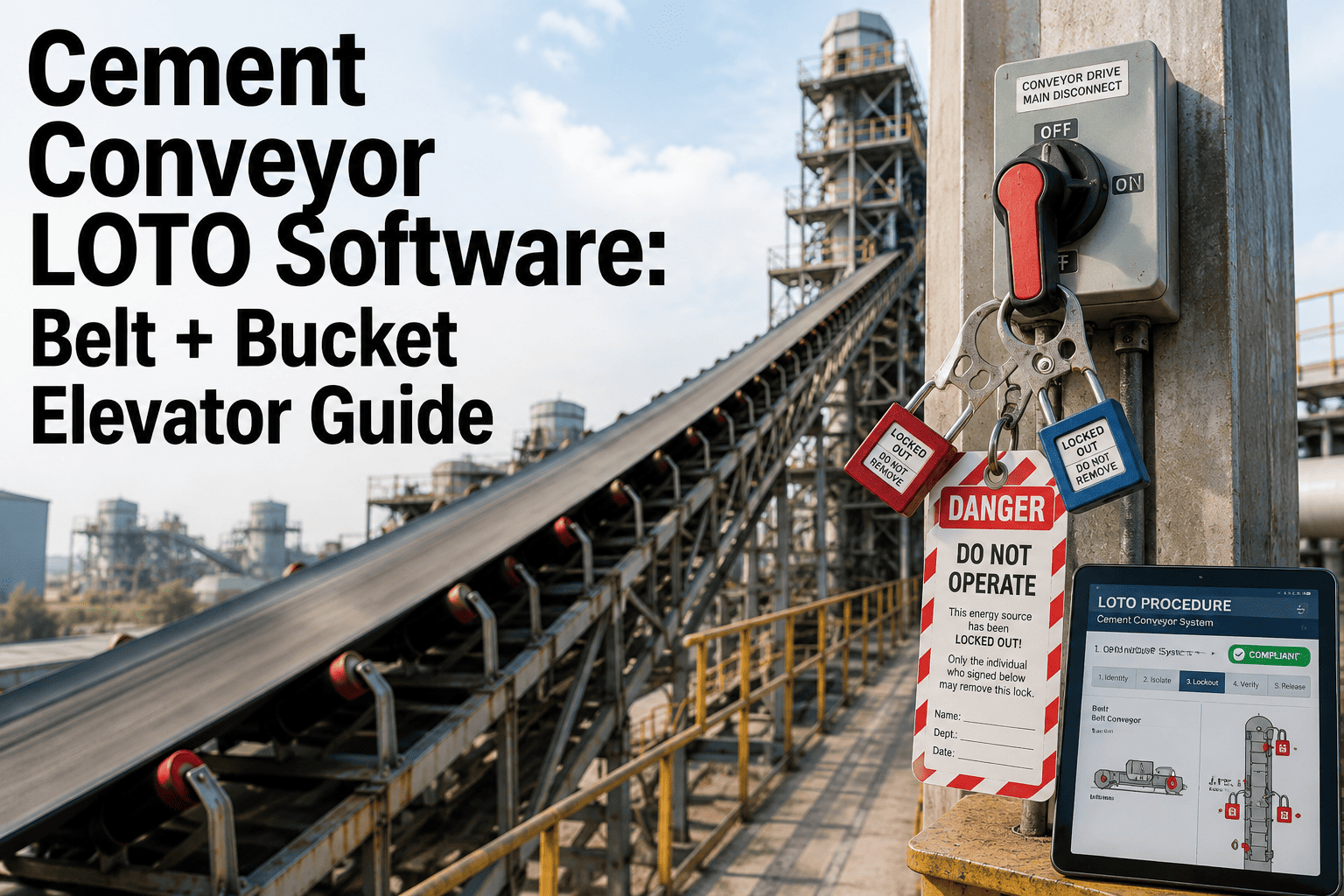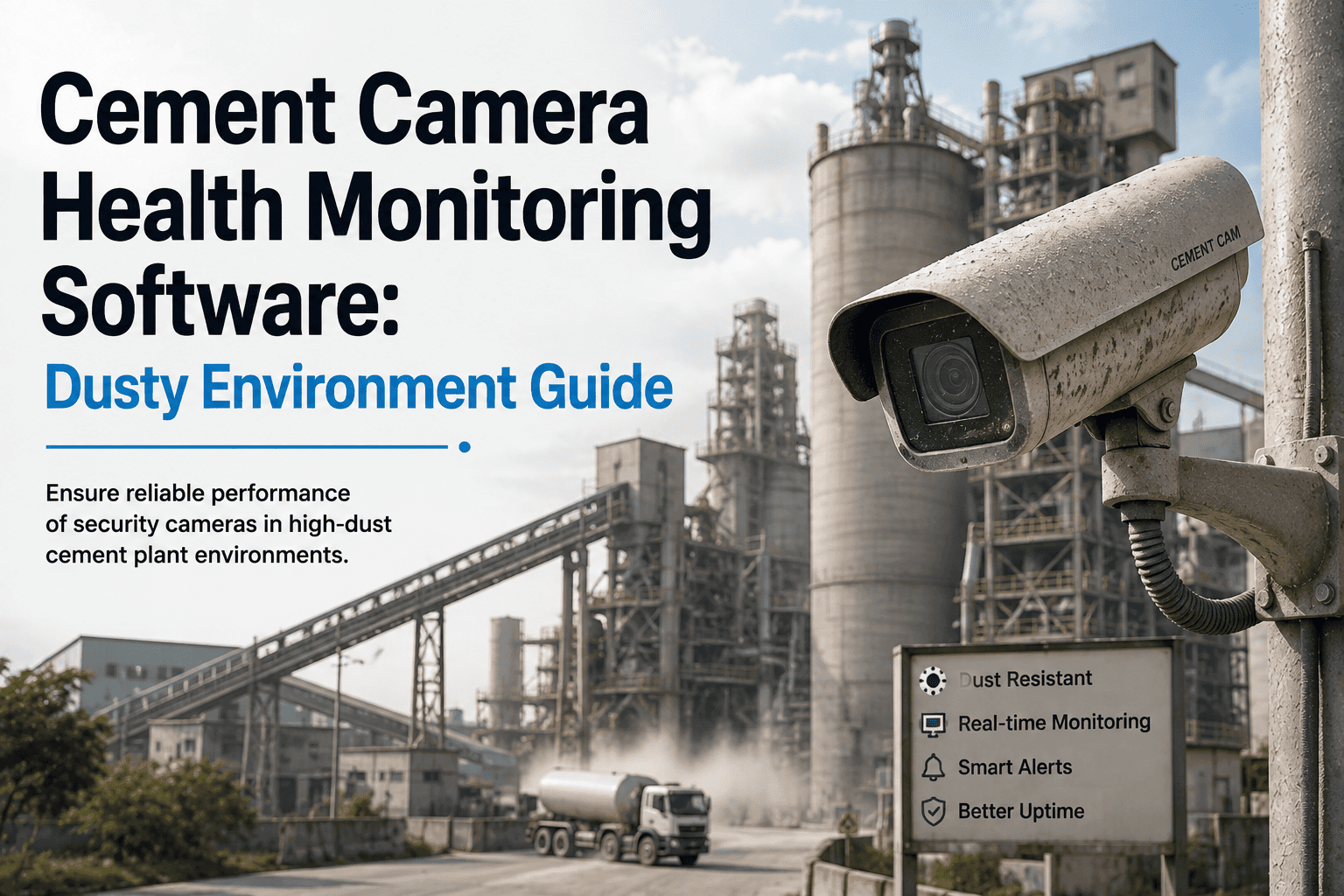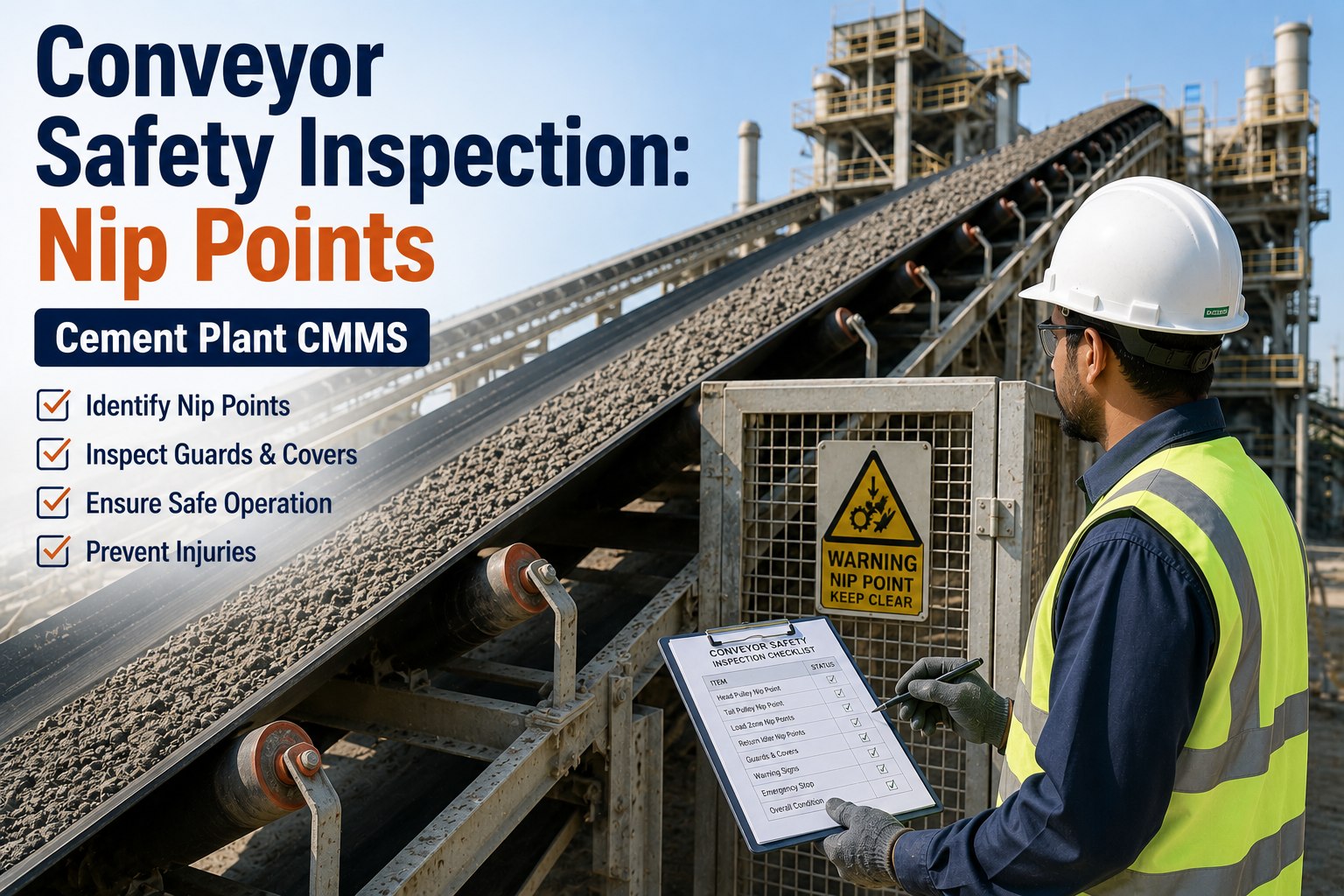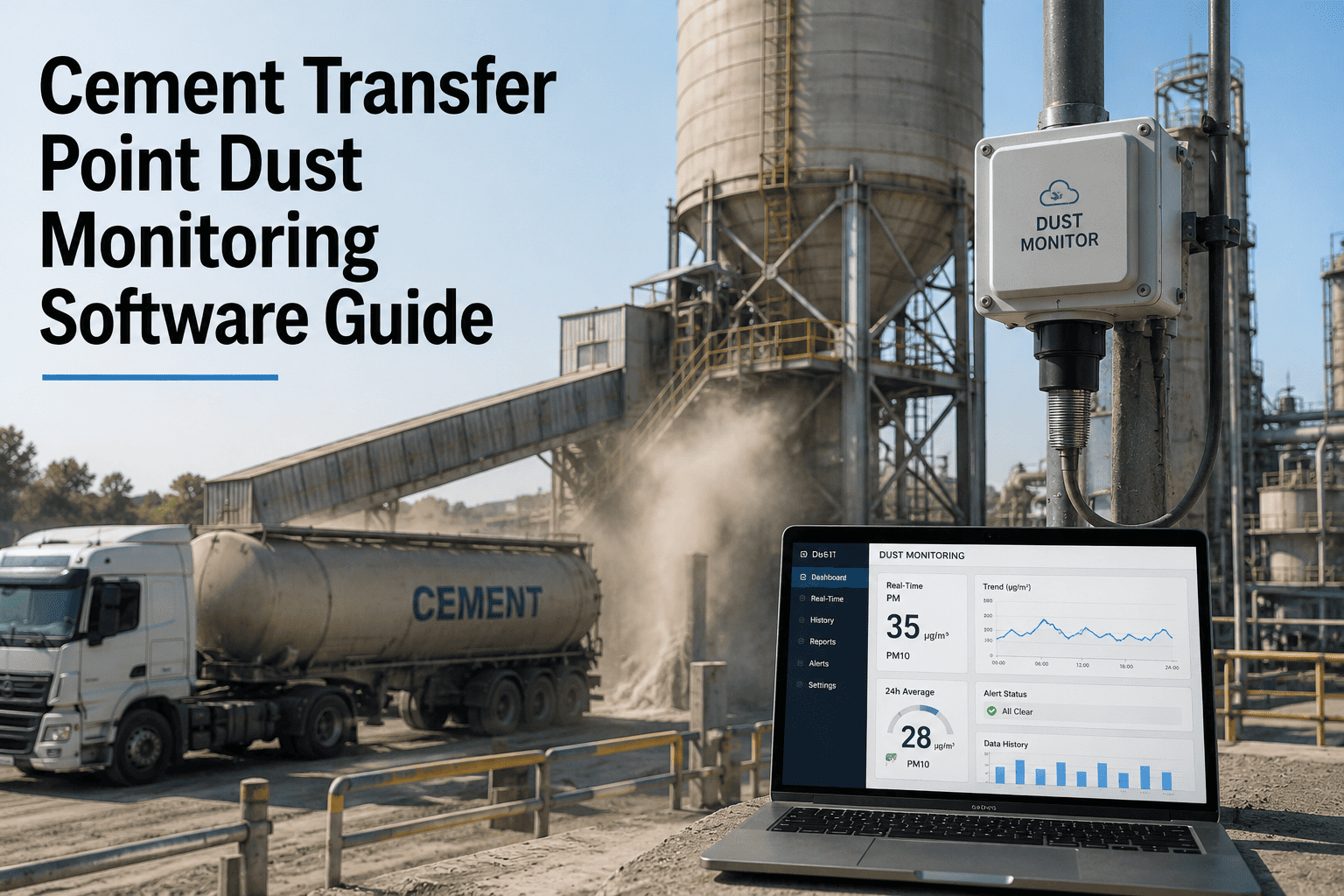
Cement transfer points don't get inspected until they fail — and by then a citizen complaint or a visible plume already has your compliance team on notice. Every belt-to-belt drop, chute-to-hopper transfer, bucket elevator boot, and packing house loadout is a documented affected facility under federal air rules, each one capable of triggering a visible emissions notice the moment a baghouse drifts unnoticed for a shift. Cement plants that connect dust monitoring to their maintenance software close that gap: differential pressure, opacity, and airflow readings feed straight into work orders, so a collector losing efficiency gets fixed before an inspector ever walks the yard. This guide covers which transfer points carry the highest violation risk, what a connected monitoring layer actually tracks, and how plants are cutting fugitive dust flags without adding headcount. See how it works with a free trial workspace built around your own transfer points.
Which transfer point in your plant is closest to a visible emissions violation right now?
Most fugitive dust flags don't come from the kiln stack — they come from an open belt drop, a worn chute liner, or a baghouse quietly losing draft at a transfer point nobody walked past that shift.
Five transfer points, one shared compliance risk
Kiln stacks and clinker cooler vents get continuous monitors because they are the obvious point sources. Transfer points are treated as routine mechanical equipment — until a dusty plume at a belt drop or a loadout spout becomes the thing an inspector photographs. Each of the five points below fails differently, and each one needs a different sensor to catch it early.
An open drop between two conveyors, exposed to plant draft and outside wind. Skirting wear and misaligned chutes turn a contained drop into a visible plume within days.
Feed chutes into raw mill and finish mill hoppers see the heaviest material flow in the plant. Liner wear and cracked flanges leak dust long before the chute is scheduled for inspection.
Elevator boots look sealed from the outside, but boot seal wear and material buildup let fine dust escape at the base — usually caught only during a walkdown, if at all.
Bag and bulk truck loadout spouts run hardest during peak dispatch hours, exactly when a dust collector fault is least likely to be noticed by a busy loadout crew.
Cement and pozzolan silo vents are baghouse-controlled point sources with a defined opacity limit. A slow rise in differential pressure is the earliest sign the bags need attention.
Round-sheet checks capture a single reading once a shift. A collector can drift from healthy to non-compliant between two rounds without anyone seeing the trend line.
Why transfer points draw more scrutiny than the kiln
Federal air rules name conveyor transfer points, silo vents, and material handling points directly as affected facilities, each carrying its own opacity limit and inspection method. Because these points sit outdoors and change material flow constantly, they are also where visible emissions observations and citizen complaints most often begin.
How fast a healthy transfer point becomes a violation
A baghouse or chute rarely fails all at once. It drifts — a slow rise in pressure drop, a slow loss of draft — over a window most plants aren't watching closely enough to catch.
Differential pressure, opacity, and airflow all sit inside their normal band. Nothing on a round sheet would flag this shift as different from any other.
A bag starts blinding, a chute liner wears through, or a damper sticks partway open. Readings move gradually — too gradually for a once-a-shift check to notice.
Without an intervention, the transfer point crosses its opacity threshold. This is typically the point at which a plume becomes visible from outside the fence line.
See your own transfer points on a live dust dashboard
Connect your baghouse pressure taps, chute sensors, and loadout dampers to one dashboard that flags drift before it becomes a plume anyone has to photograph.
What good transfer point coverage looks like
Before an audit or an inspection, most plants want a fast answer to one question: is every transfer point actually being watched, or just walked past. Use this as a baseline coverage check.
Each belt drop, chute, elevator boot, loadout spout, and silo vent has a live pressure, opacity, or airflow reading tied to it.
Every transfer point has its own normal range, since a healthy reading on a loadout spout can look very different from a healthy silo vent reading.
A drifting reading routes to a specific reliability or EHS contact, not a shared inbox that gets checked once a day.
Every alert that turns into a work order keeps the original sensor reading attached, so the fix and the fault stay linked for the audit trail.
Pressure, opacity, and airflow history for each transfer point can be pulled instantly instead of reconstructed from paper logs during an inspection.
Any new conveyor route, chute rebuild, or loadout addition gets a sensor and a baseline before it goes into regular production.
From a pressure reading to a closed work order
A connected dust monitoring layer does not replace your baghouses or enclosures — it watches them continuously and routes the moment something drifts straight into the hands of the person who can fix it.
Differential pressure taps on baghouses, dust density sensors at chutes and loadout spouts, and airflow sensors on exhaust fans stream readings continuously.
Each transfer point gets its own rolling baseline, so a slow creep in pressure drop or opacity is caught days before it crosses the compliance threshold.
When a reading trends outside its band, reliability and EHS get a mobile alert naming the exact transfer point and sensor, not a plant-wide warning.
The maintenance system opens a work order with the reading, the transfer point, and a suggested fix — bag change, chute liner, damper reset — ready to assign.
Detection speed, point by point
The same fault looks very different depending on whether a person or a sensor is watching for it.
| Transfer Point | Common Failure Mode | Round-Sheet Detection | Connected Monitoring |
|---|---|---|---|
| Belt-to-belt transfer | Skirting wear, chute misalignment | Next scheduled walk | Same shift alert |
| Chute-to-hopper drop | Liner wear, cracked flange | Visual only, easy to miss | Dust density trend line |
| Bucket elevator boot | Seal wear, material buildup | Rare, boot rarely opened | Continuous seal monitoring |
| Packing house loadout | Collector fan or filter fault | Noticed after visible plume | Airflow and dP alert |
| Silo vent baghouse | Bag blinding or tear | Monthly or quarterly check | Rising dP flagged early |
Cement transfer point dust monitoring — five questions answered
Start with belt-to-belt drops, chute-to-hopper feeds, bucket elevator boots, packing house loadout spouts, and silo vent baghouses. These five cover most of a plant's fugitive dust exposure and are the points named directly in federal air rules.
No. The sensors and software watch the equipment you already have — pressure taps, opacity or dust density sensors, and airflow meters — and turn a drifting reading into a work order before it becomes a visible plume.
Once a reading trends outside its normal band, the platform opens a work order naming the transfer point, the sensor value, and a suggested fix, then routes it to the assigned technician automatically.
Yes — most plants start with their highest-risk point, usually a loadout spout or a silo vent, then add the remaining transfer points once the workflow is proven. A Book a Demo session can map that rollout to your plant layout.
Most single-point deployments go live within days once sensors are wired to existing pressure taps and vent points. A Start Free Trial workspace lets you connect one transfer point and see the dashboard before committing further.
Put every transfer point on one connected dust dashboard
From belt drops to silo vents, know which transfer point is drifting before it shows up as a plume, a complaint, or a violation notice.
Free 14-day trial · No credit card