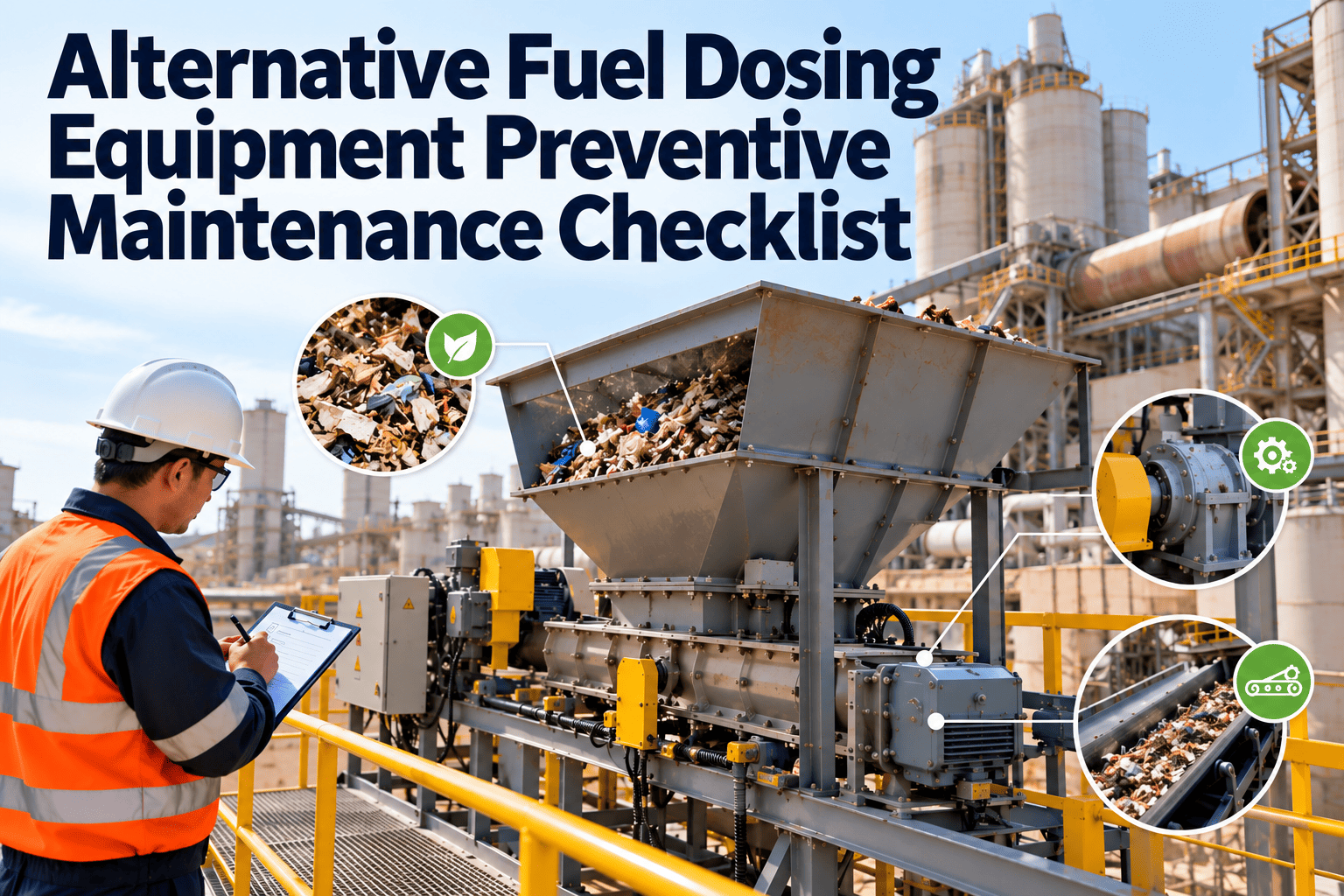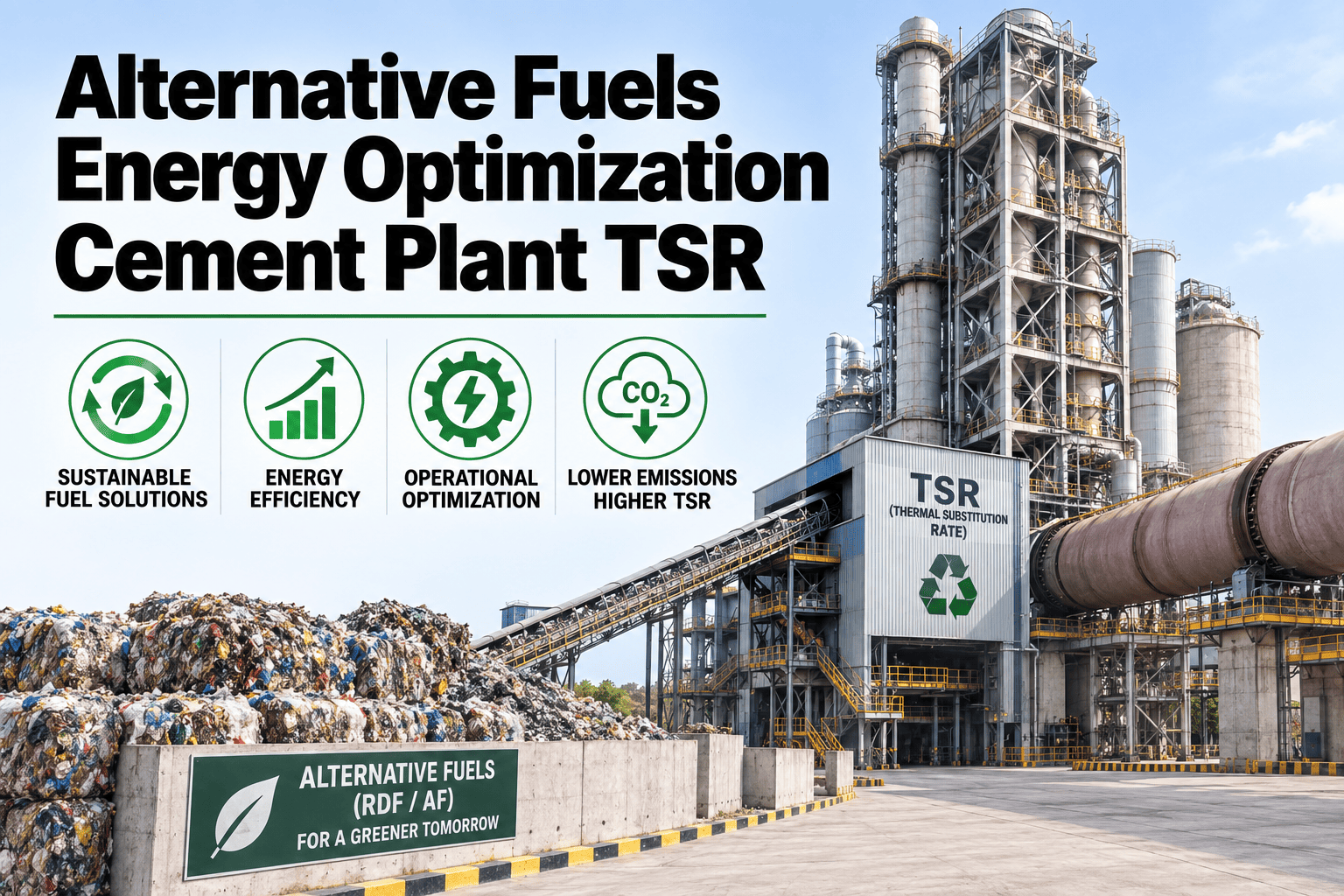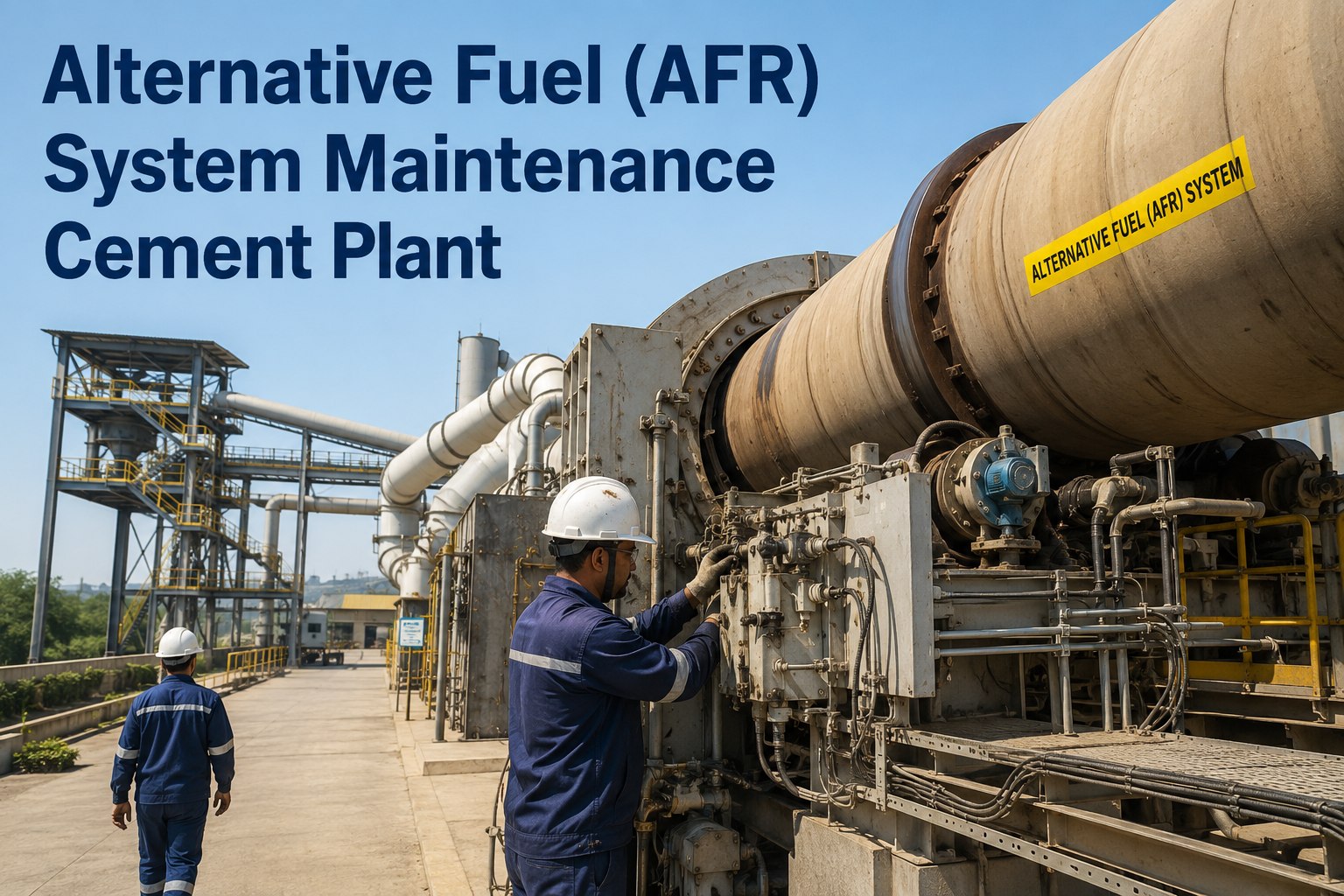
Alternative fuel and raw materials systems have become the most maintenance-hungry corner of the modern cement plant, where heterogeneous feed streams, abrasive refuse-derived fuel, and constant fire risk converge inside a single conveyor chain. A single unplanned AFR trip can cost 4–8 hours of kiln production and erode the thermal substitution rate (TSR) your sustainability targets depend on. This guide breaks down the maintenance disciplines that keep shredders, dosing equipment, HOTDISK feeders, and fire-protection systems running at design availability — without reactive firefighting. To put these routines into a structured CMMS workflow, you can Start Free Trial and configure PM plans for every AFR asset in an afternoon.
Is Your Alternative Fuel System Quietly Stealing TSR Uptime?
Heterogeneous feed, high wear rates, and fire risk all live inside one system — and one missed PM cycle can cascade into an unplanned kiln trip costing 4–8 production hours. The maintenance plan below shows exactly which checks, frequencies, and spare-part thresholds keep your substitution rate climbing instead of stalling.
Why AFR Systems Dominate Your Maintenance Backlog
A modern cement plant running at 60–80% TSR pushes 8–14 tons per hour of shredded refuse-derived fuel through its feed chain — roughly 3× the wear load of conventional fossil-fuel handling.
A 5,000 TPD plant in South-East Asia pushed TSR from 35% to 62% in 18 months but saw AFR-related kiln trips rise from 2 to 9 per quarter. Root-cause analysis attributed 71% of trips to three gaps: inconsistent shredder grate inspection (oversize particles jamming the HOTDISK), absent dosing-scale calibration, and spark-detection sensors past their 12-month service life. Structuring these into a CMMS-driven PM program cut AFR trips to under 3 per quarter and recovered an estimated $612K/yr in lost production.
Tiered PM Schedules for Every AFR Asset
Build PM intervals around failure data — not the OEM manual alone. The three-tier structure below maps daily operator rounds, weekly technician tasks, and monthly engineering inspections to the assets that actually drive AFR availability.
Operator Rounds
- Inspect shredder hopper for bridge buildup and foreign objects
- Verify AFR conveyor belt tracking and scraper tension
- Check HOTDISK rotor temperature trending on DCS
- Confirm spark-detection system status LEDs all green
- Log dosing-feeder amperage at start, mid, and end of shift
- Walk fire-water line — verify pressure gauge at 7–9 bar
Technician Tasks
- Calibrate dosing belt scales against known reference weight
- Measure shredder knife clearance — flag if outside 0.8–1.2 mm
- Lubricate AFR conveyor bearings per OEM lube chart
- Test emergency-stop chain on all AFR drives
- Inspect rotary valve seals for material bypass
- Clean spark-detection optics with lint-free cloth and IPA
- Review metal-detector reject-log for trending ferrous ingress
Engineering Inspection
- Ultrasonic-thickness survey on AFR duct elbows and bends
- Vibration analysis on shredder gearbox and HOTDISK drive
- Thermographic scan of dosing-feeder motors and junction boxes
- Fire-suppression cylinder weight check — recharge if below 95%
- Review CMMS work-order backlog and MTBF trend for top 10 assets
- Audit spare-parts min/max for shredder knives, belts, and seals
The True Cost of Skipping AFR PM
When AFR trips idle the kiln, the cost compounds across lost clinker output, restart fuel, and emission-penalty exposure. Use the formula below to quantify your own exposure.
A plant running 5,000 TPD at $28/T margin, 18 trips/yr of 6 hours each = $630K/yr in avoidable AFR downtime cost.
Reactive AFR Repair vs. Structured PM Program
The gap between a reactive plant and a PM-disciplined plant shows up in TSR, in trips, and in the maintenance budget itself.
| Metric | Reactive Approach | Structured PM Program | Improvement |
|---|---|---|---|
| AFR-driven kiln trips per quarter | 9 | 2.4 | 73% reduction |
| Mean time to repair (MTTR) | 6.5 hours | 2.1 hours | 68% faster |
| Shredder knife life | 900 hours | 1,450 hours | 61% longer |
| Spare-parts inventory carrying cost | $185K/yr | $118K/yr | 36% lower |
| TSR achievement vs. target | 78% | 96% | +18 pts |
| Fire-safety incidents per year | 4 | 0 | 100% eliminated |
| Annual maintenance labor cost | $340K | $265K | 22% lower |
Your 90-Day Path to AFR Reliability
A phased rollout prevents scope creep and delivers measurable gains inside the first quarter. Each phase below has a clear owner, deliverable, and exit criterion.
Asset Register & Criticality Ranking
Catalog every AFR asset from reception bunker to kiln feed chute in a CMMS. Assign criticality (A/B/C) based on production impact and failure frequency. Target: 100% of A-tier assets (shredders, HOTDISK, main dosing belts) have a PM plan created and assigned.
PM Plans Live & Backlog Burn-Down
Activate daily, weekly, and monthly PM checklists for all A/B assets. Begin capturing condition data (vibration, thermography, belt-scale drift). Exit criterion: PM compliance above 90% for two consecutive weeks and reactive backlog reduced by 40%.
Reliability Review & TSR Optimization
Run a formal RCM review of the top five failure modes. Adjust PM intervals based on 60 days of actual data — not OEM guesswork. Benchmark TSR achievement against target and submit a quarterly reliability scorecard to plant leadership.
Steady TSR Growth
Plants with disciplined AFR PM programs sustain 8–12 percentage-point TSR gains over 12 months versus flat or declining rates in reactive plants.
Fire Risk Under Control
Monthly spark-detector service, quarterly suppression-cylinder checks, and daily fire-water pressure logging eliminate 95% of preventable AFR fire incidents.
Predictable Maintenance Budget
Shifting from reactive to planned maintenance cuts emergency labor by 40% and lets you forecast the annual AFR maintenance spend within ±8%.
Longer Consumable Life
Knife-clearance checks and lube-discipline tracking extend shredder knife life by 50–65% and conveyor bearing life by 30%, directly lowering parts spend.
Turn AFR Maintenance from a Cost Center into a TSR Enabler
Deploy structured PM plans, condition-based inspections, and downtime analytics across every shredder, conveyor, dosing belt, and HOTDISK in your plant — in a single CMMS built for cement operations.
AFR System Maintenance, Answered
Real questions from cement plant maintenance and reliability teams — answered with the numbers and standards that matter on the plant floor.
How often should we calibrate AFR dosing belt scales?
Dosing belt scales should be calibrated weekly against a known reference weight, with a full calibration verification monthly. Drift beyond ±2% directly impacts TSR accuracy and can cause kiln instability. Most plants running at 50%+ TSR perform a quick three-point check every Monday morning — it takes 20 minutes and catches drift before it compounds across the week.
What is the typical service life of shredder knives on RDF feed?
On standard refuse-derived fuel, shredder knife life ranges from 900 to 1,500 hours depending on feed contamination (especially glass and inert content). Plants that enforce daily knife-clearance checks, maintain 0.8–1.2 mm tolerance, and rotate knives on schedule consistently reach the upper end — 1,400+ hours. Skipping clearance checks typically cuts life by 35–40% and increases the risk of oversize particles jamming downstream HOTDISK feeders.
Which fire-protection PM tasks are non-negotiable for AFR systems?
Four tasks form the non-negotiable baseline: daily spark-detection LED status check, weekly optics cleaning, monthly fire-water pressure verification at 7–9 bar, and quarterly suppression-cylinder weight check with recharge below 95% capacity. Plants that execute these four tasks at the specified intervals report zero preventable AFR fire incidents in 95% of cases. The remaining 5% are typically traced to feeder-chute foreign-object ingress — addressed by daily operator rounds.
How do we structure a CMMS workflow specifically for AFR assets?
Start by separating AFR assets into three criticality tiers — A (production-critical: shredders, HOTDISK, main dosing belts), B (supporting: conveyors, rotary valves, metal detectors), and C (non-critical: lighting, access platforms). Assign tiered PM templates: daily operator rounds for all A/B, weekly technician tasks for A/B, and monthly engineering inspections for A only. Trigger work orders automatically from condition-monitoring thresholds (vibration, temperature, belt-scale drift) so failures are caught before they trip the kiln.
What KPIs should we track to prove AFR maintenance ROI to leadership?
Track six core KPIs: AFR-driven kiln trips per quarter (target: under 3), PM compliance percentage (target: above 90%), mean time to repair on A-tier assets, shredder knife life in hours, TSR achievement versus target, and annual AFR maintenance cost per ton of clinker. Present these in a quarterly reliability scorecard that ties maintenance discipline directly to production output and sustainability targets — that is the language plant leadership and ownership respond to.
Build Your AFR Reliability Program This Week
Configure shredder, conveyor, dosing, and HOTDISK PM plans in a CMMS designed for cement operations — and start closing the gap between your TSR target and your actual substitution rate.
Free 14-day trial · No credit card