Early-adopter cement plants co-firing hydrogen face entirely new maintenance requirements that no existing CMMS template, OEM service manual, or industry standard fully addresses yet. Burner tip erosion accelerates at rates not seen with conventional fuels, seal integrity monitoring requires hydrogen-specific leak detection technology, flame detection systems designed for hydrocarbon combustion need hardware and calibration upgrades, and the hydrogen distribution network itself demands a structured inspection regime that treats every fitting and valve as a potential safety event. This article covers the CMMS workflows, IoT sensor strategies, and maintenance program structures that keep hydrogen co-firing operations safe, compliant, and economically viable. If your plant is evaluating or already operating hydrogen co-firing, book a 30-minute session with our cement plant specialists, or explore Oxmaint's platform to see how it handles hydrogen-specific maintenance workflows.
Decarbonization Maintenance
Hydrogen Co-Firing in Cement Plants: The Maintenance Challenges No One Warns You About
Burner erosion. Seal failures. Flame detection blind spots. Hydrogen changes the maintenance equation in ways conventional fuel programs are not built to handle.
2.9×
Faster flame speed vs. methane
4ppm
H₂ detection threshold for safety systems
60–80%
CO₂ reduction possible at full substitution
Four Maintenance Domains That Change with Hydrogen Co-Firing
Hydrogen is not simply a fuel substitution. Its physical properties — low molecular weight, extreme flammability range, invisible flame, high thermal conductivity — create failure modes that require dedicated maintenance strategies across four key areas.
01
Burner Tip Erosion
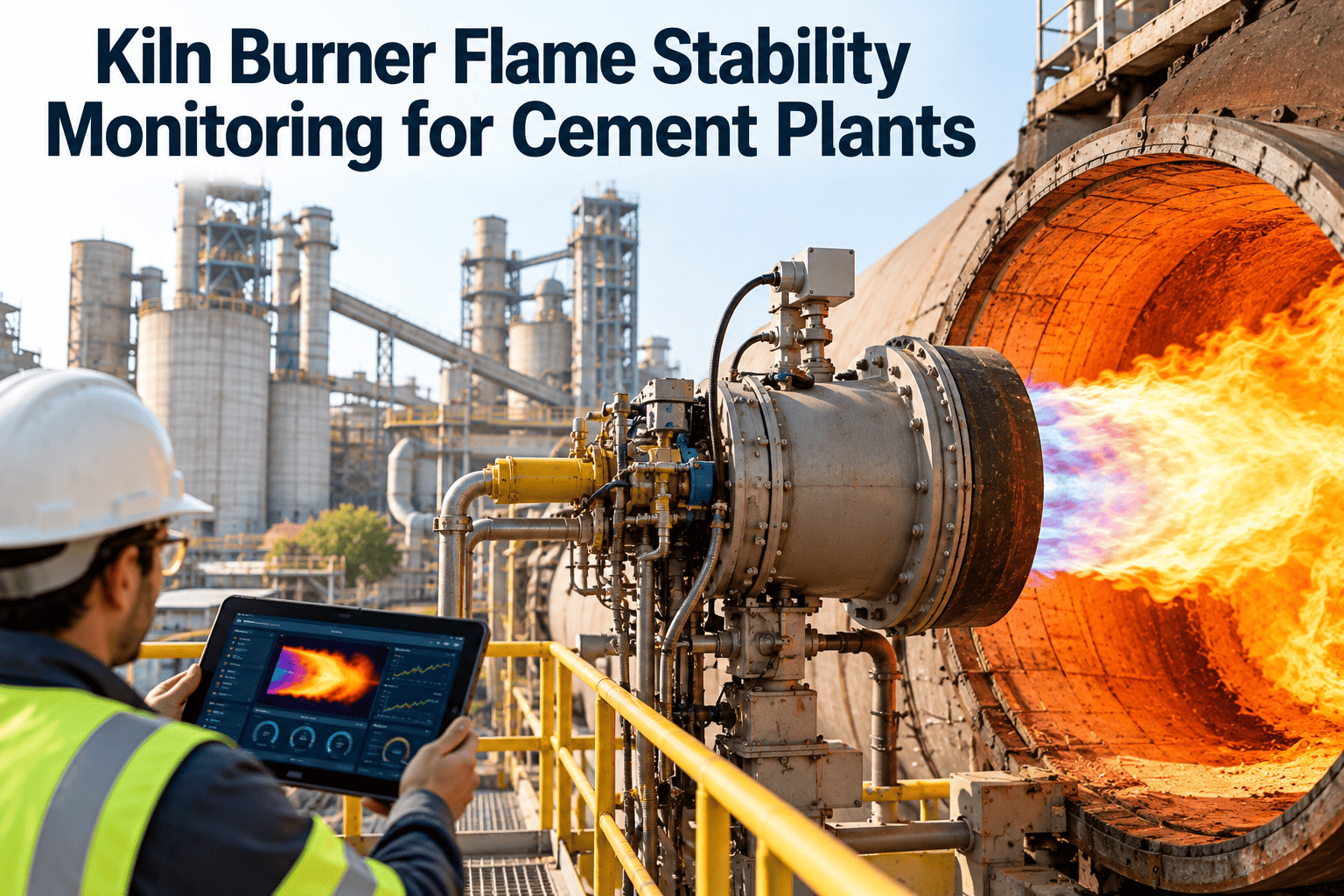
Hydrogen's higher flame temperature and different combustion stoichiometry accelerates burner tip wear. Plants report tip replacement intervals shrinking from 18–24 months (coal) to 8–14 months at 30%+ hydrogen co-firing ratios.
02
Seal Integrity Monitoring
Hydrogen molecules are small enough to permeate seals that are gas-tight for natural gas or propane. Standard compressed air leak testing is insufficient — hydrogen-specific soap bubble or electronic detector surveys must be added to the inspection program.
03
Flame Detection Upgrades
UV/IR flame detectors calibrated for hydrocarbon combustion may not reliably detect hydrogen flames, which are nearly invisible in daylight and emit UV radiation in different spectral bands. Most plants co-firing hydrogen must upgrade to multi-spectral or CCTV-based detection systems.
04
Leak Detection Networks
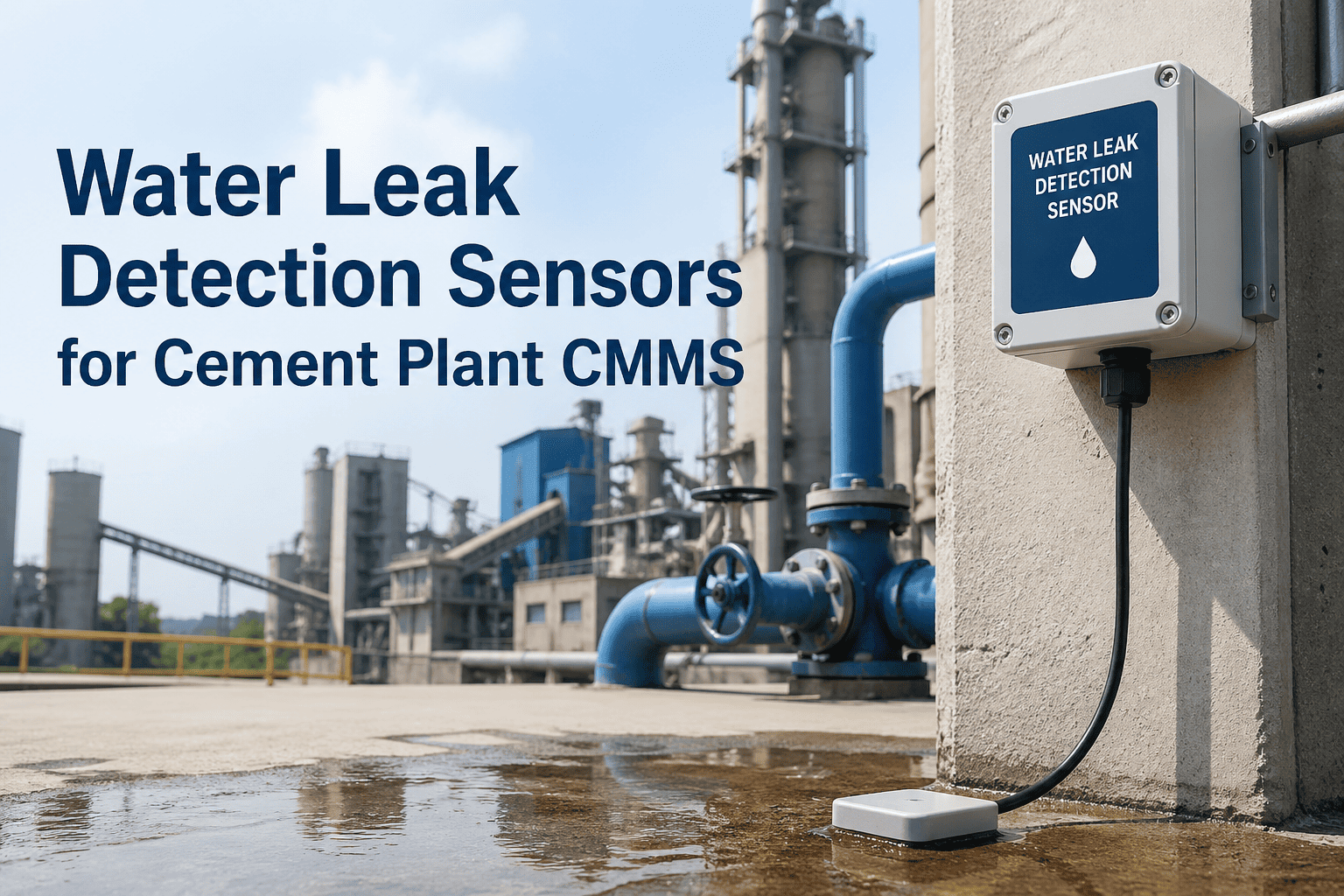
A hydrogen leak detection network covering supply lines, valve stations, burner connections, and enclosed spaces is a new infrastructure requirement with its own maintenance needs — sensor calibration, battery backup testing, alarm system functional checks, and catalyst replacement.
Burner Maintenance: What Changes and What to Measure
Burner maintenance programs written for coal or natural gas need restructuring for hydrogen co-firing. These are the specific changes that matter most for maintaining burner reliability.
| Maintenance Item |
Conventional Fuel Interval |
Hydrogen Co-Firing Interval |
What to Inspect |
| Burner tip dimensional check |
Annually |
Every 4–6 months |
Orifice diameter, tip erosion pattern, thermal distortion |
| Hydrogen pipe fitting torque check |
Not applicable |
Every 3 months |
All flanged and threaded connections on H₂ supply lines |
| Flame detector calibration |
Annually |
Every 6 months |
Spectral response, sensitivity, self-test function, lens cleanliness |
| Leak detection sensor calibration |
Not applicable |
Every 6 months |
Sensor zero and span calibration, response time test with bump gas |
| Fuel control valve seat inspection |
Every 2–3 years |
Annually |
Seat wear, seal condition, hydrogen embrittlement signs on body |
| Hydrogen supply line pressure test |
Not applicable |
Every 12 months |
Hydrostatic or pneumatic pressure test per design code |
Building a hydrogen co-firing maintenance program from scratch? Oxmaint's CMMS lets you configure hydrogen-specific work order templates, inspection intervals, and safety checklists — separate from your existing fuel system maintenance workflows.
IoT Sensor Strategy for Hydrogen Safety Monitoring
A passive inspection-only approach to hydrogen leak detection is insufficient for safety compliance. Continuous IoT monitoring covering all enclosed areas of the hydrogen supply system is considered best practice in the chemical and refining industries — and should be adopted by cement plants co-firing hydrogen.
Zone Coverage
Enclosed Spaces and Valve Rooms
Electrochemical or catalytic bead hydrogen sensors at ceiling level (H₂ rises rapidly). Alarm at 10% LEL (lower explosive limit), automatic isolation valve trip at 25% LEL. Sensors at maximum 5-meter spacing in enclosed rooms per IEC 60079-29-2.
Supply Line Monitoring
Pipeline and Fitting Surveillance
Open-path infrared or laser-based H₂ detectors can cover long pipeline sections without individual point sensors at every fitting. Supplement with quarterly manual soap bubble surveys at all flanged joints during operational rounds.
Burner Area
Kiln Hood and Burner Platform
Multi-gas detectors combining H₂, CO, O₂ deficiency, and combustible gas in a single unit. Personnel entering the burner platform during co-firing should carry portable H₂ monitors — integrate monitor data into the CMMS event log for compliance documentation.
Remote Alerting
CMMS-Integrated Alarm Management
Route detector alarms to both the control room DCS and CMMS simultaneously. CMMS auto-generates an emergency work order with response procedure checklist when any detector triggers — eliminating the gap between alarm and documented response action that regulators increasingly audit.
CMMS Workflows Specific to Hydrogen Co-Firing
Standard CMMS work order templates are built around rotating equipment and routine PM tasks. Hydrogen co-firing requires additional workflow types that most maintenance management teams have never needed before.
A
Hydrogen leak survey work order
A structured checklist work order triggered every three months covering all fittings, valves, and connections in the H₂ system. Technician records inspection result (pass/advisory/action required) at each point. Any action-required findings auto-generate a corrective work order with 24-hour response priority.
B
Flame detector calibration and functional test
Bi-annual work order requiring two-technician execution: one at the detector, one at the control panel confirming alarm response. Record sensitivity test result and self-test pass/fail status. Flag for replacement if response time to test flame exceeds 3 seconds or sensitivity has degraded more than 20% from baseline.
C
Burner tip wear measurement and trending
Quarterly dimensional inspection work order recording burner orifice diameter and tip condition photographs. CMMS triggers replacement recommendation when orifice has worn beyond 5% of design diameter or when thermal distortion is visible. Trend data across multiple burner replacements identifies whether wear rate is accelerating — which indicates burner alloy selection or operating parameter issues.
D
Hydrogen embrittlement inspection on critical components
Annual inspection targeting high-stress components in the hydrogen supply system: valve bodies, pipe elbows, flange bolts, and pressure regulator housings. Hydrogen embrittlement produces surface cracking that is invisible without dye penetrant or magnetic particle testing — include NDT in the annual work order for all components rated above 30 bar operating pressure.
E
Regulatory compliance documentation bundle
Generate a monthly compliance report from CMMS data covering: all H₂ leak survey results, detector calibration status, any alarm events with response records, burner condition status, and outstanding corrective actions. Most hydrogen co-firing regulatory frameworks (ATEX, DSEAR, local gas safety regulations) will audit exactly this data — having it auto-generated saves significant management overhead.
Hydrogen Co-Firing Maintenance KPIs to Track Monthly
Define these KPIs from day one of hydrogen operations. Waiting until an incident occurs to establish what good looks like is too late.
0
H₂ leak events exceeding 10% LEL
Target is zero. Any exceedance requires root cause analysis, system inspection, and regulatory notification in most jurisdictions within 24–72 hours.
100%
Detector calibration compliance rate
All hydrogen leak detectors and flame detectors must be within their calibration interval at all times. Any overdue calibration is a compliance failure, not just a maintenance KPI miss.
<8 mo
Mean burner tip replacement interval
Measure actual vs. planned interval. Significant deviation indicates H₂ co-firing ratio or combustion settings need adjustment to reduce thermal wear on burner hardware.
>90%
Planned maintenance completion rate for H₂ tasks
Hydrogen system maintenance has safety implications — a missed PM is qualitatively different from a missed gearbox lubrication. Target 90%+ on-schedule completion for all hydrogen-related work orders.
Ready to build a CMMS-backed hydrogen maintenance program? Oxmaint's platform supports custom work order templates, IoT sensor alarm integration, and regulatory compliance reporting — everything your hydrogen co-firing program needs.
Frequently Asked Questions
How much does hydrogen co-firing accelerate burner wear in cement kilns?
Early operational data from European and Asian cement plants suggests burner tip life decreases by 30–50% at hydrogen co-firing ratios of 20–40% by energy content. The exact rate depends on hydrogen concentration, burner alloy material, kiln operating temperature, and combustion air management. Plants using Inconel 625 or Haynes 230 alloy burner tips report better wear resistance than standard stainless grades at elevated hydrogen ratios.
Book a session to discuss burner tracking setup in Oxmaint.
What type of hydrogen leak detector is best for cement plant environments?
Catalytic bead (pellistor) sensors are widely used and cost-effective but are subject to poisoning by silicone vapors, chlorinated compounds, and sulfur — all present in cement plant atmospheres. Electrochemical hydrogen sensors offer better resistance to catalyst poisoning and are preferred for enclosed spaces near kiln and clinker handling areas. Laser-based open-path detectors are best for large open areas along pipeline routes. All sensor types require calibration every six months.
Track calibration schedules in Oxmaint.
Do existing cement plant flame detectors work for hydrogen flames?
Most standard UV/IR detectors used in cement plants are calibrated for hydrocarbon combustion. Hydrogen flames emit strongly in the UV band but produce minimal IR radiation, making them partially or completely invisible to many IR-dominant detectors. Multi-spectral UV/IR detectors with hydrogen-specific sensitivity settings, or CCTV-based flame detection using image analysis, are the recommended upgrade path for kiln burner areas co-firing hydrogen.
What regulations apply to hydrogen co-firing in cement plants?
Applicable regulations vary by country but typically include the ATEX/IECEx framework for equipment in explosive atmospheres, local pressure vessel and gas pipeline codes, site environmental permits covering emissions from alternative fuel use, and process safety management (PSM) requirements if hydrogen quantities cross defined thresholds. A CMMS compliance documentation module that auto-generates audit-ready records is strongly recommended before beginning hydrogen operations.
Sign up free to see Oxmaint's compliance reporting features.
Can Oxmaint integrate with hydrogen leak detector alarm systems?
Yes. Oxmaint supports IoT sensor integration via MQTT, Modbus, and REST API connections to industrial gas detection control panels and DCS systems. When a hydrogen detector triggers an alarm, Oxmaint can auto-generate an emergency work order with a pre-configured response checklist — closing the gap between physical alarm and documented maintenance response.
Book a demo to see a live integration demonstration.
Hydrogen Co-Firing Is New Territory — Your CMMS Should Be Ready for It
Oxmaint gives cement plants the workflow templates, IoT integrations, and compliance documentation tools to manage hydrogen co-firing maintenance safely and systematically — from day one of green fuel operations.