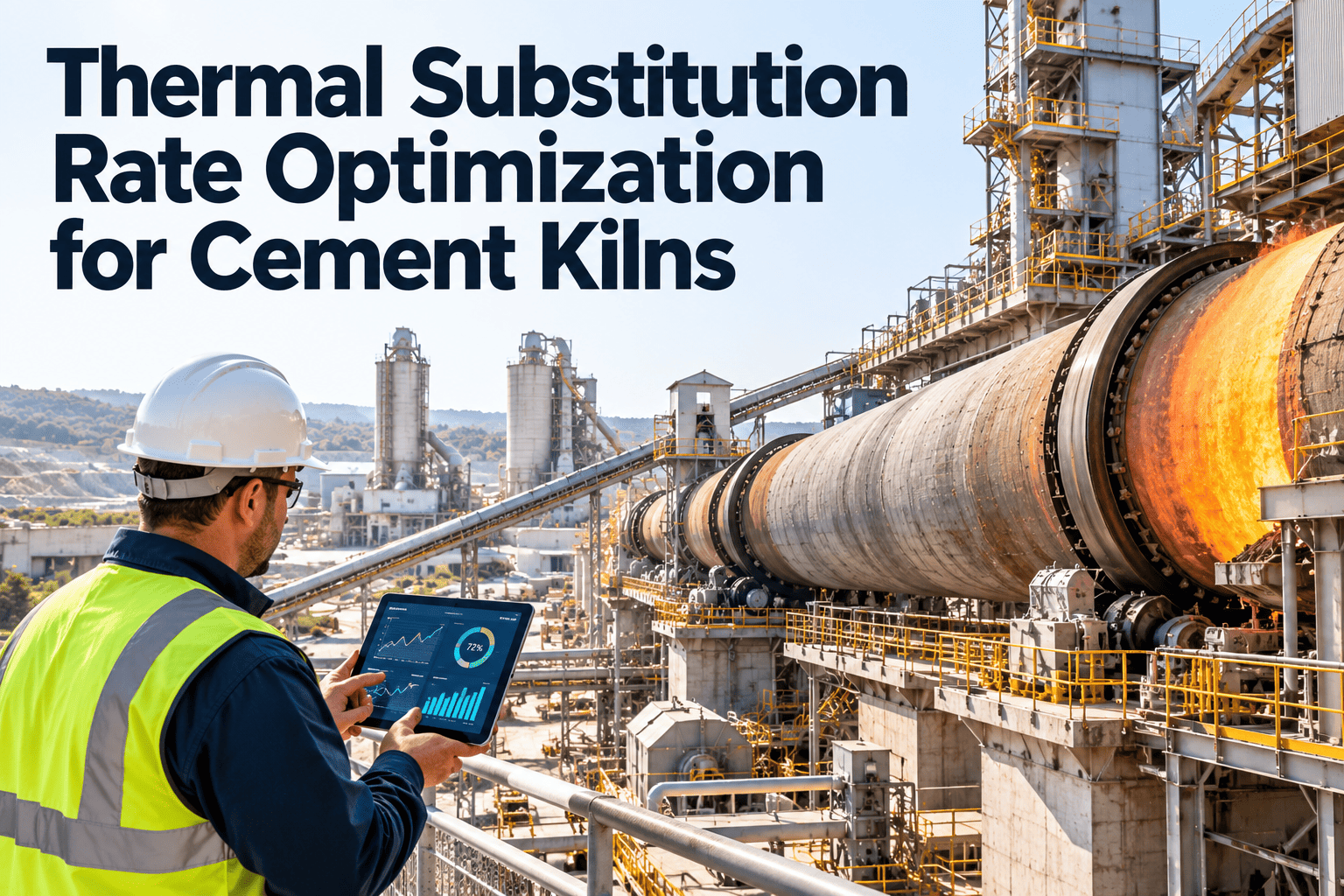
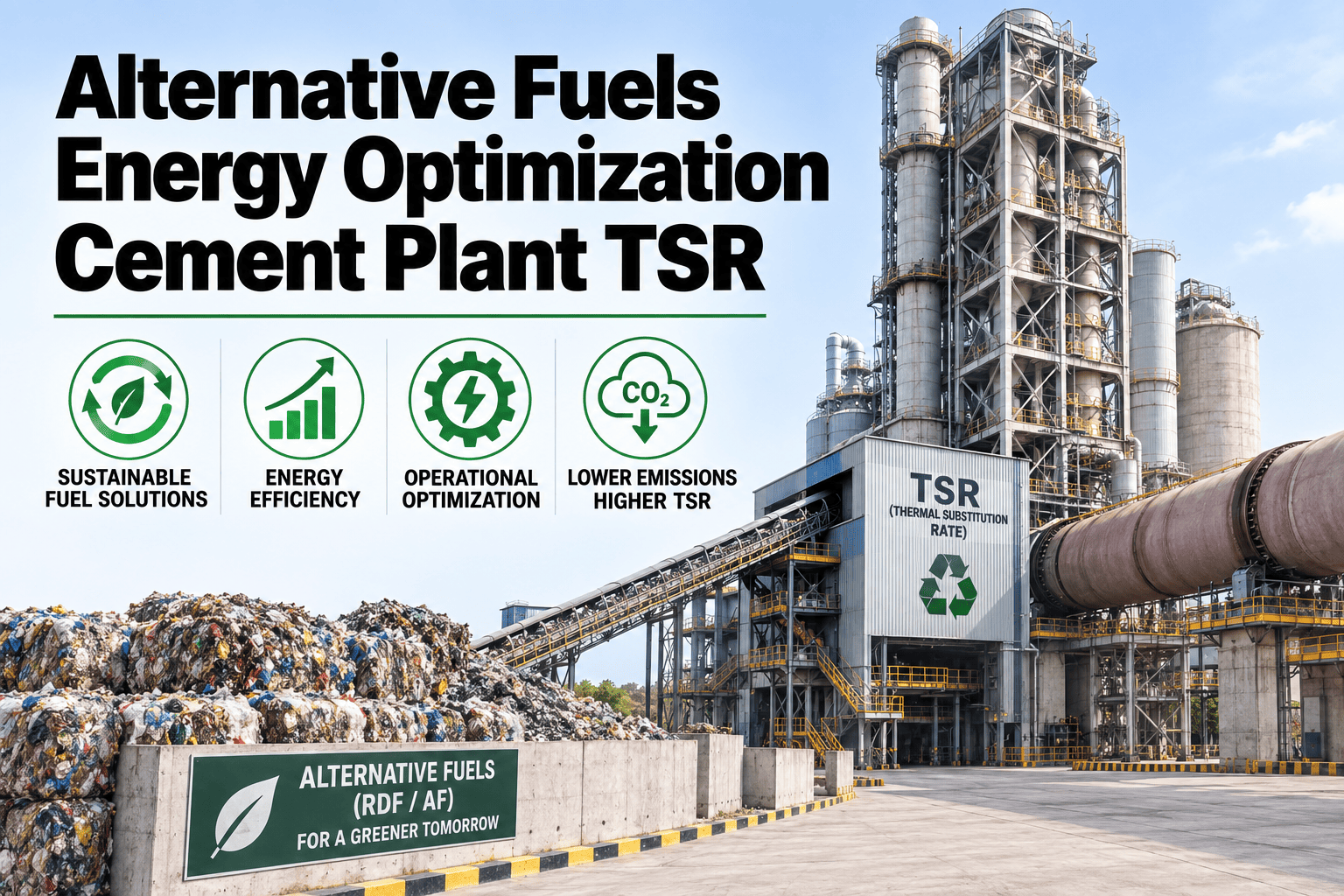
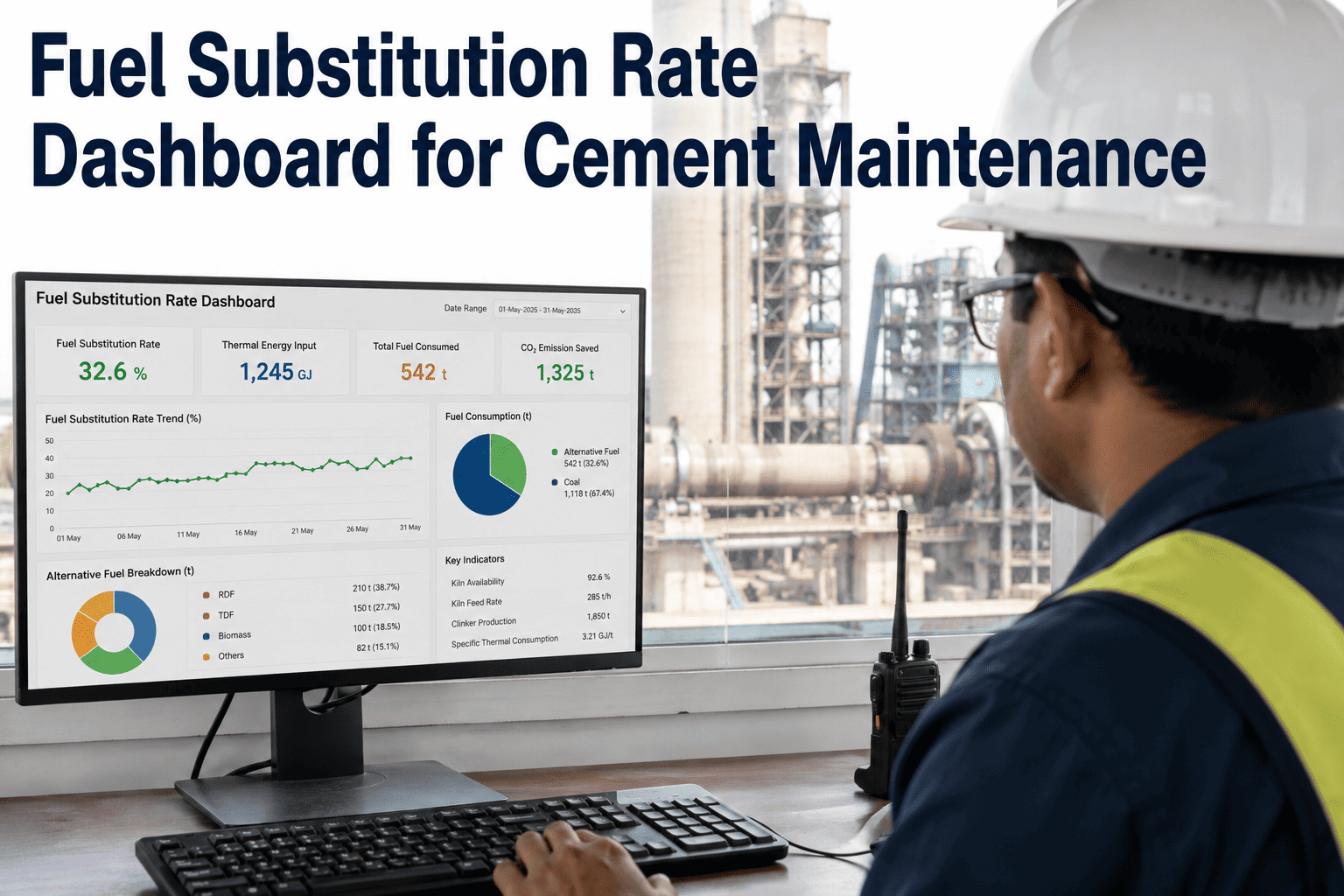
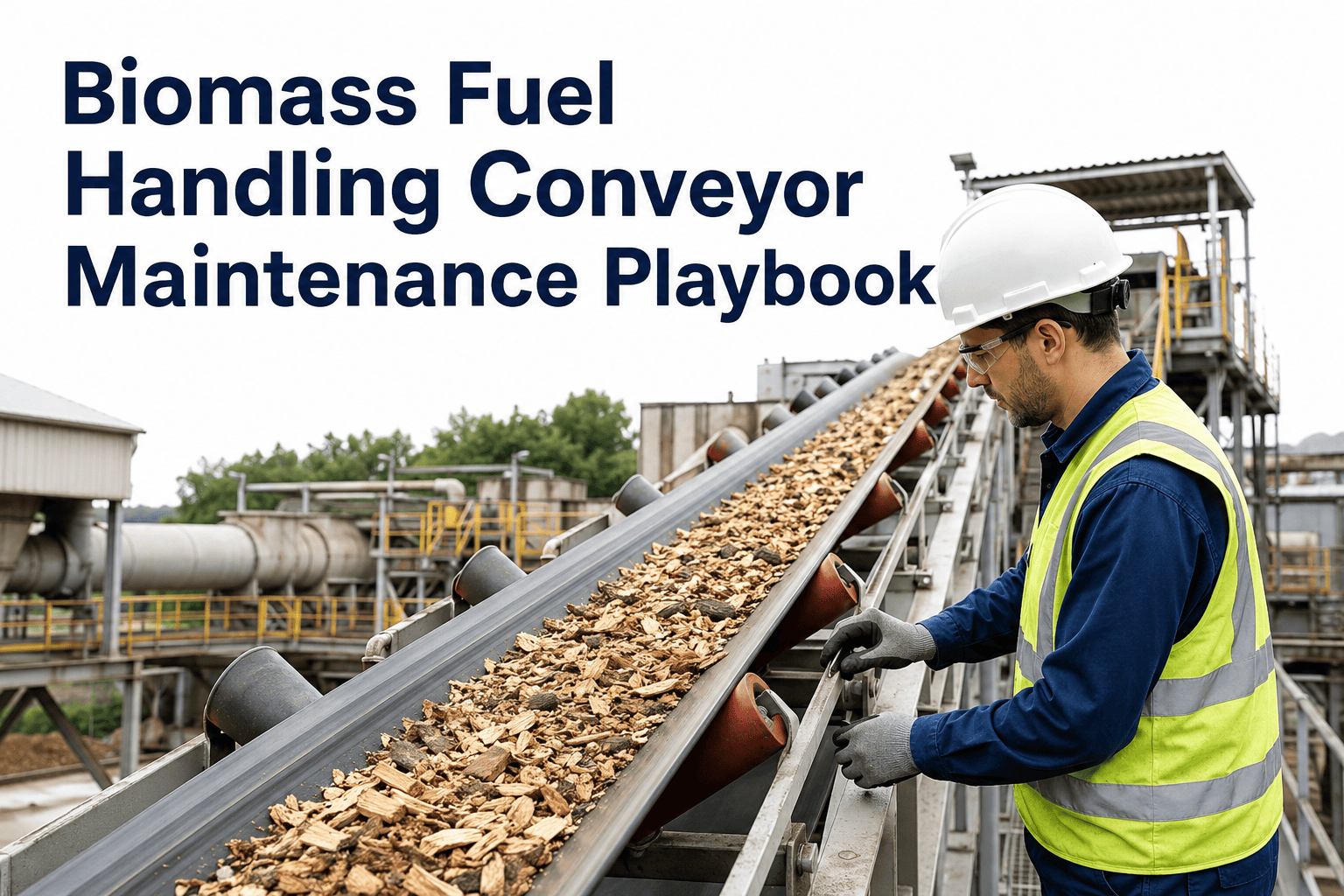
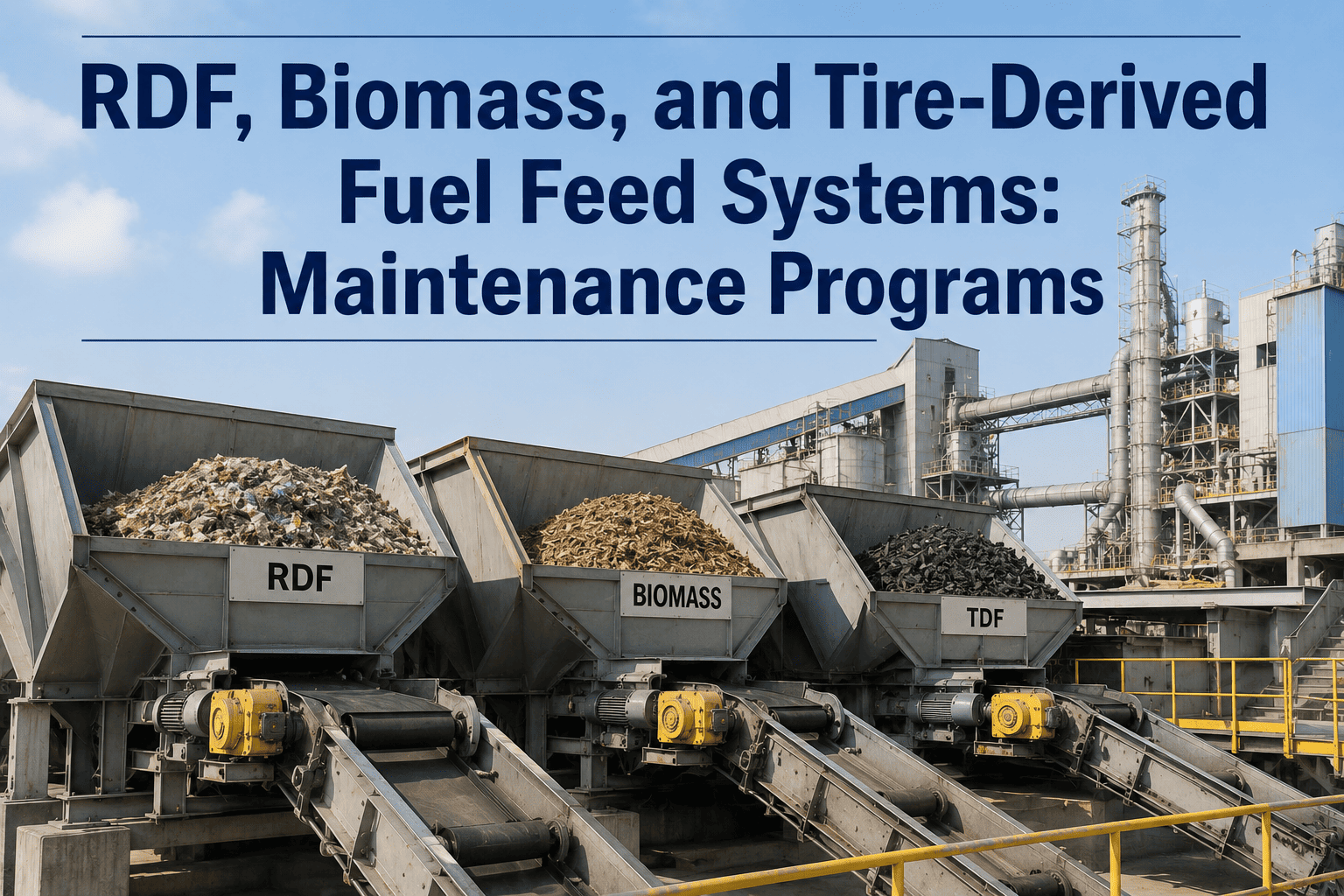
The cement industry burns through 8% of global CO₂ emissions and consumes roughly 120 kg of coal per tonne of cement produced — making energy the single largest controllable cost at 40% of total production expenses. Yet the gap between leaders and laggards in alternative fuel adoption is staggering: EU plants average a 52% thermal substitution rate while U.S. plants sit at just 16%. One plant in Catalonia hit 100% alternative fuel use and boosted clinker output by 37%. The operational and financial case for fuel switching is no longer theoretical — it is a proven competitive advantage that separates cement manufacturers who will thrive from those who will struggle under tightening carbon regulations and volatile fossil fuel markets. If your plant still relies entirely on coal and petcoke, this guide maps the exact operational pathway to change that. Managing the complexity of alternative fuel operations demands real-time visibility into fuel quality, kiln conditions, and equipment health — exactly what Oxmaint's CMMS platform delivers for cement plant teams.
Alternative Fuels in Cement Production: Why It Matters Now
Alternative fuels in cement manufacturing are non-traditional energy sources used to replace conventional fossil fuels — coal, petroleum coke, natural gas — inside rotary kiln systems operating above 1,450°C. The kiln's high temperatures, long residence times, and alkaline environment ensure complete destruction of organic waste components while binding inorganic residues directly into the clinker matrix. This dual function of energy recovery and waste elimination positions cement plants as critical nodes in the circular economy, diverting millions of tonnes from landfills annually while cutting fuel procurement costs.
Alternative Fuel Types and Thermal Properties
Not all alternative fuels perform identically inside a cement kiln. Each fuel stream introduces unique calorific values, moisture levels, ash chemistry, and handling characteristics that directly influence flame behavior, clinker quality, and emissions output. Selecting the right fuel mix — and managing it properly — is what separates successful AF programs from costly failures.
Refuse-Derived Fuel (RDF)
Derived from non-recyclable municipal waste. Requires mechanical-biological preprocessing for consistent particle size below 25mm for calciner injection.
Tire-Derived Fuel (TDF)
45% of U.S. scrap tires already processed in cement kilns. Steel wire content affects raw mix iron balance — requires modulus recalculation.
Biomass & Agricultural Waste
Rice husks, palm shells, wood waste, bagasse. Biogenic CO₂ fraction can count as carbon-neutral under specific accounting frameworks.
Waste Oil & Solvents
Highest NOₓ reduction potential at 17–87% across substitution scenarios. Requires dedicated liquid injection systems at kiln and calciner.
Sewage Sludge
Requires thermal drying before kiln use. NOₓ reduction ranges 14–80%. High phosphorus content may alter clinker chemistry.
Municipal Solid Waste (MSW)
SO₂ emissions may increase 0.5–1% at higher substitution. Chlorine content demands continuous bypass monitoring to prevent preheater blockage.
Global Thermal Substitution Rate Comparison
The thermal substitution rate (TSR) measures the percentage of kiln thermal energy derived from alternative fuels. This single metric benchmarks a plant's decarbonization progress and fuel cost optimization. The regional disparity reveals how regulatory environments, waste infrastructure maturity, and operational readiness shape outcomes.
Data compiled from PCA (2023), GCCA, IFC, and Lawrence Berkeley National Lab (Dec 2024). Catalonia plant achieved 100% AF use with 37% clinker production increase.
Track Alternative Fuel Performance in Real Time
Oxmaint gives maintenance and operations teams a unified dashboard for fuel quality tracking, kiln condition monitoring, and automated work order generation — built for cement plant environments.
Operational Impact on Kiln Performance and Clinker Quality
Switching to alternative fuels introduces variables that directly affect flame profile, heat distribution, coating stability, and clinker mineralogy. Poorly managed transitions cause ring formation, unstable kiln operation, and off-spec clinker. Signing up for Oxmaint gives your team the data infrastructure to manage these variables without guesswork.
Flame & Combustion Effects
Lower calorific fuels with higher moisture produce longer, less intense flames that shift the burning zone downstream. RDF particles above 60mm create localized hot spots and uneven heat distribution. Real-time adjustments to primary air volume, fuel feed rate, and kiln speed are essential — parameters that benefit from automated monitoring workflows.
Clinker Chemistry Changes
AF ash directly influences raw mix balance. TDF introduces iron through steel wire — requiring iron modulus recalculation. Biomass ash is high in alkalis (K₂O, Na₂O), increasing volatile circulation and causing preheater blockages. Chlorine from MSW and RDF creates bypass dust issues. LSF, SM, and AM values need continuous validation.
Emissions Profile Shifts
Waste oil offers the highest NOₓ reduction at 17–87%. Biomass shows the lowest at 5–27%. SO₂ can marginally increase with scrap tires (1–4%) and MSW (0.5–1%). Particulate matter generally decreases across all AF types (8–75% reduction). CEMS data must integrate into your operational dashboards to flag compliance deviations early.
Step-by-Step Kiln Integration Process
Successfully integrating alternative fuels requires a phased approach covering preprocessing, feeding systems, kiln modifications, and quality control. This framework reflects best practices from plants sustaining 50%+ TSR levels. Every phase generates maintenance actions that should be tracked through structured work orders — explore how Oxmaint handles this for cement operations.
Fuel Characterization & Feasibility
Conduct proximate and ultimate analysis of candidate fuels. Evaluate calorific value consistency, chlorine content (below 0.5% to avoid bypass issues), heavy metal concentrations, and particle size distribution. Map local waste availability within 150 km radius for sustainable supply economics. AF materials are fibrous and flaky — demand vertical-wall stainless steel hoppers with storage height limited to 1–2x hopper width for bottom extraction.
Infrastructure Modification
Install dedicated receiving, storage, and dosing systems. Solid AF requires shredders for size reduction below 25mm (calciner) and below 50mm (main burner). Liquid AF needs heated storage, filtration, and precision pumping. Retrofit multi-channel burner capability for simultaneous solid and liquid AF. Add thermocouples at calciner outlet, O₂ analyzers, and CO monitors for tighter process control.
Trial Burns & Optimization
Begin at 5–10% TSR using the most consistent stream (typically TDF or waste oil). Run 30-day trials with stack testing at 7, 14, and 30-day intervals. Monitor kiln shell temperatures, torque variations, and clinker free-lime as primary stability indicators. Increase substitution in 5% increments with minimum 2-week stabilization between each step. Document all parameter changes as structured work orders.
Sustained Operations & Scaling
At target TSR, focus shifts to supply chain reliability, quality consistency, and predictive maintenance of AF-specific equipment. Implement automated fuel blending based on real-time kiln thermal feedback. Establish acceptance criteria and rejection protocols. Scale higher by adding new fuel streams — maintain minimum 3 different AF sources to mitigate supply disruption risk.
Cost and ROI Analysis of Fuel Switching
The economics of alternative fuels are compelling but require modeling that accounts for direct savings and indirect costs. Plants that integrate fuel management with digital maintenance systems like Oxmaint consistently achieve faster payback and sustained performance gains.
Cost data from published EU and U.S. cement operation case studies. Actual figures vary by local waste markets, regulation, and plant configuration.
Why a CMMS Is Non-Negotiable for AF Operations
Operating a kiln on alternative fuels adds complexity that manual systems cannot handle. Fuel quality fluctuates batch to batch. Feeding systems wear faster from abrasive materials. Kiln coating behavior changes with ash chemistry. Emissions monitoring tightens. Each variable generates maintenance actions, inspection requirements, and compliance documentation that must be tracked centrally.
AF Equipment Preventive Maintenance
Shredders, conveyors, dosing feeders, and liquid injection systems need accelerated PM schedules. Oxmaint automates PM generation based on runtime hours, throughput tonnage, or calendar intervals — adjusting dynamically when equipment conditions change.
Fuel Quality and Kiln Condition Logging
Every AF batch should have proximate analysis logged against the kiln run that consumed it. Customizable inspection forms let operators record calorific value, moisture, chlorine, and particle size from mobile devices at delivery — creating full traceability from fuel quality to clinker outcomes.
Emissions Compliance Tracking
When CEMS flags an SO₂ or NOₓ exceedance, Oxmaint auto-generates a corrective action work order, assigns it to the responsible engineer, and logs resolution — building the audit trail regulators require.
Refractory and Coating Monitoring
AF alters flame characteristics and heat profiles, directly impacting refractory wear and coating stability. Structured kiln scan logging, thickness tracking, and automated alerts when measurements approach thresholds prevent unplanned shutdowns costing $50,000–$200,000 per day.
Manage Your Alternative Fuel Transition with Confidence
From fuel quality logging to kiln condition monitoring and automated compliance tracking — Oxmaint is the CMMS built for modern cement plant operations. Join hundreds of maintenance teams who have digitized their workflows.
Regulatory Landscape and Compliance Requirements
The regulatory framework for AF use in cement kilns varies by jurisdiction but is converging toward stricter emissions limits, mandatory waste tracking, and carbon pricing. The EU ETS covers 11,000+ installations since 2005. China's ETS launched in 2021 with 2,200 installations. The UAE Net Zero 2050 Strategy expands carbon pricing across manufacturing. In the U.S., the Clean Air Act and EPA's NHSM Rule dictate which materials qualify as fuels versus solid waste.
CEMS for NOₓ, SO₂, HCl, CO, PM, and TOC are mandatory in most jurisdictions during AF co-processing. Stack testing frequency increases during trial burns. All CEMS data must be retained minimum 5 years with documented quality assurance procedures.
Fuel vs. waste determination dictates the entire permitting pathway. U.S. EPA NHSM Rule defines which secondary materials qualify as fuels. EU end-of-waste criteria under the Waste Framework Directive apply in Europe. Misclassification risks facility-wide permit revocation.
Biogenic CO₂ from biomass-based AF can be counted as carbon-neutral under most frameworks. Fossil-derived waste fractions cannot. Accurate stream separation is essential — a 2024 LCA study showed up to 12.7% lifecycle GHG reduction when biogenic rotation and storage are properly credited.
Frequently Asked Questions
What is the thermal substitution rate and why does it matter?
TSR measures the percentage of kiln thermal energy from alternative fuels instead of fossil fuels. It is the primary benchmark for decarbonization progress and fuel cost optimization. Higher TSR directly correlates with lower fossil fuel costs and reduced Scope 1 emissions — both increasingly tied to carbon credit economics and regulatory compliance.
Can alternative fuels affect cement quality?
Yes, but the impact is manageable with proper controls. AF ash introduces additional components into the raw mix that can alter clinker mineralogy. Plants operating at 60–80% TSR in Europe consistently meet EN 197-1 quality standards through rigorous fuel quality specs (calorific value, chlorine, heavy metals, ash chemistry) and continuous raw meal design adjustments.
What capital investment is needed to start using alternative fuels?
Initial infrastructure ranges from $2M to $8M depending on plant size, existing equipment, and target fuel types. This covers receiving, storage, preprocessing, dosing systems, burner modifications, and instrumentation. Most plants achieve full payback within 18–36 months through fuel savings and waste gate fee revenue.
How does a CMMS help manage alternative fuel operations?
A CMMS centralizes all AF maintenance: preventive maintenance on feeding and preprocessing equipment, fuel quality inspection logging, kiln condition monitoring, emissions compliance tracking, and spare parts inventory. Without digital systems, the complexity of multiple fuel streams overwhelms manual processes, causing missed inspections and compliance gaps.
What are the biggest operational risks of fuel switching?
Primary risks include inconsistent fuel quality causing kiln instability, accelerated equipment wear, chlorine-induced preheater corrosion, emissions exceedances during transitions, and supply chain disruptions. All are mitigable through proper characterization, phased implementation, diversified supply, and digital work order management.
Which alternative fuel delivers the best ROI?
TDF often provides fastest ROI due to high calorific value (28–35 MJ/kg), low moisture, minimal preprocessing, and established supply chains. Waste oil also delivers strong economics with significant NOₓ reduction. Most high-performing plants use 3+ fuel streams simultaneously to balance cost, quality, and supply reliability.
Is green hydrogen viable for cement kilns?
Green hydrogen is being explored in India and Europe. Early trials show co-processing potential, but current costs ($4–6/kg vs coal at $0.05–0.10/kg equivalent energy) remain prohibitive. Commercial viability for cement is expected in the 2030–2035 timeframe as electrolyzer costs decline and renewable electricity prices fall.
Related Resources for Cement Plant Optimization
Cement Kiln Energy Optimization & Fuel Consumption
Thermal efficiency strategies, heat balance calculations, and fuel consumption benchmarking for rotary kiln systems.
Read Full Guide →Cement Industry Decarbonization Roadmap & Technology
Carbon capture, alternative binders, electrification pathways, and regulatory frameworks for net-zero cement manufacturing.
Read Full Guide →Cement Kiln Refractory Maintenance & Lining Life
Refractory selection, installation, monitoring, and lifecycle management for kilns running alternative fuels.
Read Full Guide →Reduce Unplanned Downtime in Cement Plants with CMMS
How leading operations use digital maintenance to cut unplanned stops by 45% and drive kiln availability above 92%.
Read Full Guide →