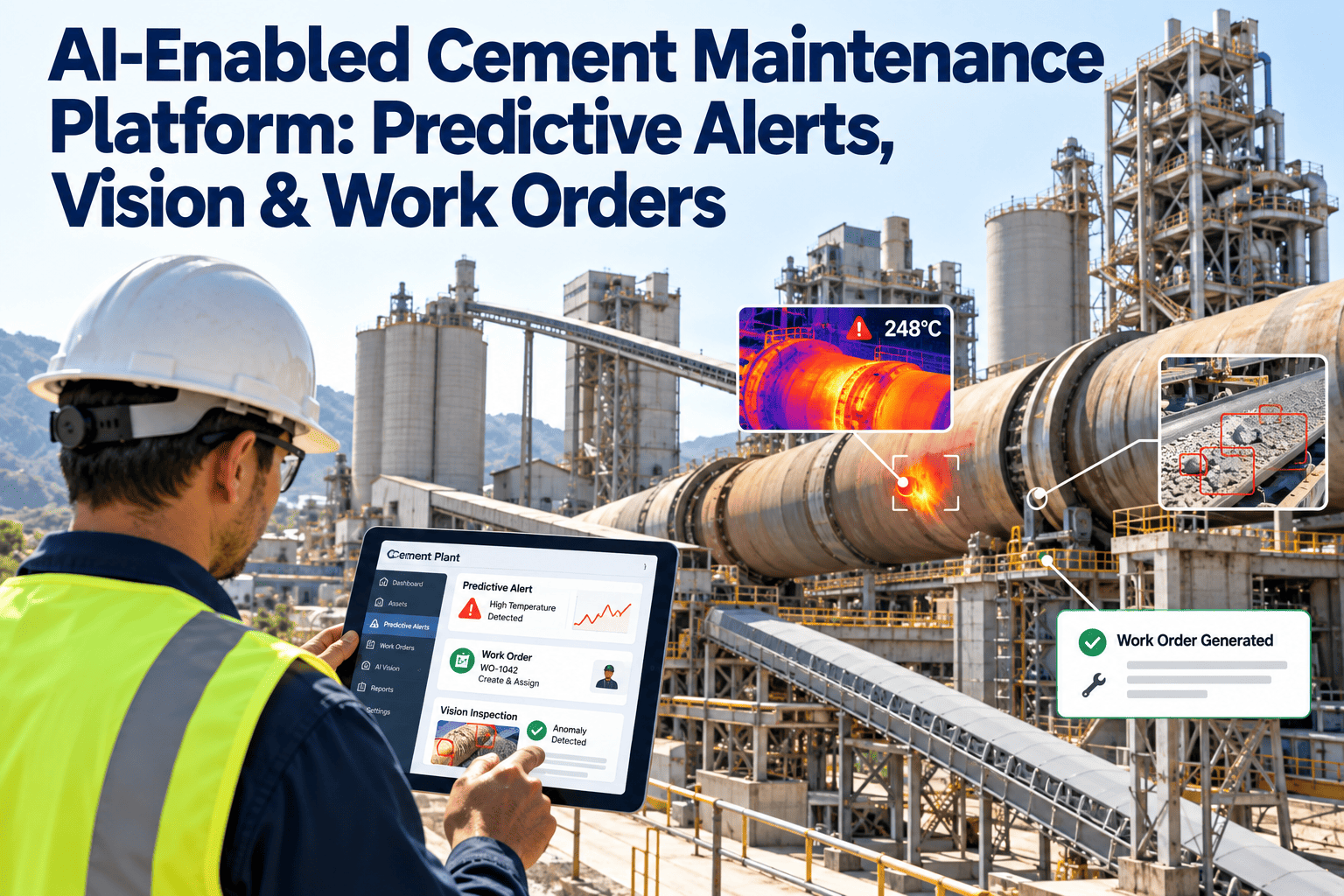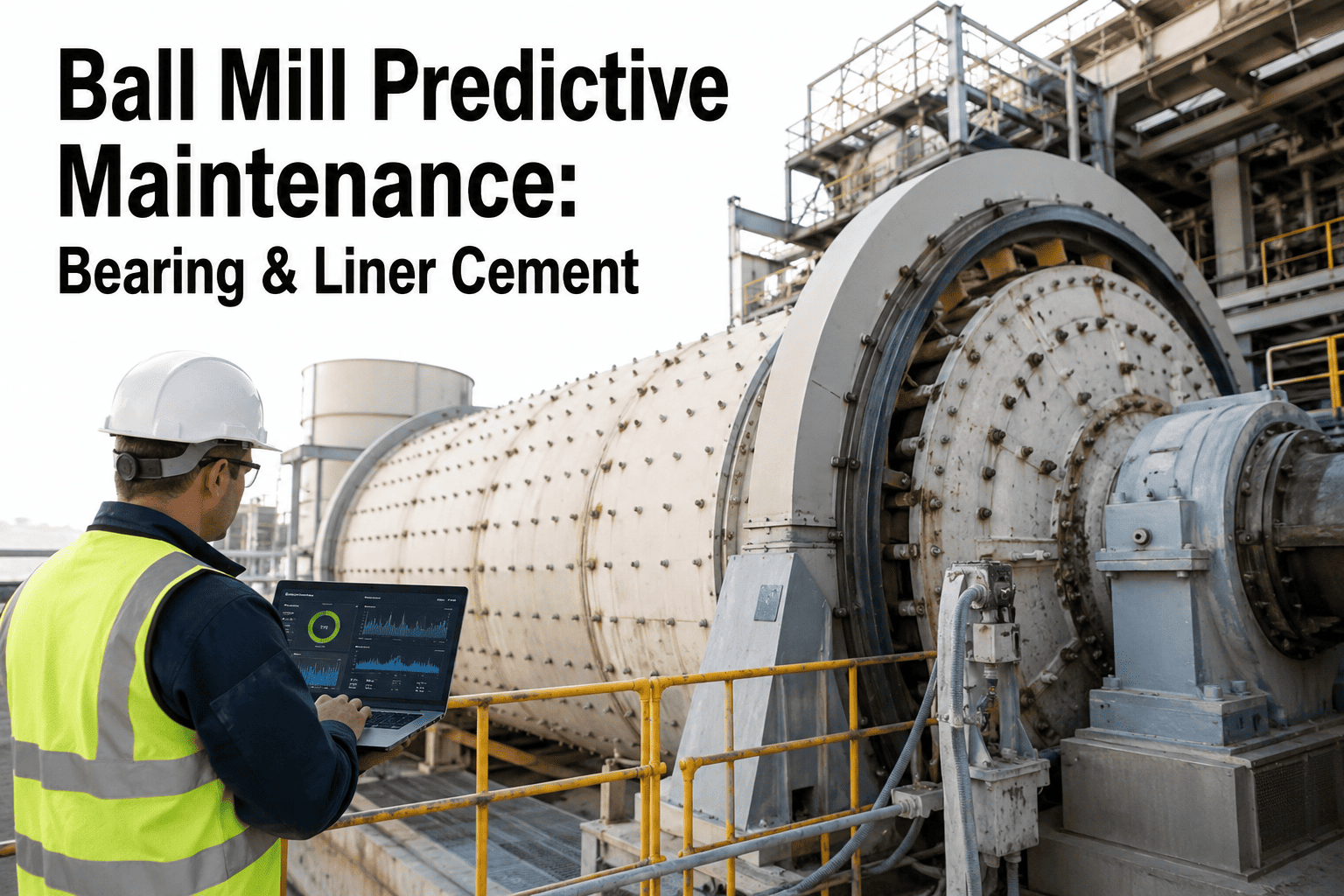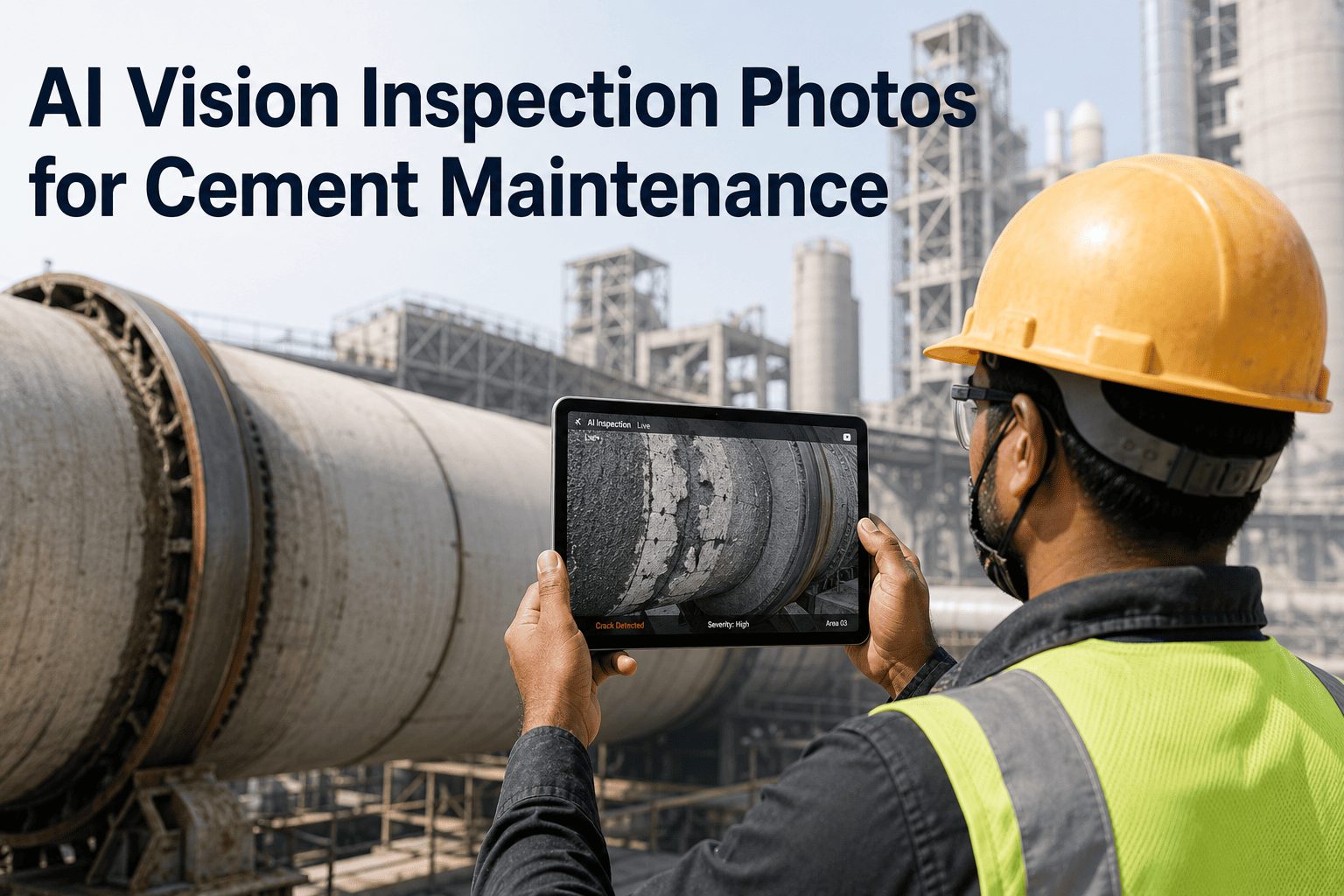
Mill liners account for 30 to 40% of ball mill maintenance cost, and the decision of exactly when to reline sits on a knife edge — replace too early and budget is wasted on liner that still had service life left, replace too late and the risk shifts to shell damage, bolt failure, and a throughput collapse mid-run. For decades that decision has depended on a technician's visual judgment during a shutdown, compared against memory of what last quarter's liner looked like. Oxmaint's AI Vision module replaces that judgment call with a photo-based measurement trail every plant can point to.
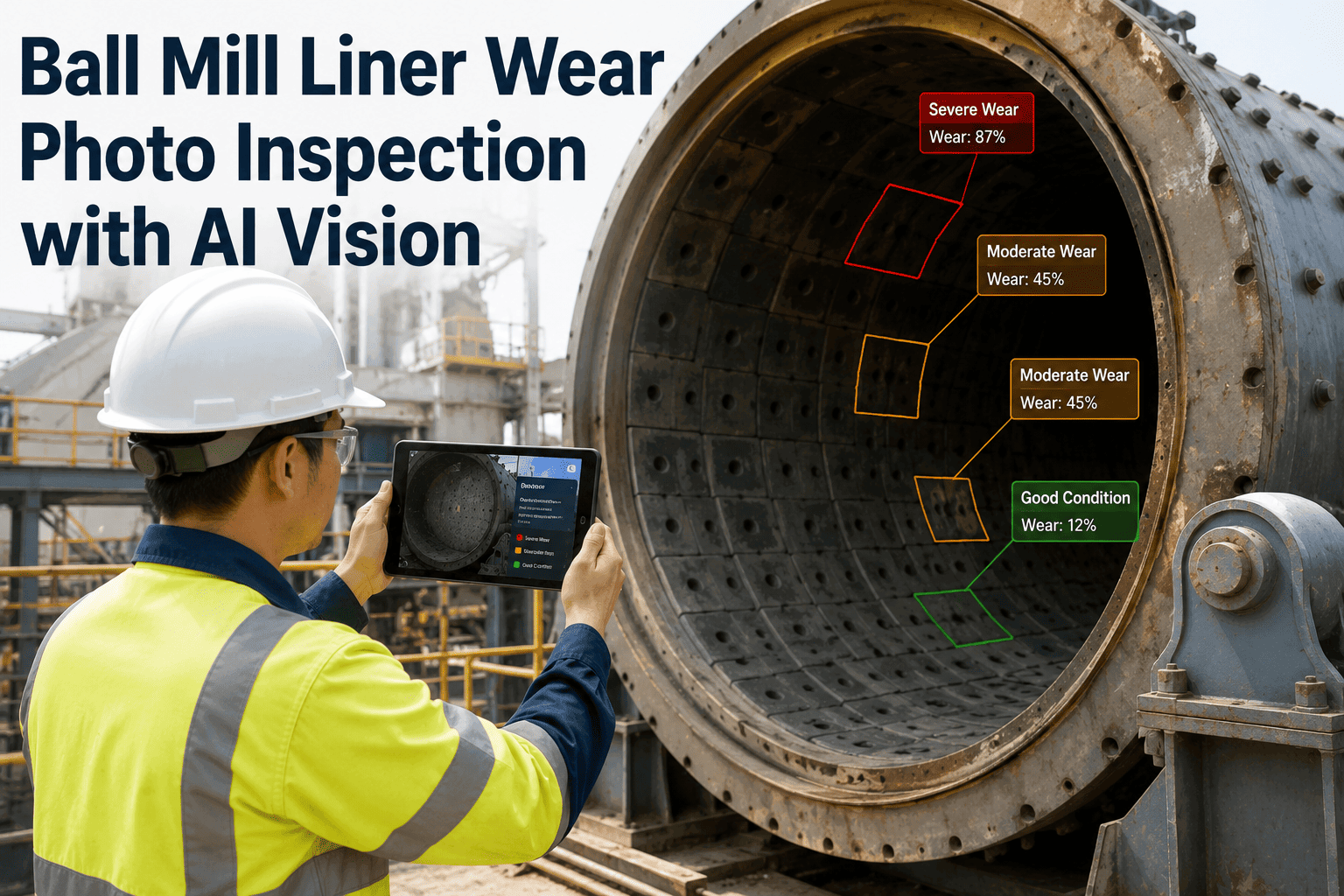
Ball Mill Liner Wear Photo Inspection with AI Vision
Every liner follows the same wear curve — fast initial wear, a long stable zone, then a rapid decline. The question has never been whether the curve exists. It has always been whether anyone is measuring where on the curve a specific liner sits, today.
Manual Inspection vs Photo-Based AI Inspection
The two methods use the same shutdown window and the same access to the mill interior — the difference is entirely in what gets recorded and how consistently it can be compared over time.
Liner Cost Accounts for 30–40% of Ball Mill Maintenance Spend
A few weeks of miscalculated replacement timing, repeated across every liner zone and every shutdown, adds up to real budget — in either direction. AI Vision closes that gap with a measured record instead of a memory.
The Liner Wear Curve — Four Zones, Four Different Risks
Every mill liner follows a broadly predictable wear progression. Understanding which zone a specific liner segment sits in changes what the correct maintenance action actually is.
How the Photo Inspection Workflow Runs
Photo Capture at Shutdown
Technician captures liner zone photos using a standard mobile device during the scheduled inspection window — no specialized camera equipment required.
AI Wear Pattern Analysis
The vision model compares current photos against the liner's historical image set, flagging profile change, exposed bolt heads, and localized thinning by zone.
Calibration Against Ultrasonic Readings
Periodic ultrasonic thickness measurements anchor the visual model to an actual physical reading, keeping the wear curve estimate accurate over the liner's full service life.
Replacement Window Recommendation
The system outputs a recommended reline window per zone, tied directly to a work order and the correct liner part numbers pulled from inventory.
Frequently Asked Questions
How accurate is AI photo inspection compared to ultrasonic thickness measurement?
AI photo-based wear prediction accuracy depends on periodic calibration against physical ultrasonic thickness readings taken at every shutdown — the vision model is a continuous estimation layer between those calibration points, not a replacement for the physical measurement itself. When calibrated regularly, photo-based tracking closes the gap between the infrequent physical readings with a consistent, comparable visual record. Start free in Oxmaint to see the calibration workflow.
Do we need special cameras to use AI Vision liner inspection?
No. Standard mobile device cameras are sufficient for the photo capture step. The value comes from the consistency of comparison and the automated wear pattern analysis applied to those photos over time, not from specialized imaging hardware — which is why plants can begin building a photo history from the very next scheduled shutdown.
What is the cost difference between relining a liner too early versus too late?
Relining early wastes the remaining service life of good liner material and adds unnecessary planned downtime to the maintenance calendar. Relining late risks shell damage, bolt failure, and throughput collapse — an emergency zone failure that costs dramatically more in both parts and lost production than the liner replacement itself would have. Both outcomes are avoidable when the wear zone is measured rather than estimated by memory. ABC classification for spare parts also helps plan liner stock ahead of a confirmed replacement window.
Can liner wear tracking integrate with work order and inventory systems?
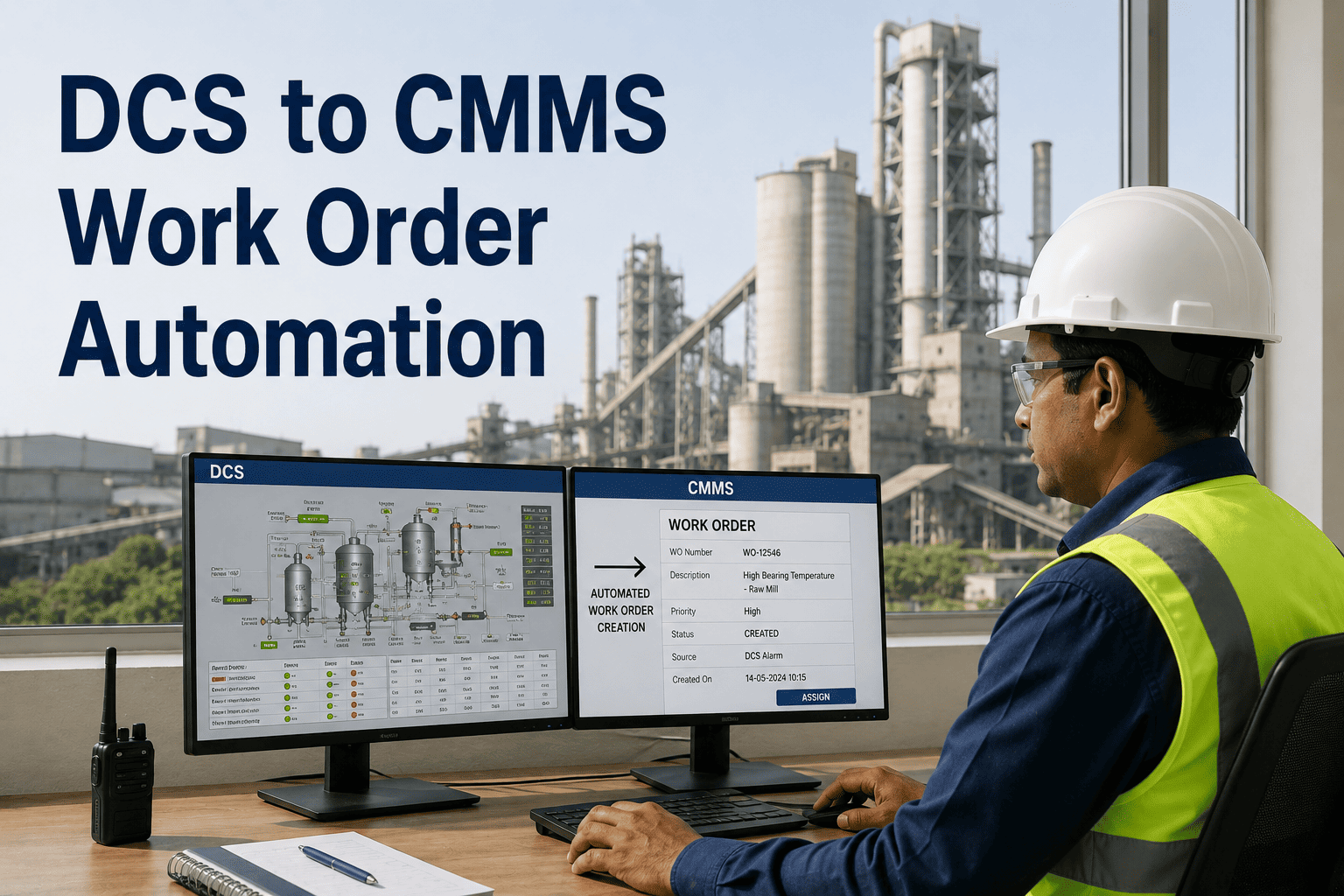
Yes. When the AI Vision model flags a liner zone approaching its replacement window, Oxmaint generates a work order automatically with the correct liner part number and quantity pulled from the asset's bill of materials — eliminating the manual step of a planner cross-referencing wear data against a separate parts catalog. Book a demo to see the liner-to-work-order flow.
Does liner wear affect grinding efficiency before it becomes a safety concern?
Yes — this is one of the most overlooked costs of a degrading liner. As the liner profile changes in the degradation zone, impact energy transfer to the grinding media becomes less efficient, meaning the mill can consume more kWh per tonne of product well before the liner reaches a condition that would be flagged as an emergency risk. Catching this transition early protects both grinding efficiency and safety margin at the same time.
Replace Liner Memory With a Liner Measurement Record
Photo-based wear tracking, calibrated against ultrasonic readings, with automatic work orders when a zone approaches its replacement window.