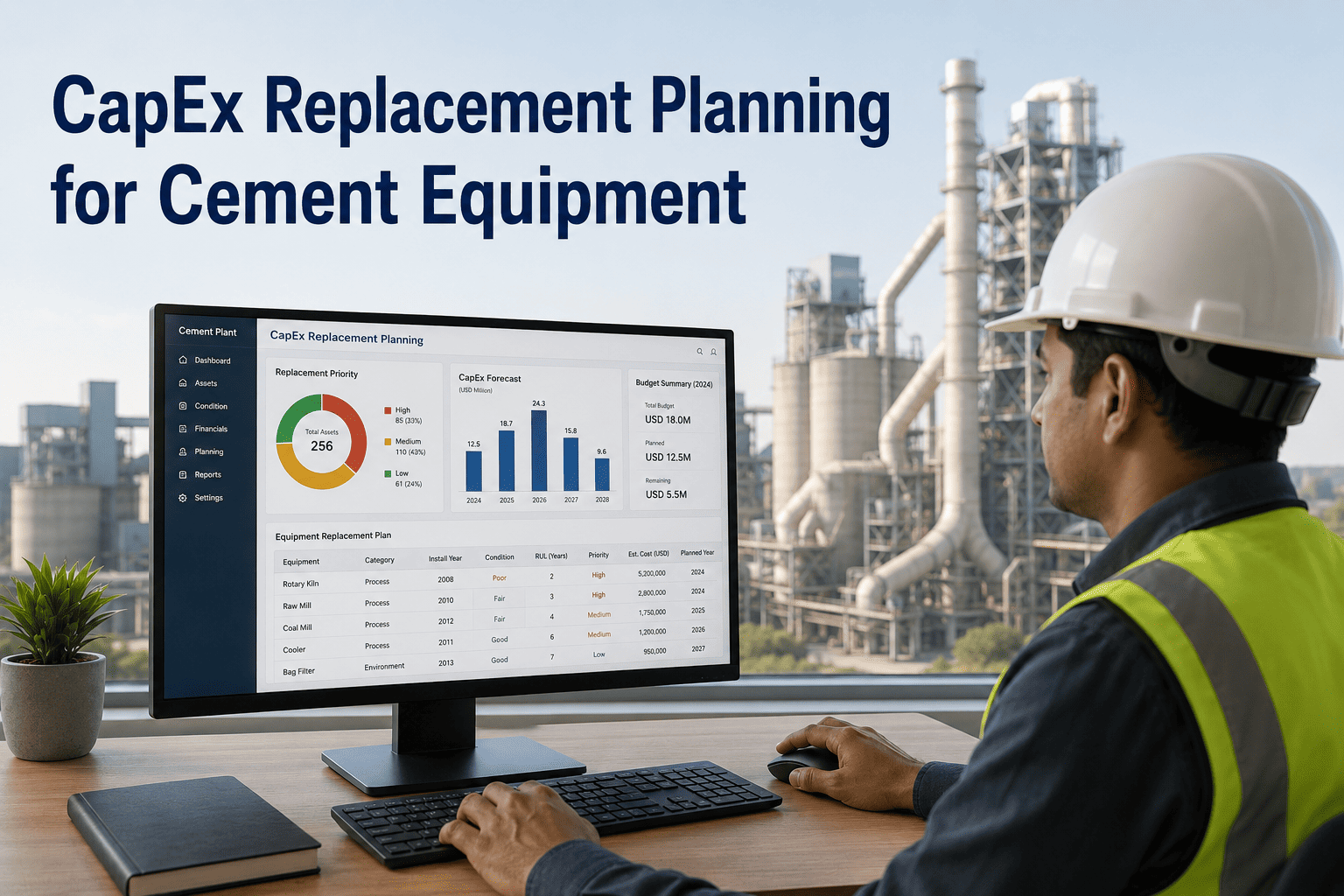
CapEx decisions in a cement plant are rarely wrong because of bad intent — they're wrong because of missing data. When a maintenance manager recommends replacing the raw mill main gearbox, the finance committee wants to know: how much has it cost to maintain, how many times has it failed, what's the production downtime exposure, and what happens if we wait another 18 months? Without a system that aggregates maintenance cost, downtime history, and asset risk in one place, those answers come from memory and spreadsheets — and capital gets allocated to the equipment that got argued for most loudly rather than the equipment that needs it most. OxMaint's analytics and reporting turns your maintenance history into a CapEx planning tool, giving cement plant teams the data to prioritize equipment replacement decisions with evidence. Sign up free to start building the maintenance data behind your next CapEx case, or book a demo for a walkthrough of the CapEx planning dashboard.
ANALYTICS AND REPORTING · CEMENT PLANTS · CAPEX PLANNING
The Right Equipment Gets Replaced. When the Data Says So.
OxMaint turns cement plant maintenance history into CapEx evidence — cost per asset, downtime per failure, risk score per piece of equipment — so every replacement decision is defensible.
SAMPLE CAPEX PRIORITY RANKING
01
Kiln Tyre — Unit 2
Cost: $186k | MTBF: 14mo | Risk: Critical
Replace Now
02
Raw Mill Gearbox
Cost: $94k | MTBF: 22mo | Risk: High
Plan FY26
03
Cement Mill Separator
Cost: $41k | MTBF: 34mo | Risk: Medium
Monitor FY27
Generated from OxMaint maintenance history — not a spreadsheet estimate.
THE DATA PROBLEM
Why CapEx Cases Fail Without Maintenance Data
A cement plant typically spends 10–15% of its replacement asset value on maintenance annually. Without visibility into which assets are consuming disproportionate share, CapEx budgets get allocated by recency bias rather than risk — the equipment that broke last month gets funded, not the equipment most likely to fail next quarter.
Without OxMaint
Gut feel and spreadsheets
Replacement decisions argued from memory. No consistent data framework. Finance committees fund proposals, not priorities.
vs
With OxMaint
Ranked, evidence-based CapEx
Every replacement recommendation backed by cost accumulation, downtime hours, failure frequency, and configurable risk scoring.
THE FOUR DATA INPUTS
What OxMaint Aggregates to Build a CapEx Decision
01
Maintenance Cost Accumulation
OxMaint totals labor, parts, and contractor costs from every work order against an asset across its full service life. When cumulative cost crosses a configured threshold relative to replacement value, a CapEx flag triggers automatically.
02
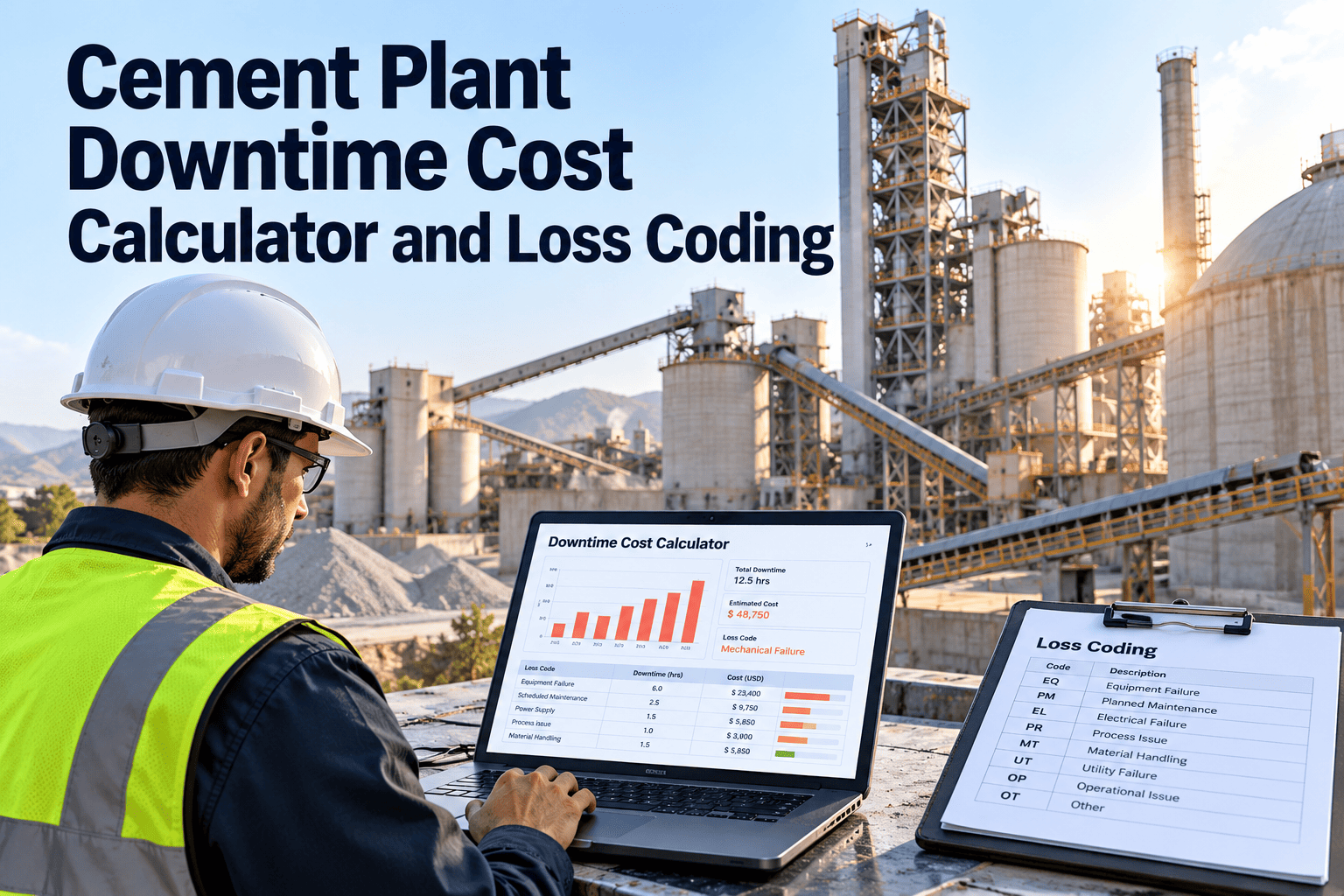
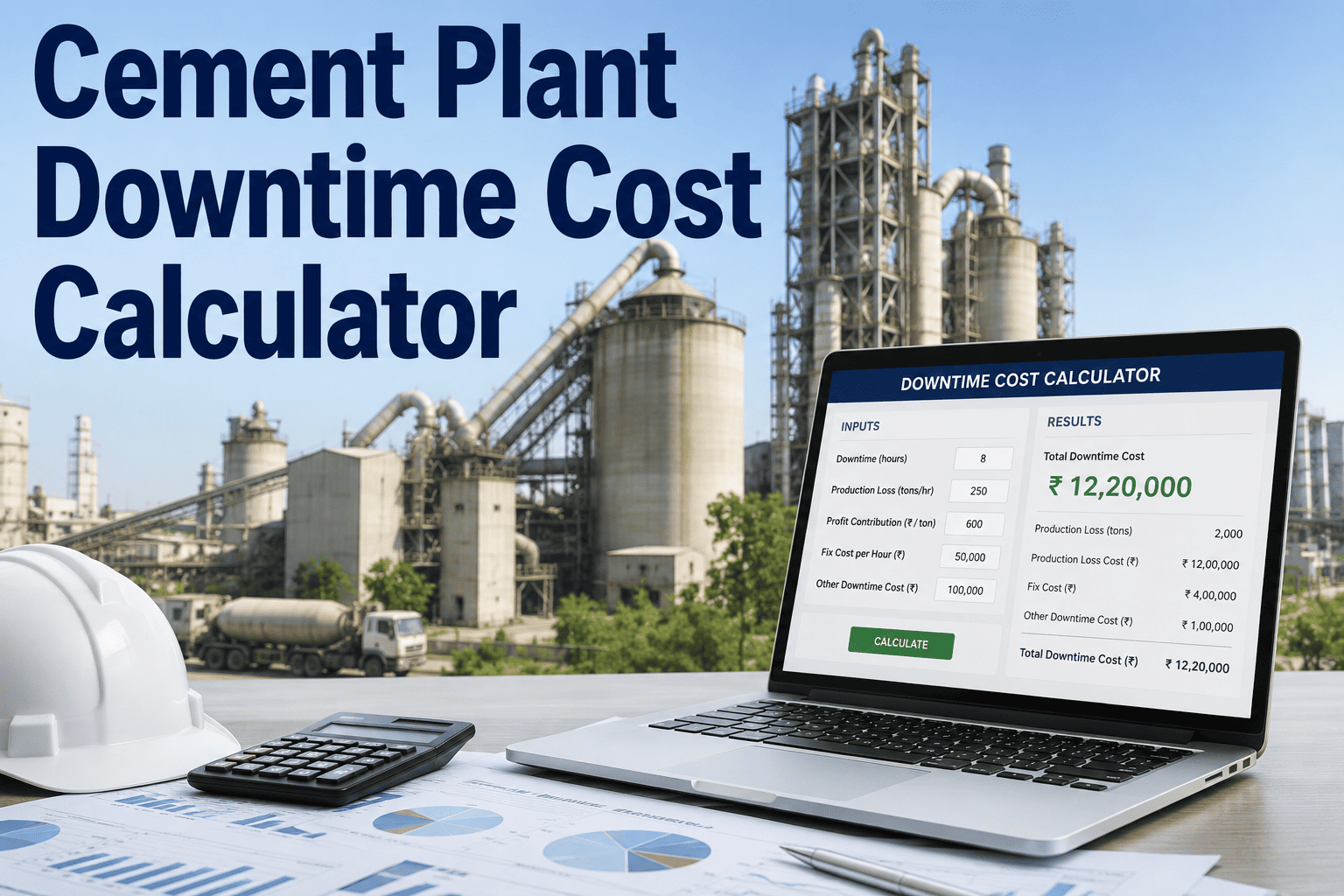
Downtime Cost Calculation
OxMaint records production downtime for every failure event and calculates lost production cost using your plant's configured production rate and margin values. Downtime cost becomes part of the economic replacement case alongside repair spend.
03
Failure Frequency and MTBF
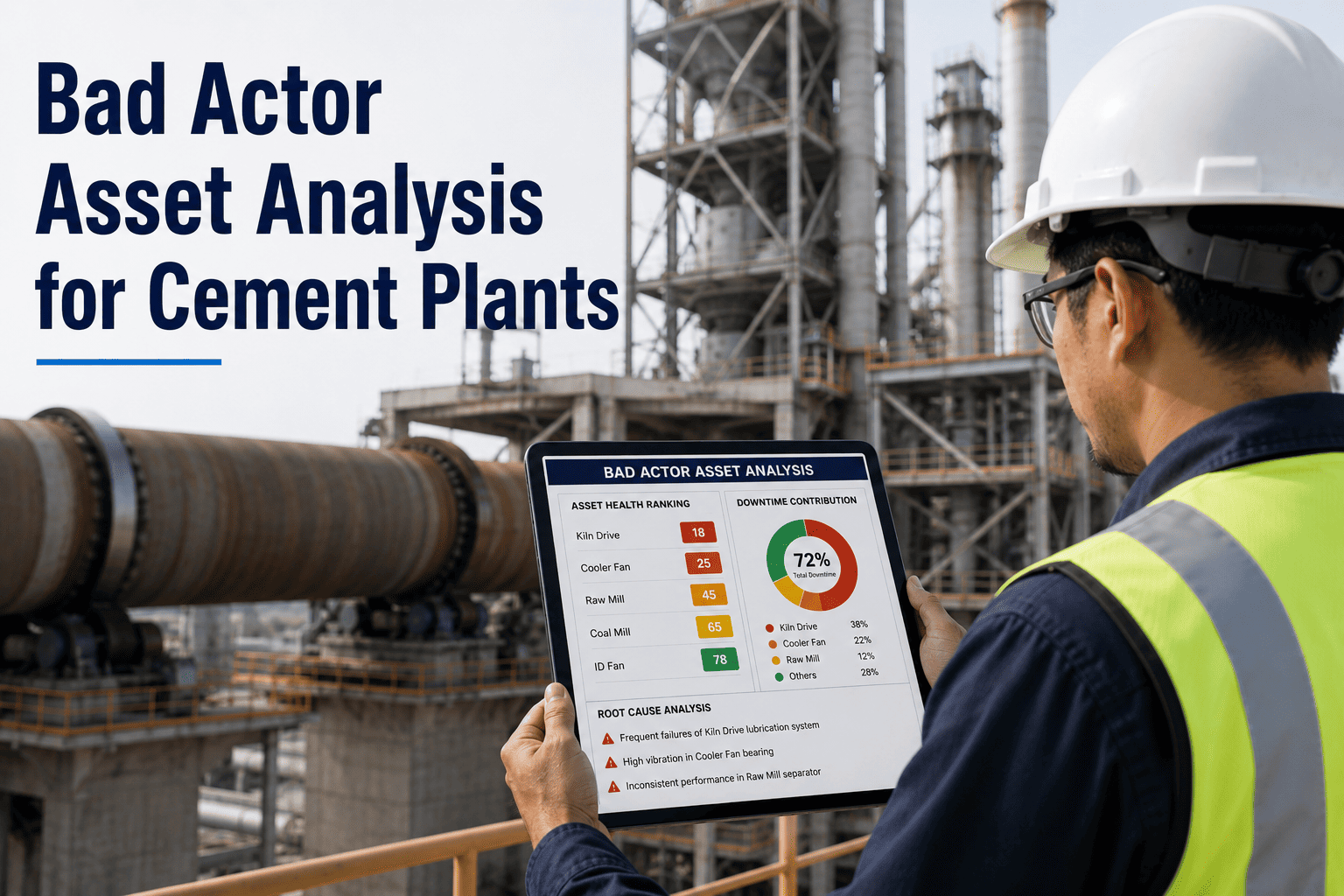
Mean time between failures is calculated automatically from the asset's failure history. A declining MTBF trend — each failure arriving sooner than the last — is one of the strongest signals that an asset has crossed into end-of-life territory.
04
Asset Risk Scoring
OxMaint combines age, MTBF trend, cost-to-replacement ratio, and criticality weighting to produce a risk score for each asset. The score drives the CapEx priority ranking — so the most urgent replacements surface automatically.
OXMAINT · CAPEX PLANNING · CEMENT PLANT ANALYTICS
What Would You Do Differently If You Had a Ranked Equipment Replacement List — Today?
OxMaint generates that list from your maintenance data. Pre-built cement plant analytics templates deploy in days, not months.
THE OUTPUT
What OxMaint Produces for CapEx Planning
| Report / Output |
What It Contains |
Used For |
| Asset CapEx Priority Report |
Ranked list of assets by replacement urgency — risk score, cumulative cost, MTBF trend, downtime exposure |
Annual CapEx budget prioritization and board submissions |
| Asset Lifecycle Cost Report |
Full maintenance cost history per asset — year by year, by category (labor, parts, contractors) |
Replacement value justification and insurance valuation |
| Failure Frequency Analysis |
Failure count, MTBF by period, failure mode distribution, cost per failure event |
RCM analysis, maintenance strategy review, replacement timing |
| Downtime Cost Summary |
Production hours lost, estimated revenue impact, per asset and per site |
CapEx business case financial modeling and risk quantification |
FREQUENTLY ASKED
Questions About OxMaint CapEx Replacement Planning
How long does it take to have enough data for meaningful CapEx reporting?
Plants with existing maintenance records can import historical data via CSV, giving OxMaint an immediate multi-year cost and failure history to work from. For plants starting fresh, meaningful trend data typically builds within 6 to 9 months of live work order tracking.
Sign up free to start building the record.
Can we configure replacement thresholds for different asset classes?
Yes — CapEx alert thresholds are configurable per asset class in OxMaint. A rotary kiln has a different cost-to-replacement threshold than a conveyor belt drive. Each asset class gets its own economic replacement model.
How does OxMaint handle assets where downtime cost is difficult to quantify?
OxMaint uses a configurable production rate value that can be set conservatively or precisely. Even a rough production loss estimate is more defensible in a CapEx case than no downtime cost figure at all.
Book a demo to configure your plant's values.
Can OxMaint CapEx reports be exported for finance or board review?
OxMaint CapEx reports are exportable in PDF and structured data formats. They include all supporting maintenance history data so finance teams can verify the underlying evidence behind any replacement recommendation.
Does OxMaint support CapEx planning across multiple cement plant sites?
Yes — OxMaint supports multi-site CapEx reporting, allowing group engineering and finance teams to compare asset risk and replacement priority across plants and allocate CapEx budgets at a portfolio level.
OXMAINT · ANALYTICS AND REPORTING · CEMENT EQUIPMENT CAPEX
Turn Your Maintenance History Into a CapEx Case Finance Will Approve
OxMaint aggregates maintenance cost, downtime, failure history, and asset risk into ranked CapEx priority reports — so the right cement equipment gets funded at the right time.