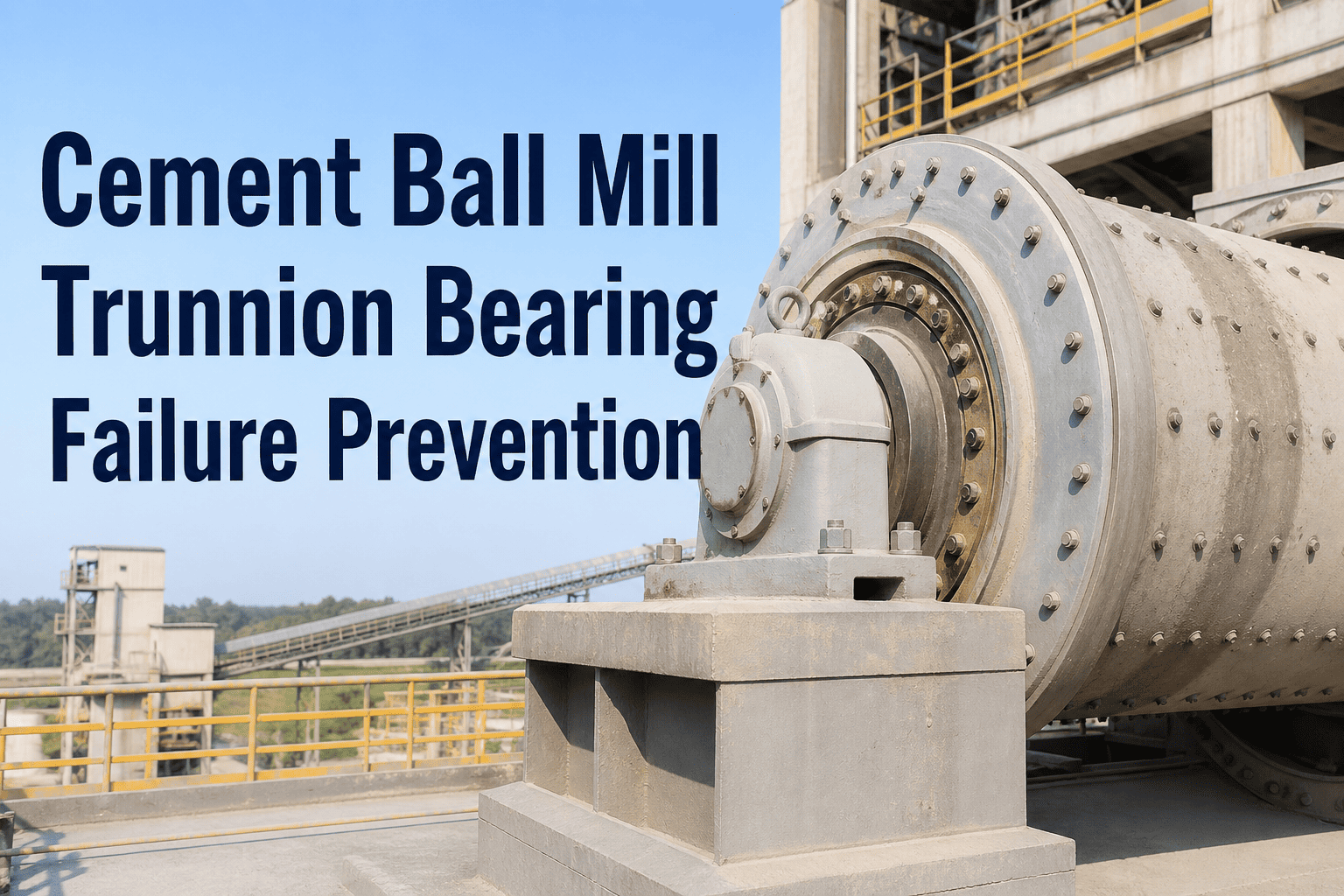
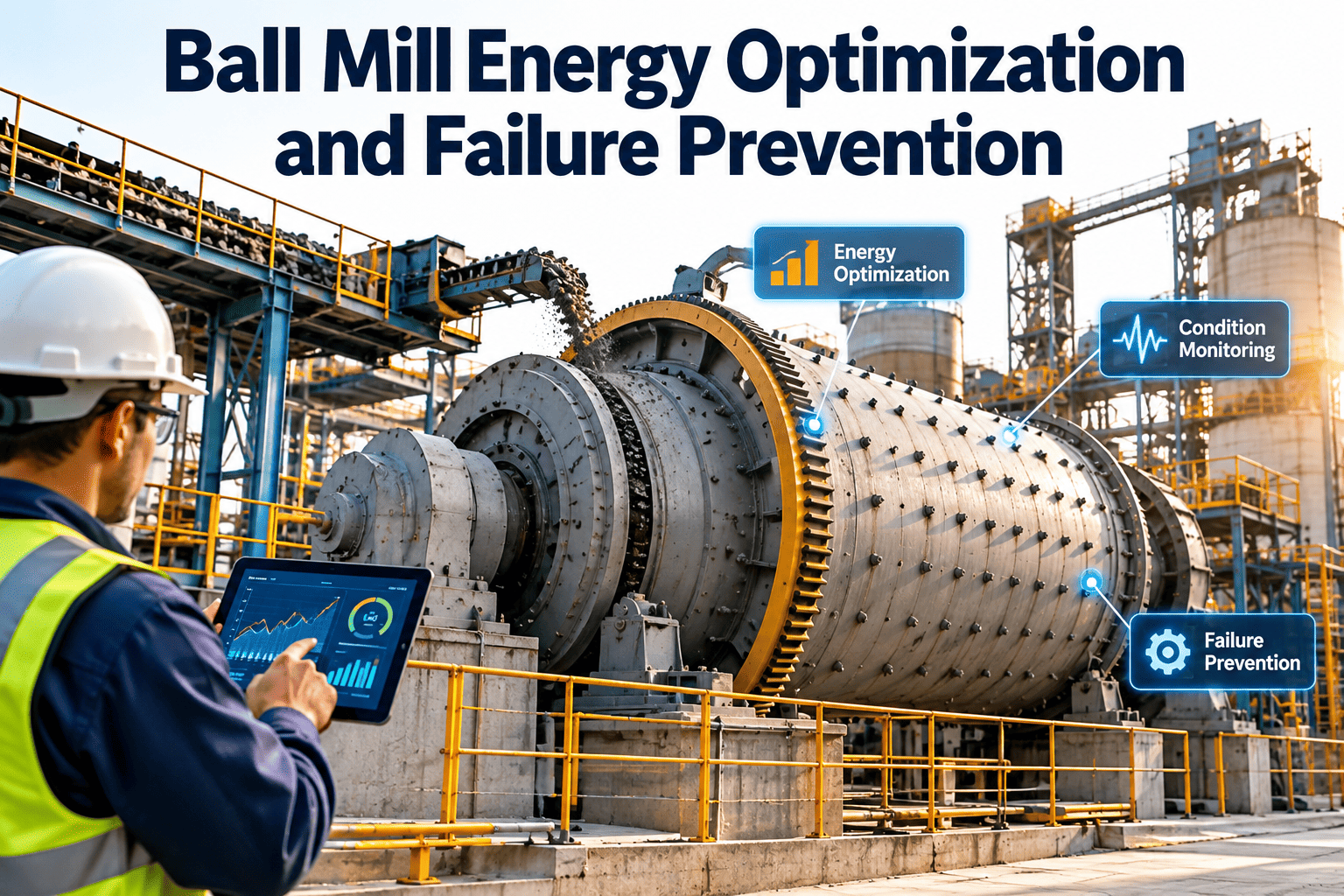
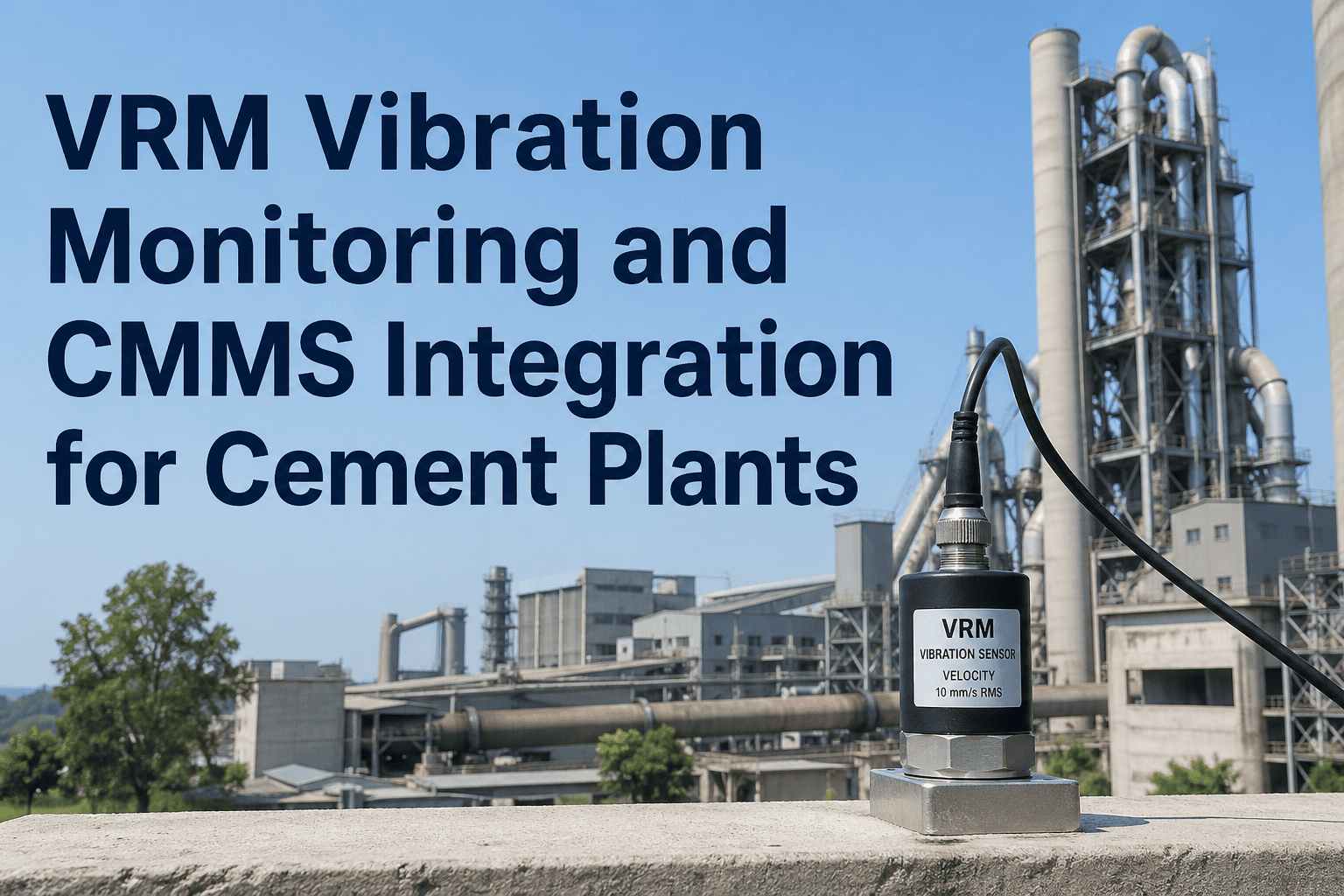
Trunnion bearing failure is the single most expensive unplanned event in cement ball mill operations — a seized white metal bearing can take a 5,000-tonne-per-day mill offline for 10 to 21 days, with total losses including emergency repairs, expedited parts freight, and lost clinker production routinely exceeding $2 million per incident. What makes this especially damaging is that every trunnion bearing failure that reaches seizure was preventable. White metal degradation, oil film collapse under load, and shaft misalignment each leave measurable signatures in vibration spectra and bearing temperatures weeks before the point of no return. The plants closing the gap between warning and action are the ones with sensor data flowing into a CMMS that schedules intervention automatically when thresholds are crossed — not the ones waiting for the night shift operator to notice something "sounds different" at 3 a.m.
Critical Equipment Reliability
Trunnion Bearing Failure Costs $2M+ Per Event. Sensor-Linked CMMS Stops It Weeks Earlier.
White metal degradation, oil film collapse, and misalignment announce themselves in the data long before they announce themselves in the plant. Here's how to read the signals — and act on them automatically.
10–21
days
Average mill downtime after trunnion seizure
$2M+
per event
Total cost including lost production and emergency repair
3–6
weeks
Lead time for replacement white metal bearing pads
95%
avoidable
Of trunnion failures when sensor monitoring is active and acted upon
Three Failure Modes — All Detectable Before Seizure
How it develops
White metal bearing surfaces fatigue under repeated cyclic loading. Micro-cracks form in the babbitt layer, propagate, and eventually cause segments to detach and score the trunnion journal. The process accelerates dramatically when oil temperature rises above 65°C or when contaminants enter the lubrication system.
Early Signal
Bearing temp rising 3–5°C above 30-day rolling average
Advanced Signal
Metal particle count in oil analysis rising above 15 ppm iron
Critical Signal
Vibration 1x running speed amplitude increasing trend over 14 days
How it develops
Hydrodynamic bearing design depends on a continuous pressurized oil film separating journal and bearing metal. Oil viscosity drop from overheating, pump wear reducing delivery pressure, or oil contamination with water or process material all reduce film thickness. Once the film collapses under load, metal-to-metal contact generates heat rapidly — seizure can follow within hours, not days.
Early Signal
Oil supply pressure trending below OEM minimum at rated throughput
Advanced Signal
Oil viscosity at operating temperature outside specified range on quarterly analysis
Critical Signal
Bearing temperature spike above 75°C — immediate shutdown required
How it develops
Foundation settling, thermal growth differentials, and liner wear distribution shifts introduce misalignment between the two trunnion bearings supporting a ball mill. Misalignment concentrates load onto one edge of the bearing pad, dramatically increasing local contact stress. White metal fatigue in the loaded zone then progresses at 3 to 5 times the normal rate, compressing the timeline to failure significantly.
Early Signal
Uneven temperature distribution across bearing width — edge running 8°C+ hotter
Advanced Signal
Drive end vibration 2x running speed component increasing over 21-day period
Critical Signal
Foundation settlement measurement exceeding 2mm differential across bearing centres
Sensor Thresholds That Trigger CMMS Action — By Parameter
Swipe to see all columns on mobile
| Parameter |
Normal Operating Range |
CMMS Alert Threshold |
CMMS Shutdown Threshold |
Work Order Type Generated |
| Bearing Temperature |
45°C – 62°C |
Above 68°C for 15 min |
Above 75°C instantaneous |
Priority 1 — Investigate immediately |
| Oil Supply Pressure |
2.5 – 4.2 bar |
Below 2.2 bar for 5 min |
Below 1.8 bar instantaneous |
Priority 1 — Lube system inspection |
| Vibration (1x RPM) |
Baseline ±15% |
25% above 30-day baseline |
50% above 30-day baseline |
Priority 2 — Vibration analysis route |
| Oil Temperature |
40°C – 60°C |
Above 65°C for 10 min |
Above 72°C instantaneous |
Priority 1 — Cooling system check |
| Oil Particle Count |
Below 10 ppm Fe |
Above 15 ppm Fe on analysis |
Above 30 ppm Fe on analysis |
Priority 2 — Oil sampling and filter inspection |
| Bearing Pad Wear |
Thickness above 80% new |
Below 70% of new thickness |
Below 60% of new thickness |
Priority 1 — Schedule planned reline |
Are Your Trunnion Bearing Sensors Actually Connected to Action?
Sensors without CMMS integration are just alarms that get acknowledged and forgotten. OxMaint connects your bearing temperature, vibration, and oil pressure readings to automatic work order generation — so the right technician gets the right task within minutes of threshold breach, not the next morning at the team meeting.
Preventive Maintenance Schedule: What Runs on a Clock, What Runs on a Sensor
Time-Based Tasks
Daily
Bearing Temperature and Oil Level Log
Operator records bearing temperatures at both trunnions and oil reservoir level against shift baseline. Any deviation flagged as work request in CMMS mobile app.
Weekly
Lubrication System Full Inspection
Pump pressure and flow verification, oil cooler condition, filter differential pressure reading, all supply and drain lines checked for leaks. Findings attached to CMMS asset record with photos.
Monthly
Vibration Measurement Route
Technician measures vibration at drive end and non-drive end trunnion bearing housings. Spectrum data recorded in CMMS and compared against baseline and previous month. Trend deviation above 20% triggers engineering review.
Quarterly
Oil Analysis Sampling and Lab Submission
Oil samples drawn from bearing supply line and reservoir. Lab analysis covers viscosity, particle count, water content, and oxidation products. Results stored against CMMS asset — trend library builds over time to establish site-specific alarm limits.
Annually
Bearing Pad Inspection and Reline Assessment
Planned mill stop for white metal thickness measurement, surface condition inspection, and journal geometry check. Reline decision made from CMMS-stored thickness history, not visual impression. Parts ordered 12 weeks in advance if scheduled reline confirmed.
Condition-Triggered Tasks
Alert
Temperature Rise Above Alert Threshold
CMMS generates Priority 2 work order — lube system walkdown, oil cooler condition check, filter inspection, and bearing surface IR scan within 4 hours.
Critical
Temperature or Pressure at Shutdown Threshold
CMMS generates Priority 1 work order with mandatory mill stop before restart. Engineering sign-off required after inspection before CMMS work order can be closed and mill authorized to restart.
Alert
Vibration Trend Above 25% Baseline Deviation
CMMS generates vibration analysis work order. Detailed spectrum review by reliability engineer. Root cause classification required to close — misalignment, unbalance, bearing defect, or structural resonance. Corrective action linked to asset record.
Alert
Oil Analysis Particle Count Exceeds Limit
CMMS generates oil system inspection work order. Full filter change, visual bearing inspection at next available stop, and repeat oil sample after 2 weeks to confirm trend reversal before closing work order.
The Financial Case: Planned Reline vs Emergency Seizure
CMMS-scheduled based on thickness trend and oil analysis data
Mill downtime
36–48 hours planned
Parts cost
$45,000 – $90,000
Labor cost
Standard rates, planned window
Production loss
Scheduled — covered by inventory buffer
Secondary damage
None — journal condition preserved
Total Cost: $60,000 – $130,000
VS
Reactive response — no sensor data acted upon, no prior CMMS work orders
Mill downtime
10–21 days unplanned
Parts cost
$120,000 – $280,000 including journal repair
Labor cost
Overtime, emergency call-outs, specialist contractors
Production loss
$800,000 – $1,600,000 lost clinker revenue
Secondary damage
Journal scoring, possible shell distortion, girth gear inspection
Total Cost: $1,200,000 – $2,400,000+
Frequently Asked Questions
What is the earliest warning sign of trunnion bearing failure in a cement ball mill?
A sustained rise in bearing temperature above the 30-day rolling average — even just 3 to 5 degrees Celsius — is typically the first detectable signal. This usually appears 3 to 6 weeks before any audible change or vibration shift. CMMS temperature trend tracking catches this far earlier than operator rounds alone.
How frequently should trunnion bearing oil samples be analyzed?
Quarterly is the standard interval for healthy bearings. If metal particle counts are trending upward or recent vibration data shows anomalies, increase to monthly sampling until the root cause is identified and resolved. All sample results should be stored in CMMS against the bearing asset record to build a meaningful trend library.
Can CMMS integrate with our existing vibration sensors and DCS?
Yes. OxMaint supports API integration with plant historians, SCADA systems, and third-party condition monitoring platforms. Sensor data feeds CMMS threshold logic directly, generating work orders automatically when parameters are breached — without requiring manual data entry or daily review of sensor dashboards by maintenance staff.
How long does it take to implement a trunnion bearing monitoring program with CMMS?
Asset setup, threshold configuration, and PM task library creation for a single ball mill circuit can be completed in 3 to 5 days. Sensor integration via API typically takes 1 to 2 weeks depending on the existing infrastructure. Most plants see the first automatic work orders generated within the first two weeks of going live.
From Sensor Alarm to Scheduled Action
The Data to Prevent Your Next $2M Trunnion Failure Is Already Being Generated. Make Sure Someone Is Acting on It.
OxMaint connects your ball mill bearing sensors to automatic CMMS work orders, builds the temperature and vibration trend history that predicts failure weeks out, and schedules relines before journals are ever at risk. Join cement plants worldwide replacing emergency seizure repairs with planned, budgeted maintenance windows.