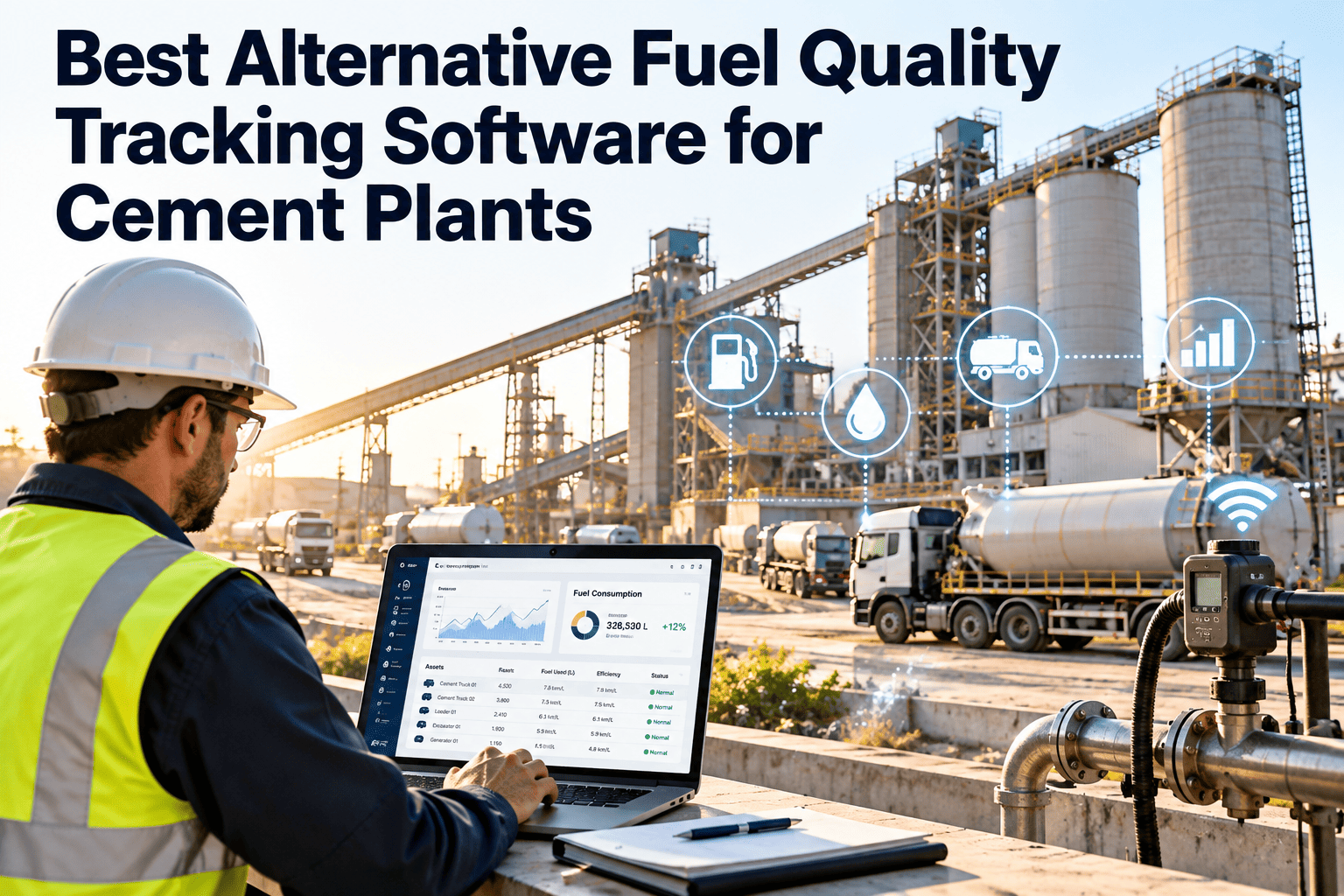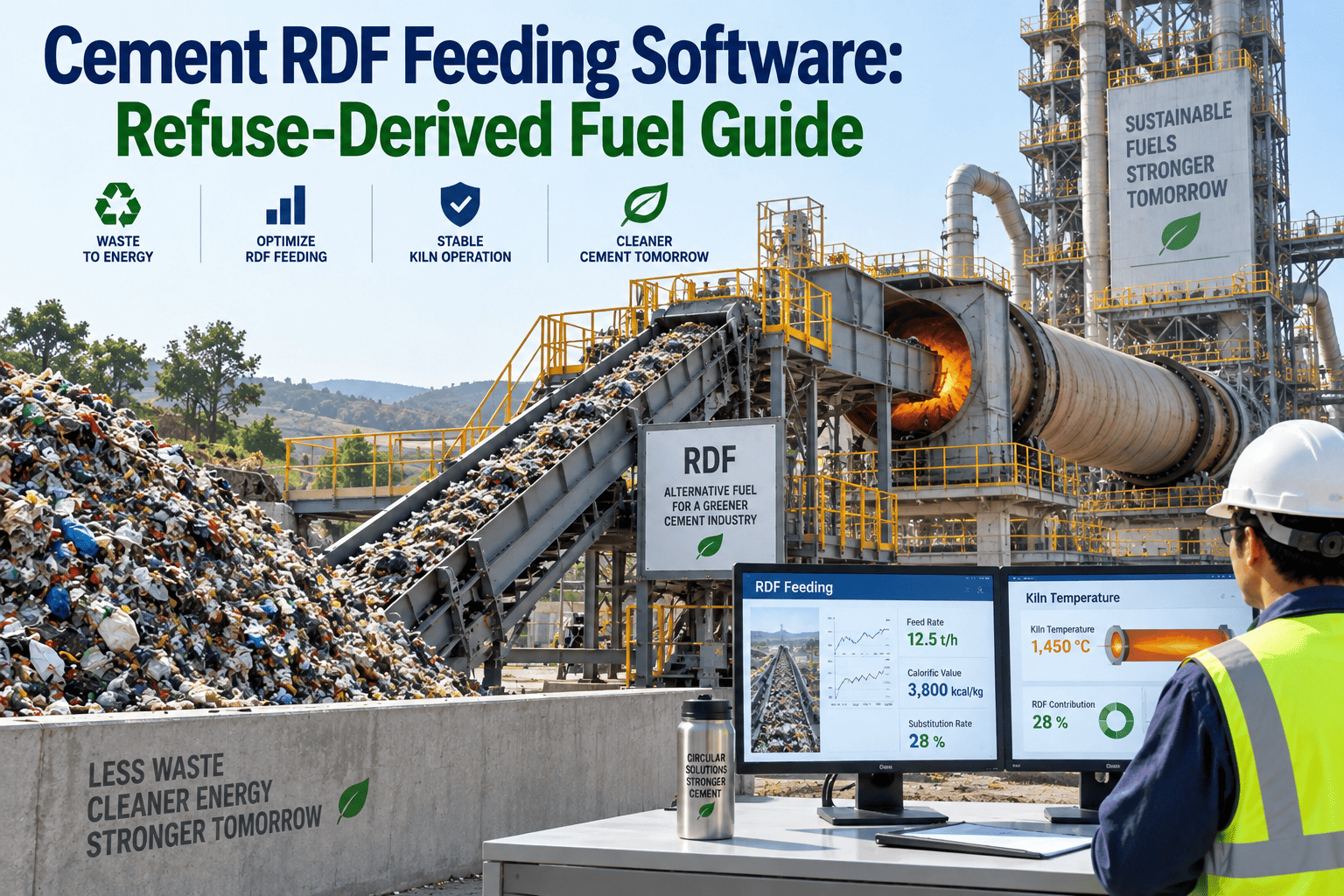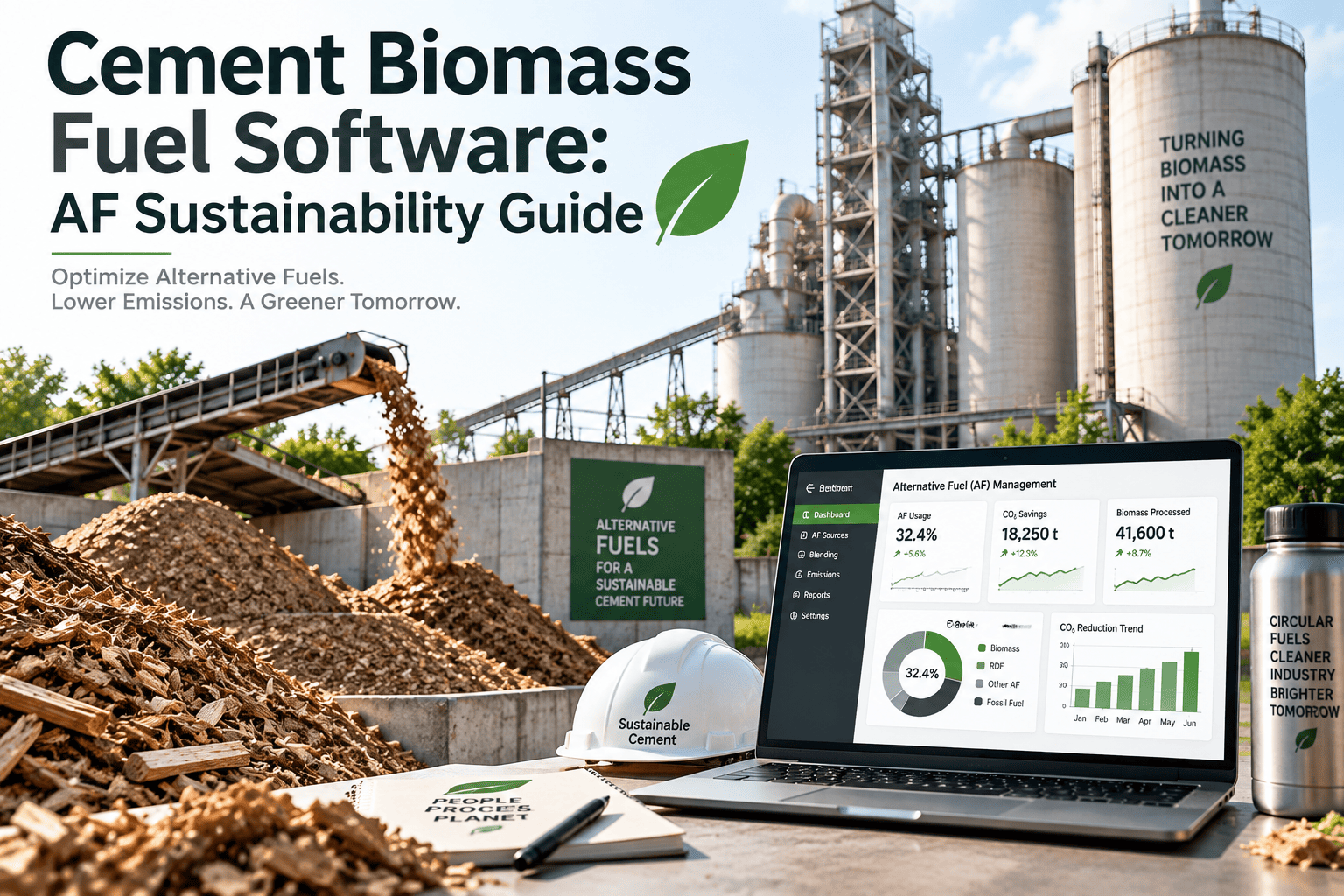
Cement plants racing to hit 2030 Scope 1 targets are all discovering the same operational truth — the fossil-fuel dial has been turned as far as it will go, and the remaining decarbonisation is locked inside biomass. Rice husk, wood chips, agricultural residue, palm kernel shell, groundnut shell — the calorie is cheaper than coal, the CO₂ is biogenic, and the supply is regional. But biomass is chemically unstable in a way coal never was: moisture swings 8–35%, calorific value swings 12–18 MJ/kg, chlorine and alkali levels shift by supplier and by season. Every batch is a different fuel wearing the same name. That is why cement biomass programmes need a purpose-built CMMS-grade fuel quality tracker — not a spreadsheet.
Track Biomass Fuel Quality Batch-by-Batch — OxMaint CMMS for AF Programmes
Log rice husk, wood chip, and agri-residue moisture, LHV, chlorine, and ash per truck. Trigger dryer, feed-rate, and bypass maintenance work orders automatically. Hit TSR targets without derating clinker quality.
Why Biomass Fuel Breaks Traditional Cement AF Software
Coal and petcoke are engineered fuels — narrow spec, predictable combustion, one supplier can be trusted for a full quarter. Biomass is not. A load of rice husk that arrived at 12% moisture on Monday can land at 28% moisture on Friday if the paddy region had rain, and the calorific value swings inversely. Wood chip suppliers change species mid-season. Agri-residue arrives with soil contamination that spikes ash chemistry. The plant is essentially blending a new fuel every single day, and no static PLC recipe or paper QA log can keep up. AF spreadsheets fail cement programmes the moment TSR crosses 20% — that is the operational line where fuel quality variance stops being a nuisance and starts becoming the primary cause of clinker excursions, preheater blockages, and kiln torque swings. A biomass-specific tracking system needs to store per-batch fuel analysis alongside kiln response data, tie both to maintenance history, and trigger action before the next hopper feeds a bad load into the calciner. That is exactly the workflow OxMaint's cement biomass fuel software was built for.
The Biomass Quality-to-Work-Order Loop
The gap between a cement plant at 20% TSR and one at 60% TSR is almost never combustion technology — it is closed-loop biomass fuel governance. Fuel arrives, sample is taken, analysis is logged, spec is compared to acceptance envelope, and if it drifts, a work order fires immediately — not tomorrow, not at the weekly QA review. Dryer maintenance, bypass filter change-out, hopper agitation checks, feed-rate recalibration, sample rig cleaning — every one of these becomes a scheduled or triggered task tied to a specific batch or trend. OxMaint's cement biomass fuel software runs this loop from a single asset record per fuel type per supplier, so plant managers can see at a glance which supplier stream is degrading, which asset is downstream of the drift, and which work orders are open against it. This is the operational muscle behind published European TSR numbers — not a bigger burner. Book a live demo of the biomass loop tracker to see it against your own supplier list.
Biomass Fuel Compatibility — Cement Kiln Matrix
Not every biomass is a drop-in for every kiln. Rice husk works beautifully in Asian plants with mature paddy supply chains — Philippine plants have publicly reported meeting over 30% of thermal need with rice husk alone. Wood chip suits North American and European plants co-located with construction and demolition streams. Palm kernel shell dominates Malaysian and Indonesian programmes. Groundnut shell, cotton stalks, and bagasse serve regional Indian and African plants. The cement biomass fuel software you run needs to hold each fuel's chemistry envelope, feed-point recommendation, and TSR ceiling separately — because feeding a rice husk feed rate into a wood chip programme, or vice versa, is exactly how good AF programmes lose 6 months of TSR progress in a single week.
| Biomass Fuel | Typical LHV | Moisture | Ash | Chlorine | Feed Point | TSR Ceiling |
|---|---|---|---|---|---|---|
| Rice Husk | 12–15 MJ/kg | 8–14% | 18–22% | 0.10–0.35% | Calciner | 25–30% |
| Wood Chip (C&D) | 14–17 MJ/kg | 15–30% | 2–5% | <0.10% | Calciner + Kiln | 15–25% |
| Palm Kernel Shell | 17–19 MJ/kg | 10–18% | 3–6% | 0.05–0.20% | Kiln burner | 20–35% |
| Bagasse (sugar) | 7–10 MJ/kg | 45–55% | 2–4% | 0.05–0.15% | Calciner (post-dry) | 10–15% |
| Groundnut Shell | 16–18 MJ/kg | 8–12% | 3–5% | 0.10–0.30% | Calciner | 15–20% |
| Cotton Stalk / Straw | 14–16 MJ/kg | 10–20% | 5–10% | 0.30–1.20% | Calciner only | 8–12% |
| Coffee Husk | 15–17 MJ/kg | 10–18% | 4–8% | 0.10–0.25% | Calciner | 15–25% |
The Scope 3 & Carbon Cost Case for Biomass
Fuel substitution has become the single most cost-effective decarbonisation lever in cement — higher-impact than clinker factor reduction and years faster than CCUS. Biomass is where biogenic CO₂ enters the picture: the carbon released when rice husk or wood chip combusts is counted as neutral under most Scope 1 frameworks, which means every percentage-point of biomass in the fuel mix translates directly into reported CO₂ intensity reduction. For an integrated group targeting SBTi 1.5°C alignment or EU CBAM disclosure, biomass tracked properly at the batch level is auditable Scope 1 avoidance. The catch is the paper trail — regulators and auditors do not accept "the plant used biomass." They need per-batch mass balance, calorific value, biogenic fraction, and combustion completeness records tied to a specific kiln campaign. This is where a maintenance-grade fuel tracker separates itself from a shift log or a QA spreadsheet — the records need to survive an audit five years out.
Ship Biomass Fuel Records Auditors Actually Accept
OxMaint stores per-batch moisture, LHV, chlorine, ash, biogenic fraction, and kiln campaign linkage. Exportable for CBAM, SBTi, and Scope 1 verification.
Where AF Programmes Go Off the Rails
Ten years of published cement AF case studies, industry conference reports, and post-mortems on stalled programmes reveal the same handful of failure modes over and over. None of them are combustion problems — they are all data governance problems. Every one of them is preventable with a purpose-built cement biomass fuel software layer sitting between the weighbridge, the lab, the DCS, and the maintenance backlog.
What OxMaint's Cement Biomass Fuel Software Actually Does
OxMaint is a maintenance management software platform built for heavy industry, and its cement biomass module is the AF-specific configuration used by integrated cement plants, grinding units, and multi-site cement groups pushing TSR targets in 2026. It manages biomass fuel intake, batch quality, dryer and feeder maintenance, chlorine bypass PM, and CBAM-grade recordkeeping in one place, integrated with the same OxMaint CMMS you use for kiln shell, cooler, and preheater assets. No parallel spreadsheet, no separate QA log, no lost audit trail. Start your free OxMaint trial — the biomass configuration ships with a rice-husk, wood-chip, and agri-residue template out of the box.
We were stuck at 22% TSR for two years. Every push above that broke on a preheater build-up we couldn't predict. OxMaint's per-batch chlorine trending flagged the drift in one specific rice husk supplier — and once we tightened acceptance on that stream, we cleared 34% TSR in the following quarter. The kiln didn't change. The fuel record did.
Frequently Asked Questions
Turn Biomass Fuel Variability Into a Managed Programme — With OxMaint
Track every batch. Trigger every PM. Prove every biogenic tonne. OxMaint's cement biomass fuel software is how AF cement plants hit Scope 1 targets without derating clinker.