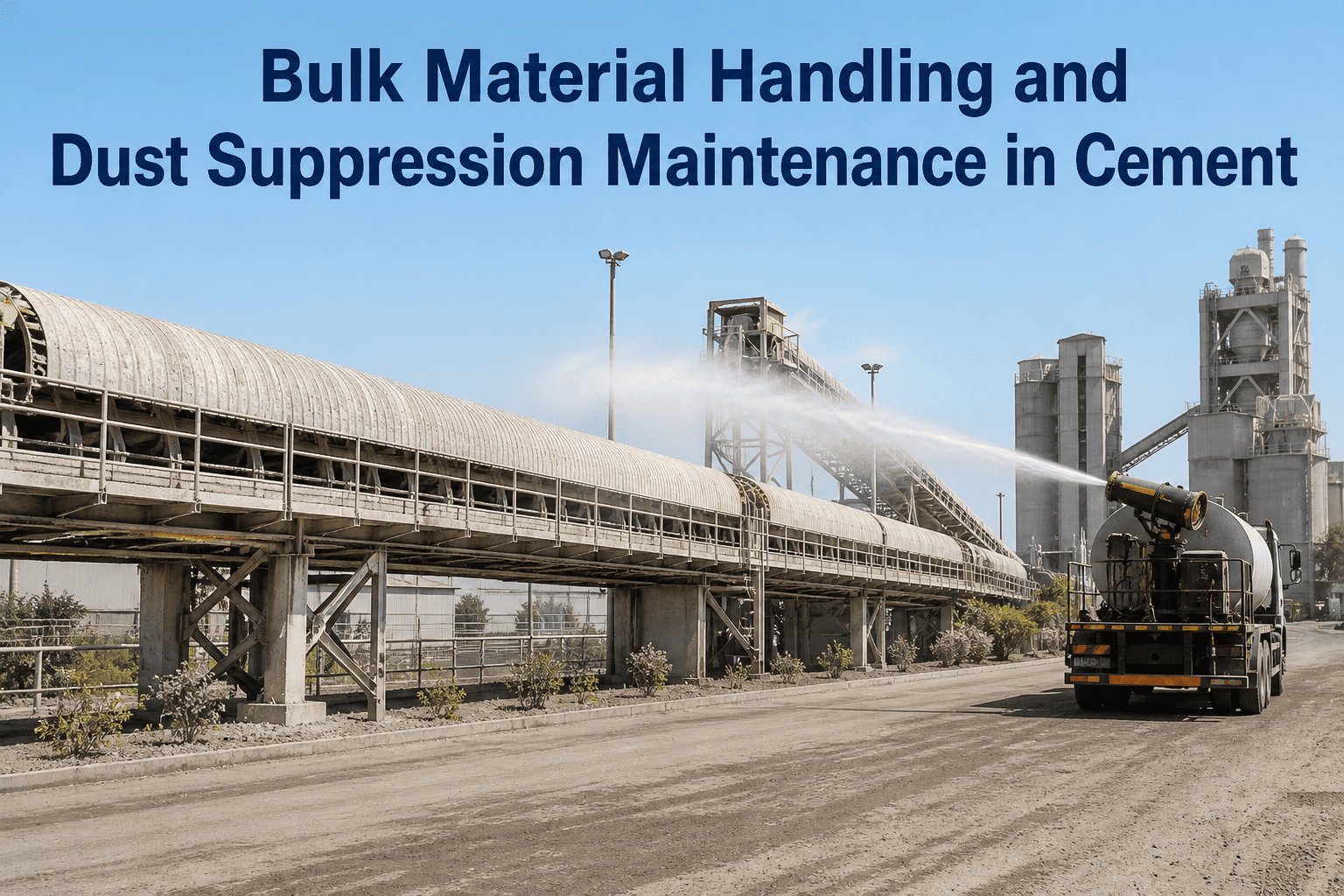
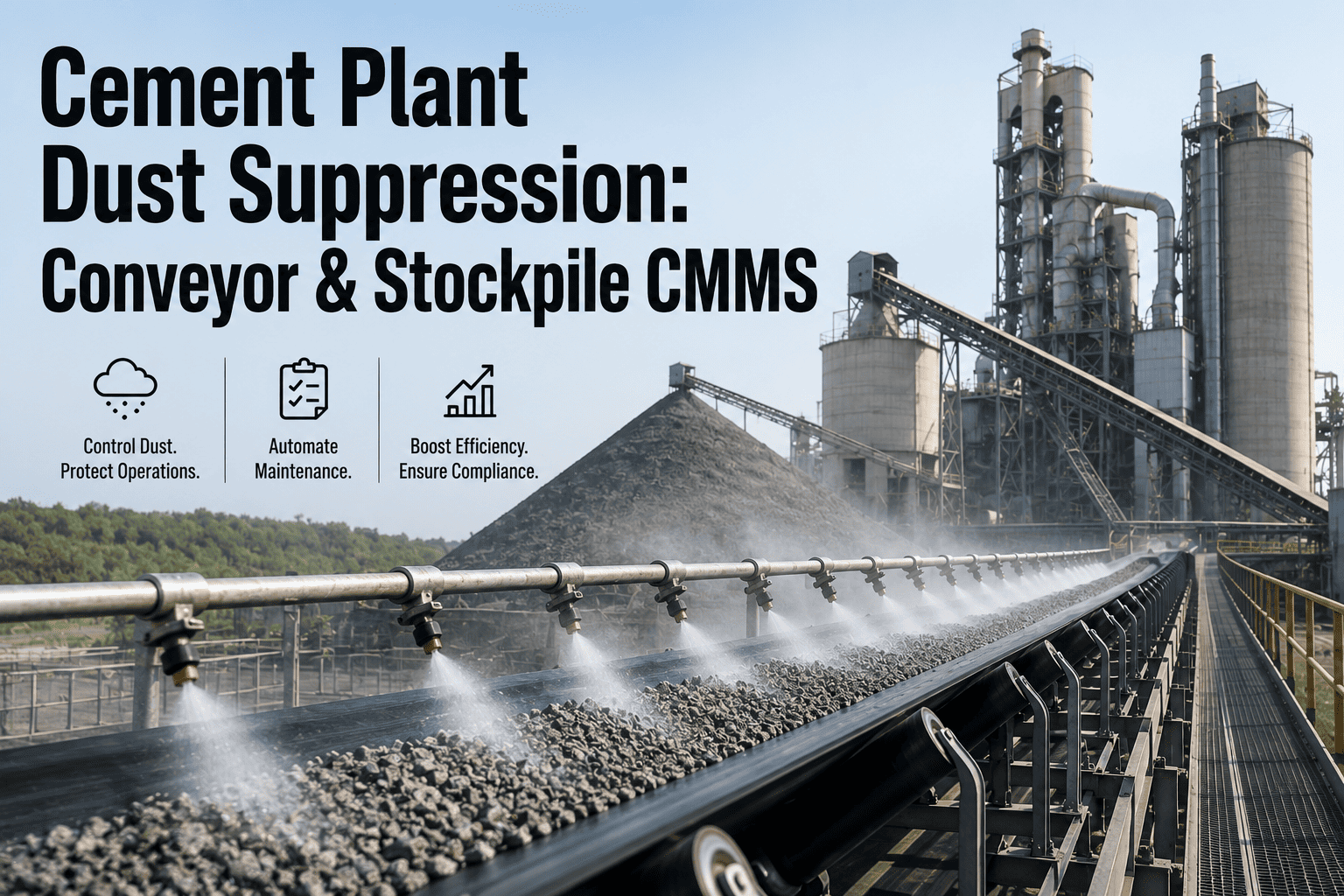
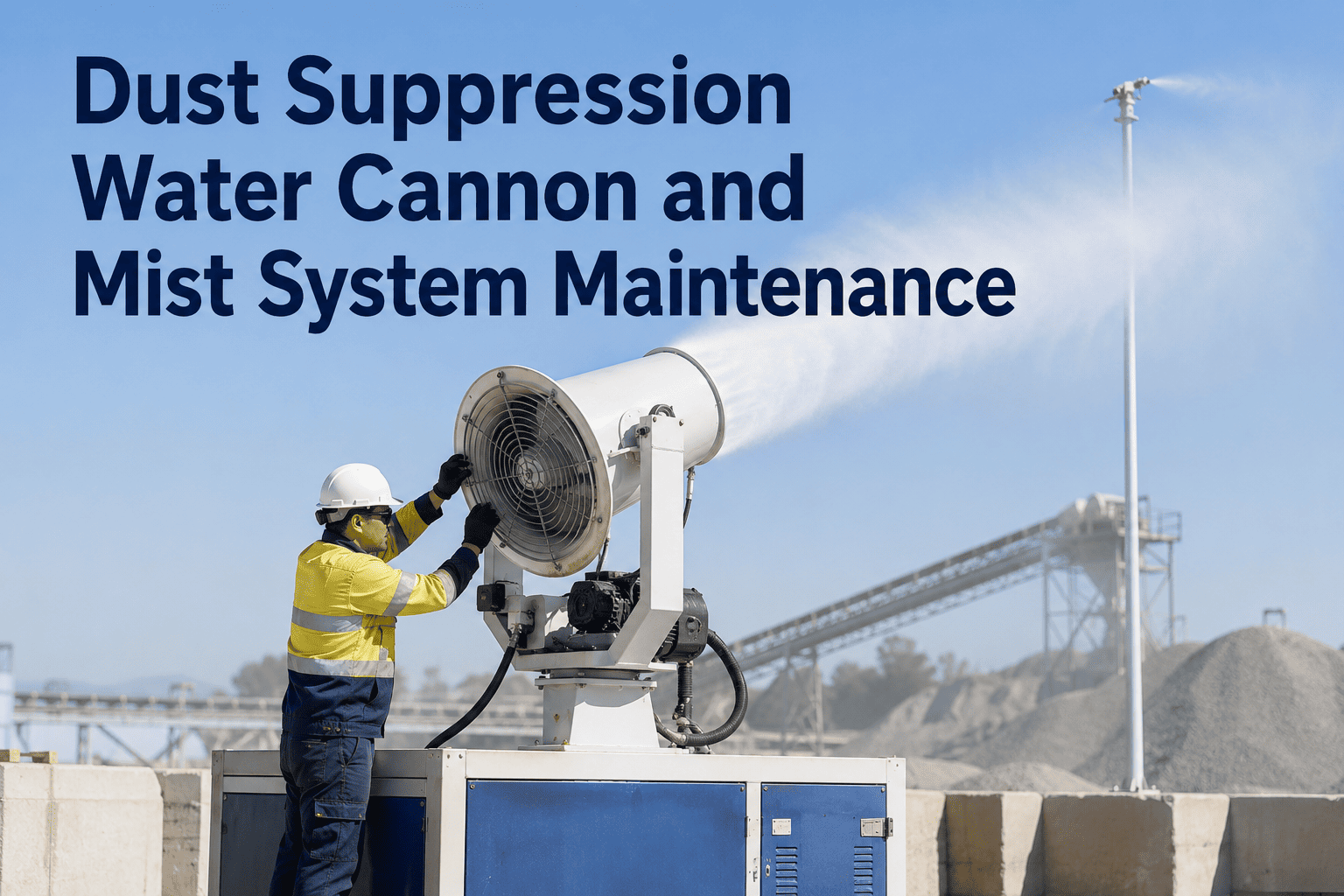
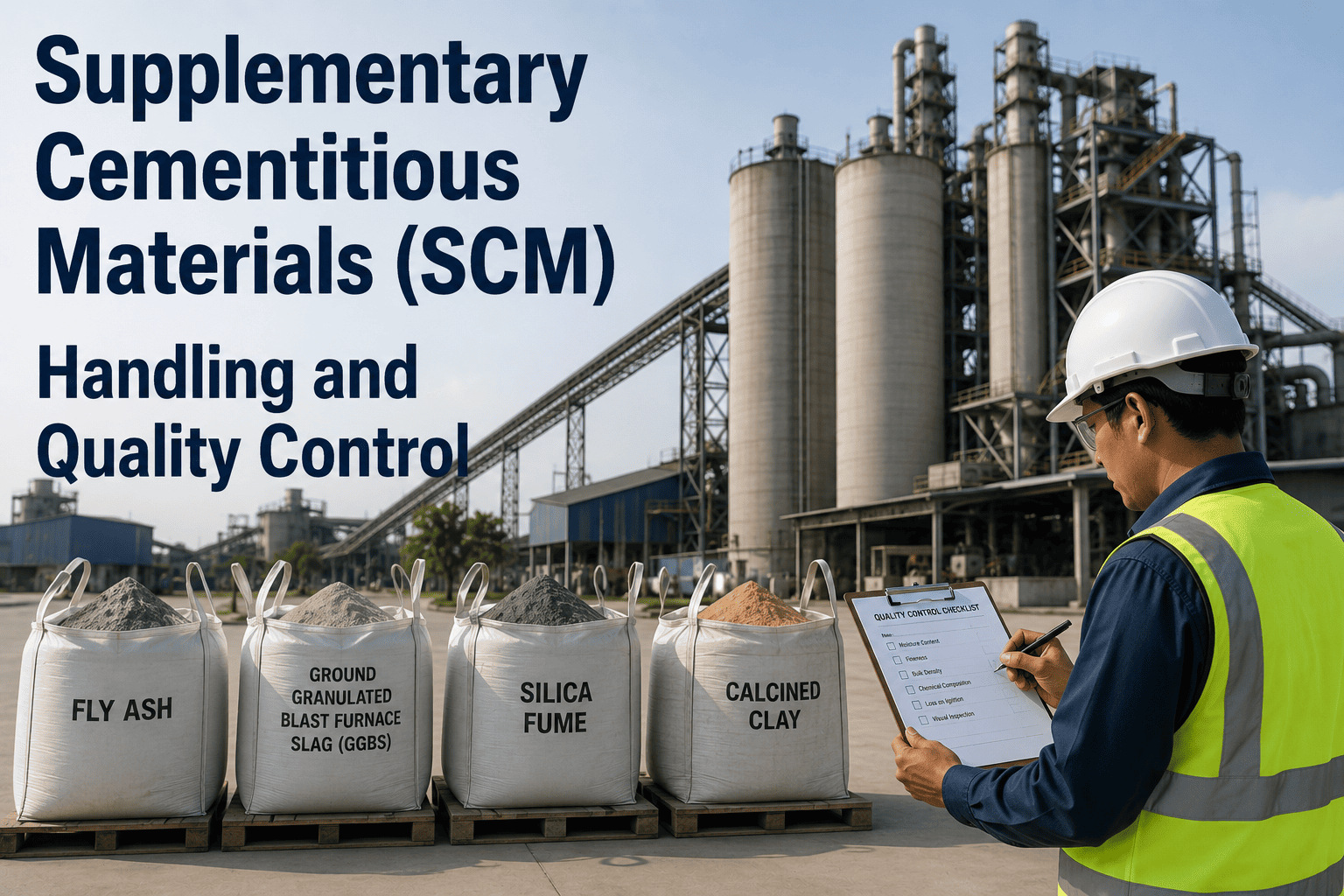
Dust suppression systems that fail in cement plants don't just trigger environmental violations — they set off a chain reaction that grinds production to a halt and buries your maintenance team in emergency repairs. When suppression nozzles clog, pumps cavitate undetected, or sensor thresholds go unchecked, fine particulate matter migrates into bearings, conveyor drives, motor windings, and control panels. The result: accelerated wear on equipment that should last decades, OSHA citations that carry five-figure penalties, and unplanned downtime that can cost a mid-size cement plant upward of $200,000 per day. A modern CMMS built for heavy industry converts your dust suppression and bulk material handling program from a reactive patchwork into a scheduled, documented, and audit-ready operation — before the next inspection, not after.
Cement Plant Maintenance Intelligence
Bulk Material Handling & Dust Suppression: The Maintenance Gap Costing Cement Plants Millions
Particulate control failure doesn't announce itself — it accumulates quietly in worn nozzles, blocked lines, and degraded sensors until the damage is already done. Here's how leading plants close that gap with scheduled CMMS programs.
$200K+
Daily cost of unplanned downtime in mid-size cement operations
5x
Faster bearing wear in high-dust environments without suppression
66%
Reduction in compliance risk with documented PM programs
40%
Longer equipment life with tonnage-triggered inspection intervals
Why Dust Suppression Fails — And Why It Matters More Than You Think
Cement plants generate particulate at every transfer point: crusher discharge, bucket elevator heads, conveyor loading zones, clinker coolers, and raw mill circuits. Suppression systems are the frontline defense — but they're also the most under-maintained asset class in most plants. Here's what goes wrong and what it costs downstream.
01
Nozzle Clogging and Scale Buildup
Water nozzles serving limestone and clinker transfer points accumulate calcium carbonate deposits and fines. Spray patterns degrade weeks before operators notice. Without CMMS-tracked inspection cycles — ideally tied to tonnage processed — partial blockages become full blockages before the next calendar-based check arrives.
02
Pump Cavitation and Seal Wear
Suppression pumps running with marginal inlet pressure cavitate silently. Seal wear accelerates, bearing temperatures climb, and water hammer events go unrecorded. When the pump finally fails during peak production, there's no maintenance history to inform the repair decision — or the capital justification for replacement.
03
Sensor Drift in Particulate Monitors
Optical and gravimetric dust sensors in baghouse outlets and stack monitors drift over time. A sensor reading 15 mg/Nm³ when actual emissions are 42 mg/Nm³ creates false compliance confidence — right up to the day a regulator shows up with calibrated reference equipment. CMMS-scheduled calibration cycles close this exposure.
04
Baghouse Filter Differential Pressure Neglect
Bag filters blinding out — whether from cake buildup, moisture ingress, or pulse-jet solenoid failure — increase differential pressure and reduce airflow. The result is both emission exceedance and motor overload. Plants without CMMS-tracked dP trending catch this only when it becomes an emergency.
The Downstream Equipment That Pays the Price
Scroll to see all columns on mobile
| Equipment |
Failure Mode from Dust Ingress |
Typical MTBF Without PM |
MTBF With CMMS Program |
| Conveyor Belt Drive |
Gearbox seal contamination, overheating |
8–14 months |
24–36 months |
| Bucket Elevator Bearings |
Abrasive wear, lubricant contamination |
6–10 months |
18–28 months |
| Motor Windings (open frame) |
Insulation breakdown from cement dust |
12–18 months |
30–48 months |
| VFD Enclosures |
Cooling fan blockage, thermal trips |
10–16 months |
28–40 months |
| Control Panel I/O Cards |
Creepage failure on PCB surfaces |
24–36 months |
60–84 months |
What a CMMS-Structured Dust Suppression Program Looks Like
Daily
Visual Spray Pattern Checks at Transfer Points
Operators conduct walkaround checks of all active suppression zones during each shift. Blocked or misdirected nozzles are flagged as work requests directly in the CMMS mobile app — no paper, no lost notes, no deferred action.
Weekly
Pump Pressure and Flow Rate Verification
Technicians record pump discharge pressure, flow rate at header manifold, and seal leakage condition against CMMS-stored baseline values. Deviation thresholds auto-generate priority work orders before damage escalates.
Monthly
Full Nozzle Strip-and-Inspect at High-Wear Zones
Crusher, raw mill, and clinker cooler suppression headers receive nozzle removal, descaling, and flow testing against OEM specifications. Parts consumed are logged to asset history for lifecycle cost tracking.
Quarterly
Particulate Sensor Calibration and Certification
All stack monitors, area sensors, and baghouse outlet analyzers are calibrated against NIST-traceable reference standards. Calibration certificates attach directly to the work order in CMMS — audit-ready without scrambling through paper files.
Tonnage-Based
Baghouse Bag Inspection Triggered by Production Volume
Bag filter inspection intervals are tied to clinker production tonnage, not calendar months. Plants running at 110% capacity should not wait until a fixed calendar date — CMMS counters connected to production data trigger work orders automatically when thresholds are crossed.
Still Logging Dust Suppression Checks on Paper Sheets?
OxMaint auto-generates your inspection work orders, captures readings from the field on mobile, and builds the compliance history that satisfies OSHA and EPA auditors without a single spreadsheet. Start in days, not months.
Compliance Exposure: What Regulators Check and How CMMS Protects You
OSHA 29 CFR 1910.94
Ventilation & Dust Control
Inspectors look for documented evidence that suppression systems are tested, repaired, and operational. CMMS work order history with technician sign-off and timestamp satisfies this requirement in a single report export.
EPA NESHAP / Title V
Particulate Emission Limits
Continuous emission monitoring data must be supported by instrument calibration records. CMMS stores every calibration event, deviation note, and corrective action against the specific sensor asset — regulators get a clean chain of custody.
ISO 14001
Environmental Management
Certification requires documented operational controls for significant environmental aspects. Dust suppression is a primary control point. CMMS provides the procedure library, completion records, and nonconformance logs required during ISO audits.
State Air Quality Permits
Site-Specific Limits
Most cement plants operate under negotiated permit conditions with specific equipment-level controls. CMMS maps maintenance tasks to permit conditions so that when the state inspector arrives, you can show compliance documentation by equipment ID, not just by memory.
Key Performance Indicators for Dust Suppression Programs
Nozzle Availability Rate
Target: Above 95%
Sensor Calibration Compliance
Target: 100% on schedule
PM Completion Rate (Suppression Systems)
Target: Above 90%
Emission Exceedance Events per Quarter
Target: Zero
Baghouse dP Within Normal Range
Target: Above 90% of operating hours
Frequently Asked Questions
How often should suppression nozzles be inspected in a cement plant?
High-traffic zones like crusher discharge and clinker transfer should be visually checked daily and stripped for descaling monthly. Lower-activity zones can follow a quarterly interval, but CMMS allows you to tie inspection frequency to actual tonnage processed rather than fixed calendar dates — which is more accurate for plants with variable production rates.
Can CMMS help during an environmental regulator audit?
Yes. Regulators want to see documented proof that suppression systems are maintained and operational. CMMS exports a complete work order history for any asset or date range — calibration records, inspection sign-offs, corrective actions, and parts replaced — in minutes rather than days of manual paper searching.
What is the ROI of implementing a dust suppression CMMS program?
Typical payback is 4 to 9 months when you factor in avoided compliance fines, reduced emergency repair costs, and extended life on downstream equipment that suffers accelerated wear in high-dust environments. Plants running structured suppression PM programs report 50 to 70% fewer unplanned stoppages tied to dust-related equipment failures.
Do we need IoT sensors to start a structured suppression maintenance program?
No. The majority of the value comes from consistent execution of time-based and tonnage-based inspection tasks. Sensors add a further layer of condition-based triggering, but they work best when layered on top of an already-functioning PM foundation rather than as a replacement for it.
How does CMMS handle suppression maintenance across multiple transfer points at once?
CMMS creates individual asset records for each suppression zone, pump set, and sensor. Work orders are generated by asset so technicians know exactly which zone requires what task — no ambiguity, no missed points. Completion data rolls up into a single dashboard so maintenance managers see coverage across the entire plant at a glance.
From Reactive Dust Fires to Proactive Control
Your Next Emission Exceedance Is Already Building. Get Ahead of It.
OxMaint gives cement plant maintenance teams the work order automation, mobile execution, parts tracking, and compliance reporting to transform dust suppression from a liability into a documented strength. Join plants worldwide running smarter operations on OxMaint.