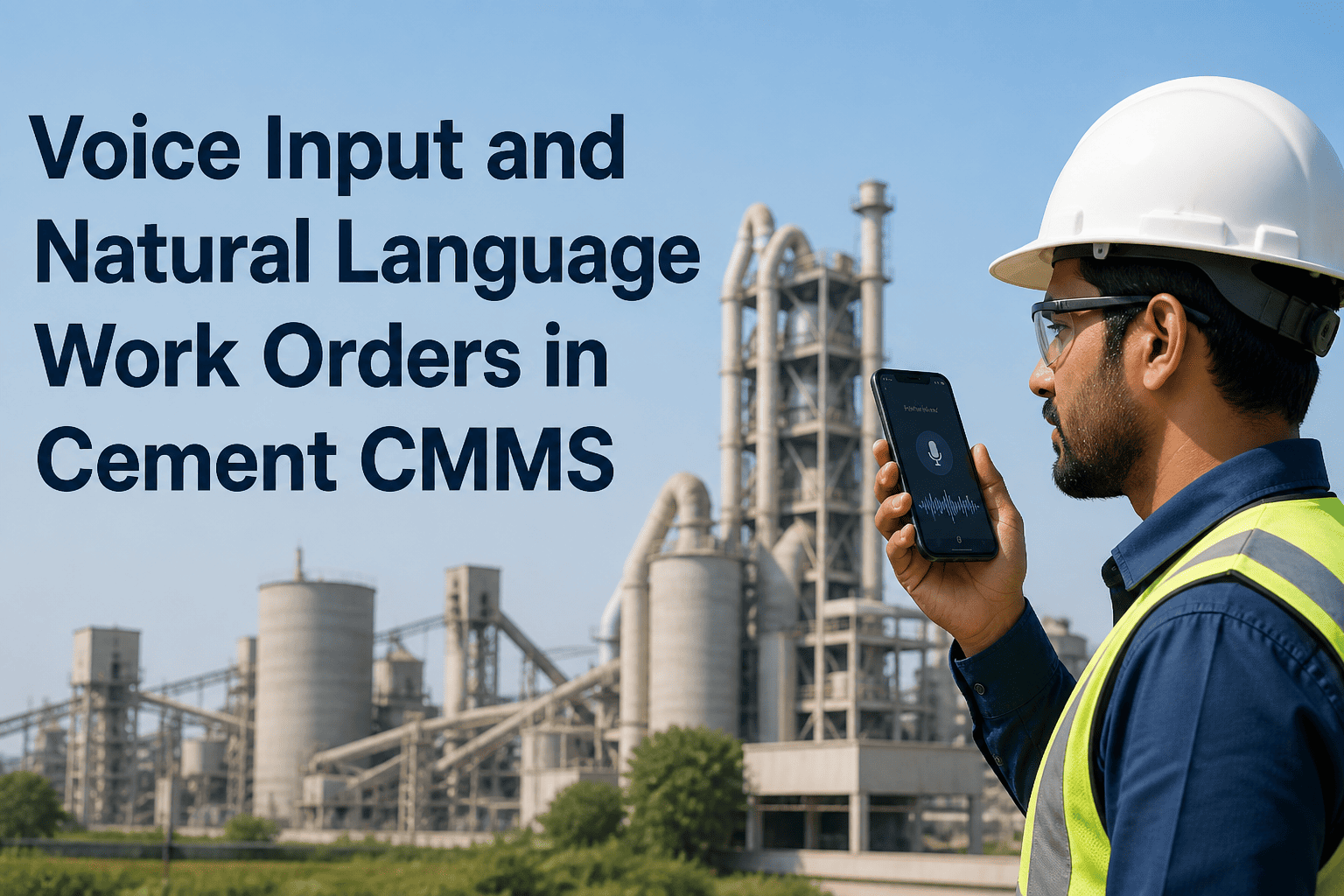
Cement technicians wearing gloves in dusty environments cannot type work order updates — but they can speak them. The documentation gap in cement plant maintenance is not a motivation problem; it is a physical reality. A technician inspecting a raw mill bearing at 45°C with safety gloves, a dust mask, and a hard hat cannot interact with a tablet the way an office worker uses a laptop. AI natural language processing in CMMS converts spoken observations, equipment readings, and fault descriptions into structured maintenance records, cutting documentation time by 65% on the plant floor. Oxmaint's voice-enabled work order system is built for exactly this environment — noisy, gloved, moving, and time-pressured. Start your free Oxmaint trial and see how voice-first CMMS closes the documentation gap that costs cement plants compliance risk and maintenance intelligence.
Your Technicians Can't Type. That's Not a People Problem — It's a System Problem.
Oxmaint's AI natural language processing converts spoken observations directly into structured work orders, inspection records, and maintenance logs — hands-free, accurate, and integrated with your full PM programme.
Why Documentation Fails on the Cement Plant Floor
Oxmaint converts a technician's spoken observation — "left-side bearing on raw mill 2 is running at 78°C, slight vibration, will need grease check next week" — into a structured work order with asset tag, temperature reading, fault classification, and scheduled follow-up. No typing required.
From Spoken Word to Structured Maintenance Record in Seconds
No commands, no templates. The technician describes what they see, hears, or measured in plain language — the same way they would radio it to a supervisor. Oxmaint's NLP engine processes cement plant vocabulary, equipment names, and numeric readings without special formatting.
The NLP layer identifies the asset reference, fault type, measurement values, urgency indicators, and any action mentioned. "Kiln 2 drive coupling has oil leak, losing about 2 litres per hour, needs immediate attention" becomes an asset-linked, priority-flagged corrective work order.
The generated record is displayed for a quick spoken or one-tap confirmation. If anything was misinterpreted, the technician corrects it by voice — staying in the field, not navigating menus. Accuracy above 95% means most records are confirmed without any correction.
The completed record is live in Oxmaint before the technician moves to the next asset — assigned to the right queue, linked to the asset history, and visible to planners and supervisors in real time. No paper trail, no end-of-shift data entry, no lost observations.
Where Voice Input Makes the Biggest Difference in Cement Maintenance
| Task | Challenge Without Voice | With Voice Input | Time Saved |
|---|---|---|---|
| Rotating equipment inspection rounds | 10–15 assets; gloved typing for each; readings often rounded or estimated | Spoken readings per asset logged precisely as technician checks each point | 12–18 min/round |
| Fault reporting during operation | Technician radios supervisor; note written later; often incomplete by end of shift | Spoken fault report becomes corrective work order within seconds of observation | 20–30 min per fault |
| Shutdown inspection recording | Clipboard notes transcribed after window closes; key details lost or misremembered | Observations logged as the inspection proceeds; nothing lost when the window closes | 30–45 min per shutdown |
| Lubrication route completion | Lubrication log filled in from memory at shift end; quantities and conditions approximate | Each point logged by voice at the time of service; exact quantities and observations recorded | 15–20 min per route |
| Post-repair work order closure | Technician queues paperwork at shift end; some orders left open; maintenance KPIs inaccurate | Repair description and closure spoken at the asset before moving to next task | 8–12 min per closure |
Voice Input CMMS for Cement Plant Maintenance
Your Technicians Are Already Doing the Inspection. Let the System Do the Paperwork.
Oxmaint's voice-enabled CMMS closes the documentation gap without changing how technicians work. They inspect, observe, and speak — Oxmaint records, structures, and schedules. Every finding captured. Every asset protected.