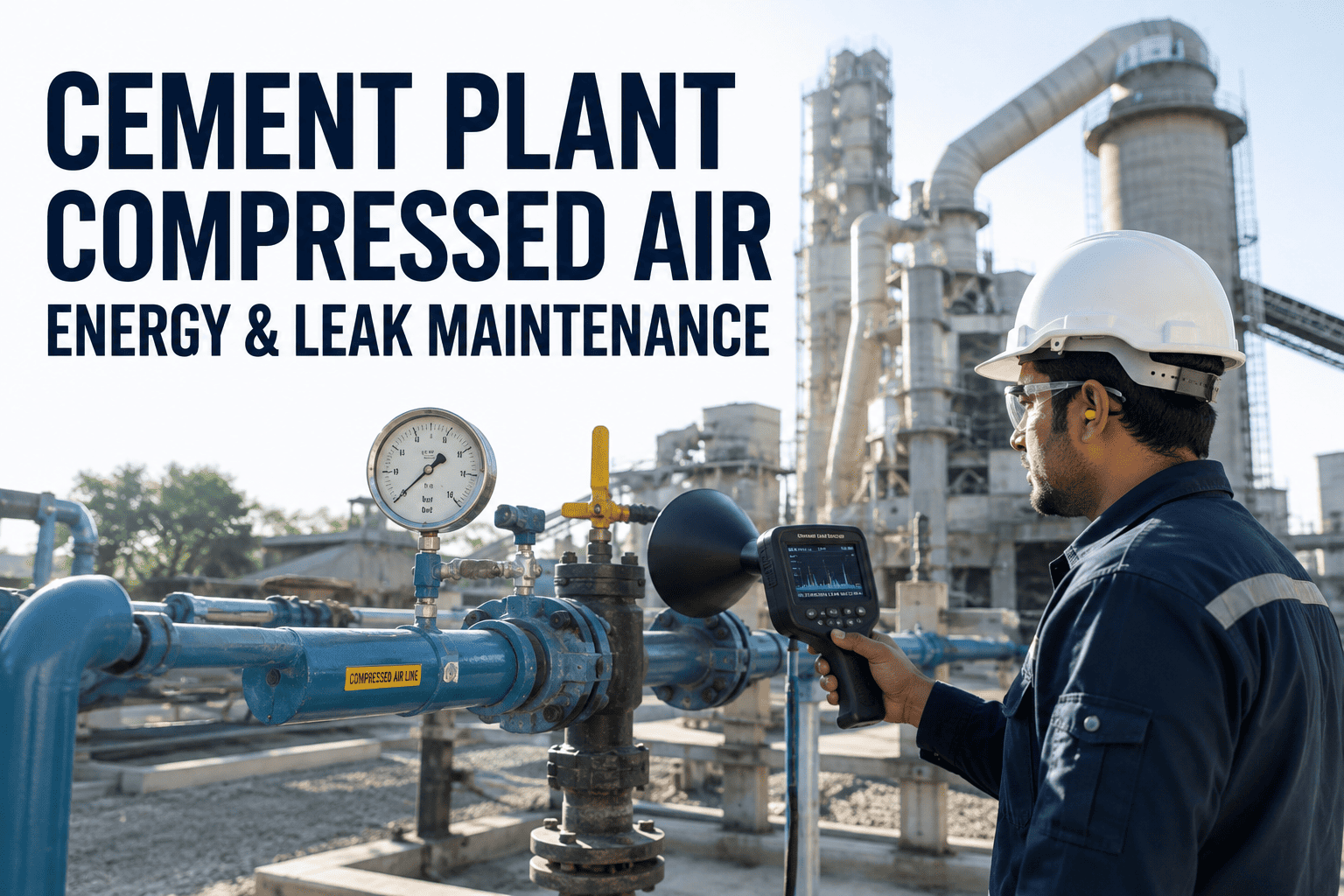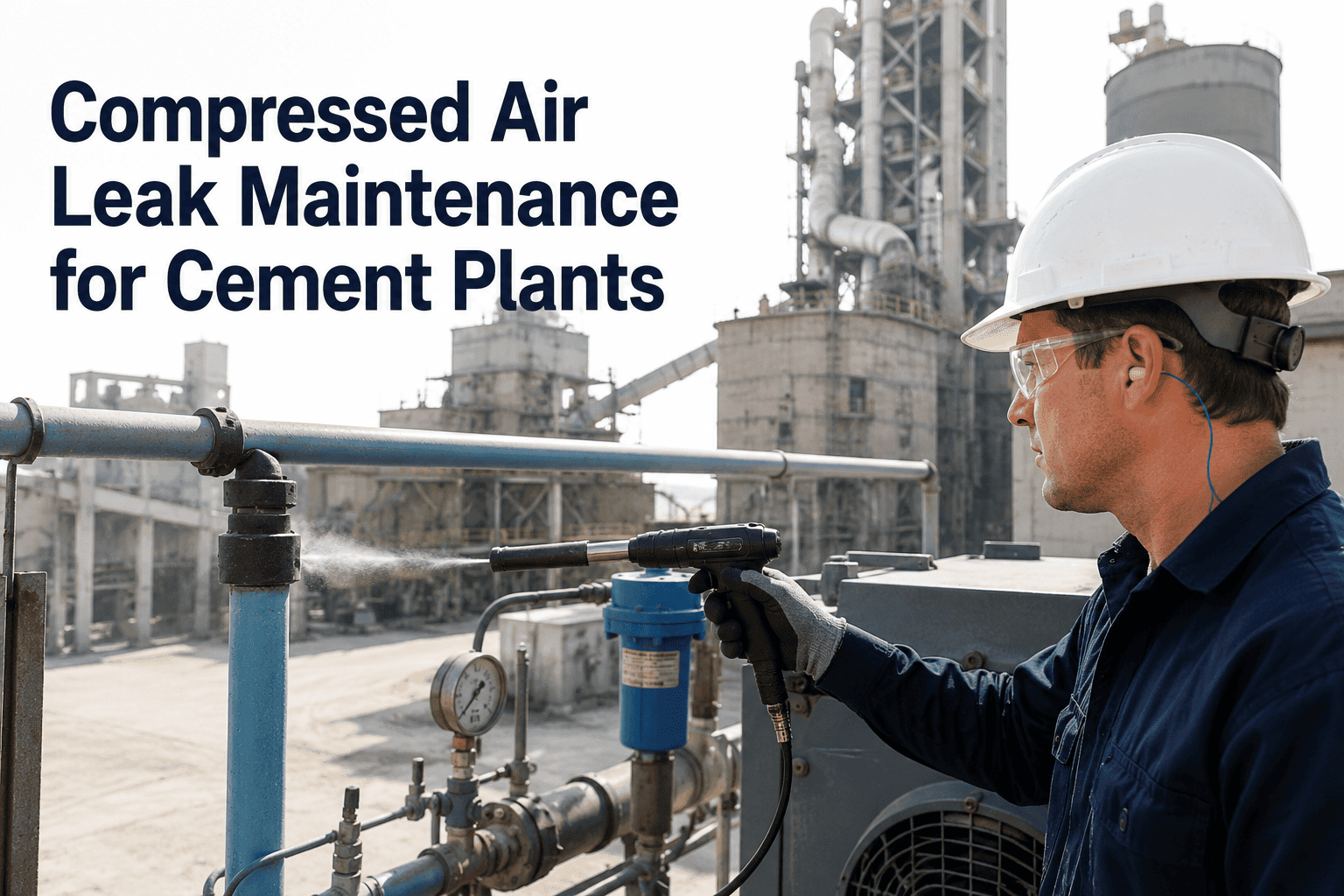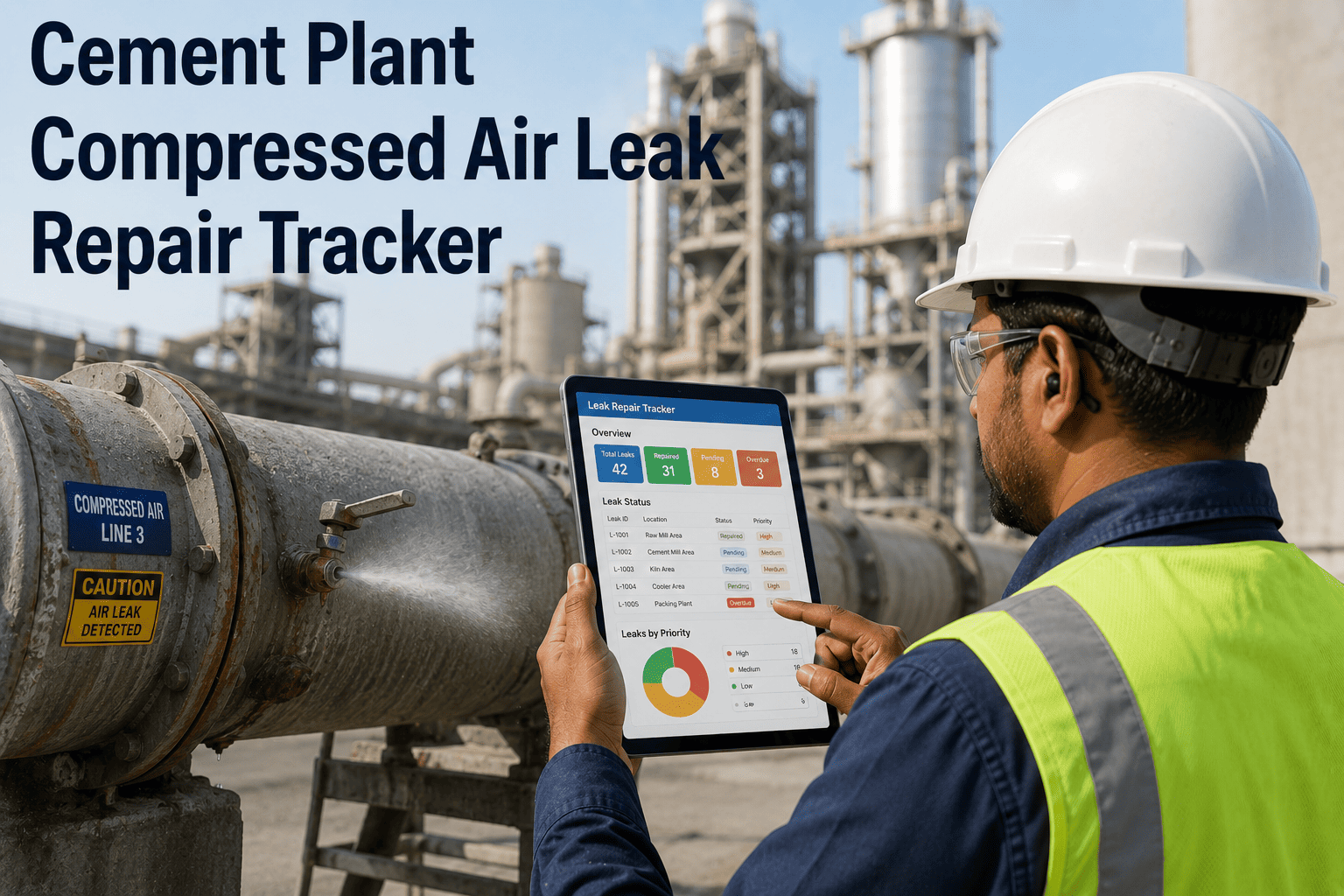
Compressed air is often called the most expensive utility in a cement plant, and leaks are the reason why — a single quarter-inch leak can quietly burn through enough energy in a year to cover a technician's salary. Most plants know leaks exist but have no system to capture where they are, rank which ones matter most, or confirm a repair actually happened. OxMaint turns leak hunting into a tracked maintenance workflow instead of a once-a-year energy audit, and you can start tracking leaks for free on your next walkdown.
The Leak You Can't See Is the One Costing You the Most
Compressed air leaks rarely get fixed because nobody owns the list. OxMaint gives your utilities team a structured checklist to log every leak found, rank it by cost impact, assign the repair, and confirm the fix closed the loop.
Five Steps to Turn Leak Hunting Into Measurable Savings
Cover header lines, drop legs, quick connects, and FRL units — most leaks cluster at joints and fittings rather than straight pipe runs, so prioritize connection points first.
Record location, estimated leak size, and a photo for each finding in OxMaint — small leaks add up across a plant and are often the cheapest to fix immediately.
OxMaint estimates the yearly cost of each leak based on size and system pressure, so the utilities team repairs the highest-cost leaks first instead of the easiest-to-reach ones.
Each logged leak converts into a work order with an owner and due date — removing the "we'll get to it eventually" gap that lets leaks persist for years.
After repair, the same point is re-scanned and marked closed in OxMaint — building a verified record of savings instead of an assumption that the fix worked.
Track Every Air Leak Like a Maintenance Asset, Not a Forgotten Note
OxMaint logs, prioritizes, and tracks compressed air leak repairs from first detection to confirmed closure — so your savings are real, not estimated.
Annual Energy Cost by Leak Size at Typical Plant Pressure
Estimates based on typical industrial system pressure of 100 psi; actual cost varies by plant electricity rate and compressor efficiency.
What a Leak Tracker Entry Should Capture
| Field | Why It Matters |
|---|---|
| Location and Asset Tag | Links the leak to a specific line segment or piece of equipment for repeat tracking |
| Estimated Leak Size | Drives the annual cost estimate and repair priority ranking |
| Detection Method | Confirms whether ultrasonic detection or audible discovery was used, for audit consistency |
| Assigned Technician and Due Date | Converts a logged finding into an accountable, trackable repair task |
| Repair Confirmation Date | Closes the loop and timestamps the start of realized energy savings |
Compressed Air Leak Tracking — Common Questions
How often should a cement plant run a compressed air leak survey?
Does OxMaint estimate the cost savings from each repaired leak?
Can leak repairs be assigned to outside contractors instead of in-house technicians?
What tools are needed to detect compressed air leaks accurately?
How do I prove compressed air leak repairs are actually saving money?
Make Your Next Air Leak Survey the Last One That Goes Nowhere
OxMaint turns leak detection into a closed-loop maintenance process — logged, ranked, assigned, repaired, and verified, with savings you can actually report.