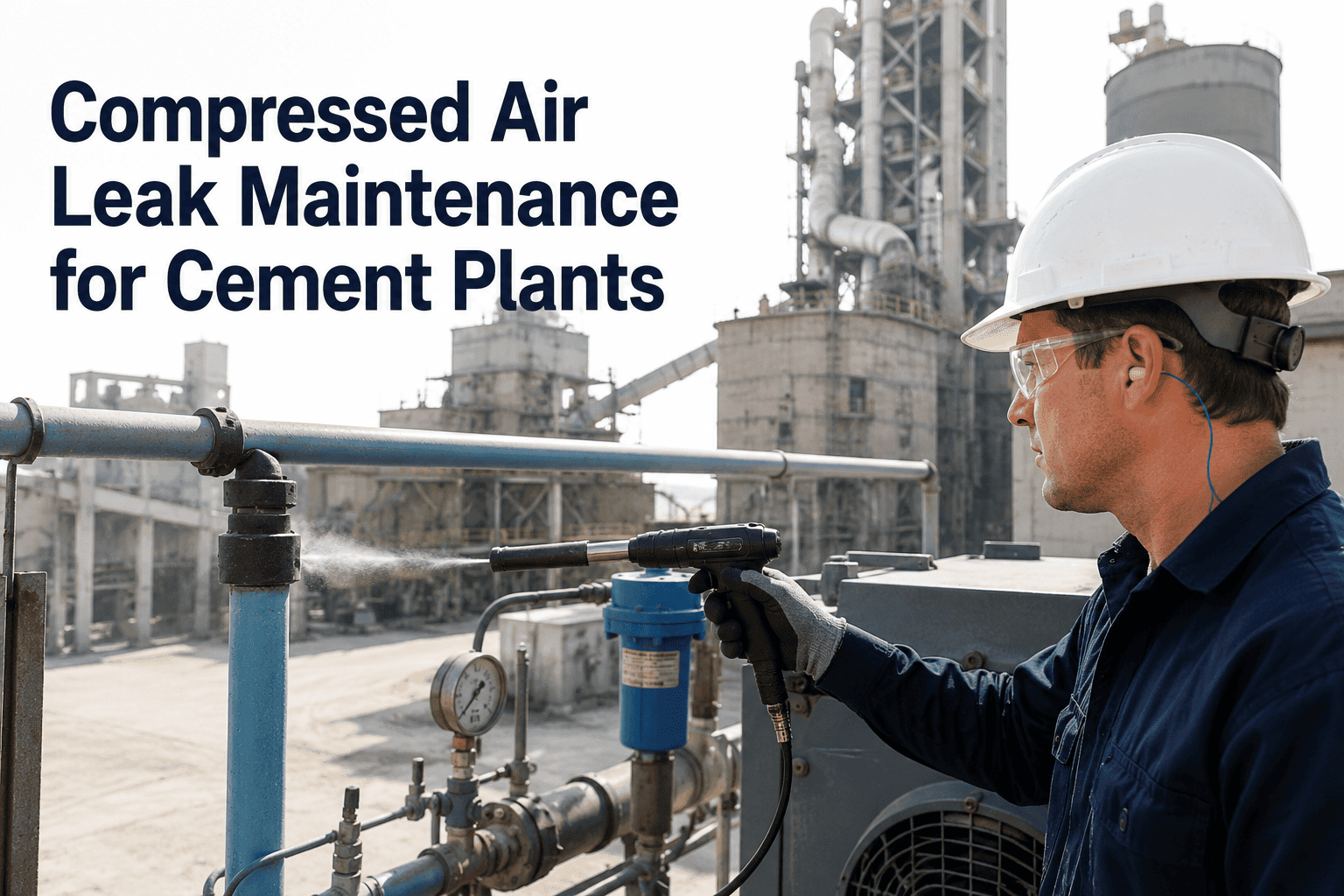
Compressed air runs more of a cement plant than most teams realize — pneumatic valves, bag filter cleaning cycles, instrument air, and dust collection all depend on compressors that rarely get the attention given to the kiln or mill. Yet a single neglected oil change or an ignored air leak can take down a compressor and, with it, every pneumatic system tied to it. OxMaint helps cement plant teams put compressor PM on a fixed schedule — oil checks, filter changes, leak repairs, and inspections — so air supply stays reliable instead of becoming the next surprise outage. Start a free trial or book a demo to see your PM calendar built out.
$2,500–$8,000
Annual cost of a single ¼-inch compressed air leak
A single quarter-inch leak in a compressed air line can cost a facility between $2,500 and $8,000 a year, and the unsettling part is that most leaks of this size go unnoticed without a deliberate inspection routine. Across a plant with dozens of pneumatic lines and fittings, untracked leaks compound into a steady, invisible drain on compressor capacity and energy spend.
The Preventive Maintenance Tasks That Actually Prevent Failures
01
Oil Level and Quality Checks
Low oil or degraded lubricant in oil-injected compressors is one of the fastest paths to bearing and rotor damage. Scheduled checks catch the drop before it becomes a teardown.
02
Filter Inspection and Replacement
Intake, oil, and coalescing filters clog steadily in a cement plant's dusty environment. A blocked filter strains the compressor and quietly raises energy consumption.
03
Leak Detection and Repair
Routine listening checks or ultrasonic surveys catch leaks at joints, valves, and hoses while they're still a repair job — not a capacity shortfall the plant compensates for by running another compressor.
04
Condensate and Moisture Drainage
Water condensate that isn't drained regularly causes corrosion inside tanks and dryers and can carry contaminants downstream into pneumatic instruments.
Put Compressor PM on Autopilot
OxMaint schedules oil checks, filter swaps, and leak inspections automatically by run-hours or calendar interval — no more relying on someone remembering.
Daily, Weekly, and Monthly PM at a Glance
| Frequency |
Task |
Why It Matters |
| Daily |
Check oil level, listen for unusual noise or vibration |
Catches lubrication drops and early mechanical wear immediately |
| Daily |
Drain condensate from tanks and dryers |
Prevents corrosion and water carryover into the air system |
| Weekly |
Inspect hoses, fittings, and valves for leaks |
Stops small leaks before they compound into major energy loss |
| Monthly |
Inspect and clean or replace intake filters |
Maintains airflow efficiency and reduces compressor strain |
| Per OEM interval |
Oil and oil separator change, belt and coupling check |
Protects against the wear that leads to unplanned compressor downtime |
How OxMaint Keeps Compressor PM On Track
1
Set the PM Schedule Once
Define oil change, filter, and inspection intervals per compressor based on OEM recommendation and run-hours — OxMaint handles the recurrence from there.
2
Auto-Generate Work Orders
When a task is due, OxMaint creates the work order with checklist and required parts attached, assigned to the right technician automatically.
3
Log Leak and Inspection Findings
Technicians record leak locations, severity, and repair status directly from a mobile device during rounds, building a leak history per zone.
4
Track Completion and Compliance
Maintenance managers see PM compliance rate across the compressor fleet at a glance, instead of digging through paper logs to find what was missed.
Expert Review
"Compressors fail quietly. Nobody notices a degrading oil separator or a growing leak until the air pressure drops and a pneumatic valve somewhere in the plant stops responding. The plants that avoid compressor downtime aren't running newer equipment — they're running the same basic PM tasks on a schedule they actually stick to, with someone tracking whether it happened."
— Utilities Maintenance Consultant, Heavy Industry
Frequently Asked Questions
How often should a cement plant compressor get an oil change?
It depends on the compressor type and OEM specification, but most oil-injected rotary screw compressors need an oil change every 2,000 to 4,000 run-hours.
Start a free trial to set the exact interval for each unit in your fleet.
Can OxMaint help track compressed air leaks across the whole plant?
Yes. Leaks reported during inspection rounds are logged against the specific line or zone, building a history that shows which areas generate repeat leaks and need a permanent fix rather than another patch repair.
What happens if a compressor PM task is missed?
OxMaint flags overdue PM tasks on the maintenance dashboard so managers can see compliance gaps immediately, rather than discovering a missed oil change only after the compressor fails.
Book a demo to see the compliance view.
Does OxMaint support different PM schedules for oil-free and oil-injected compressors?
Yes. Each compressor asset carries its own PM template, so oil-free units skip oil-related tasks entirely while oil-injected units follow their full lubrication schedule.
Can technicians log compressor PM completion from a mobile device?
Yes. Technicians complete checklists, attach readings or photos, and close out work orders directly from the plant floor, so the PM record updates in real time without paper forms.
Keep Every Compressor on a Predictable Maintenance Schedule
From daily oil checks to OEM-interval overhauls, OxMaint turns compressor PM into a system the whole team can see and trust — instead of a routine that depends on memory.