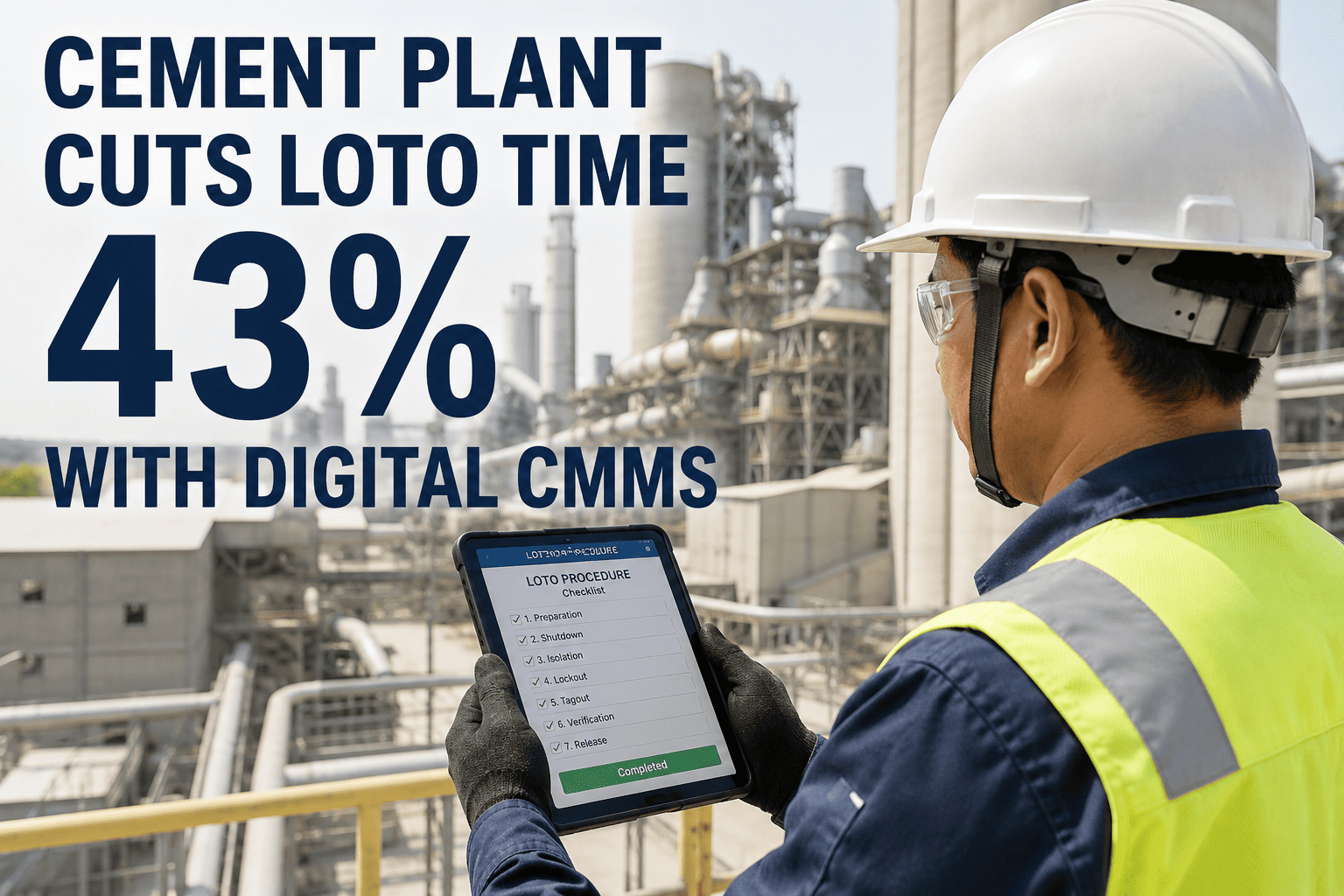
Cement plant inspection teams have leaned on paper checklists and clipboard rounds for decades, and the cracks show up exactly where you would expect: kiln shell hot spots, conveyor idler wear, and bag-house damper leaks get missed until they turn into unplanned downtime. One multi-line cement plant decided to test whether a digital CMMS built around photo-first inspections could change that pattern, and tracked every single inspection round for twelve straight months against its old paper-based baseline. What follows is the exact rollout, the numbers behind a 68% drop in missed defects, and what the reliability team changed to get there. If your inspectors are still chasing five different paper trails across shifts, see how Oxmaint's inspection workflow compares.
Cement Plant Case Study
How One Cement Plant Cut Missed Inspection Defects by 68% With a Digital CMMS
Twelve months, one rollout, and a complete rework of how inspection findings turn into maintenance action. Here is exactly what changed and why it worked.
68%
Fewer defects missed during inspection rounds
4x
Faster from defect finding to work order
94%
Inspection completion rate after rollout
Why Inspection Defects Kept Slipping Through
Before the rollout, the plant ran a full inspection program on paper. Rounds were completed, sheets were filed, and yet the same conveyor idlers and refractory hot spots kept reappearing in shutdown reports. A review of twelve months of downtime data traced most of it back to four gaps in how inspection findings actually moved through the plant.
01
Paper Checklists With No Photos
A checked box telling a supervisor "seal condition: fair" carries almost no information. Without a photo attached, there was no way to compare this month's wear against last month's, so slow degradation went unnoticed until failure.
02
Fragmented Shift Handoffs
Inspection sheets from the night shift sat in a tray until the day supervisor reviewed them, sometimes two or three days later. Findings that needed same-day attention were routinely delayed by the handoff gap itself.
03
No Baseline for Comparison
New technicians inspecting an asset for the first time had no reference point for what normal wear looked like on that specific machine, so early-stage defects were frequently judged as within tolerance.
04
Delayed Defect Reporting
Converting a paper finding into an actual work order meant re-typing it into a separate system, often a day or two later, by which point the finding had lost priority against newer issues on the board.
The Twelve-Month Rollout, Step by Step
Rather than switching every process at once, the plant's reliability team phased the CMMS rollout across five stages, giving each change time to stick before layering on the next one.
01
Months 1 to 2: Asset mapping and criticality tagging
Every kiln, mill, crusher, and conveyor section was catalogued in the CMMS with a criticality rating, so inspection frequency could be set by actual risk instead of a flat schedule applied to every asset equally.
02
Month 3: Mobile inspection templates with mandatory photo capture
Paper checklists were rebuilt as mobile forms. A photo became a required field for any finding rated below "good," removing the option to log a vague condition note with no supporting evidence.
03
Month 4: Baseline photo library built for every asset
Technicians walked the plant capturing reference-condition photos for high-criticality assets, giving every future inspection round a fixed point of comparison instead of relying on individual memory or judgment.
04
Months 5 to 6: Automatic work order generation from flagged defects
Any inspection finding rated "advisory" or "action required" now auto-generated a work order the moment the technician submitted the form, closing the gap between finding a defect and someone being assigned to fix it.
05
Months 7 to 12: Trend dashboards and monthly defect review
With a full data set accumulating, the reliability team introduced a monthly review meeting built entirely from CMMS trend reports, shifting conversations from opinion-based guesses to asset-specific wear patterns.
No more clipboard rounds and re-typed findings. Oxmaint's mobile inspection workflow makes photo evidence a required step, not an afterthought, and turns every flagged defect into a work order automatically.
Before and After: The Numbers That Moved
The plant tracked five metrics through the entire twelve-month period, comparing the final quarter against the paper-based baseline from the year before rollout.
| Metric |
Before Digital CMMS |
After 12 Months |
Change |
| Inspection defect miss rate |
34% |
11% |
68% reduction |
| Average time from finding to work order |
6 days |
1.5 days |
4x faster |
| Inspection round completion rate |
61% |
94% |
33-point gain |
| Repeat defects on same asset within 90 days |
22% |
6% |
73% reduction |
| Monthly audit preparation time |
18 hours |
3 hours |
83% reduction |
What the Reliability Team Tracks Now
These four numbers are reviewed at every monthly defect meeting. They replaced a much longer list of vague, hard-to-action metrics the plant used to report before the rollout.
68%
Drop in missed defects
Measured by comparing findings caught during scheduled inspections against defects later discovered during unplanned downtime events.
94%
Inspection completion rate
Technicians complete mobile forms in the field in roughly the same time paper checklists took, removing the excuse for skipped rounds.
4x
Faster corrective action
Automatic work order generation from flagged findings means nothing waits in a paper tray for a supervisor to review it days later.
3 hrs
Monthly audit prep time
Inspection history, photos, and work order closure records are already organized in the CMMS, ready to export for any audit request.
These results came from changing one workflow, not the whole maintenance program. Photo-first inspections and automatic work order generation were the two changes that moved every number in this case study.
Frequently Asked Questions
What changed most to reduce the defect miss rate?
Requiring a photo for any below-standard finding was the single biggest driver. It forced technicians to document actual condition instead of a subjective rating, and gave the next inspection round something concrete to compare against.
See the inspection module.
How long did the full CMMS rollout take?
The plant phased it across twelve months in five stages, starting with asset mapping and ending with monthly trend reviews. Most of the defect-rate improvement was already visible by month six.
Did inspection time per round increase with mobile forms?
No. Technicians completed mobile checklists in roughly the same time as paper sheets, since photo capture replaced writing long condition notes rather than adding an extra step to the round.
Why did repeat defects on the same asset drop so sharply?
Automatic work orders closed the loop between a finding and a fix, and trend dashboards flagged assets with recurring issues so the root cause got addressed instead of the symptom being patched again.
Can a smaller plant see similar results with Oxmaint?
The workflow scales down as easily as it scales up, since criticality tagging and mobile inspections work the same way on ten assets or two thousand.
Book a session to map out a rollout for your plant.
Your Inspection Data Should Be Doing More Than Sitting in a Binder
Oxmaint turns every inspection round into photo-backed, trend-ready data that drives preventive maintenance decisions instead of getting filed and forgotten.