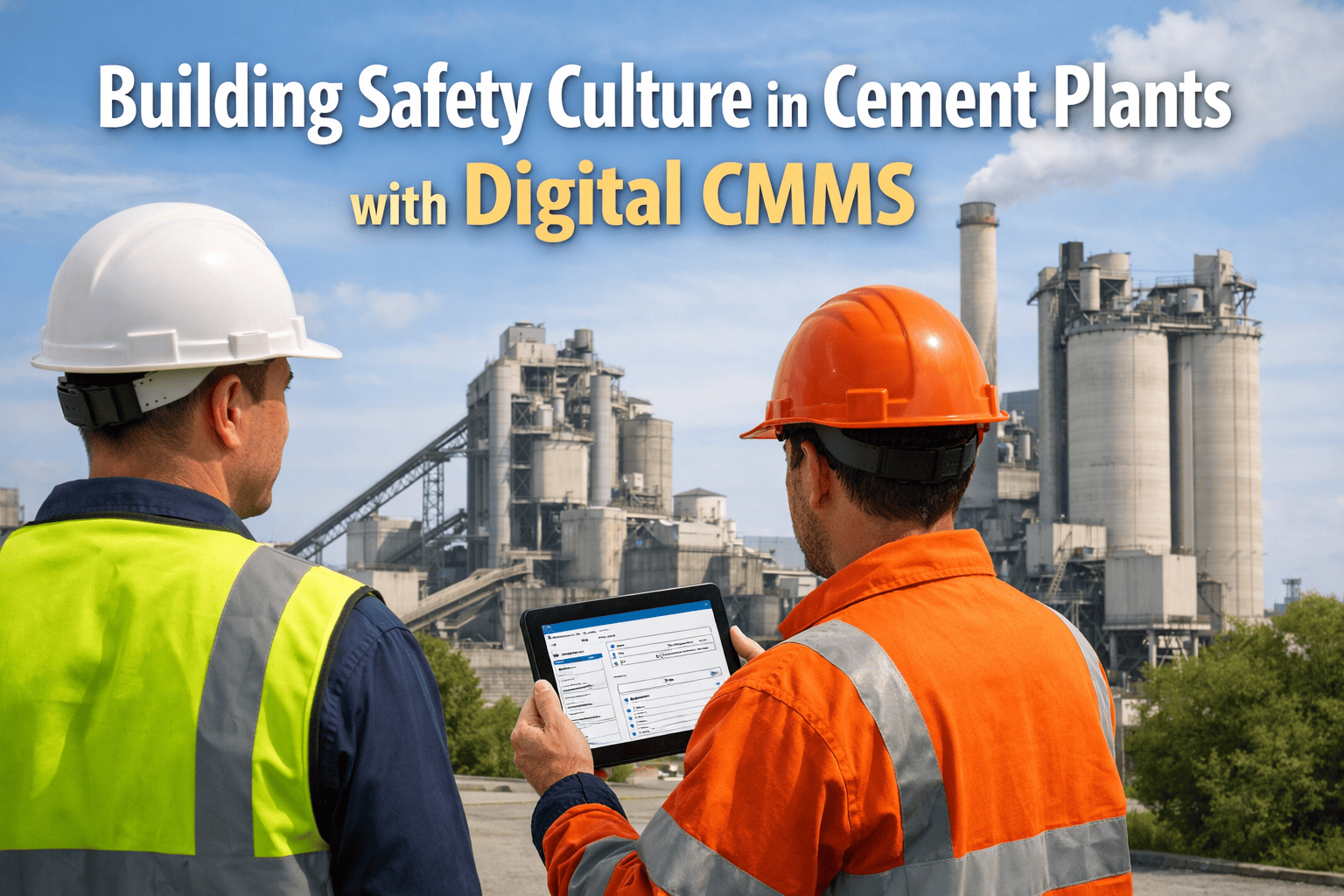
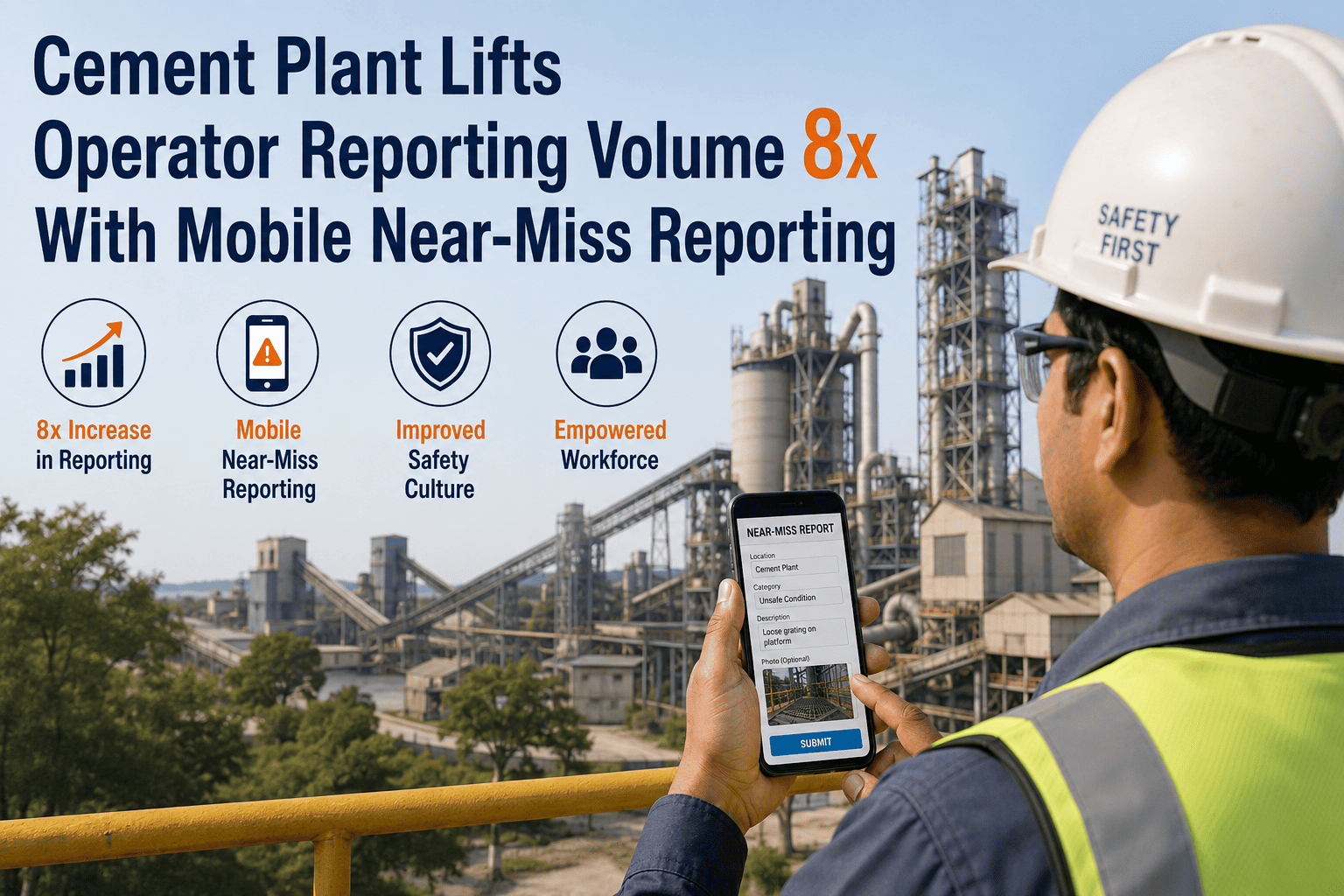
The cement industry's best-performing plants — those with lost-time incident rates below 0.3 per 200,000 hours — report near-miss events at roughly 10 times the rate of average performers. That counterintuitive finding from decades of industrial safety research reveals the real mechanism behind safety culture: plants are not safer because they have fewer incidents; they have fewer incidents because their workforce reports every hazard, every near-miss, every unsafe condition — and the system acts on each one. Digital CMMS-integrated safety reporting is what makes that reporting culture possible at scale, turning every observation into a tracked, resolved, and documented corrective action.
The Safety Reporting Pyramid — Why Volume Matters More Than Severity
Heinrich's Safety Triangle has guided industrial safety thinking for nearly a century, and its core logic is stronger than ever: for every serious injury, thousands of minor incidents and tens of thousands of at-risk behaviors occur in the same operational footprint. The plants that control the top of the triangle are the ones that systematically capture and address the bottom. Paper forms and tribal knowledge cannot keep up with that volume. Digital reporting can.
1
Serious injury or fatality
30
Property damage events
3,000+
At-risk behaviors and unsafe conditions
Ratio per single serious injury — the reporting base is where safety culture either succeeds or fails
The Case Study — What "10x Reporting" Actually Looks Like
Before Digital Reporting
Average Cement Plant Profile
47
Near-miss reports per year
8 days
Average time from report to action
34%
Corrective actions actually closed
1.8
Lost-time injury rate (per 200K hrs)
Paper forms, email chains, siloed EHS spreadsheets. Workers file reports, then watch them disappear into administrative limbo.
After Digital CMMS Reporting
Top-Decile Cement Plant Profile
520
Near-miss reports per year
3 hours
Average time from report to action
94%
Corrective actions actually closed
0.26
Lost-time injury rate (per 200K hrs)
Mobile reporting, automatic work order generation, closed-loop tracking. Every report acted on, every action visible to the reporter.
The Five Pillars of a Reporting-Driven Safety Culture
Pillar 01
Frictionless Reporting at the Point of Work
A worker seeing a hazard at the raw mill needs to report it in under 30 seconds — without leaving the floor, filling out forms, or finding a supervisor. Mobile-first digital reporting inside the CMMS makes this possible; paper-based systems make it impossible.
Pillar 02
Visible, Credible Follow-Through
The fastest way to kill a reporting culture is to let reports disappear. Workers stop filing when nothing happens. Digital CMMS makes follow-through traceable and visible — the reporter sees the work order, the action, the close-out, the learning.
Pillar 03
No-Blame Psychological Safety
Reports only flow when workers know they will not be punished for surfacing problems. Digital systems support this by separating observation data from performance metrics — the focus stays on the hazard, not the person who was near it.
Pillar 04
Pattern Recognition Across the Plant
A single near-miss on a conveyor is an event; ten near-misses on the same conveyor over four months is a failure pattern. Only a digital system with categorization, tagging, and trend analysis surfaces these patterns before they become serious injuries.
Pillar 05
Leadership Engagement Made Measurable
Safety culture fails when leadership engagement is symbolic rather than operational. Digital CMMS dashboards let plant managers, shift supervisors, and area leads see reports in their zones, their response times, their closure rates — accountability becomes a number.
Turn Every Safety Observation Into Action
Your Safety Culture Is Only as Strong as Your Reporting System
Oxmaint's safety reporting module captures near-misses, hazards, and unsafe conditions from any mobile device and converts them into tracked CMMS work orders with automatic routing, closure tracking, and pattern analytics — the operational backbone that world-class cement plant safety cultures run on.
The Anatomy of a Digital Near-Miss Report
Converting a workforce observation into a closed-loop safety action requires a specific workflow — one that paper systems simply cannot execute. Here is what happens when a technician in a cement plant packing area spots a worn catwalk grating and taps "Report Hazard" on their mobile device.
Capture in Under 30 Seconds
Photo, location tag from asset QR code, hazard category, risk score. The worker types one sentence of context. The report is submitted without leaving the floor.
Worker effort: 30 seconds
Auto-Triage and Routing
The CMMS scores severity, identifies the asset, and routes the report to the area supervisor and maintenance planner. High-severity items trigger immediate alerts; lower-risk items enter the planning queue.
System latency: under 1 minute
Work Order Auto-Generation
A corrective action work order is created against the physical asset with the hazard photo attached, parts requisitioned, and a technician assigned. The worker who reported it receives a tracking link.
Planning effort: 3-5 minutes
Execution and Verification
Technician completes the repair or mitigation, uploads photo evidence, and marks the work order closed. The area supervisor verifies the action and signs off on closure.
Turnaround: hours to days
Feedback Loop to Reporter
The original reporter is notified of closure with a summary of what was done. This single loop — seeing that their report mattered — is what drives the next 520 reports per year.
Cultural effect: compounding
What the Data Actually Shows — Leading vs Lagging Indicators
Safety Metrics Cement Plants Should Track Monthly
Scroll horizontally to view full metric set
Common Reasons Safety Reporting Programs Fail
Reports Disappear Into Administrative Silence
A worker files a hazard report and never hears about it again. Within 3-4 cycles of this, reporting stops. The fix is not more training — it is closing the loop every single time.
Reporting Is Punished Through Metrics
When near-miss rates are used to score individual performance or team safety awards, workers learn to underreport. Culture-driven plants explicitly protect reporters from any negative consequence.
Paper Forms That Belong in a Museum
Multi-page carbon forms in a binder at a supervisor's desk will never capture the real safety picture. Workers need to report from where they are, in under a minute, with a phone they already carry.
Data Stays Trapped in EHS Software Nobody Reads
Standalone EHS systems produce compliance reports that executives skim and nobody acts on. Integrating safety data into the CMMS puts it where maintenance, operations, and leadership already work every day.
Leadership Attention Is Ceremonial
Weekly safety meetings with canned presentations produce compliance, not culture. Real culture shows up in daily supervisor walks, visible report responses, and leaders who personally close the loop with reporters.
Frequently Asked Questions
Safety Culture Built on Data You Can Trust
The Plants With the Best Safety Records Report More, Not Less
Oxmaint gives your cement plant workforce a frictionless way to report every hazard, every near-miss, every unsafe condition — and gives your leadership the closed-loop execution layer that turns reports into resolved actions, visible patterns, and measurable culture change. Ten times the reporting. A fraction of the incidents.