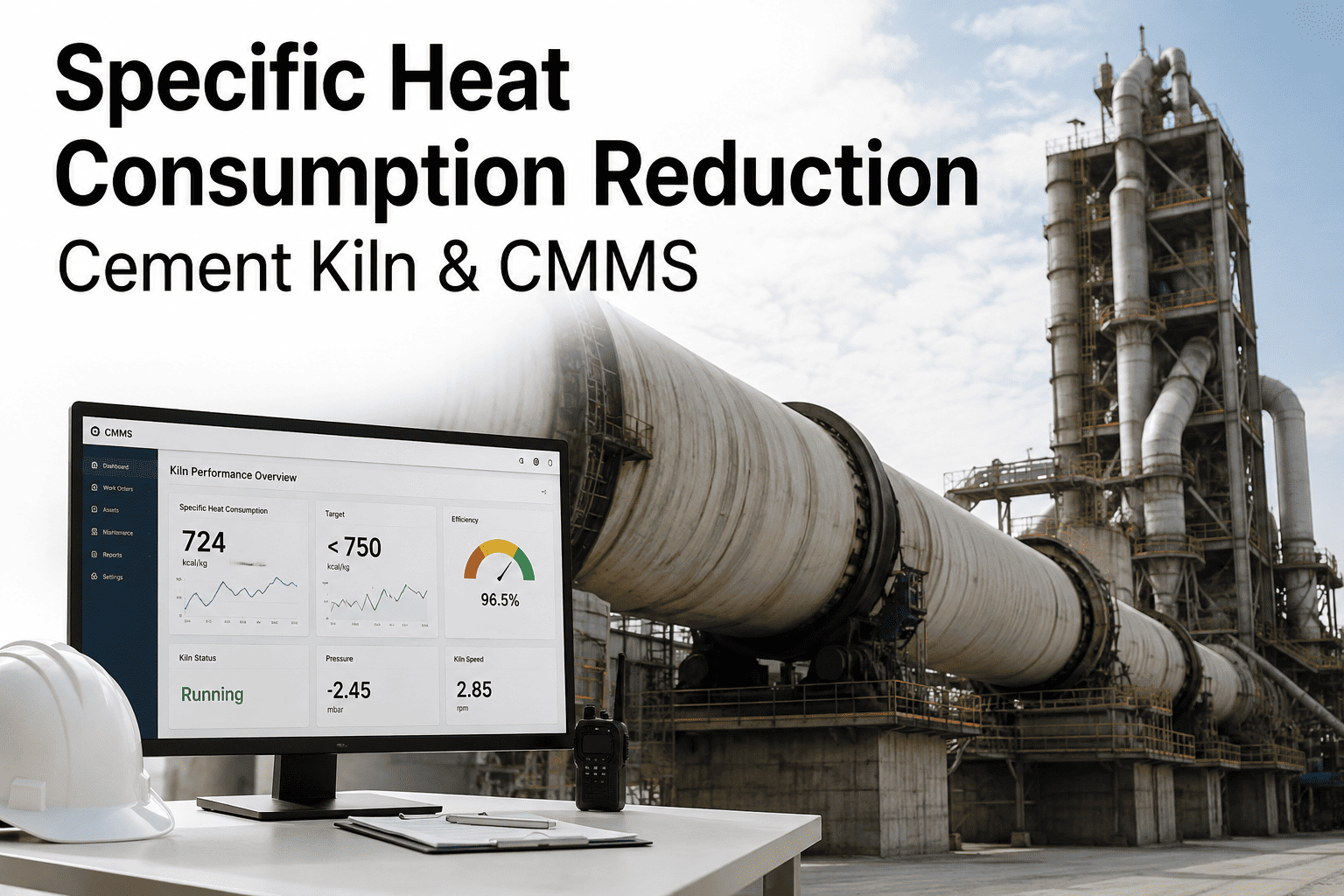
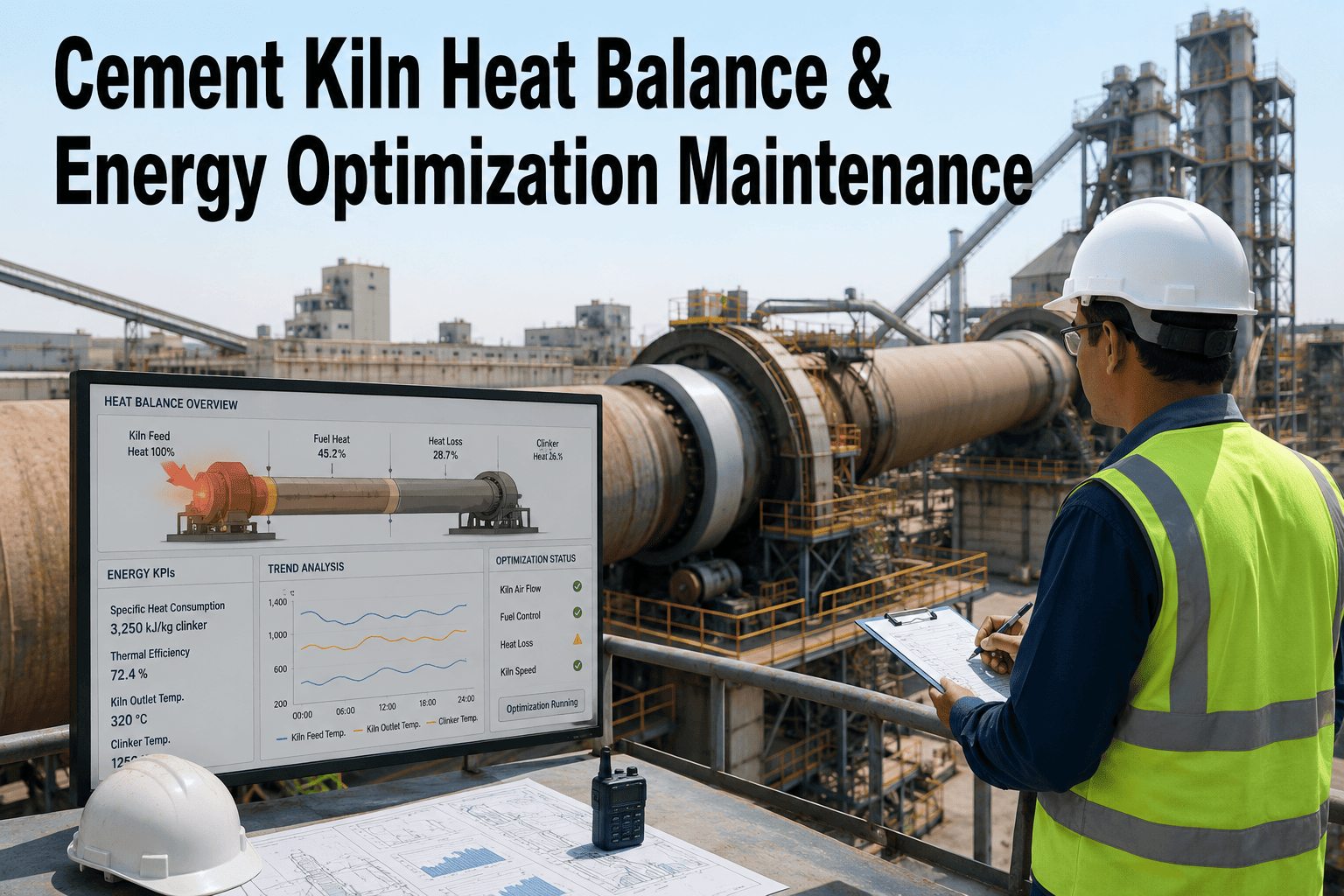
A cement plant running a rotary kiln at scale knows that every kcal/kg of specific heat consumption (SHC) maps directly to fuel spend. When one mid-size integrated cement plant engaged OxMaint's maintenance platform, their kiln burner condition tracking and false air audit program delivered an 84 kcal/kg SHC reduction in 8 months. The improvement was not a one-time tune-up; it was the result of structured inspection schedules, digital condition records, and weekly trending that made kiln heat loss visible for the first time. If you want to see what that looks like for your plant, start a free trial and bring your current SHC baseline.
84
kcal/kg
SHC reduction in 8 months
8
months
From baseline to target
3.2%
fuel cost
Reduction in annual fuel spend
0
unplanned
Kiln shutdowns during program
The starting point
What 790 kcal/kg looks like inside a cement plant
SHC at 790 kcal/kg on a theoretical minimum closer to 700 means the plant was leaving the equivalent of weeks of fuel on the floor every year. The root causes were not mysteries; they were the kind of problems that accumulate when kiln burner inspections are infrequent and false air entry points go unmapped. Before OxMaint, the maintenance team had no structured way to track burner tip wear against heat trend data, and false air readings existed only in quarterly reports nobody acted on between cycles.
Before OxMaint
Baseline state — Month 0
SHC at 790 kcal/kg, unmeasured weekly
Burner tip inspections quarterly, no condition grading
False air audits done annually by external team
No link between inspection findings and heat trends
Shell radiation losses estimated, never measured
After OxMaint
Month 8 operational state
SHC at 706 kcal/kg, reviewed in weekly stand-up
Burner condition graded monthly, trends visible
False air points mapped, re-audited every 6 weeks
Inspection findings linked to SHC trend in dashboard
Shell radiation loss tracked with IR scan work orders
The program structure
Three workstreams that drove the 84 kcal/kg drop
The SHC reduction came from three simultaneous but independent workstreams, each tracked as a separate inspection program inside OxMaint. Combining all three into one program would have made accountability invisible. Keeping them separate meant each workstream owner could see exactly how their findings translated into heat savings, week by week.
01
Kiln Burner Condition Tracking
Burner tip wear scored on a 5-point condition scale at each monthly inspection. Flame shape deviation logged as a work order trigger. Momentum zone tracking added after Month 2 when primary air ratios were found 4 points above setpoint. SHC contribution from burner optimization alone was estimated at 31 kcal/kg.
31 kcal/kg from burner program
02
False Air Audit and Sealing Program
Plant-wide false air mapping identified 23 ingress points across the preheater tower, kiln inlet seal, and cooler. Each point assigned a severity score and a sealing work order. Re-audit every 6 weeks confirmed seal effectiveness before closing the work order. This workstream accounted for 38 kcal/kg of the total reduction.
38 kcal/kg from false air sealing
03
Shell Radiation Loss Management
IR scan routes added to the monthly kiln inspection in OxMaint. Hot spot findings above the threshold automatically triggered a refractory inspection work order. Refractory lining condition scored by zone and linked to heat loss estimates. Targeted patching during planned stops kept radiation losses from rebounding. Contribution was 15 kcal/kg.
15 kcal/kg from shell radiation control
Map your SHC reduction program
Your kiln is losing kcal/kg you can recover in months, not years
The OxMaint onboarding team will map your burner inspection frequency, your false air audit gap, and your shell radiation exposure against this case and give you a realistic Month 8 SHC target for your plant.
SHC trajectory
How the numbers moved across 8 months
SHC does not drop in a straight line. The first two months showed the smallest movement because the audit findings were still being converted into sealed work orders. Months 3 through 5 showed the steepest drop as false air sealing completed and burner settings were adjusted based on condition data. Months 6 through 8 were about holding the gains and targeting the remaining refractory heat loss.
Audit and mapping phase
False air ingress points mapped. Burner condition baseline established. Shell IR scan routes configured in OxMaint. Minimal SHC movement while findings were being actioned.
Sealing and burner correction
High-priority false air points sealed. Primary air ratio corrected on kiln burner. SHC dropped 31 kcal/kg in two months, the steepest section of the improvement curve.
Secondary sealing and refractory patching
Remaining false air points addressed. First refractory patch campaign completed at planned stop. IR hot spot monitoring confirmed radiation loss reduction. Weekly SHC review cadence locked in.
Stabilization and gains locked
84 kcal/kg total reduction confirmed against baseline. All three workstreams operating on scheduled maintenance cycles. SHC trending stable between 704 and 710 across the final four weeks.
What the records showed
Results presented at the Month 8 program review
| Metric |
Month 0 baseline |
Month 8 actual |
Change |
| Specific heat consumption |
790 kcal/kg |
706 kcal/kg |
Down 84 kcal/kg |
| Burner inspection frequency |
Quarterly |
Monthly, graded |
4x more frequent |
| False air ingress points sealed |
0 tracked |
23 sealed and verified |
Program established |
| Shell hot spot work orders |
Ad hoc, untracked |
Systematic, linked to SHC |
Fully digitized |
| Unplanned kiln shutdowns |
3 in prior 8 months |
0 during program |
100% reduction |
| SHC review cadence |
Quarterly report |
Weekly stand-up |
13x more frequent |
Common questions
Frequently asked questions from cement plant reliability teams
Does this program require new hardware like IR cameras or CEMS upgrades?
No new hardware was required for this program. Existing handheld IR cameras already on site were used for shell scans, and false air measurements used standard manometer kits. OxMaint structures the work orders and trending; your existing instruments provide the readings.
Start a free trial to see how the inspection templates map to your current tools.
How long before SHC improvements become visible in the data?
In this case, the first measurable SHC movement appeared by the end of Month 2, once the highest-severity false air points were sealed. Burner-related improvements showed up within 3 weeks of the primary air ratio correction. The digital record in OxMaint made it possible to correlate each action to the SHC trend in real time rather than waiting for a quarterly report.
Can OxMaint integrate with our existing DCS or historian data?
OxMaint's inspection and work order records operate independently of the DCS and can pull trend context from a historian export. Full historian integration is a post-program configuration step, not a prerequisite.
Book a demo to walk through your current data environment and the integration options.
Is 84 kcal/kg achievable for a plant already running below 750 kcal/kg?
Plants already below 750 typically see smaller absolute gains but still benefit from the structured audit cadence. A plant at 740 kcal/kg with an unsystematic false air program often has 20 to 35 kcal/kg still available. The OxMaint team will scope a realistic target based on your current SHC and audit history before you commit to the program.
What team size is needed to run this program internally?
This plant ran the program with one reliability engineer as program owner and two maintenance technicians assigned to inspection routes. No additional headcount was required. The OxMaint onboarding team handled configuration, inspection template setup, and the first two monthly reviews to ensure the program was running correctly before handover.
Start your SHC reduction program
84 kcal/kg is not a benchmark, it is a repeatable result
Bring your current SHC number, your burner inspection cadence, and your last false air audit date. The OxMaint team will scope a structured program with a defensible Month 8 target for your specific kiln and operating conditions.