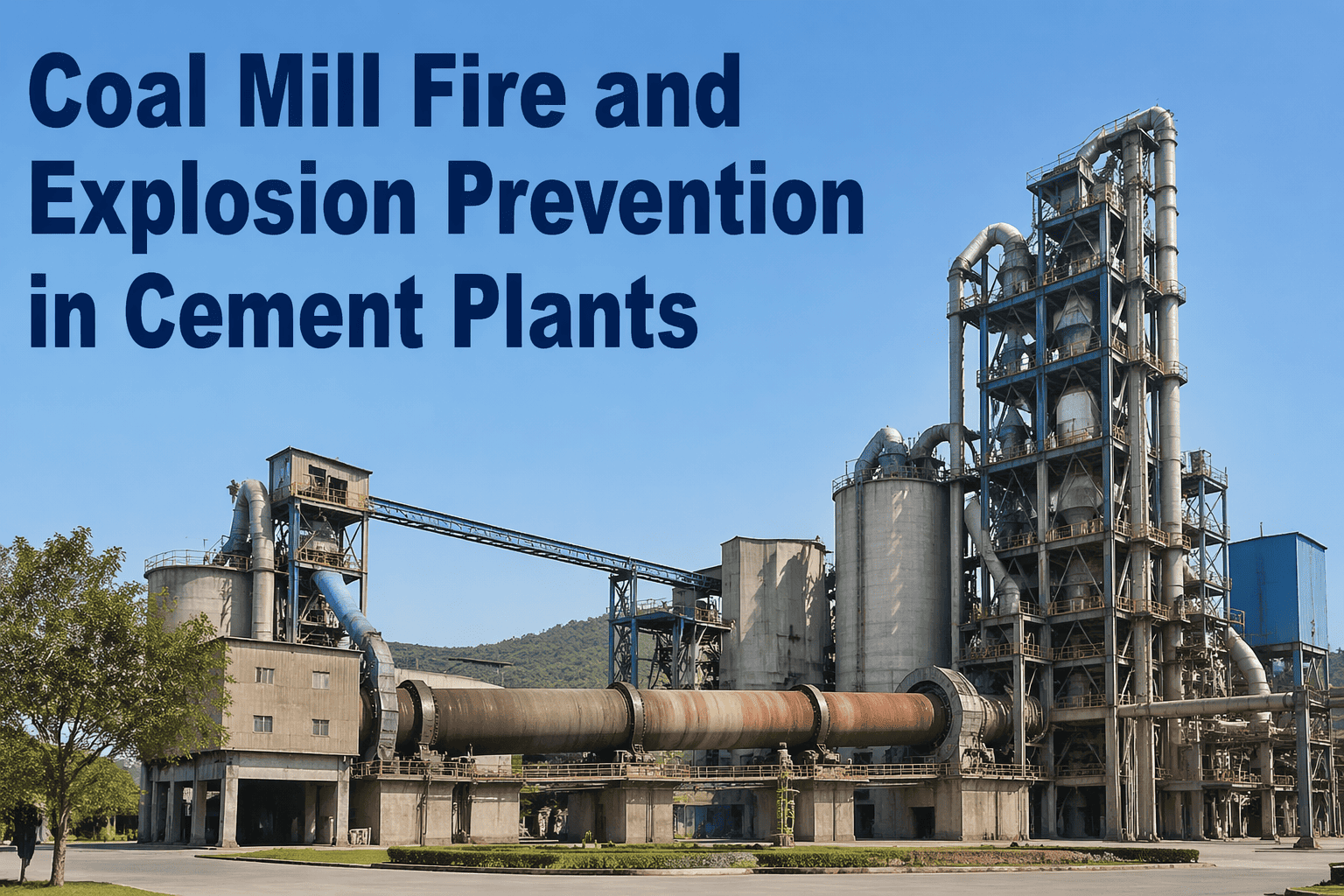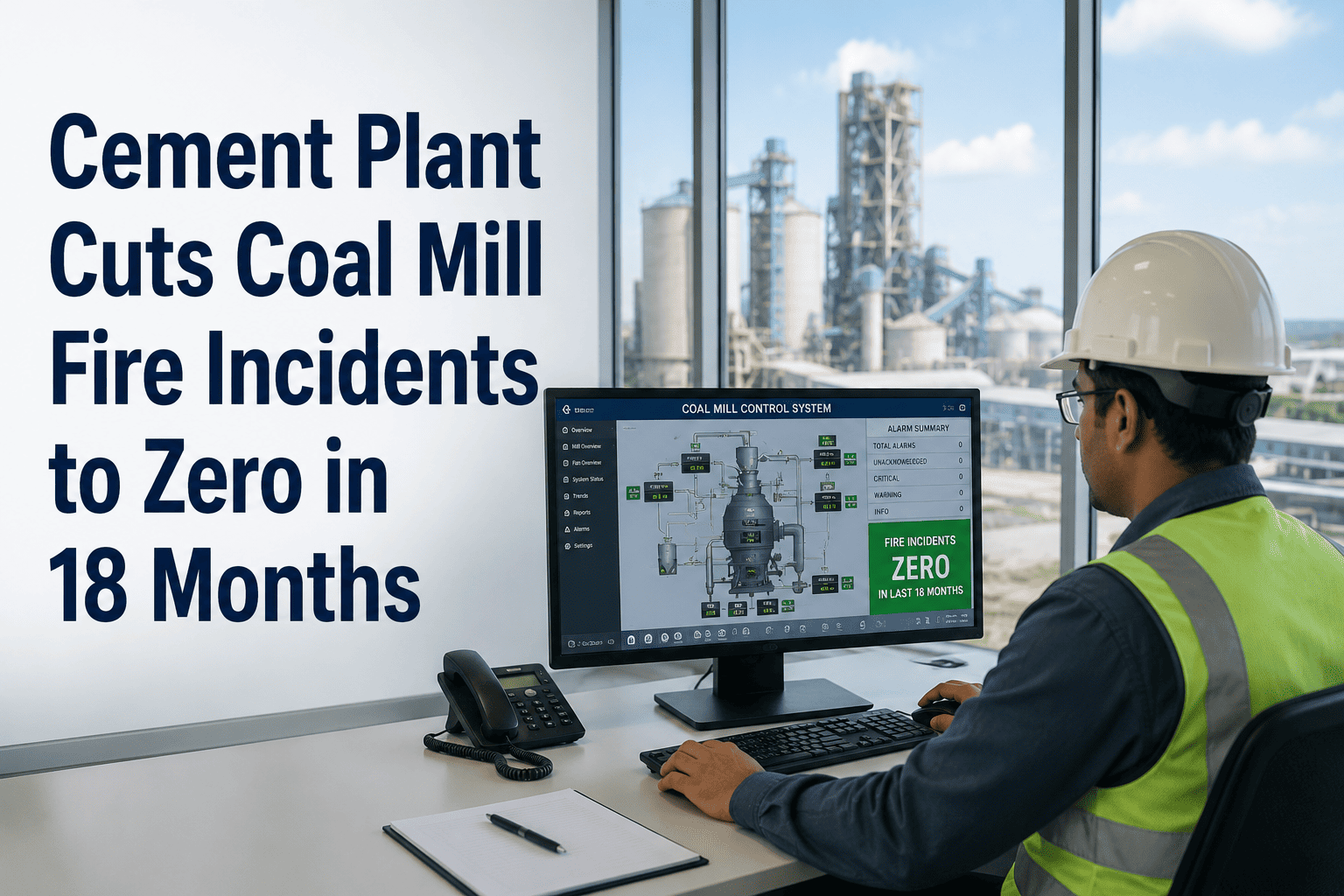
Coal mill fires are not rare in cement plants — they are predictable failures that happen when preventive maintenance programs slip. This case study documents how one mid-sized cement plant eliminated coal mill fire incidents entirely over 18 months by deploying Oxmaint to structure their NFPA 654 PM program, digitize CO and O2 monitoring logs, and connect every sensor reading to a work order before conditions escalate. The plant had experienced three separate coal mill fire events in the 24 months prior to the rollout, each costing between $180,000 and $420,000 in unplanned downtime, equipment repairs, and regulatory review. If your plant is managing coal mill safety through spreadsheets and paper logs, sign up for Oxmaint to see how a structured digital PM program changes outcomes.
Zero Coal Mill Fire Incidents in 18 Months
How one cement plant went from three fires in two years to a clean 18-month record — using NFPA 654-aligned PM scheduling and continuous CO/O2 monitoring records in Oxmaint.
Why Coal Mills Keep Catching Fire — And Why Paper Logs Cannot Stop It
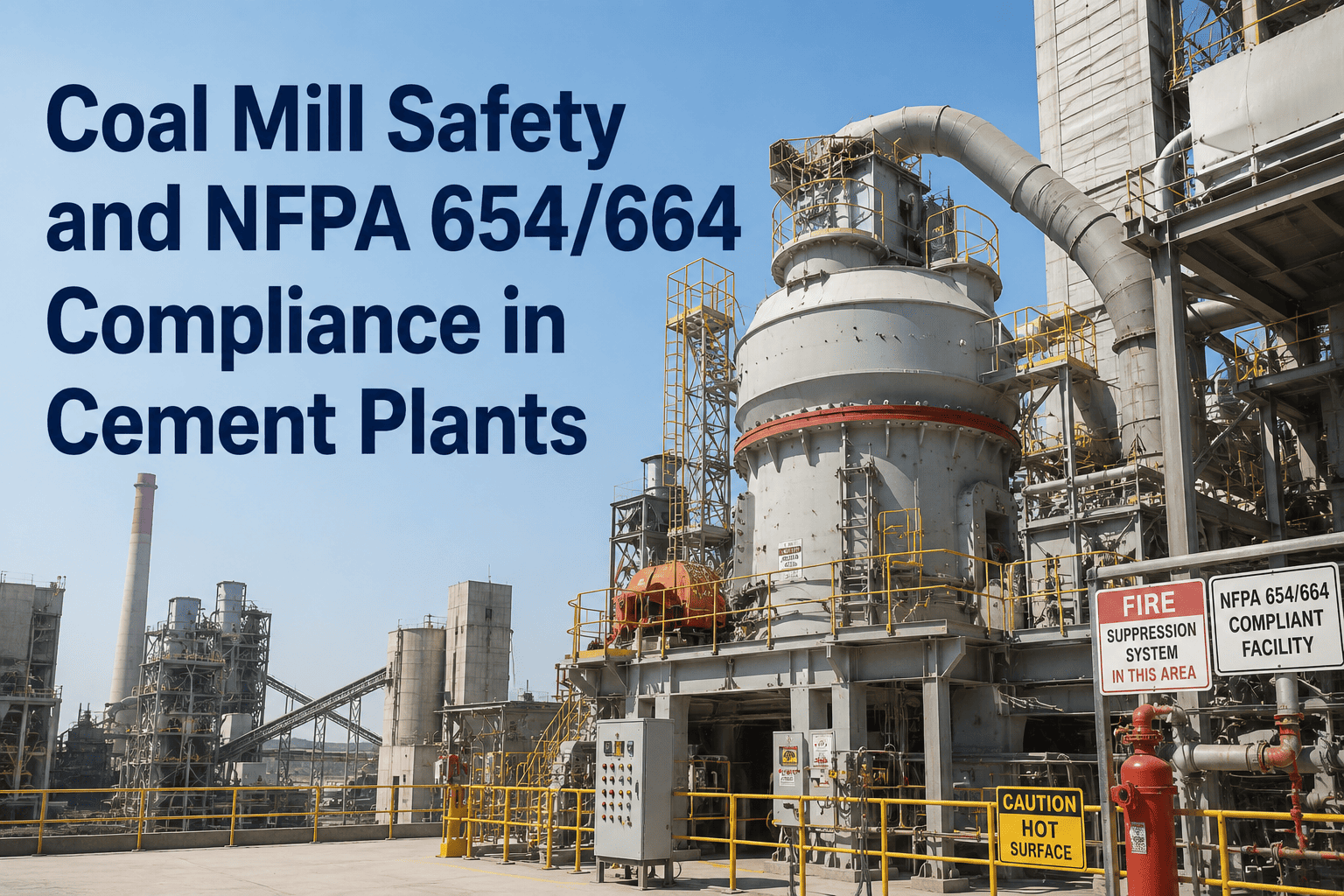
Coal dust is explosive. In a cement plant's coal mill circuit, fine pulverized coal creates a persistent combustion risk at every stage — from the mill itself through the classifier, bag filter, and transport lines. NFPA 654 defines the inspection, inerting, housekeeping, and monitoring requirements that keep this risk managed. The problem is not that plants are unaware of these requirements. The problem is that compliance depends entirely on whether the PM tasks actually get done, whether CO and O2 readings are captured consistently, and whether anyone notices when readings trend toward the danger threshold before an event occurs.
Weekly inerting checks and monthly ductwork inspections were logged manually. When shift handoffs were rushed, tasks were skipped without anyone knowing until the next audit.
CO and O2 monitoring data lived in operator logbooks and separate spreadsheets. No system connected rising CO readings to a maintenance escalation — until smoke appeared.
After each fire incident, regulatory review required documentation that inspections had been performed. Paper logs from prior months were incomplete, creating liability exposure beyond the equipment damage itself.
Without trending data, the maintenance team had no way to see that CO readings had been climbing for 11 days before the second fire. The signal was there. The system to act on it was not.
From Three Fires to Zero: The Rollout Timeline
The transformation did not happen overnight. It followed a structured deployment sequence that prioritized the highest-risk assets first, then expanded to full coverage.
The coal mill circuit — mill body, classifier, bag filter, transport ducts, and inert gas system — was entered into Oxmaint as individual assets with criticality ratings. Each asset received a baseline condition record documenting wear state, last inspection date, and known deficiencies.
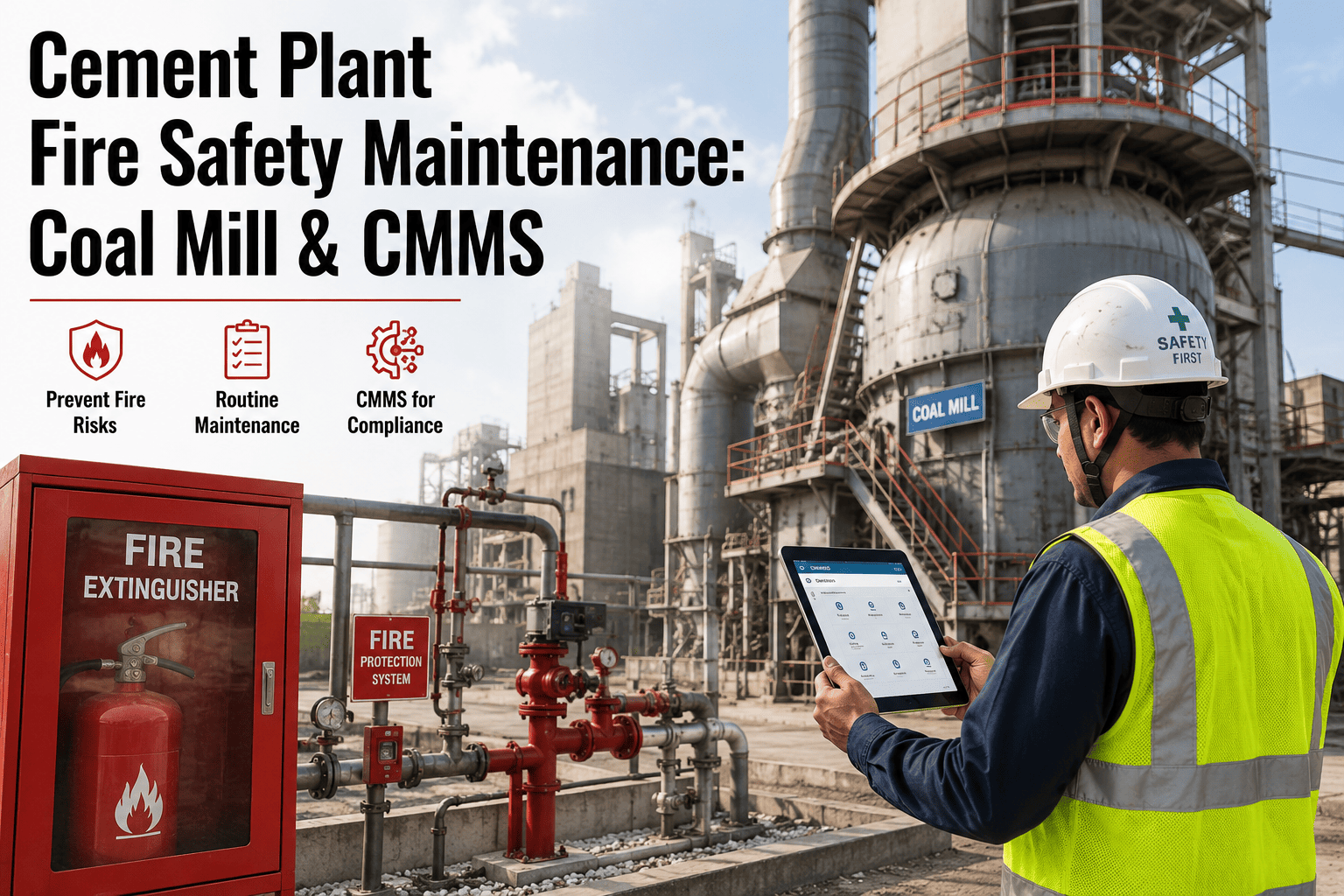
Every NFPA 654-required inspection, housekeeping, and inerting task was converted into scheduled PM work orders with defined intervals: daily housekeeping checks, weekly inerting system verification, monthly ductwork and bag filter inspection, and quarterly full-circuit audit. Task instructions were embedded in the work order so technicians had the procedure at the point of execution.
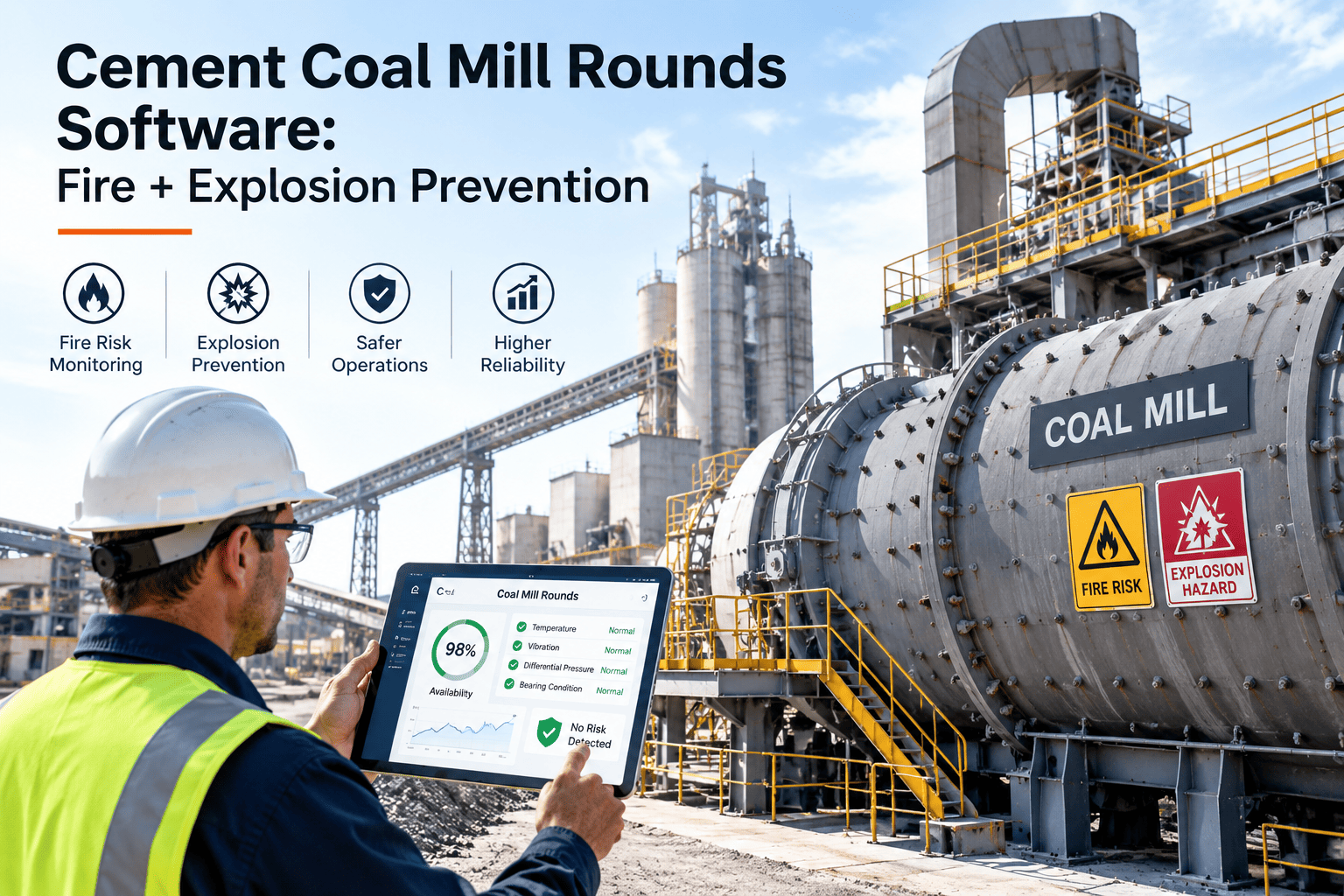
Operator CO and O2 readings were digitized into Oxmaint inspection forms — captured as structured numeric data rather than free-text logbook entries. Threshold alerts were configured: CO above 50 ppm triggered a maintenance notification; above 100 ppm triggered an immediate work order creation and supervisor escalation.
PM compliance rate reached 97% within two months of full deployment. Three early CO exceedances were caught and resolved — ductwork seal repairs, a bag filter compartment purge, and an inerting line blockage — before any of them progressed to a fire condition. All three events generated work orders, repair records, and sign-off documentation automatically.
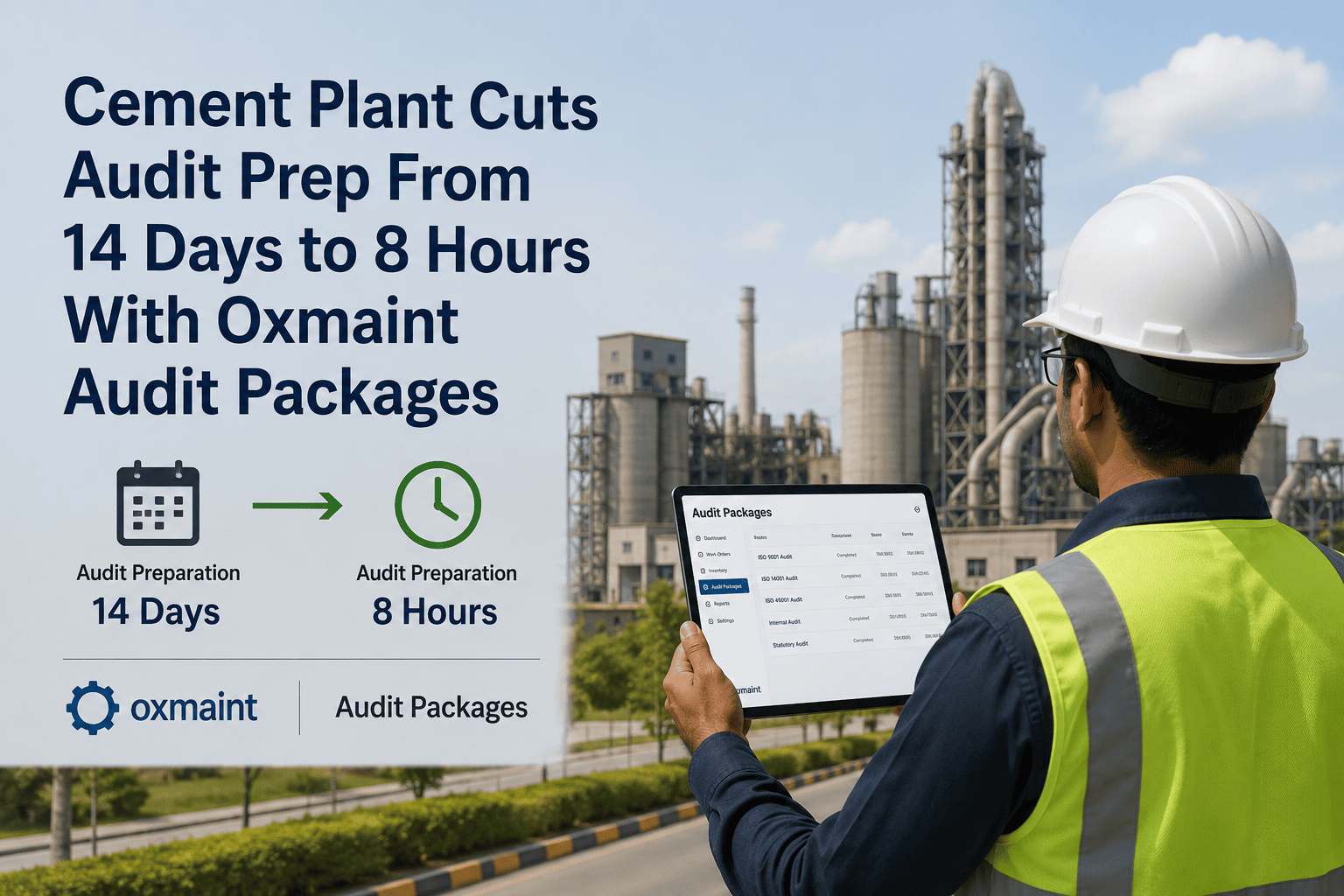
No fire incidents in the second half of the program period. When the plant underwent a scheduled regulatory audit in month 17, the Oxmaint record provided complete inspection history, CO/O2 trending data, corrective action documentation, and technician sign-off logs for the entire 18 months — delivered in the audit review meeting, not assembled in the week before.
See How Oxmaint Manages Coal Mill PM Programs
Your coal mill circuit carries the same combustion risks as this case study plant. Oxmaint structures your NFPA 654 PM program, digitizes CO/O2 monitoring, and creates the audit trail regulators require — before you need it.
What Changed — By the Numbers
The Four Mechanisms That Made Zero Incidents Possible
Every required inspection interval from NFPA 654 is configured as a recurring PM work order. Daily, weekly, monthly, and quarterly tasks are automatically assigned to the responsible technician. Missed tasks generate escalation notifications — not discovered in the next audit.
Operator readings are captured as structured data in Oxmaint inspection forms. When CO or O2 readings cross configured thresholds, the system automatically generates a corrective work order and notifies the supervisor — turning a sensor reading into a maintenance action before conditions escalate.
Every repair, inspection finding, and condition note is linked to the specific asset — mill body, duct section, bag filter compartment — building a defect history that reveals recurring failure patterns across equipment and shifts.
All inspections, readings, work orders, corrective actions, and sign-offs are stored with timestamps and technician attribution. The complete record is available instantly — not assembled from folders and logbooks the week before an audit.
Common Questions About Coal Mill Fire Prevention Programs
NFPA 654 requires regular inspection and maintenance of dust collection systems, inerting systems, and combustible dust accumulation controls. This includes documented inspection intervals for ductwork, bag filters, and inert gas delivery systems, as well as housekeeping procedures to prevent dust buildup. Oxmaint structures all of these as scheduled PM work orders so no interval is missed.
Most cement plant coal mill safety programs set an initial alert at 50 ppm CO and a mandatory escalation threshold at 100 ppm. Sustained readings above 50 ppm indicate smoldering or incipient combustion and require immediate investigation of duct sealing, bag filter condition, and inerting system function. Early detection at the 50 ppm level consistently prevents escalation to fire conditions.
Most cement plants complete the initial asset setup and NFPA 654 PM task configuration in 4 to 6 weeks. CO/O2 threshold configuration and operator training add another 2 to 4 weeks. Full compliance records begin accumulating from day one of technician use, and a complete audit-ready record is available within the first full inspection cycle. Book a demo to walk through a configuration built for your coal mill circuit.
Oxmaint captures CO and O2 readings through structured digital inspection forms completed by operators at each monitoring interval. For plants with automated monitoring systems, readings can be entered directly into Oxmaint inspection records. Threshold-based work order creation and escalation alerts apply regardless of how the data is entered.
Direct costs range from $150,000 to over $500,000 per incident depending on damage severity, including equipment repair, unplanned production downtime, and regulatory response. Indirect costs — including insurance premium increases, management time, and potential fines for documentation failures — typically add 30% to 60% on top of direct costs. The ROI case for a structured digital PM program is typically measured in months, not years.
Your Coal Mill Carries the Same Risks. Oxmaint Makes Zero Incidents Achievable.
This plant went from three fires to zero in 18 months. The difference was structured PM scheduling, digital CO/O2 monitoring records, and automatic escalation before conditions reached the fire threshold. Oxmaint delivers all three in a single system built for cement plant operations.