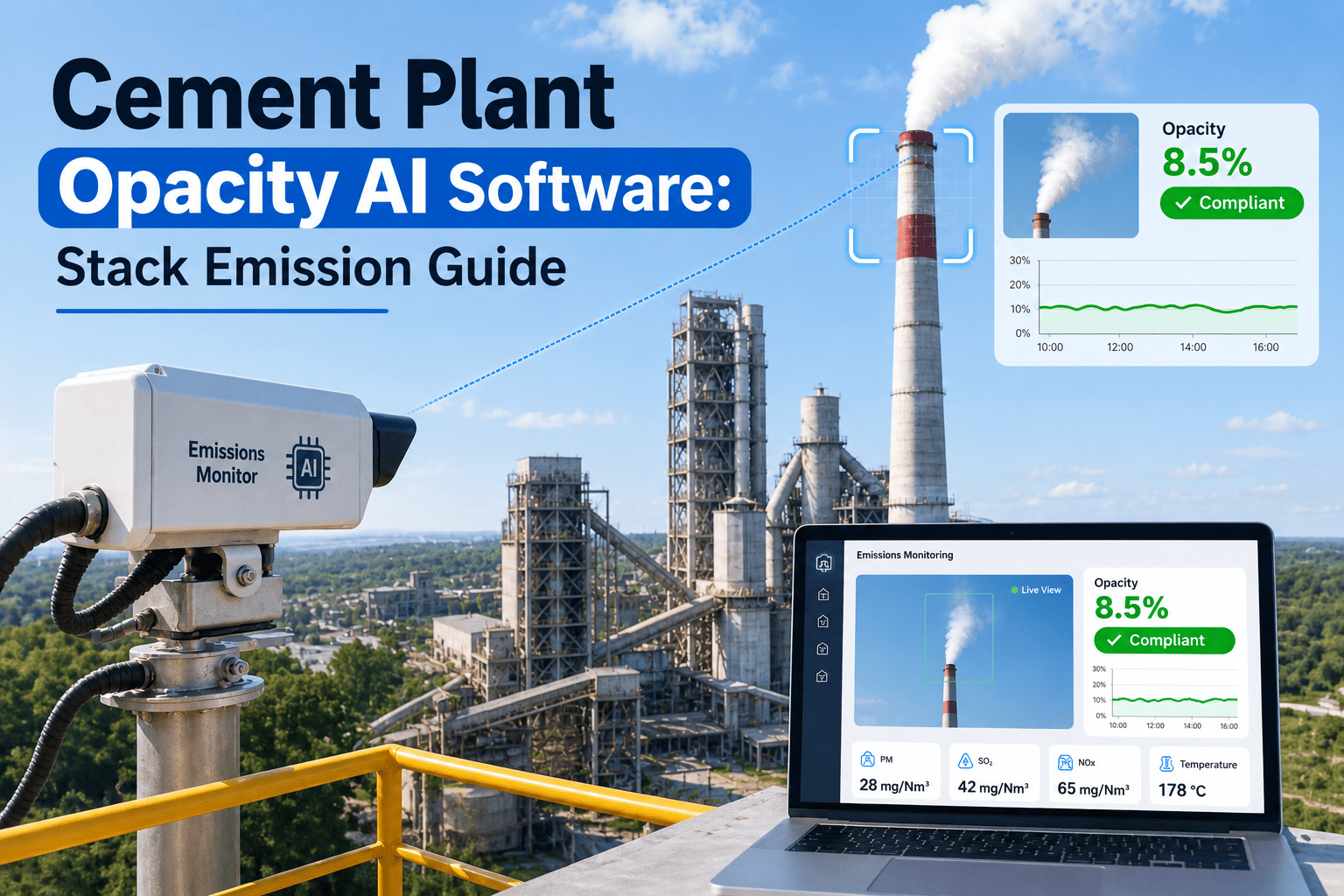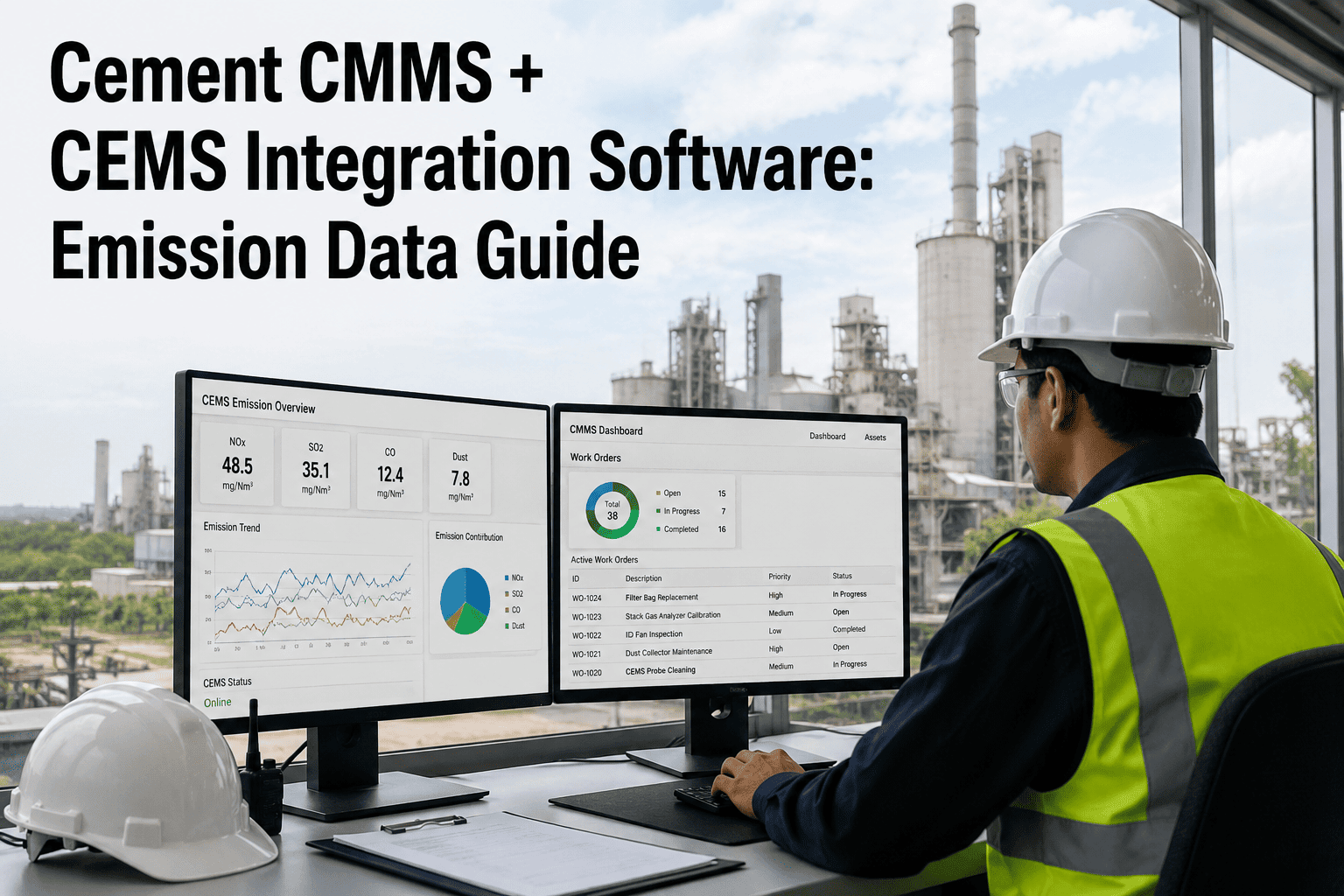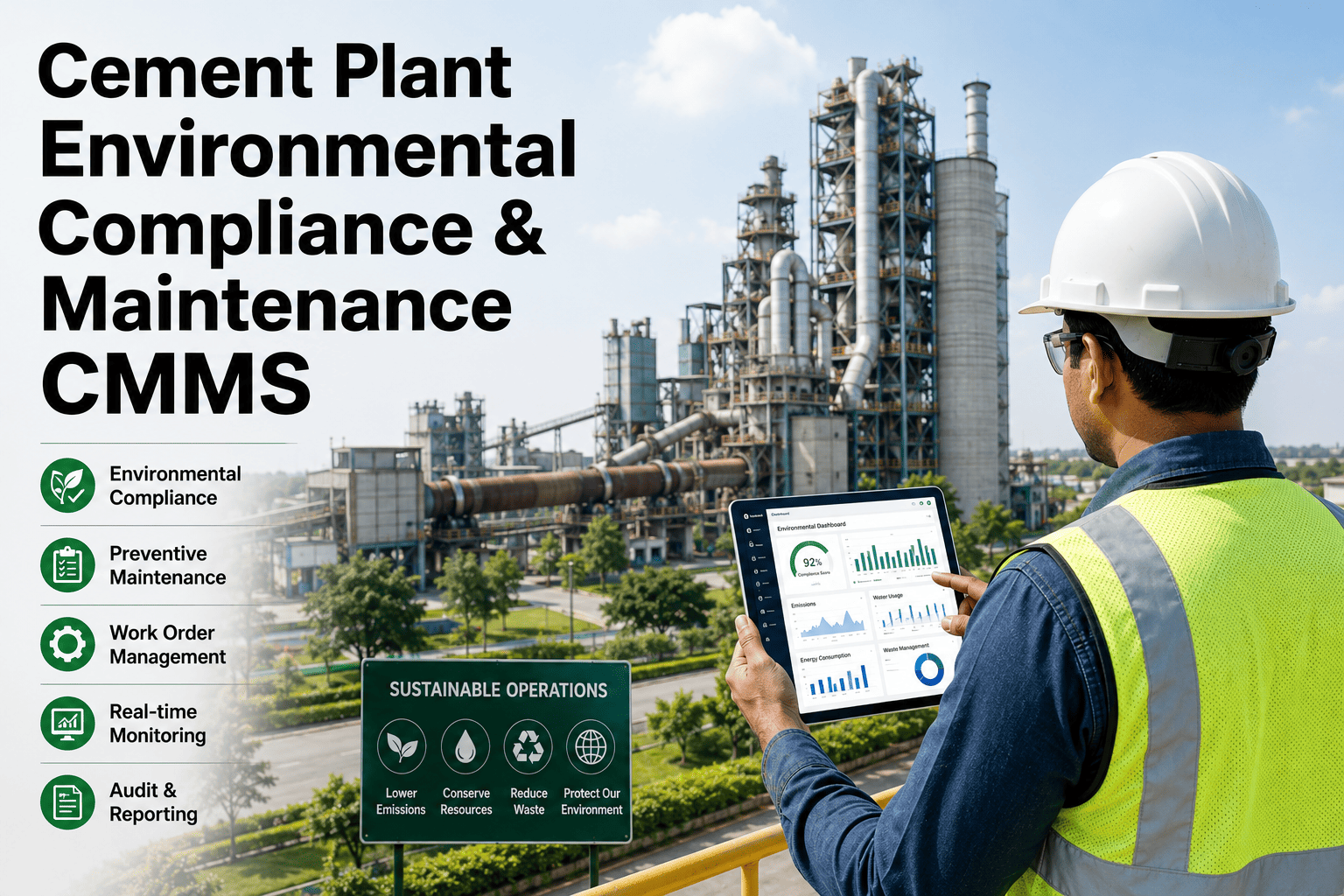
Cement plants operate under some of the tightest particulate-matter limits in U.S. industry, and EPA enforcement has only sharpened since the NESHAP for Portland Cement (40 CFR 63, Subpart LLL) tightened PM limits to 0.04 lb/ton of clinker. Every stack test, every continuous emissions monitoring system (CEMS) report, and every visible-emissions observation now feeds a compliance record that inspectors can subpoena within hours. A modern CMMS closes the gap between the baghouse, the opacity monitor, and the compliance binder — turning dust-control maintenance from a reactive scramble into a defensible, audit-ready workflow. See how OxMaint structures that workflow when you Start Free Trial.
EPA MATS · CEMS · OPACITY
Can your cement plant survive the next unannounced stack test?
A single 6-minute Method 9 opacity reading above 20% can trigger a Notice of Violation worth $60,000–$120,000 per day. OxMaint structures your PM-control maintenance, CEMS calibration, and dust-handling work orders into one survey-defensible CMMS trail — so every baghouse, ESP, and stack monitor is inspection-ready on day one.
$119K
Avg. single-event PM/opacity penalty under Subpart LLL
THE COMPLIANCE MATH
What an uncontrolled dust event actually costs
A typical 1.5-million-ton-per-year cement plant runs 4–6 major PM sources (kiln, clinker cooler, raw mill, finish mill, packhouse). A single baghouse bypass event lasting 90 minutes can release 40–80 lb of PM — well past the 3% opacity threshold in most Title V permits.
Annualized dust-event exposure
Annual Risk = (Penalty per event × Likely events/yr) + Lost production hrs × $/ton
Example: a 1.5M TPY plant with 3 baghouse trips/yr, $95K avg penalty, and 14 hrs downtime at $310/ton = $290,600/yr exposure.
CMMS-driven prevention payback
Payback (mo) = Annual CMMS cost ÷ [(Prevented events × Penalty) + (Downtime hrs saved × $/hr)]
At $9,600/yr CMMS spend preventing 2 events + 22 downtime hours → payback in under 4 months.
| Dust-event cost driver | Without CMMS | With OxMaint CMMS | Avoided cost/yr |
|---|---|---|---|
| NOV penalties (Subpart LLL PM) | 2–3 events | 0–1 events | $95K–$190K |
| CEMS data availability below 95% | Common | ≥98.5% | $25K–$60K |
| Baghouse unplanned filter changes | 14% reactive | 4% reactive | $38K |
| Lost clinker production (downtime hrs) | ~60 hrs/yr | ~22 hrs/yr | $118K |
| Compliance engineer reporting time | 12 hrs/wk | 4 hrs/wk | $41K |
MAINTENANCE CHECKLIST
Dust-emission control equipment that must stay audit-ready
Each PM-control asset below carries a specific EPA expectation. The checklists map directly to the maintenance tasks OxMaint schedules, routes, and timestamps — producing the work-order trail inspectors ask for first.
Baghouses & Pulse-Jet Filters
- Differential-pressure trend logged every shift (target 2–6 in. w.c.)
- Pulse-valve solenoid function test — quarterly
- Bag / cage inspection door leak check — monthly
- Filter cake condition & cleaning cycle audit — semi-annual
- Opacity spike root-cause log linked to work order
CEMS & Stack Monitors
- Daily calibration drift check (≤2.5% of span)
- Cylinder gas audit (CGA) — quarterly
- Relative accuracy test audit (RATA) — annual
- Sample-line blowback & heat-trace inspection — weekly
- Data availability target ≥95% per 40 CFR 60 Appendix B
ESP & Klin PM Control
- Transformer-rectifier (T/R) power-level logging — daily
- Rapper timing & impact verification — monthly
- Plate alignment & hopper dust level — quarterly
- Opacimeter cross-check with baghouse outlet
- Specific collecting area (SCA) audit after major outage
Dust Handling & Conveying
- Screw conveyor / chain flight seal inspection — weekly
- Airslide fluidizing-bed condition — monthly
- Bunker & silo bin-vent filter changeout — condition-based
- Fugitive-dust walkdown log with photo evidence
- Spill & housekeeping closeout within 4 hours
12-MONTH COMPLIANCE CALENDAR
How a survey-defensible dust-compliance year is structured
EPA and state inspectors expect evidence on a predictable cadence. OxMaint auto-generates the schedule below against each asset's permit condition, so nothing slips past its regulatory window.
RATA prep & annual CEMS audit window
Lock RATA vendor, calibrate sample probes, verify heat-trace, and stage calibration gases. OxMaint releases work orders 45 days before the audit due date.
Kiln outage baghouse rebuild
Condition-based bag changeout, cage straightening, and pulse-valve replacement. Photo log auto-attached to asset record for the next stack test binder.
Peak-production opacity vigilance
High clinker output drives higher gas volumes. Differential-pressure alarms and opacity 6-minute averages trended in the OxMaint dashboard; deviations trigger instant work orders.
Annual compliance report & CGA
Quarterly CGA, semi-annual Method 9 observer certification refresh, and roll-up of all CEMS downtime events into the Title V annual compliance certification.
REAL-WORLD RESULT
From 71% CEMS availability to audit-ready in one quarter
A 1.8-million-ton plant in the Midwest was spending $42K/yr on reactive baghouse repairs and had received a Notice of Violation for three consecutive months below 95% CEMS data availability. Here is what changed after implementing OxMaint.
71% → 98.6%
CEMS data availability (90 days)
$0
PM/opacity penalties in year one
38 hrs
Downtime avoided per quarter
"The inspector asked for our baghouse diff-pressure trend and CEMS calibration log. We pulled both from OxMaint in under two minutes — he closed the file and left. That used to be a three-day scramble across four spreadsheets."
— Environmental Compliance Manager, 1.8M TPY cement plant
Turn your next stack test into a non-event
OxMaint structures every baghouse, CEMS, and opacity work order into a defensible compliance trail — in one platform your whole team can actually use.
FAQ
Cement dust emission compliance, answered
What EPA rule governs cement plant dust emissions?
Portland Cement NESHAP (40 CFR 63, Subpart LLL) sets the PM limit at 0.04 lb/ton of clinker and requires opacity monitoring on kiln and clinker-cooler exhausts. New Source Performance Standards (40 CFR 60, Subpart F) also apply to plants commissioned after 1971, and many states layer tighter opacity caps (often 10–20%) on top.
How does a CMMS help with CEMS maintenance and 95% data availability?
OxMaint auto-schedules daily calibration-drift checks, weekly sample-line blowdowns, quarterly CGAs, and the annual RATA — each with a digital work-order trail. Automated escalations flag any drift reading above 2.5% of span before it eats into your data-availability percentage. See it live when you Start Free Trial.
How long should baghouse maintenance records be retained?
EPA expects a minimum of five years of records for NESHAP-affected sources, and Title V permits often require the same. OxMaint stores every diff-pressure trend, bag-changeout photo, and pulse-valve test against the asset record indefinitely — retrievable in seconds during an inspection.
Can OxMaint track opacity 6-minute averages and trigger work orders?
Yes. Opacimeter and CEMS data feed the OxMaint dashboard. A 6-minute average above your permit threshold automatically generates a high-priority work order with the source asset, the reading, and the responsible technician — closing the loop between detection and corrective action.
How quickly can a cement plant deploy OxMaint for dust compliance?
Most plants import their asset register, PM schedule, and permit conditions in 2–3 weeks. A focused dust-compliance rollout (baghouses, ESPs, CEMS, dust handling) can go live in under 14 days. Book a walkthrough via Book a Demo to see the timeline for your site.
Make dust-emission compliance the easiest part of your week
Join the cement plants that turned EPA scrutiny into a routine Monday-morning dashboard review — not a three-day audit panic.
Free 14-day trial · No credit card