A cement plant in Morocco eliminated rope access inspections entirely after deploying specialized drones for their 85-meter kiln stack assessment. Their previous inspection approach required a 4-person rope access team working for 3 days at heights exceeding 50 meters—with each inspection costing over $45,000 including scaffolding, safety equipment, and specialist contractors. The drone inspection covered the entire stack in 55 minutes, identified 23 areas of refractory degradation that manual inspection had missed in the previous cycle, and generated 3D point cloud data that enabled precise repair planning. Total cost: under $4,500 with zero worker exposure to fall hazards or corrosive flue gases. Sign up for Oxmaint to schedule stack drone inspections aligned with your CEMS calibration windows.
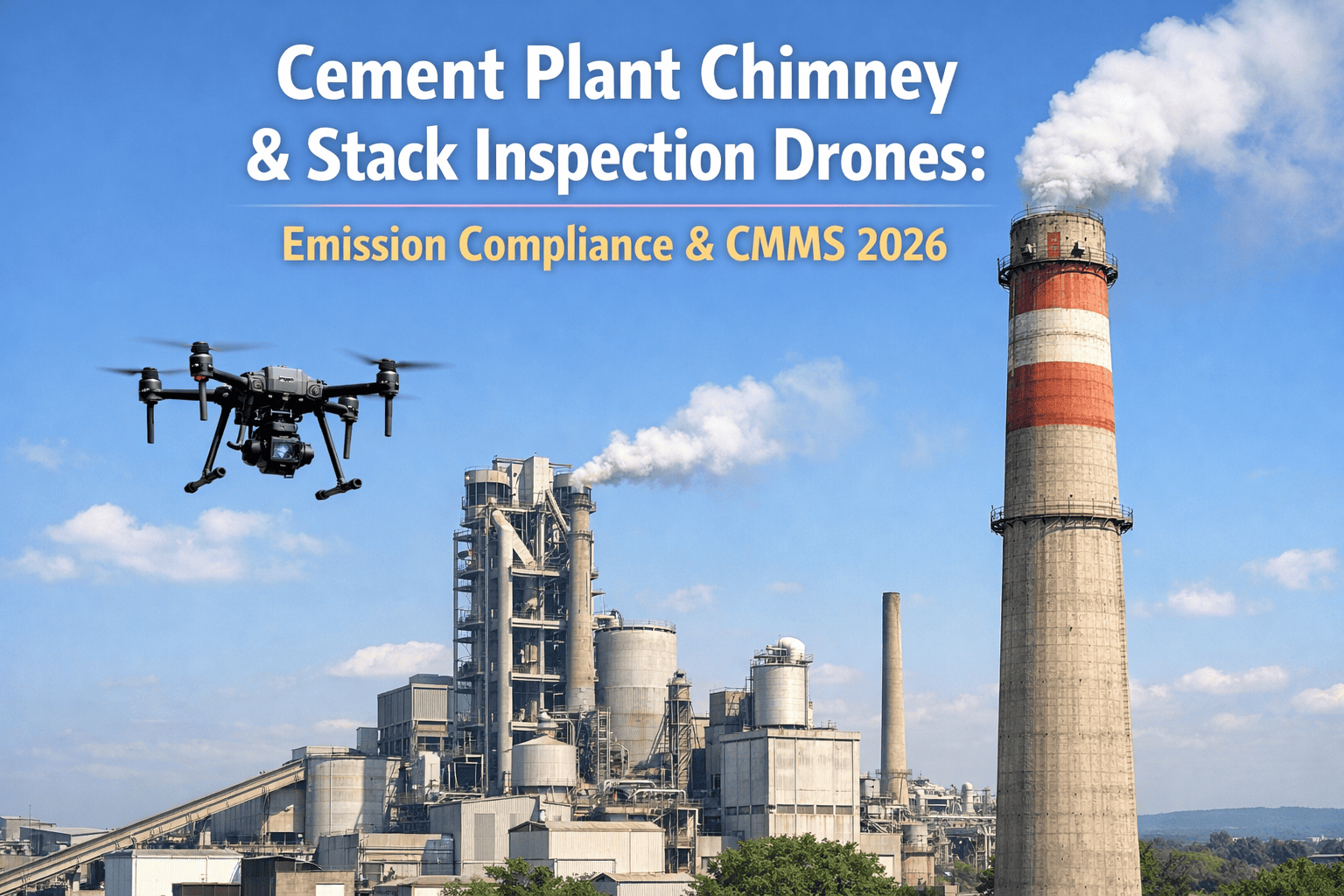
Cement Plant Chimney & Stack Inspection Drones: Emission Compliance & CMMS 2026
Cement kiln stacks reaching 50+ meters require regular inspection for structural integrity and emission system compliance. Drone inspection eliminates rope access hazards while providing HD imaging, thermal analysis, and 3D LiDAR mapping that connects directly to CMMS for EPA documentation and predictive maintenance scheduling.
Why Traditional Stack Inspection Creates Unacceptable Risk
Cement kiln stacks present unique inspection challenges: extreme heights, corrosive flue gas exposure, thermal stress, and limited access points. Traditional methods expose workers to fall hazards while failing to capture comprehensive structural data. Book a demo to see how Oxmaint tracks inspection findings.
| Factor | Rope Access Method | Drone Inspection |
|---|---|---|
| Inspection Duration | 2-3 days including setup | Under 1 hour flight time |
| Total Cost | $35,000 - $65,000 per inspection | $3,500 - $6,000 per inspection |
| Worker Safety Risk | High - fall hazards, gas exposure | Zero - operators remain on ground |
| Coverage Area | 60-70% of accessible surfaces | 100% exterior with thermal overlay |
| Data Quality | Written notes, limited photos | 4K video, thermal, 3D LiDAR point cloud |
| Defect Detection | Visual only, observer-dependent | AI-assisted crack and anomaly detection |
| Documentation | Manual report generation | Automated CMMS integration |
Align Stack Inspections with CEMS Calibration
Oxmaint schedules drone inspections during CEMS calibration windows, ensuring structural condition assessment coincides with emission monitoring system verification.
Stack Inspection Drone Capabilities
Purpose-built drones for cement stack inspection feature acid-resistant coatings, high-resolution imaging, and 3D mapping systems designed for corrosive flue gas environments. Sign up for Oxmaint to track drone maintenance and flight certification.
Visual & Thermal Inspection
HD Camera + Radiometric ThermalHigh-resolution 4K camera captures surface defects while radiometric thermal imaging identifies insulation failures, refractory hot spots, and air infiltration points invisible to visual inspection. Defogging systems maintain optical clarity in humid stack conditions.
3D LiDAR Mapping
Point Cloud & Anomaly LocalizationSolid-state LiDAR creates precise 3D point cloud models of stack structures, enabling accurate measurement of crack dimensions, brick displacement, and structural deformation. Anomaly coordinates integrate directly with CMMS for repair planning.
Inspection to Compliance Documentation Workflow
From drone flight to EPA-ready compliance reports—how stack inspection data flows through Oxmaint CMMS.
Drone Maintenance Checklist
Cement stack environments expose drones to corrosive gases and extreme updrafts. This maintenance checklist ensures reliable operation and accurate data capture. Sign up for Oxmaint to digitize your inspection drone PM program.
Oxmaint Stack Inspection Dashboard
EPA Compliance & Structural Monitoring • Real-TimeCEMS Alignment Scheduling
Automatic inspection triggers during emission monitoring calibration windows
EPA Compliance Reports
Link structural condition to emission system integrity for regulatory documentation
3D Defect Mapping
GPS-tagged anomaly coordinates for precise repair planning and trend tracking
Link Stack Condition to Emission System Integrity
Oxmaint generates EPA compliance documentation that connects structural inspection findings to CEMS calibration records—proving system integrity for regulatory audits.
Frequently Asked Questions
Eliminate Height Hazards from Stack Inspection
Drone inspection of cement chimneys and stacks delivers comprehensive structural assessment with zero worker exposure to fall hazards or corrosive gases. Oxmaint connects inspection data to EPA compliance documentation and predictive maintenance workflows.