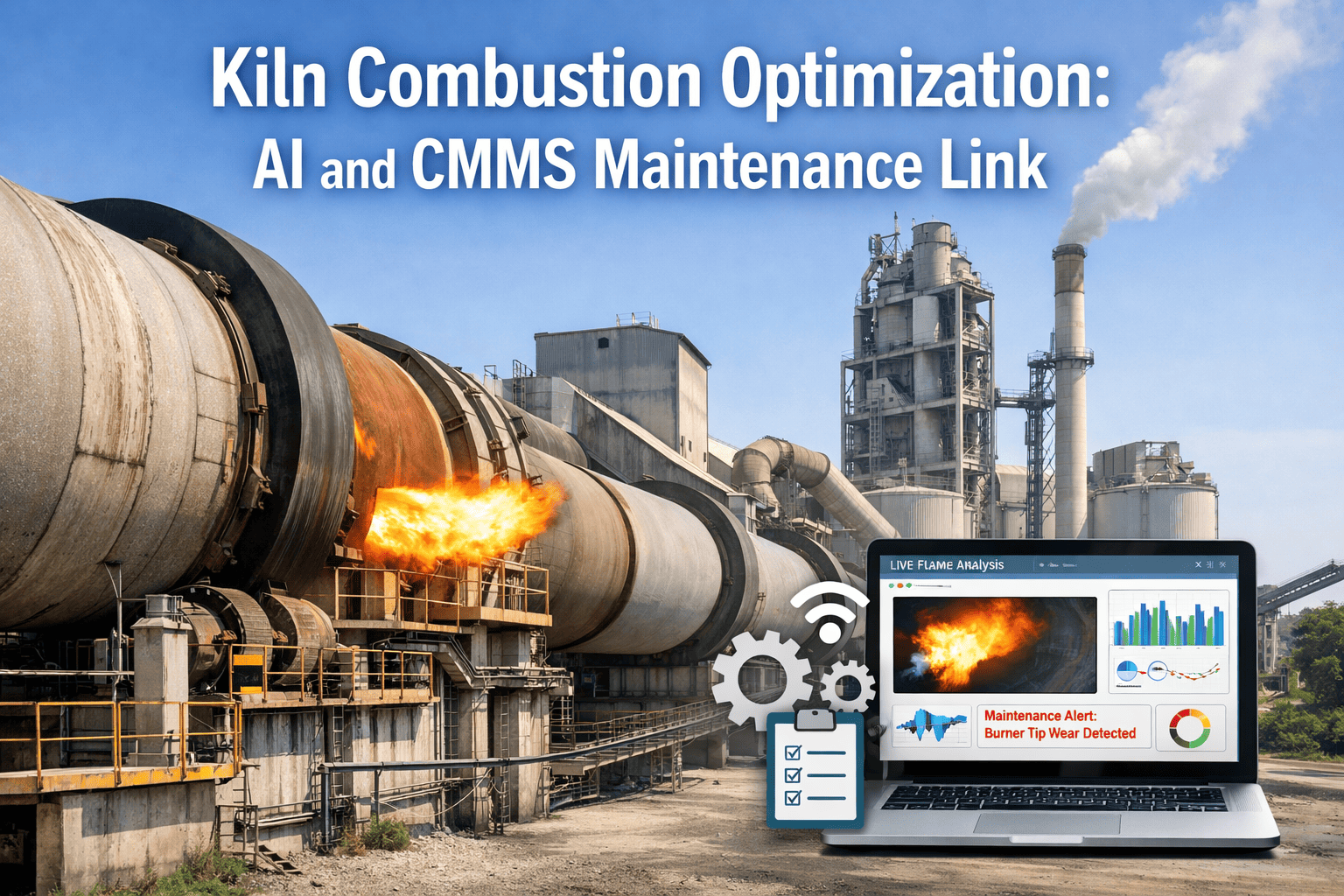
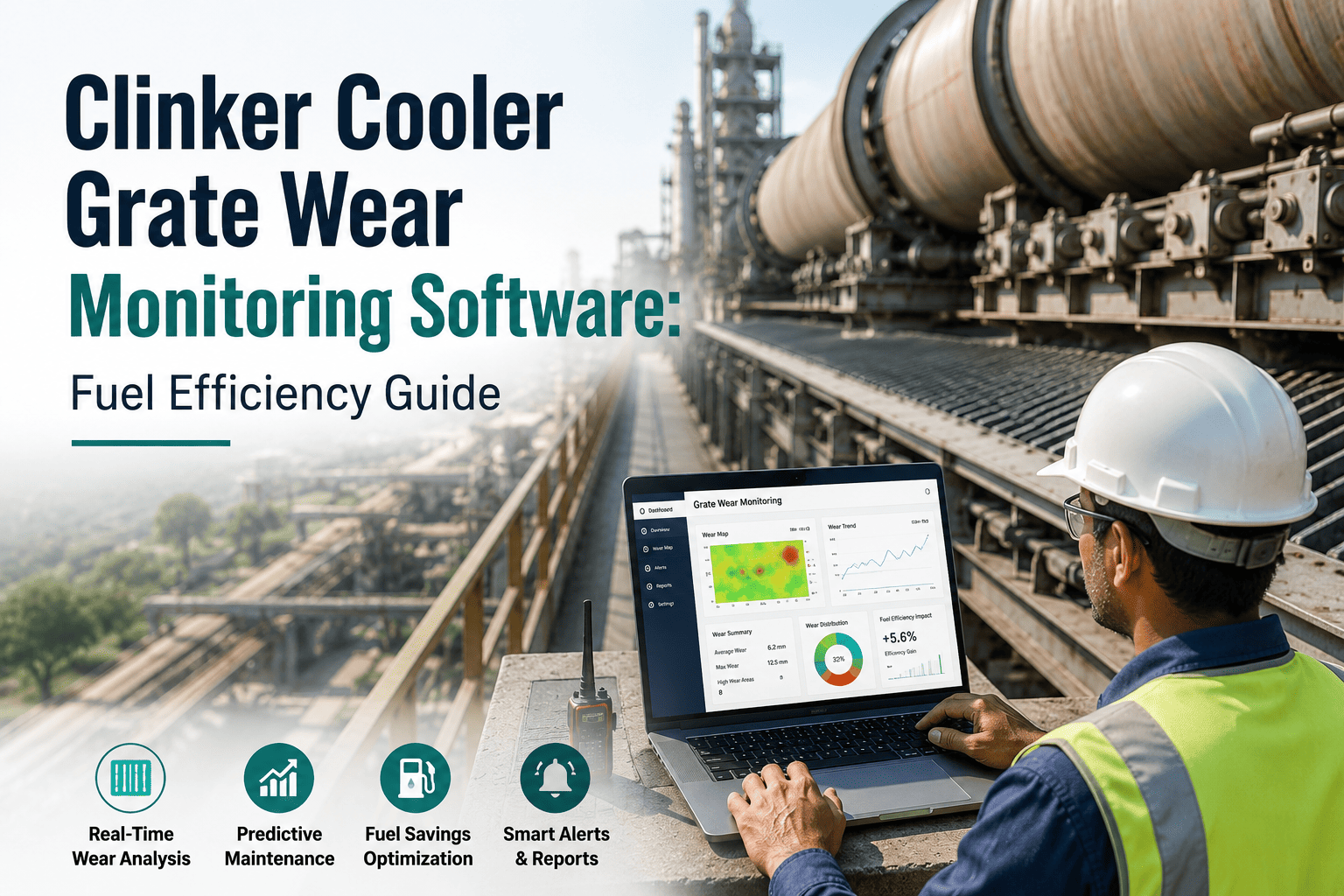
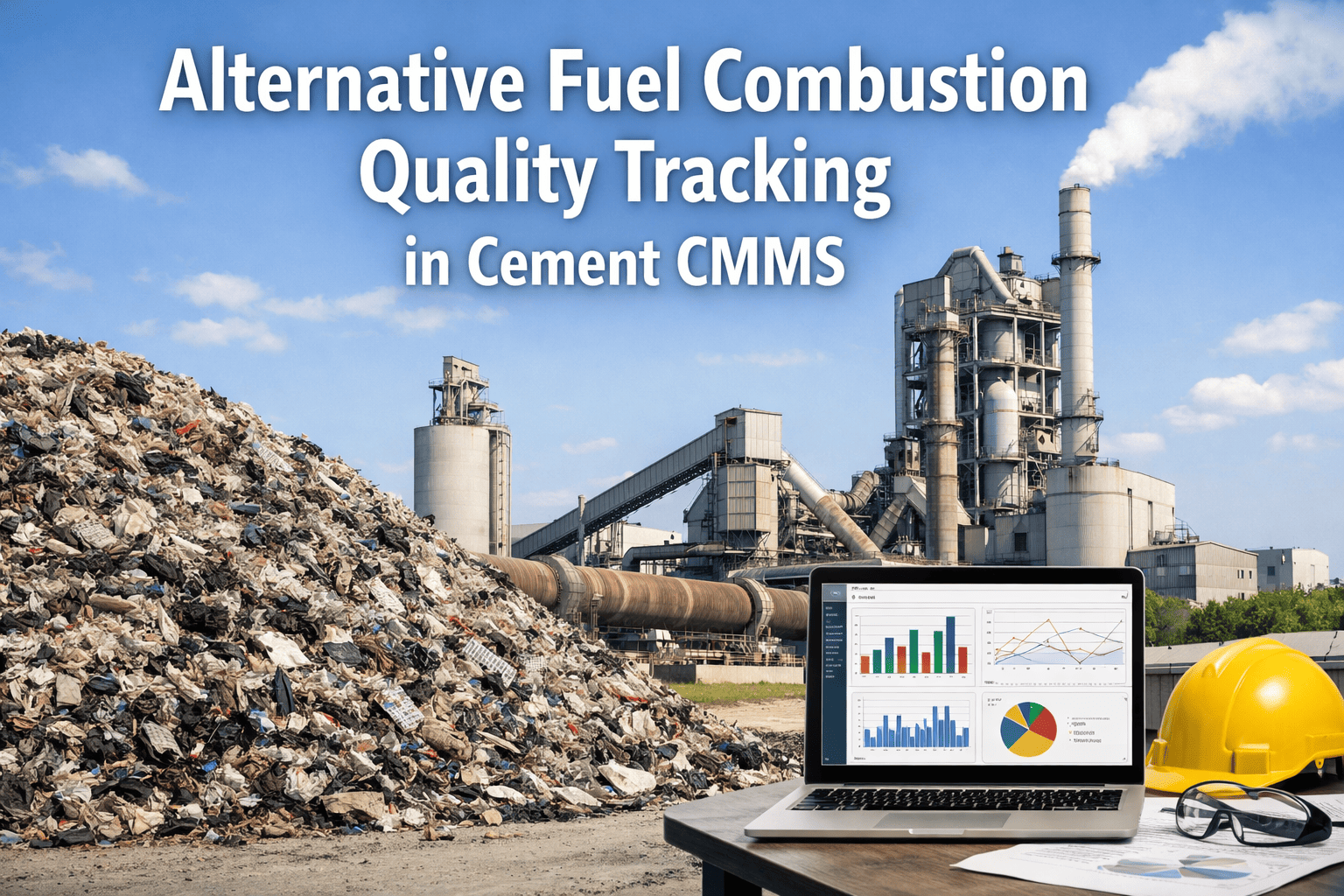
Most cement plants treat suboptimal kiln combustion as a process control problem — tune the burner, adjust excess air, retune the PID loop, call in the APC vendor. But the combustion anomalies showing up on the control room screen are almost never control problems. They are maintenance problems expressing themselves through the flame. A worn burner tip distorts flame shape. A degraded flame scanner under-reads luminosity. A false air leak at a preheater expansion joint dilutes the combustion atmosphere. A fouled kiln feed pipe starves the flame of fuel momentum. Each of these shows up as a combustion symptom — high CO, unstable flame, rising heat consumption — and each is fixed not by another APC tuning pass but by a specific maintenance task on a specific piece of equipment. Book a demo to see how Oxmaint links AI combustion anomalies directly to the maintenance work order that resolves them.
80%
of persistent combustion anomalies trace to a specific mechanical or inspection deficiency — not to process control tuning
40-80
kcal/kg clinker added to SEC from accumulated undetected combustion-linked maintenance gaps per year
3-7%
fuel savings delivered when AI combustion monitoring is connected to the CMMS that executes the corrective action
14 hrs to 23 min
typical reduction in anomaly-to-work-order response time when AI detection feeds CMMS dispatch automatically
The Mis-Diagnosis Problem: Why Combustion Tuning Alone Fails
Walk into any cement control room during a period of rising heat consumption and you will see the same sequence. The burning zone temperature is drifting. The CO at kiln inlet is creeping up. The operator adjusts fuel rate, bumps up excess air, retunes the draft. The numbers stabilise for a shift, maybe a week. Then they drift again. This loop — adjust, stabilise, drift, adjust — is the signature of a maintenance-driven combustion problem being treated as a control problem. The reason APC tuning does not hold is that the underlying physical cause is getting worse with every kiln rotation while the control system is compensating around it.
Process-First Troubleshooting
The conventional loop that never resolves
- 1Combustion anomaly appears on DCS (rising CO, unstable flame, SEC drift)
- 2Operator retunes excess air ratio and fuel feed setpoints
- 3Readings stabilise within shift — ticket closed as "operational adjustment"
- 4Anomaly returns in 3–14 days; fuel consumption silently climbs 2–5 kcal/kg
- 5Quarterly audit records "within limits" — underlying asset continues to degrade
AI + CMMS Combustion-to-Asset Linking
The Oxmaint loop that resolves root cause
- 1AI detects combustion anomaly signature (not just threshold — pattern)
- 2Signature matched against known maintenance-fault library for this kiln
- 3Oxmaint auto-generates work order on the specific asset — burner tip, scanner, expansion joint
- 4Technician dispatched with diagnostic context, part kit, and expected fix-verification signature
- 5SEC improvement post-fix logged against asset — feedback loop trains the model
Five Combustion Anomaly Signatures and the Maintenance Faults Behind Them
Below are the five combustion anomaly patterns that AI detects with the highest reliability on a rotary cement kiln — and for each, the specific maintenance deficiency that drives it. These are the patterns behind roughly 80% of persistent SEC drift cases in plants running within nominal APC tuning. Each signature maps to a distinct asset, a distinct work order type, and a distinct fix-verification test.
Signature 01
Rising burning-zone temperature variance with stable mean
Standard deviation of burning-zone temperature climbs over 7–14 days while the average stays on setpoint. Classic indicator of flame-shape degradation — hot and cold zones forming across the clinker bed.
Root cause
Burner tip erosion or rhino-horn buildup
Oxmaint work order
Burner inspection + tip replacement during next planned shutdown. Fuel saving after fix: 5–8 kcal/kg.
Signature 02
Persistent O₂ gap between preheater stages vs fuel-air model
Preheater exit oxygen reads 2–4% higher than the model predicts for the current fuel rate, consistent across all production rates and all shifts — ruling out operator variation or fuel quality.
Root cause
False air leak at expansion joint, cyclone door, or meal pipe
Oxmaint work order
Preheater seal inspection + gasket replacement. Each 1% false air eliminated = ~3 kcal/kg saved.
Signature 03
Flame luminosity signal decoupling from burning-zone pyrometer
Flame scanner luminosity and independent pyrometer temperature drift apart over weeks. One sensor is lying — and it is almost always the scanner, not the pyrometer.
Root cause
Flame scanner lens fouling or detector degradation
Oxmaint work order
Scanner purge-air check + lens clean + detector calibration. Restores APC loop fidelity.
Signature 04
Rising CO at kiln inlet despite adequate excess air
CO readings climb above 0.1% at the kiln inlet while excess air is nominally sufficient — the signature of a combustion zone that cannot complete combustion regardless of how much air is available.
Root cause
Primary air fan wear or burner momentum loss
Oxmaint work order
PA fan impeller inspection + burner momentum re-verification. Flame stability restored within one shift.
Signature 05
Secondary air temperature dropping while cooler grate is on-spec
Cooler grate speed, pressure, and airflow all inside nominal operating bands — but secondary air temperature to the kiln is 30–60°C below baseline, forcing extra fuel at the burner.
Root cause
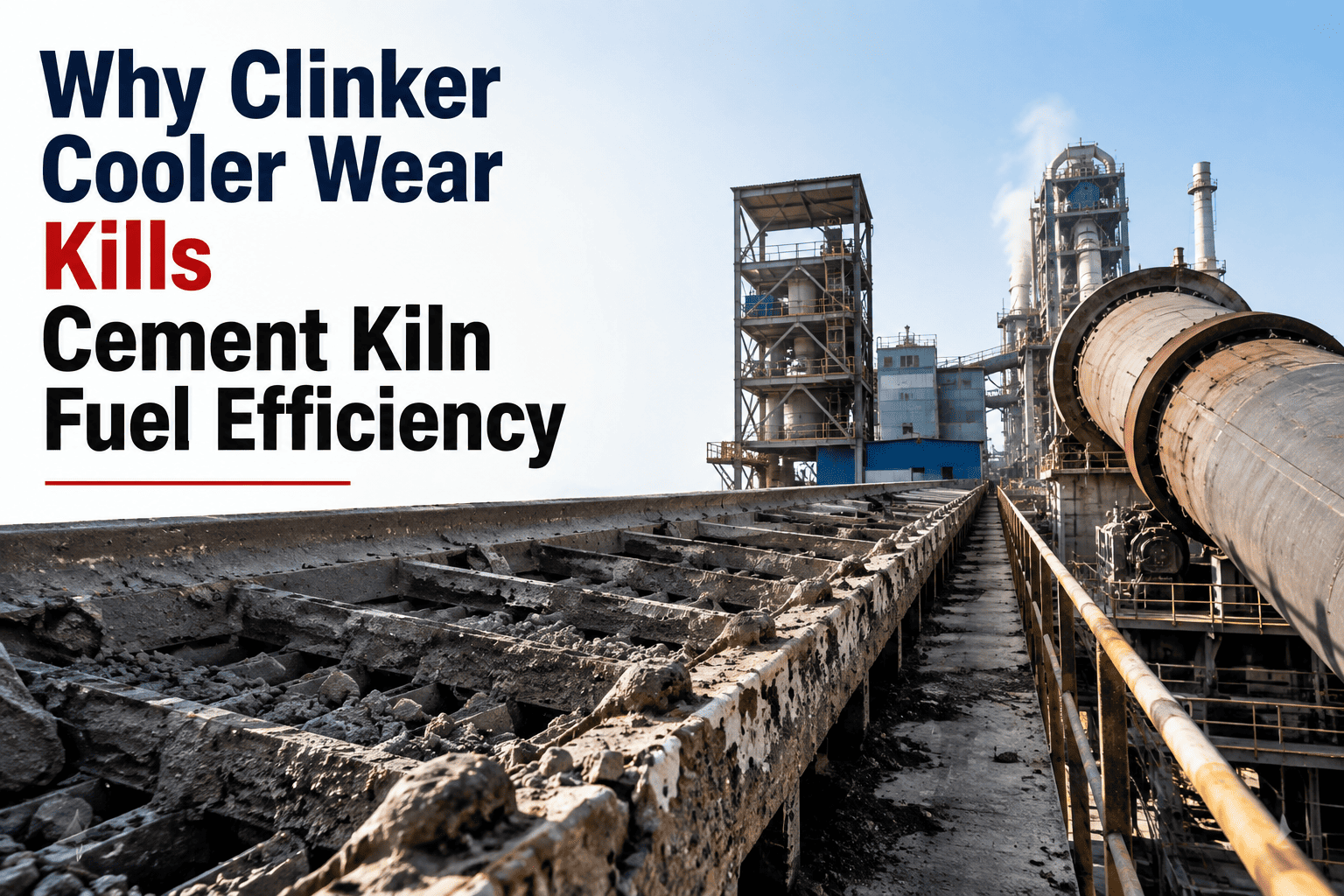
Damaged cooler grate plates causing "red river" channeling
Oxmaint work order
Cooler grate plate audit + targeted plate replacement during shutdown. Recovers 8–15 kcal/kg.
Stop Tuning Around the Problem. Fix It at the Asset.
Oxmaint connects AI combustion monitoring to the CMMS work order that resolves the underlying maintenance deficiency — so combustion anomalies get resolved at root cause, not retuned around for the next shift.
The Fuel-Cost Anatomy of Combustion-Linked Maintenance Gaps
For a 5,000 TPD kiln running on coal at current fuel prices, the financial impact of each category of combustion-linked maintenance deficiency is consistent across plants. The numbers below are typical waste ranges observed when these faults accumulate undetected for 6–12 months — the window in which quarterly energy audits and standard SCADA dashboards systematically fail to surface them.
Burner tip erosion + rhino-horn buildup
Accumulated false air at preheater stages
Flame scanner degradation (APC loop drift)
Primary air fan wear + momentum loss
Cooler grate plate damage (secondary air loss)
Unplanned kiln stops (fuel in restart cycles)
How Oxmaint Connects Combustion Detection to Maintenance Action
AI combustion monitoring without a maintenance execution layer is a dashboard. AI combustion monitoring connected to a CMMS that auto-dispatches work orders, tracks fix-verification, and accumulates asset-level SEC history is a closed control loop for fuel efficiency. Oxmaint is the maintenance execution layer — the component that converts a detected anomaly into a resolved fault on a specific asset.
Stage 1
Signal Ingestion
Flame scanner luminosity, burning-zone pyrometer, preheater O₂ / CO, secondary air temperature, PA fan power, and kiln torque streamed into the platform via OPC-UA from existing DCS.
No new instrumentation required at most plants
Stage 2
Pattern Detection
Signature library — burner tip erosion, false air drift, scanner fouling, PA fan wear, cooler red-river — matched against live data. Pattern match triggers before threshold alarms do.
Detects 6–12 weeks earlier than operator observation
Stage 3
Asset-Level Diagnosis
Matched signature translated into a specific asset ID in the Oxmaint registry — not "combustion issue" but "Kiln 2 main burner, channel 3 tip, erosion pattern Grade 2."
Asset-specific diagnostic context, not dashboard alert
Stage 4
CMMS Work Order Dispatch
Work order auto-generated with task template, required parts, diagnostic notes, safety permits, and expected fix-verification signature. Dispatched to the maintenance team's mobile app.
Anomaly-to-dispatch time typically under 25 minutes
Stage 5
Fix Verification & SEC Logging
After the work order closes, the original signature is monitored. If SEC returns to baseline within expected window, fix is verified. If not, the diagnosis is escalated and the model is retrained.
Closed-loop learning — model accuracy improves per cycle
What Changes Operationally Once This Loop Is Running
-6.2%
Specific heat consumption
Typical SEC reduction within 12 months of deploying AI combustion monitoring with CMMS-linked work order execution — driven mostly by resolving previously invisible false air and burner degradation.
-61%
Unplanned kiln stops
Planned maintenance ratio rises from ~55% to 75–80% as combustion-linked faults are caught and work-ordered before escalation into a kiln trip event.
+15%
Refractory campaign life
Stable flame shape from resolved burner tips and correctly-calibrated flame scanners reduces localised refractory overheating — extending campaign life by 15–25%.
23 min
Anomaly-to-WO response time
Typical cycle from AI pattern detection to technician dispatched with context and parts, versus 14+ hours under manual shift-review workflows.
$1.2M+
Annual fuel cost recovery
Typical recovered fuel cost on a 5,000 TPD kiln when the six categories of combustion-linked maintenance gaps are detected and resolved systematically across a year.
Full
Asset-level SEC traceability
Every combustion anomaly is linked to a specific asset, every work order carries before/after SEC impact, and every audit cycle draws from a structured asset history — not spreadsheet reconstruction.
Comparison — Before and After Combustion-to-CMMS Integration
| Operational Dimension | Before Integration | After Oxmaint Integration |
| Combustion anomaly response |
Operator retunes setpoints; root cause persists |
Pattern matched to asset; WO auto-dispatched |
| False air detection |
Caught at annual shutdown inspection only |
Detected from O₂ gap within 3–7 days of onset |
| Burner tip condition |
Calendar-based replacement regardless of state |
Condition-based replacement on erosion signature |
| Flame scanner trust |
APC loop drifts silently; operators lose trust |
Decoupling signature triggers clean + recalibrate |
| SEC attribution |
Plant-level monthly total; no asset breakdown |
Per-anomaly, per-asset, per-work-order impact |
| Audit & compliance evidence |
Manual reconstruction from logs and spreadsheets |
Native timestamped asset-condition audit trail |
| Anomaly-to-action time |
Shift review cycles — typical 14+ hours |
Automated dispatch — typical under 25 minutes |
Where the Loop Pays Back Fastest
Plants with certain operational profiles see return on this integration faster than others. If your kiln matches two or more of the conditions below, combustion-to-CMMS linking typically pays back within the first 4–6 months of deployment — before most capex combustion projects clear procurement.
A
SEC has drifted 30+ kcal/kg upward over the past 18 months with no identified root cause
B
Kiln runs on alternative or variable-quality fuels with inherent combustion instability
C
APC loop shows periodic manual-override events during stable production periods
D
Unplanned kiln trips average more than 3 per year with combustion-related root causes
E
Refractory campaign life variance across campaigns is wider than 30%
F
EU ETS / CSRD compliance requires asset-level maintenance audit documentation
Frequently Asked Questions
QDoes Oxmaint replace our existing APC or combustion optimization system?
QWhat instrumentation do we need to deploy this loop on our kiln?
In most cases, none beyond what is already installed. Flame scanner, pyrometer, preheater gas analysis, and fan power signals are enough to detect all five signature categories through existing DCS OPC-UA connectivity.
QHow long before the AI starts detecting actionable combustion-linked faults?
Baseline signatures are established within 4–6 weeks of signal ingestion. False air, flame scanner drift, and cooler red-river signatures typically surface actionable findings in the first deployment quarter.
QCan this work on a kiln that is already running AI combustion monitoring from another vendor?
Yes. Oxmaint ingests anomaly events from third-party combustion monitoring platforms and acts as the CMMS execution layer — converting external detections into asset-level work orders automatically.
Book a demo to review integration options.
QHow is SEC improvement attributed back to a specific work order?
Every work order closed by the combustion-linked loop carries a pre/post signature window. SEC delta between the windows is logged against the asset — giving you a provable fuel-saving record per repair, not just plant-wide averages.
Turn Every Combustion Anomaly Into a Resolved Work Order
Oxmaint gives cement reliability teams the missing link between AI combustion monitoring and maintenance execution — so fuel efficiency improvements come from fixing assets, not from retuning loops around broken ones.