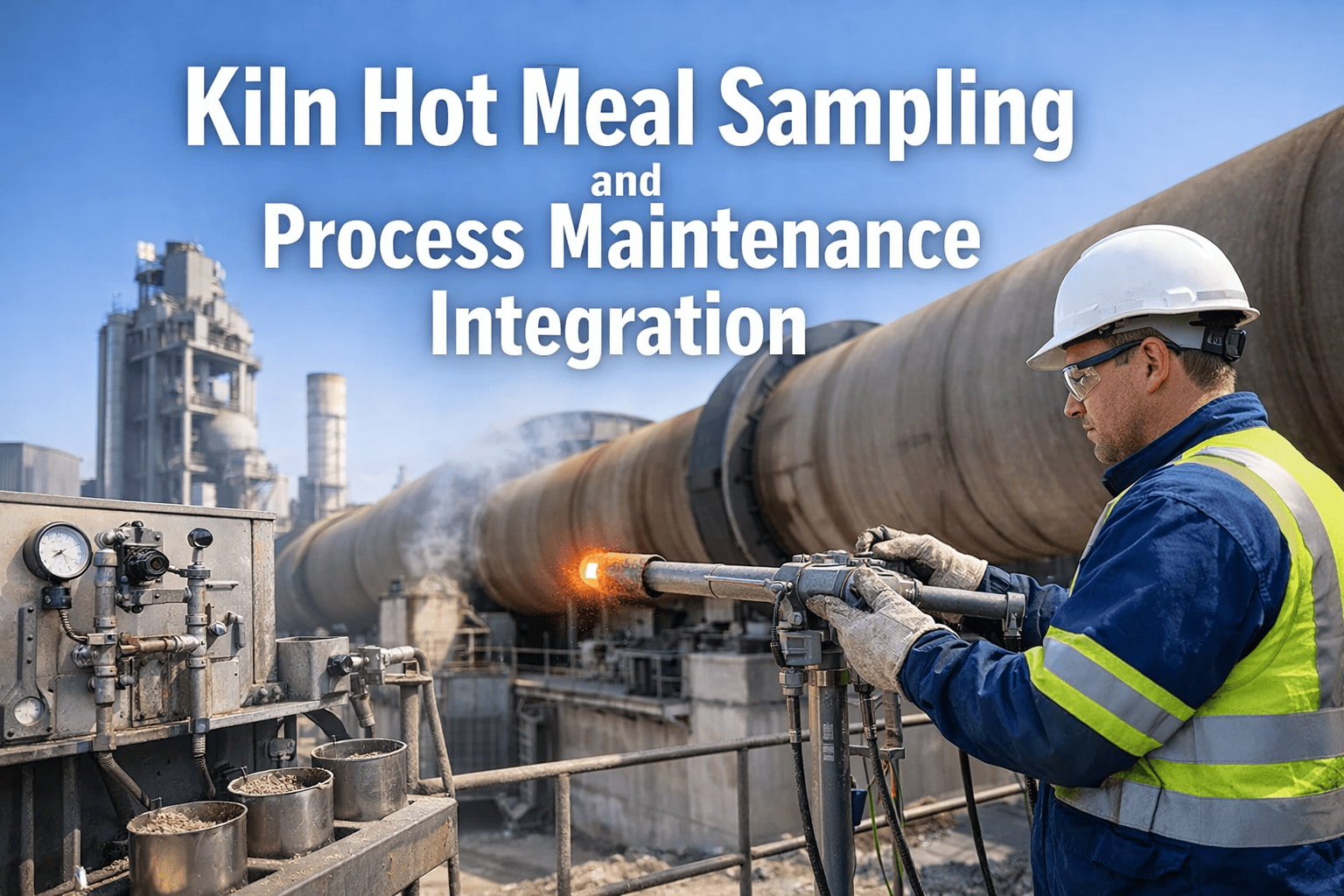
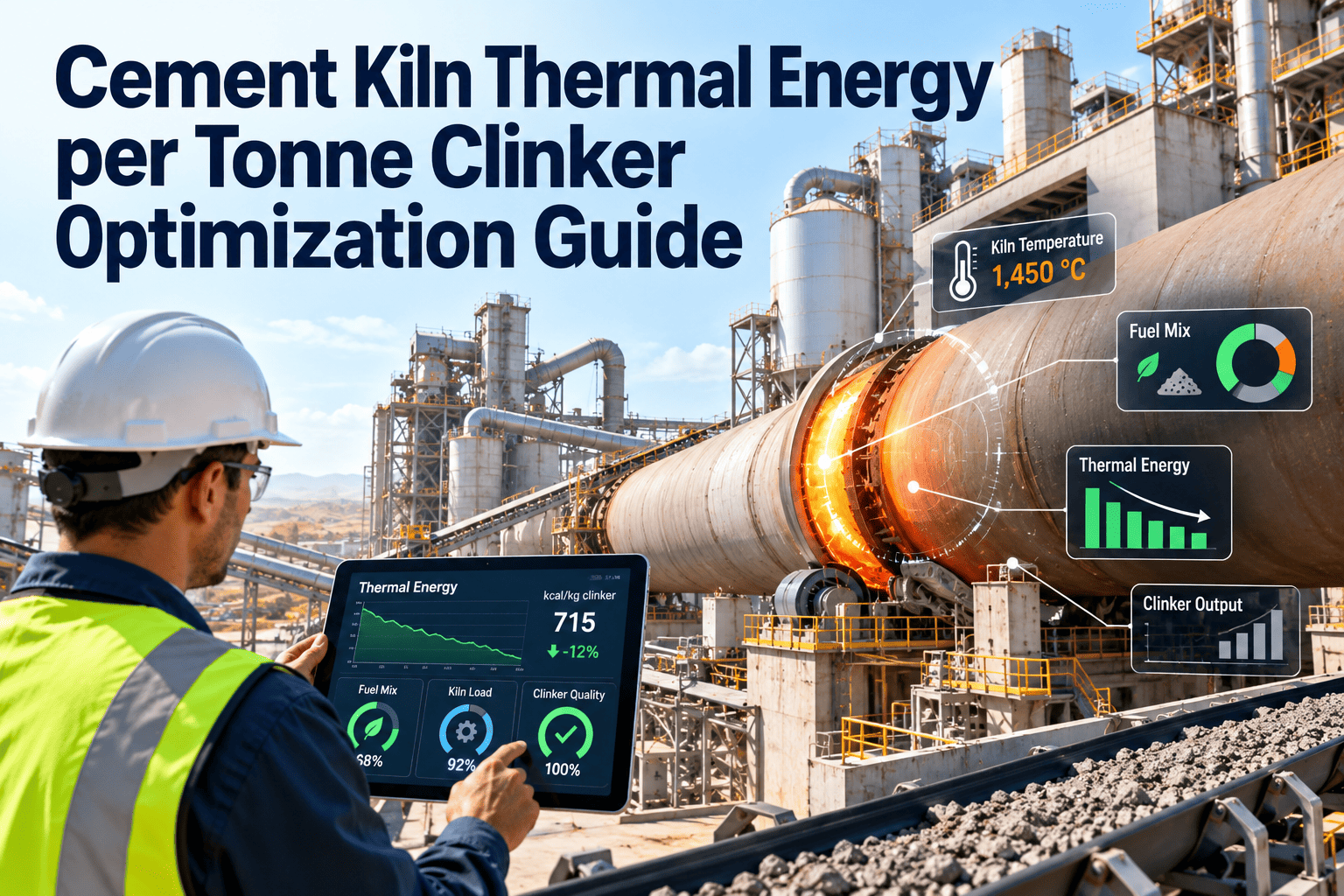
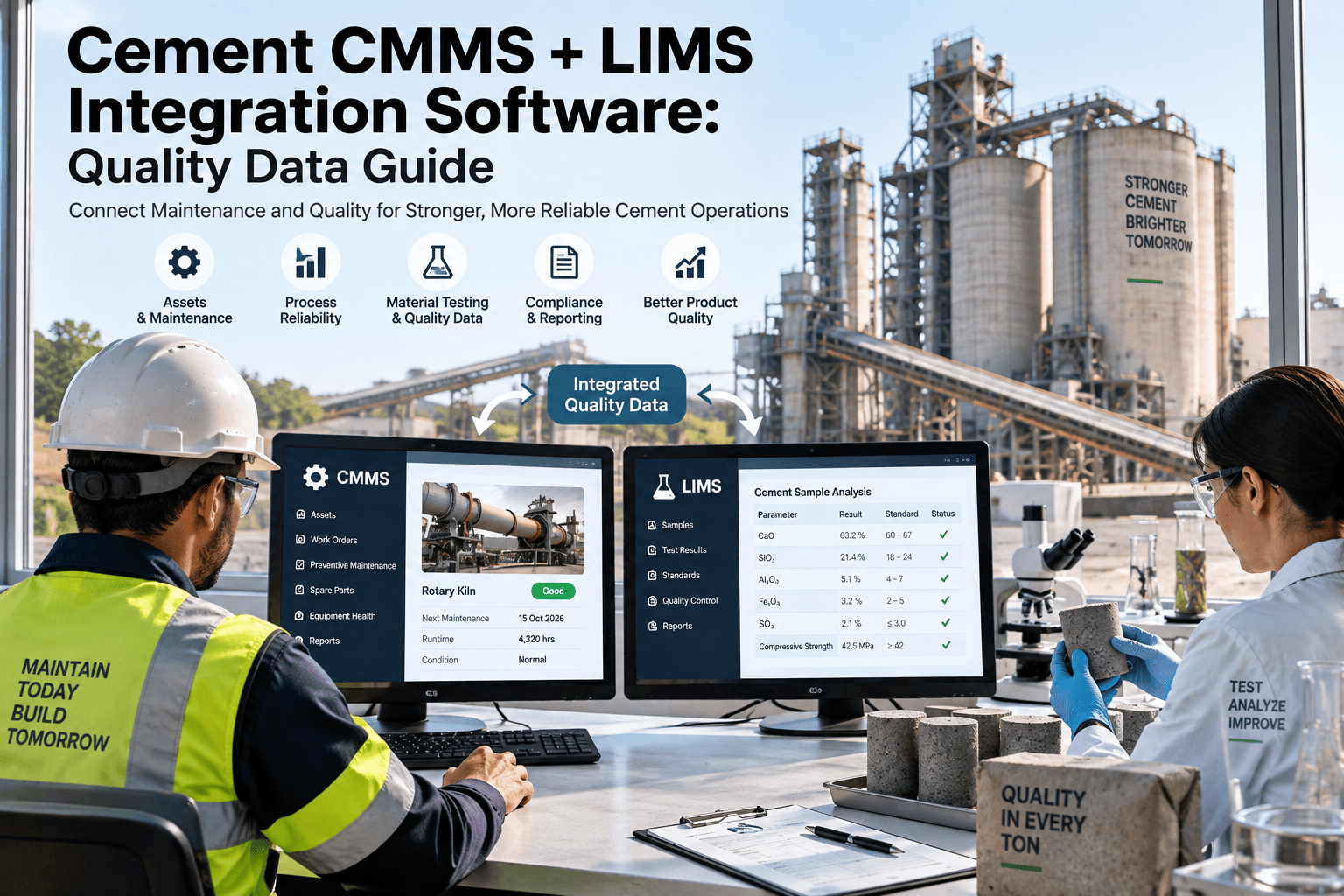
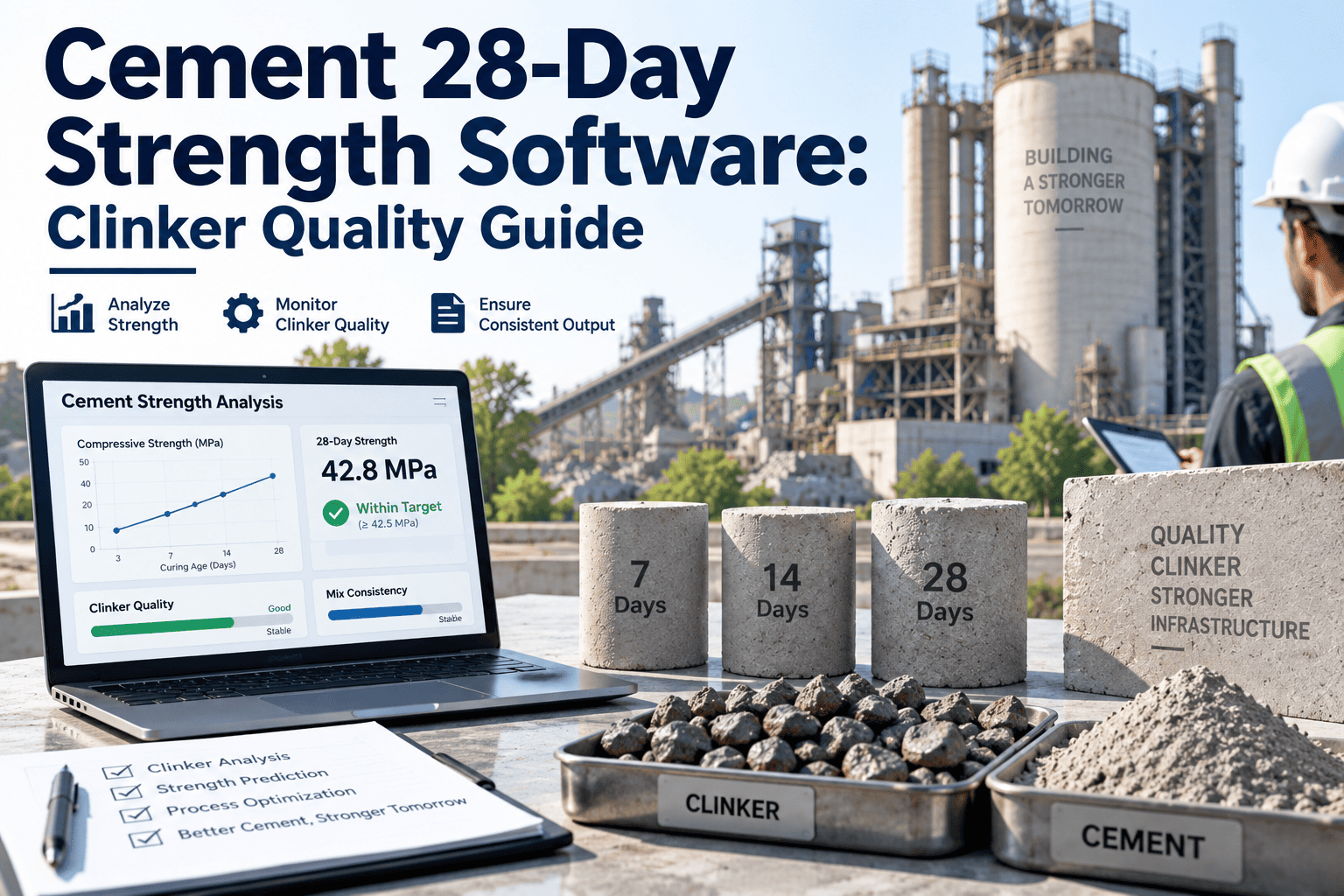
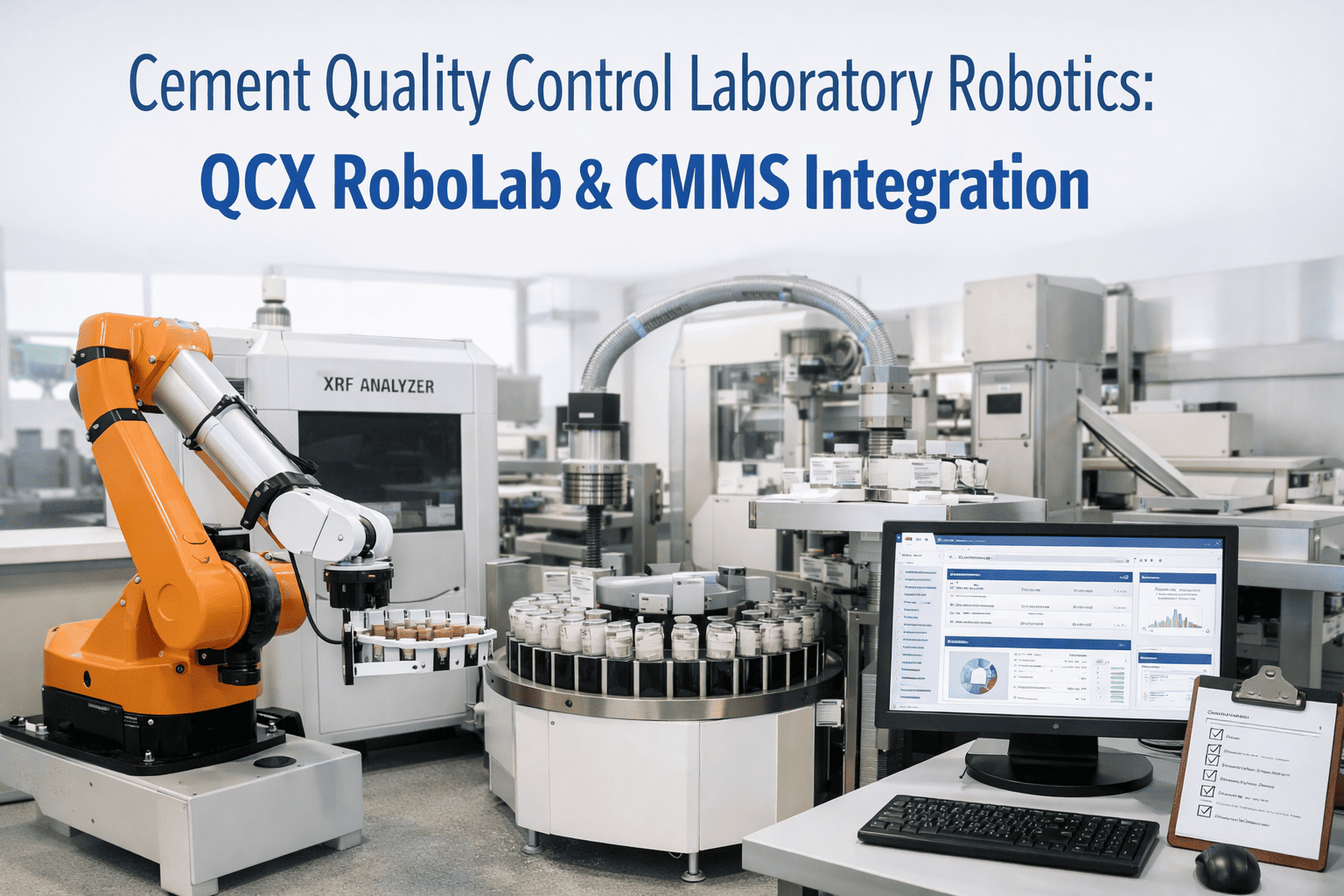
When a lab technician pulls a hot meal sample from your preheater and reports a loss-on-ignition reading, your CCR operator makes a kiln-changing decision — adjust fuel rate, shift kiln speed, or hold steady. But the operator is trusting data that depends entirely on the condition of a sample probe, extraction valve, and air-cooling line that almost no one in the plant tracks as a maintenance asset. Oxmaint closes the loop between your process lab and your maintenance team — turning sampler PMs, calibration records, and process deviation alerts into one connected system so your kiln gets told the truth, every shift.
Why Hot Meal Sample Integrity Is a Maintenance Problem — Not a Lab Problem
A hot meal sample pulled at 800–900°C from a preheater riser is one of the few real-time windows into what your kiln is actually doing. Degree of calcination, free lime trajectory, sulphur and chloride balance, alkali cycling — all of it is read off samples that take about 90 seconds to pull. When the sampler is misbehaving, the data it produces looks normal. And "normal-looking wrong data" is the single worst input your kiln operator can receive. Every adjustment is already baked into the next 2 hours of clinker before anyone realizes the reading was misleading.
When Sampling Is Clean vs. When Sampling Drifts
Clean sampling
LOI result:Reflects actual calcination
Operator action:Correct, targeted adjustment
Fuel usage:Within 3% of theoretical minimum
Free lime variance:Held inside 0.5–1.5% band
Refractory life:Campaign runs to plan
Drifted sampling
LOI result:Biased by sample contamination or cooling lag
Operator action:Overburns to cover phantom deviation
Fuel usage:3–8% excess per shift, every shift
Free lime variance:Wanders outside spec, customer claims rise
Refractory life:Cut short by thermal over-cycling
The Hot Meal Sample Journey — Where Things Quietly Go Wrong
A hot meal sample passes through five physical stages between the riser pipe and the lab furnace. Each stage has a maintenance-sensitive component, and each stage can introduce a bias your lab will never detect. This is the journey every sample makes — and the hidden failure modes at every station.
1
Extraction Point on Preheater Riser
Where: Sample probe tube inserted into riser duct at typical 800–900°C
What drifts: Probe tip erosion, partial blockage from meal buildup, thermal distortion — all cause non-representative sampling that favors finer particles
2
Isolation & Extraction Valve
Where: High-temperature slide gate or ball valve, cycled every sample interval
What drifts: Seat wear, seal degradation from repeated thermal cycling, stuck-open condition introducing false air — skews the LOI reading toward uncalcined appearance
3
Cooling Line & Quench
Where: Water-jacketed or air-cooled tube dropping sample temperature to safely handleable range
What drifts: Cooling water flow reduced due to scale, air leaks in jacket, partial condensation on internal wall — changes the material that reaches the collection vessel
4
Pneumatic Transport to Lab
Where: Pressure-blown line from preheater platform to laboratory intake
What drifts: Compressor pressure drift, moisture ingress, filter saturation — causes sample splitting or loss of fine fraction, biasing chemistry readings
5
Lab Furnace & XRF Analysis
Where: LOI furnace at 950°C and XRF spectrometer in the quality control lab
What drifts: Furnace thermocouple drift, XRF lamp degradation, overdue calibration checks against reference standards — compounds errors further downstream
Every One of These Stations Is a CMMS Asset — Or It Should Be
Most plants track kiln drive motors, ID fans, and roller bearings in their CMMS. Almost none register the sample probe, extraction valve, cooling line, and pneumatic transport system as maintainable assets with scheduled PMs, calibration records, and condition alerts. Oxmaint changes that in a week.
The True Cost of Instrument & Sampling Drift — Stacked Up
A 20°C temperature measurement error in the preheater instrumentation can drive 2–3% excess fuel use as operators compensate for phantom deviations. Apply that same logic to a sampling system and the cost compounds across every variable the hot meal test is supposed to control. Here is what each percentage point of silent drift actually costs a mid-size plant.
Sampling bias on LOI
Operators overburn to "protect" free lime
30–50 kcal/kg clinker excess fuel
Chloride / sulfur imbalance missed
Preheater buildup goes undetected
8–24 hours unplanned cleaning stop
Free lime trajectory delayed
Off-spec clinker reaches the cooler
Hundreds of tonnes of rework-grade clinker
Calcination degree misread
Calciner fuel split drifts unnoticed
3–8% excess fuel per shift, all shifts
Composite sample skew
Wrong raw mix correction applied
LSF band widens, cement strength variance
Pneumatic line fine-loss
Chemistry reading biased toward coarse fraction
Systematically wrong burnability estimate
The Closed Loop — Process Lab to Maintenance, Through One System
The integration that most cement plants are missing is not more sensors or more lab analyses. It is a structured handoff: when a lab result deviates, the maintenance team knows right away which physical asset to inspect, and when a maintenance task changes asset condition, the lab knows the next sample may need validation against a reference. Oxmaint makes that handoff automatic.
How Oxmaint Links Quality Lab to Maintenance
A
Lab Result Exceeds Threshold
Free lime, LOI, or sulfate ratio moves outside the control band. The lab system flags the deviation.
down
B
Oxmaint Correlates Against Asset Status
The system checks when the sample probe, valve, cooling line, and XRF last had their calibration or PM, and whether any pattern points to equipment rather than process.
down
C
Root Cause Path Chosen
If the pattern matches a maintenance signature — PM overdue, recurring drift after valve cycle, cooling flow alarm — a work order is generated automatically. If not, the deviation routes to process engineering.
down
D
Work Order Closes the Loop
Technician performs the fix, logs as-found and as-left values on mobile, and the lab receives a "validated" stamp on the next sample window. Everyone sees the same timeline of events.
The Maintenance Cadence That Keeps Sampling Honest
There is no single PM interval that works for hot meal sampling — the probe runs in abrasive 800°C material, the valve cycles thousands of times a month, and the XRF needs its own calibration rhythm. Oxmaint lets each asset carry its own schedule while reporting as one integrated sampling system.
Every shift
Operator visual check of sample delivery at lab intake — flag splits, missing fines, moisture
Catches pneumatic transport issues before the next sample window
Weekly
Extraction valve cycle log review; cooling flow & pressure reading captured on mobile
Builds the trend that predicts valve rebuild timing
Monthly
Probe tip inspection during brief sampling pause; reference-standard XRF check
Confirms the measurement chain is within calibration tolerance
Quarterly
Full three-point LOI furnace thermocouple calibration against NIST-traceable reference
20°C measurement error equals 2–3% excess fuel — this is the highest-ROI calibration
Per kiln stop
Probe swap, cooling line descale, pneumatic line internal inspection
Resets the sampling system to a known-good baseline for the next campaign
Annual
Full audit: compare sampling chemistry against an independent reference lab on identical material
Detects slow, systemic bias invisible to daily checks
What Plants Gain When the Loop Is Closed
2–3%
Fuel reduction from eliminating compensatory overburning
15–30 min
Earlier detection of true process deviations, once equipment noise is removed
60%+
Fewer "why is the lab reading weird" disputes between shifts
100%
Audit-ready calibration and PM history for every sampling asset
0.5–1.5%
Free lime variance held inside target band more consistently
One
Source of truth across lab, CCR, and maintenance — finally
Where Oxmaint Differs for Quality-Critical Sampling Assets
Differentiator 01
Sampling Assets Treated as First-Class Equipment
Probe, valve, cooling line, pneumatic transport, LOI furnace, and XRF each get their own asset record, PM schedule, and calibration history in
Oxmaint — not buried inside a generic "lab instruments" bucket.
Differentiator 02
Process Deviation Auto-Links to Asset History
When a lab reading drifts, the maintenance team sees a ranked list of likely equipment causes with their last-PM and last-calibration dates — instead of guessing from a spreadsheet that hasn't been updated since the last campaign.
Differentiator 03
Mobile Work Orders With As-Found / As-Left Fields
Every calibration or sampler PM carries structured as-found and as-left values, time-stamped and signed by the technician on the preheater platform — the same evidence your ISO and regulatory audits will ask for.
Differentiator 04
One Dashboard for Lab QC & Maintenance
Lab supervisors, CCR operators, and maintenance planners all look at the same view: current sample, last calibration, next PM, open anomalies. Disputes across shifts stop being disputes.
Frequently Asked Questions
How does Oxmaint know whether a lab deviation is a process issue or a sampling equipment issue?
Each sampling asset carries its PM status, calibration age, and recent anomaly log. When a deviation appears,
Oxmaint ranks equipment-driven causes by pattern match and surfaces the top candidates before anyone touches kiln setpoints — so the process team investigates only real process drift.
Can we integrate Oxmaint with our existing lab information system and CCR historian?
Yes. Oxmaint ingests lab results via standard APIs and connects to historians via OPC-UA — the same way it pulls drive and kiln telemetry. Your LIMS and CCR can keep running exactly as they do today while the maintenance side gets the context it has been missing.
Book a demo to walk through your specific stack.
How long does it take to register all our sampling and lab assets in Oxmaint?
Most cement plants complete sampling-system asset registration in 2–3 weeks — probe, valve, cooling line, pneumatic transport, LOI furnace, XRF, and reference standards all get records with calibration intervals. Historical calibration certificates can be attached as PDFs so your audit trail starts on day one.
Does this only work for hot meal sampling, or can we extend it to raw mix and clinker sampling too?
It extends naturally. The same asset-plus-calibration-plus-deviation logic works for raw mill auto-samplers, clinker cooler outlet samplers, and cement mill composite samplers. Most plants start with hot meal because it has the highest energy-cost exposure, then widen.
Start your free Oxmaint account and we will help you map the rollout.
What is the realistic first-year payback from tightening sampling integrity alone?
Plants that eliminate compensatory overburning typically recover 2–3% of kiln fuel cost — on a mid-size line that is $400K–$900K annually. Add the value of avoiding even one preheater buildup incident caused by missed chloride detection and Oxmaint pays back well inside the first year.
Schedule a walkthrough with a plant-specific ROI estimate.
Give Your Kiln Operator Data They Can Actually Trust
Your lab is producing honest numbers. Your operators are making honest decisions. The gap is almost always in the physical sampling chain between them — and it is a gap a properly configured CMMS closes in weeks, not quarters. Start building the sampling asset registry in Oxmaint, or walk through a configured demo mapped to your preheater and lab layout.