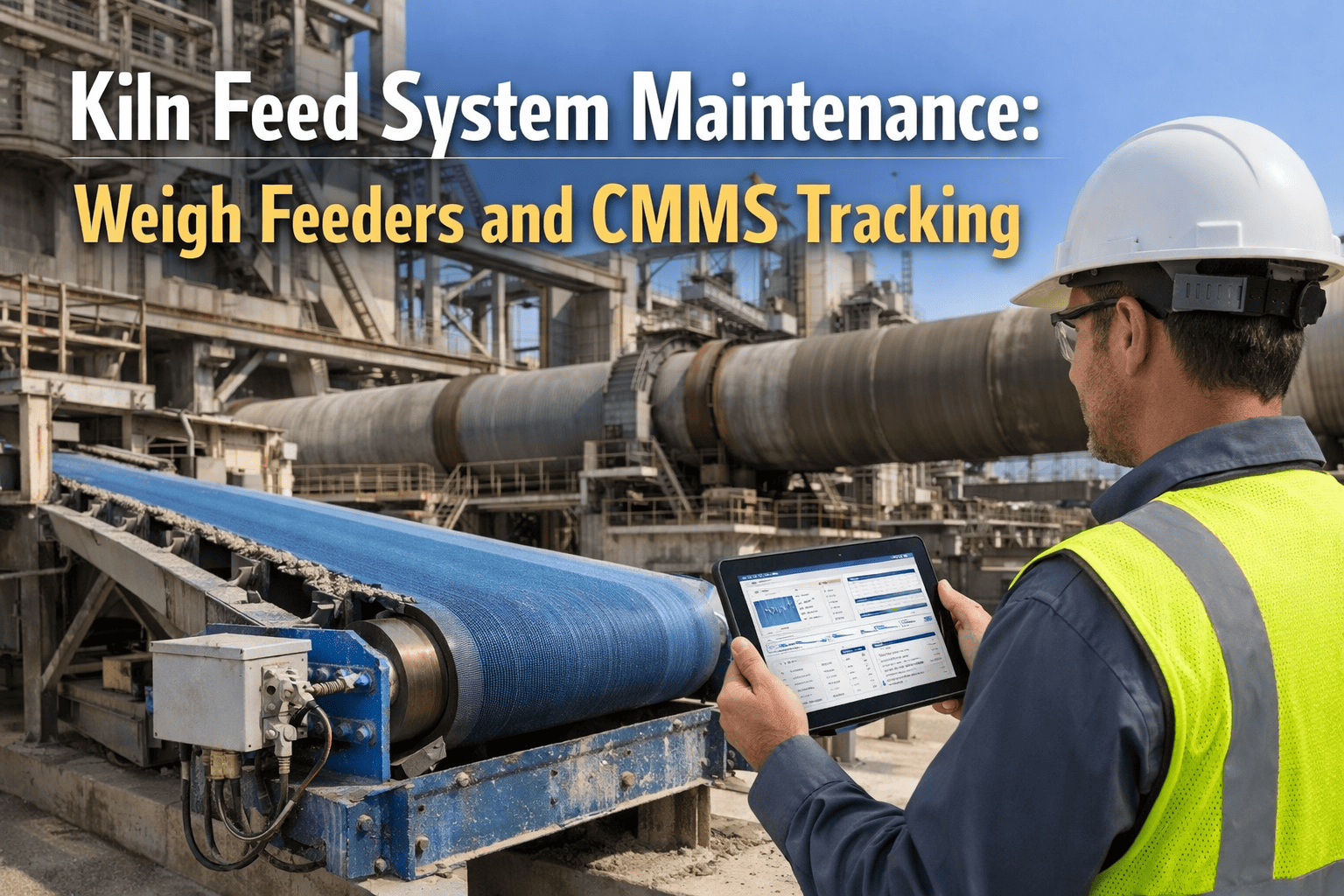
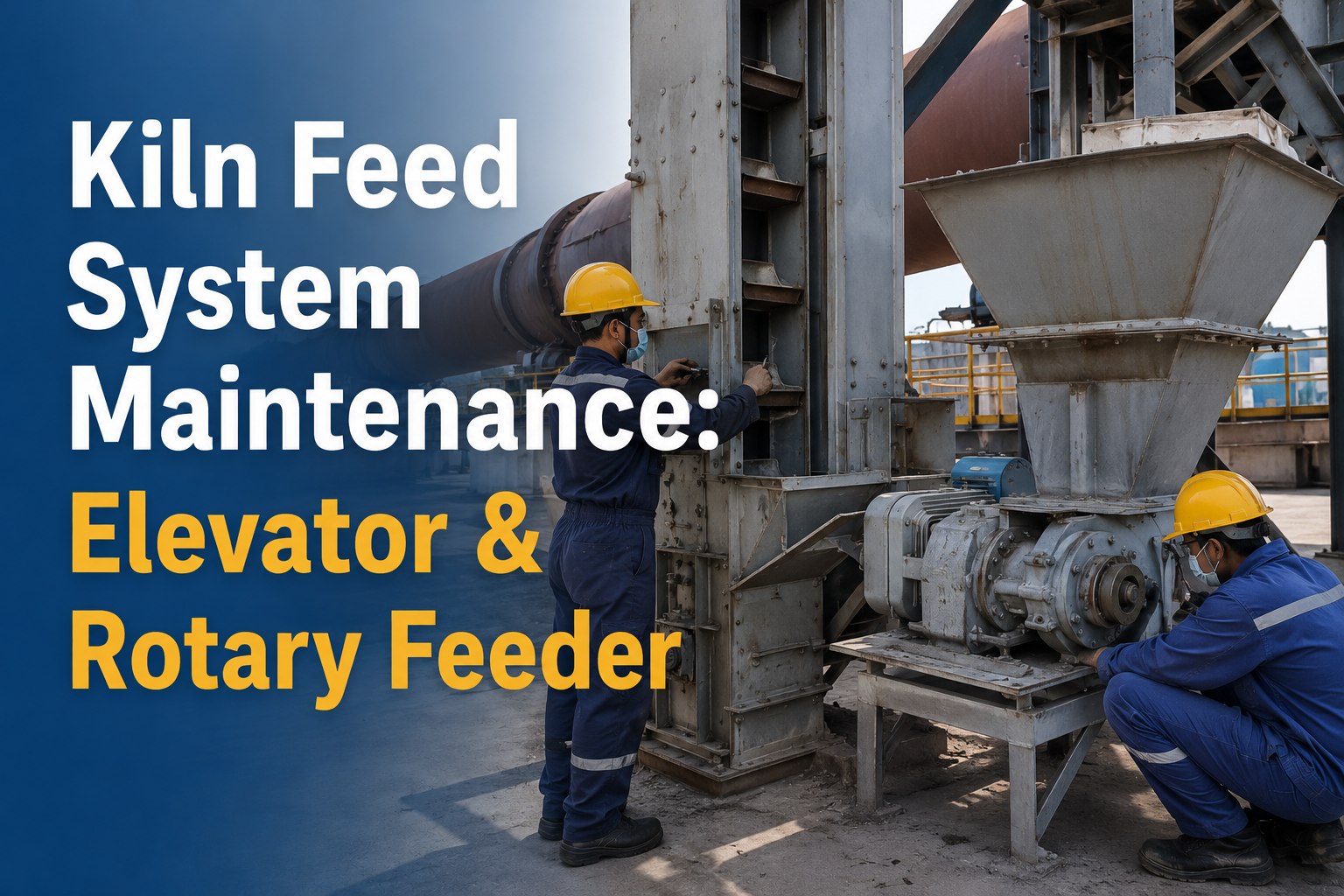
The kiln is only ever as accurate as the weigh feeder in front of it. Every clinker quality problem that gets blamed on fuel, raw mix, or the kiln operator actually starts 50 metres upstream on a belt that is reporting the wrong number. A 1% weigh feeder drift on a 5,000 TPD kiln delivers 50 tonnes of unaccounted material into the preheater every single day — shifting LSF, destabilising burning zone temperature, and pushing free lime out of spec while the control room watches a clean trend line that looks fine. The feeder is not broken. It is lying quietly, for weeks, until the lab results finally surface the damage. A CMMS that tracks weigh feeder calibration schedules, belt tension checks, load cell inspections, and impact-sensor verification is not a compliance overhead — it is the only thing between the process engineer's intended feed rate and what the kiln actually receives. Book a demo to see how Oxmaint structures kiln feed system maintenance end-to-end.
The Silent-Drift Problem
A weigh feeder does not fail loudly. It drifts 0.3% per month from material buildup on rollers, belt stretch, load cell zero-offset, and tacho disc slip — each invisible individually, collectively shifting kiln feed rate by 2–4% in a single quarter without tripping a single alarm.
What Actually Drifts — Feeder Anatomy and the Six Failure Points
A belt weigh feeder is a mechanical measurement device operating in a dust-laden, temperature-cycling, vibration-rich environment 24 hours a day. The weighbridge reports weight. The tacho reports speed. The controller multiplies the two and reports mass flow rate. Anything that corrupts either input — mechanical interference, electrical drift, material buildup, environmental exposure — corrupts the signal the kiln controller is chasing. These are the six components where drift actually originates on cement plant weigh feeders.
01
Load Cell Zero Drift
Typical drift: 0.1–0.3% per month
Temperature cycling and residual stress on parallelogram load cells shift the zero reference. Zero-calibration on an empty belt is missed or rushed, so the drift compounds into the span.
02
Belt Tension Variation
Typical drift: 0.5–1.5% after stretch
New belts stretch within the first 400 running hours. Mechanical splices and gravity take-ups produce variable tension that alters the contact point between belt and weigh suspension idler.
03
Tacho / Encoder Slip
Typical drift: up to 2% with return-belt wear
Tacho generators driven by the return belt slip when the return roller accumulates dust or the disc mount loosens. Speed under-reporting by 2% under-feeds the kiln by 2% — directly.
04
Weigh Suspension Misalignment
Typical drift: 1–3% after impact
One bump from a front loader near the feeder frame can shift the scale approach or retreat idler by millimetres. The angle of approach and retreat must be equal — when it isn't, load reports wrong.
05
Material Buildup on Idlers
Typical drift: 0.5–2% over weeks
Raw meal, limestone fines, and gypsum powder build up on approach idlers and return rollers. Extra rotational mass looks like extra material to the weigh system — phantom tonnes recorded daily.
06
Impact Sensor Degradation
Typical drift: unpredictable, step-change
Impact weighers at hopper discharge lose accuracy when the impact plate wears, the deflection element fatigues, or the damping grease migrates. Unlike the slow drifts above, impact sensor failure is abrupt.
The Downstream Consequence: What 2% Drift Costs on a Cement Kiln
The conversion from weigh feeder drift to clinker impact is direct and unforgiving. On a modern 5,000 TPD precalciner kiln running at target LSF of 96, a 2% raw meal feeder drift moves effective LSF by 0.8–1.2 points — enough to push free lime from 1.2% into the 2.5–3.5% range where cement soundness starts to fail. These are the quantifiable consequences when drift goes undetected for a full quarter.
2%
Drift on raw meal feeder
+2%
free lime breakthrough
30–50
kcal/kg over-burn compensation
Typical annualised loss on a 5,000 TPD kiln from a single persistently drifting raw meal weigh feeder: $480,000 to $920,000 in excess fuel, rejected clinker, and cement strength downgrade — almost always invisible in daily SCADA trends.
The Calibration Schedule That Actually Holds Feed Rate Stable
Most cement plants calibrate weigh feeders "once a quarter" or "whenever lab results go strange." Neither approach works. Calibration discipline is tiered: daily zero checks, weekly mechanical checks, monthly span verification, and full drop tests at defined production-hour milestones. Oxmaint tracks all four tiers per asset and auto-generates the work order when each interval is due, with the calibration record attached to the asset permanently.
Daily
Empty-belt zero check, visual inspection of belt tracking, scraper condition
Catches zero drift before it compounds into span error. Confirms scrapers are removing buildup from return side.
Weekly
Belt tension measurement, idler rotation check, tacho disc secure, return-belt cleanliness
Stretched belts, seized idlers, and fouled tachos are the three mechanical faults behind most mid-cycle drift events.
Monthly
Span verification using certified test weights or test chain; load cell linearity across operating range
Detects cumulative drift from load cell aging, buildup, and suspension misalignment before it reaches 1% threshold.
Quarterly
Full material drop test against certified bin scale; suspension alignment verification
The only calibration that validates the full mechanical-to-electrical chain. Non-negotiable for clinker quality integrity.
Annual
Belt replacement (if >8,000 run hrs), load cell replacement assessment, impact sensor calibration
Prevents catastrophic step-changes. A belt running into its second year is drifting — whether the numbers say so or not.
Your Kiln Is Only As Accurate As Your Feeder.
Oxmaint tracks every calibration interval, every drop test, every load cell check — and auto-generates the work order before drift reaches the lab. No more "why did free lime spike last Tuesday" post-mortems.
Drift Timeline — How a Small Problem Becomes a Clinker Crisis
The reason weigh feeder drift is so destructive is that it compounds linearly while its consequences compound non-linearly. Below is the real progression from a newly calibrated feeder through to a clinker quality event — the pattern observed repeatedly across precalciner kilns when calibration discipline lapses.
Week 0
Baseline established
Fresh drop test, zero verified, span verified. Feeder error <0.2%. Free lime on target, SEC stable, kiln smooth.
Week 3
First signs of drift
Material buildup accumulating on approach idler. Load cell zero has shifted 0.15%. Belt has stretched slightly from initial tension. Error around 0.6% — still well inside operator tolerance.
Week 6
Kiln compensates silently
Feeder error at 1.2%. Burning zone temperature has been gradually raised by operators chasing slightly elevated free lime. SEC up 6–8 kcal/kg. Nobody has linked the trend to the feeder.
Week 9
Free lime breakthrough event
Feeder error at 2.1%. Free lime spikes above 2.5% during a raw material hardness shift that the feeder cannot represent accurately. Lab alerts quality team. Clinker from this shift goes to downgrade silo.
Week 10
Emergency drop test
Maintenance pulls a drop test — feeder is 2.4% under. Buildup cleared, belt re-tensioned, span re-calibrated. Kiln returns to spec within 36 hours. Estimated loss over 10 weeks: $180,000.
CMMS-Tracked vs Spreadsheet-Tracked Weigh Feeder Maintenance
| Dimension |
Spreadsheet or Log Book |
Oxmaint Asset-Tracked |
| Calibration interval enforcement |
Passive — depends on shift supervisor memory |
Active — work order auto-dispatched on interval |
| Drop-test history per feeder |
Scattered across paper logs, often lost |
Permanent asset-attached record, auditable |
| Linking free lime events to feeder drift |
Requires manual reconstruction post-event |
Timeline correlation visible in asset history |
| Belt replacement scheduling |
Calendar-based, ignores actual run hours |
Condition-based on hours + drift signature |
| Load cell + tacho spares tracking |
Discovered-empty when needed urgently |
Min-level triggered to store room automatically |
| Feeder impact event documentation |
Reported inconsistently, rarely tied to asset |
Incident logged, triggers alignment re-check WO |
| Audit trail for quality deviations |
Manual reconstruction during complaint reviews |
Native — calibration state at time of incident |
Where AI Adds Value On Top of Maintenance Discipline
Calibration schedules catch drift on a schedule. AI feed monitoring catches drift between schedules — the moment the feeder signal starts diverging from what downstream sensors expect to see. Together, they close the window in which drift damages clinker quality.
Cross-Sensor Divergence Detection
AI compares reported feed rate against downstream indicators — preheater pressure, kiln torque, elevator power draw. When the weigh feeder says one thing and the kiln behaves as if it's receiving another, drift is flagged before the lab sees it.
Drift Signature Pattern Matching
Slow linear drift signals load cell or belt stretch. Step-change drift signals impact event or sensor failure. Oscillating drift signals tacho slip. Each pattern routes to a different Oxmaint work order template.
Calibration-Due Anticipation
AI predicts when a feeder will exceed the 1% drift threshold based on its historical drift rate — not a fixed calendar. Plants with high-silica limestone, alternative fuels, or humid climates drift faster and are serviced accordingly.
Proportioning Integrity Alerts
Multiple feeders in a raw mix line can drift independently. AI watches the proportional relationship between them — limestone vs clay vs iron corrector — and flags when the ratio delivered diverges from the ratio commanded.
Operational Gains From Disciplined Feed System Maintenance
-68%
Free lime deviation events per quarter
-42%
Unscheduled drop tests triggered by lab alerts
-18
kcal/kg saved through stable LSF control
+2.3%
Kiln run factor from fewer chemistry upsets
100%
Calibration audit trail completeness
14 days
Earlier drift detection vs quarterly-only cycle
Frequently Asked Questions
QHow often should cement plant weigh feeders really be calibrated?
Daily zero checks, weekly mechanical inspection, monthly span verification, quarterly full drop test, and annual belt and load cell assessment. Oxmaint auto-schedules all five tiers.
Book a demo to see the schedule template.
QCan we track weigh feeder maintenance in Oxmaint without replacing our existing weighing hardware?
Yes. Oxmaint is hardware-agnostic — it tracks the maintenance workflow, calibration records, and drift patterns against whatever feeder brand is already installed. Schneider, Siemens, Thermo Fisher, Jesma, or any other OEM.
QHow much feeder drift translates to a real clinker quality problem?
On a standard precalciner kiln, 1.5%+ drift on the raw meal feeder moves LSF by roughly half a point and begins to show in free lime within 6–10 days. 2%+ drift reliably produces breakthrough events.
QDo we need AI to solve this or is a good CMMS schedule enough?
A disciplined CMMS schedule prevents most events. AI catches the remaining between-schedule drift and shortens detection by roughly two weeks. Oxmaint provides both layers in one platform.
Book a demo to see the combined workflow.
QHow do impact-style feeders fit into this maintenance model?
Impact weighers need a different check cadence — plate-wear inspection monthly, deflection element calibration quarterly. Oxmaint carries separate templates for belt, impact, and loss-in-weight feeders; drift patterns differ by type.
Build Feed Rate Discipline Into Every Shift
Oxmaint puts weigh feeder calibration, belt tension checks, load cell inspections, and drop-test history into one asset record — so clinker quality is never surprised by a feeder that quietly drifted out of spec.