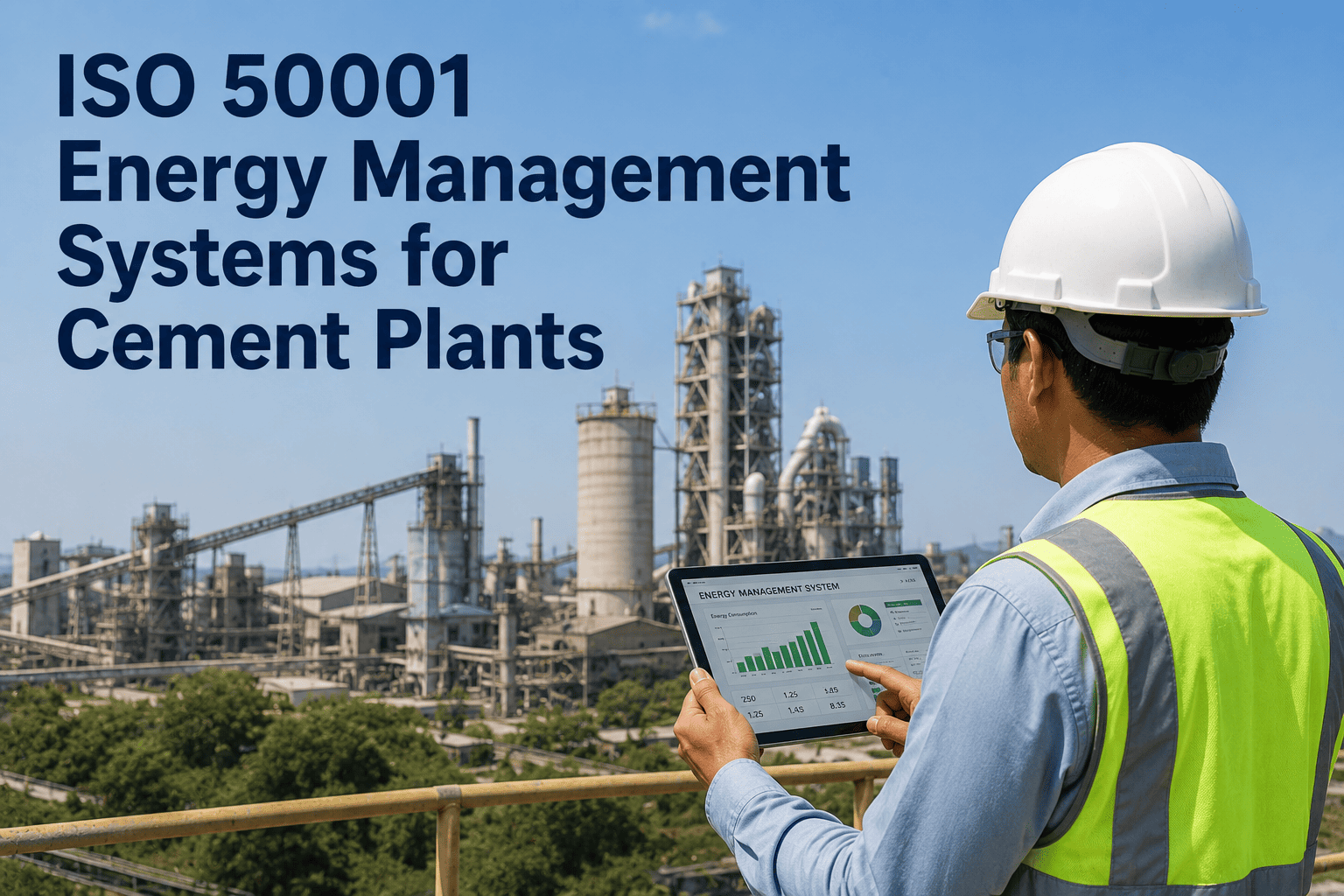
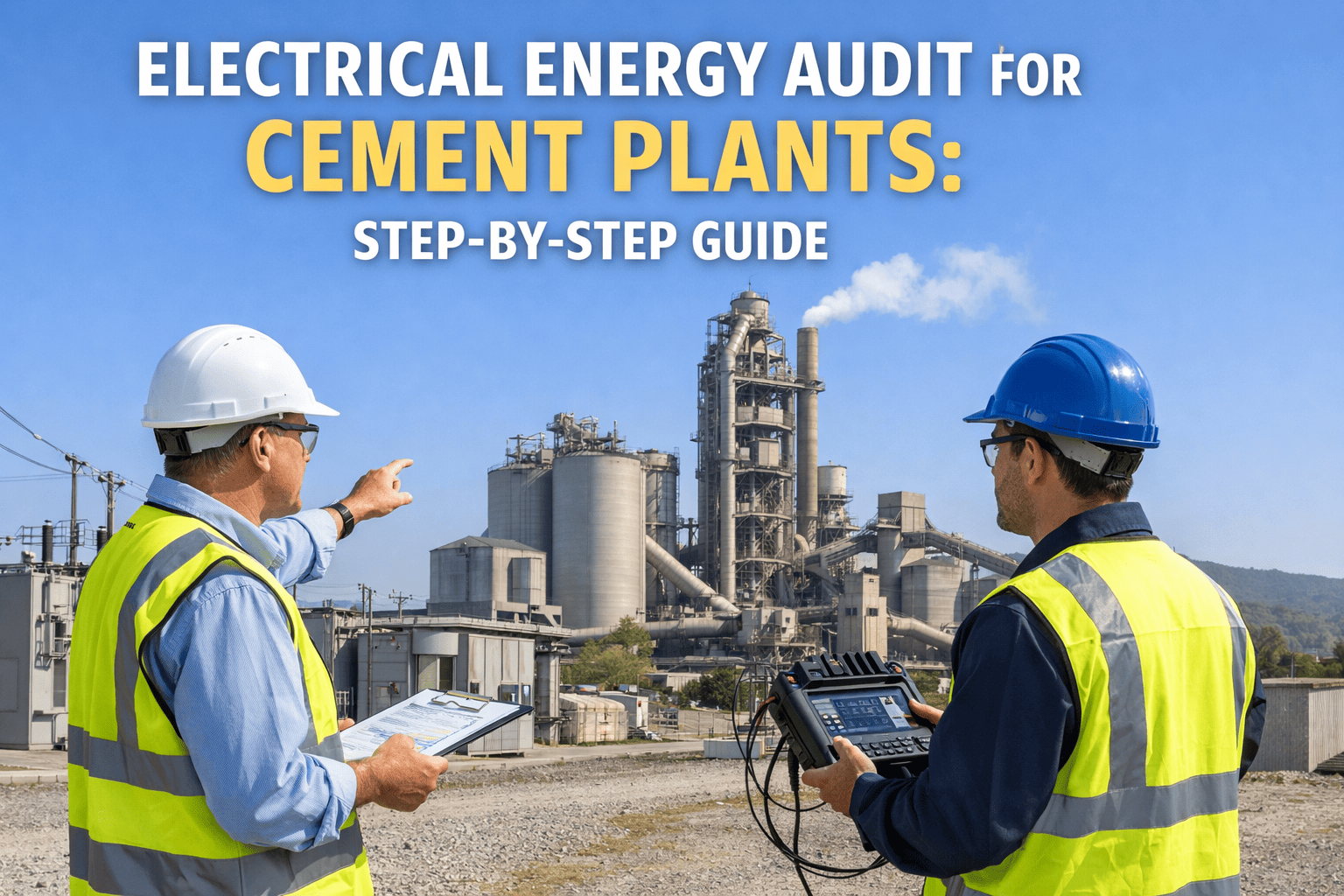
Cement plants are among the most energy-intensive industrial operations in the world — clinker production alone consumes 3,000–4,500 MJ per tonne, making energy typically the second-largest operating cost after raw materials. ISO 50001 provides the framework to convert energy from an uncontrolled variable cost into a managed, measured, and continuously improving line item. Unlike prescriptive energy regulations, ISO 50001 is a management system standard: it requires you to identify your significant energy users, establish specific energy consumption baselines, set measurable improvement targets, and document the action plans that deliver results. For cement plants pursuing certification or implementing the standard without formal certification, the practical challenge is building the data collection, analysis, and corrective action workflows that ISO 50001 requires — without adding administrative burden that maintenance and operations teams cannot sustain. This page covers the core elements: SEC and EnPI framework, energy baseline methodology, action plan structure, and the CMMS integration that makes the system auditable year-over-year. To see how OxMaint supports ISO 50001 implementation at cement plants, start a free trial or book a 30-minute energy management walkthrough with a cement plant specialist.
ISO 50001 Energy Management · Cement Plants · 2026
ISO 50001 Energy Management Systems for Cement Plants
SEC baselines, EnPI tracking, action plan structure, certification readiness, and CMMS-backed records — the complete implementation roadmap for cement plant energy management.
Typical Cement Plant Energy Split
Pyro-processing (kiln + preheater)
55%
Finish grinding (mills + separators)
22%
Materials handling & auxiliaries
11%
The ISO 50001 Plan-Do-Check-Act Loop for Cement Plants
ISO 50001 is built on the PDCA cycle. For cement plants, each quadrant has specific deliverables — not abstract management activities — that auditors evaluate for evidence of genuine implementation rather than documentation theater.
PLAN
Energy Review & Baseline
Identify all significant energy users (SEUs) — kiln, mills, fans, compressors
Establish energy baseline (EnB) from 12-month historical data with relevant variables
Define Energy Performance Indicators (EnPIs) — kWh/tonne clinker, GJ/tonne cement
Set measurable energy objectives and targets with deadline and owner
DO
Action Plans & Controls
Implement energy action plans with assigned ownership and resource allocation
Establish operational controls for SEU operating parameters (setpoints, run schedules)
Deliver competency training for personnel operating SEUs
Procurement criteria for energy-significant equipment replacements
CHECK
Monitoring & Measurement
Monthly EnPI tracking against baseline with normalized data for production variables
Calibration records for energy meters and monitoring equipment
Internal audit against ISO 50001 requirements — annual minimum
Management review with energy performance data and corrective action status
ACT
Improvement & Correction
Corrective actions when EnPI performance deteriorates beyond threshold
Nonconformance records for energy management system failures
Baseline recalculation when production mix or technology changes significantly
Continual improvement targets set at each management review cycle
SEC and EnPI Framework — The Numbers ISO 50001 Requires
Specific Energy Consumption (SEC) and Energy Performance Indicators (EnPIs) are the measurable heart of ISO 50001. These are the metrics cement plants must define, baseline, track, and improve — and the ones certification auditors check first for evidence of genuine performance management.
Thermal SEC — Clinker Production
GJ per tonne clinker
World Best Practice2.9–3.2 GJ/t
Good Performance3.2–3.8 GJ/t
Improvement Target ZoneAbove 3.8 GJ/t
Normalize for fuel type, clinker factor, and preheater configuration before benchmarking
Electrical SEC — Cement Production
kWh per tonne cement
World Best Practice85–95 kWh/t
Good Performance95–115 kWh/t
Improvement Target ZoneAbove 115 kWh/t
Normalize for cement type, clinker content, and grindability before comparing plants
Kiln-Specific EnPI
kJ per kg clinker at kiln exit
Variable Factor 1Kiln feed moisture content
Variable Factor 2Preheater exit temperature
Variable Factor 3Bypass ratio (if applicable)
ISO 50001 requires EnPI normalization regression to account for variables outside operational control
Track EnPIs and Action Plan Progress in OxMaint
OxMaint links energy action plans to work orders with owner assignment, deadline tracking, and completion evidence — giving your ISO 50001 program the CMMS backbone that auditors look for during certification and surveillance reviews.
Energy Action Plan Structure — What ISO 50001 Requires
An ISO 50001 action plan is not a wish list — it is a documented commitment with an owner, a baseline, a target, a completion date, and a verification method. The five-element structure below is what certification auditors check.
1
Opportunity Description
Specific energy saving opportunity identified — e.g. "reduce specific heat consumption at preheater by optimizing tertiary air damper control"
2
Baseline & Target
Current EnPI value, target value, estimated saving in GJ/year or kWh/year, and confidence level of estimate
3
Action Steps & Owner
Specific tasks required, responsible person for each, resources needed (capital, time, vendor), dependencies on other actions
4
Completion Deadline
Target completion date for each action step, with interim milestones for multi-phase projects — tracked in CMMS work order system
5
Verification Method
How savings will be measured and confirmed — measurement period, metering method, normalization approach, responsible verifier identity
Frequently Asked Questions
Does ISO 50001 certification require an external audit?
Yes — ISO 50001 certification requires Stage 1 (documentation review) and Stage 2 (on-site assessment) audits by an accredited certification body, followed by annual surveillance audits and a full recertification every three years. However, many cement plants implement the standard without formal certification to gain the operational benefits — reduced energy cost, structured improvement tracking — without the certification audit cycle. Both approaches require the same underlying CMMS records and documentation.
Book a demo to see how OxMaint structures both approaches.
What is the difference between an EnPI and an SEC in ISO 50001?
Specific Energy Consumption (SEC) is a physical metric — energy input per unit of output, like GJ per tonne clinker. An Energy Performance Indicator (EnPI) is the ISO 50001 term for any quantitative measure of energy performance, which can be an SEC or a more complex normalized metric that accounts for relevant variables like production mix or ambient temperature. ISO 50001 requires plants to define which EnPIs they will use and document the normalization methodology.
How often must the energy baseline be recalculated?
ISO 50001 requires baseline recalculation when a "static factor" changes — a new kiln, a change in cement product mix, or installation of a major energy efficiency technology that makes the original baseline non-representative. Routine year-over-year improvement does not require recalculation. The key is documenting the reason for any recalculation and retaining both the old and new baseline values with their effective dates in an auditable CMMS record.
What are significant energy users (SEUs) in a cement plant?
SEUs are the equipment or systems that account for the majority of energy consumption and where there is potential for significant improvement. In a typical cement plant, the kiln and preheater system, raw mills, finish mills, and main fans qualify as SEUs. ISO 50001 requires documented criteria for SEU identification, a register of all identified SEUs, and specific monitoring and control plans for each one.
OxMaint maintains SEU registers with linked PM and monitoring work orders.
Can a cement plant implement ISO 50001 without specialist energy management staff?
Yes, with the right system structure. ISO 50001 does not require a dedicated energy manager on every shift — it requires defined roles, data collection processes, and regular review cycles. The practical minimum is one person accountable for the EnMS program, monthly EnPI data entry, and annual management review facilitation. A CMMS that auto-schedules meter readings, action plan check-ins, and audit tasks removes most of the administrative burden from plant staff.
Book a demo to see how OxMaint distributes EnMS tasks across existing maintenance workflows.
Turn ISO 50001 From a Documentation Exercise Into Measurable Energy Savings
OxMaint connects your energy action plans, SEU monitoring schedules, meter calibration records, and management review tasks into one CMMS platform — producing the audit trail ISO 50001 requires without creating parallel paperwork systems for your maintenance and operations teams.