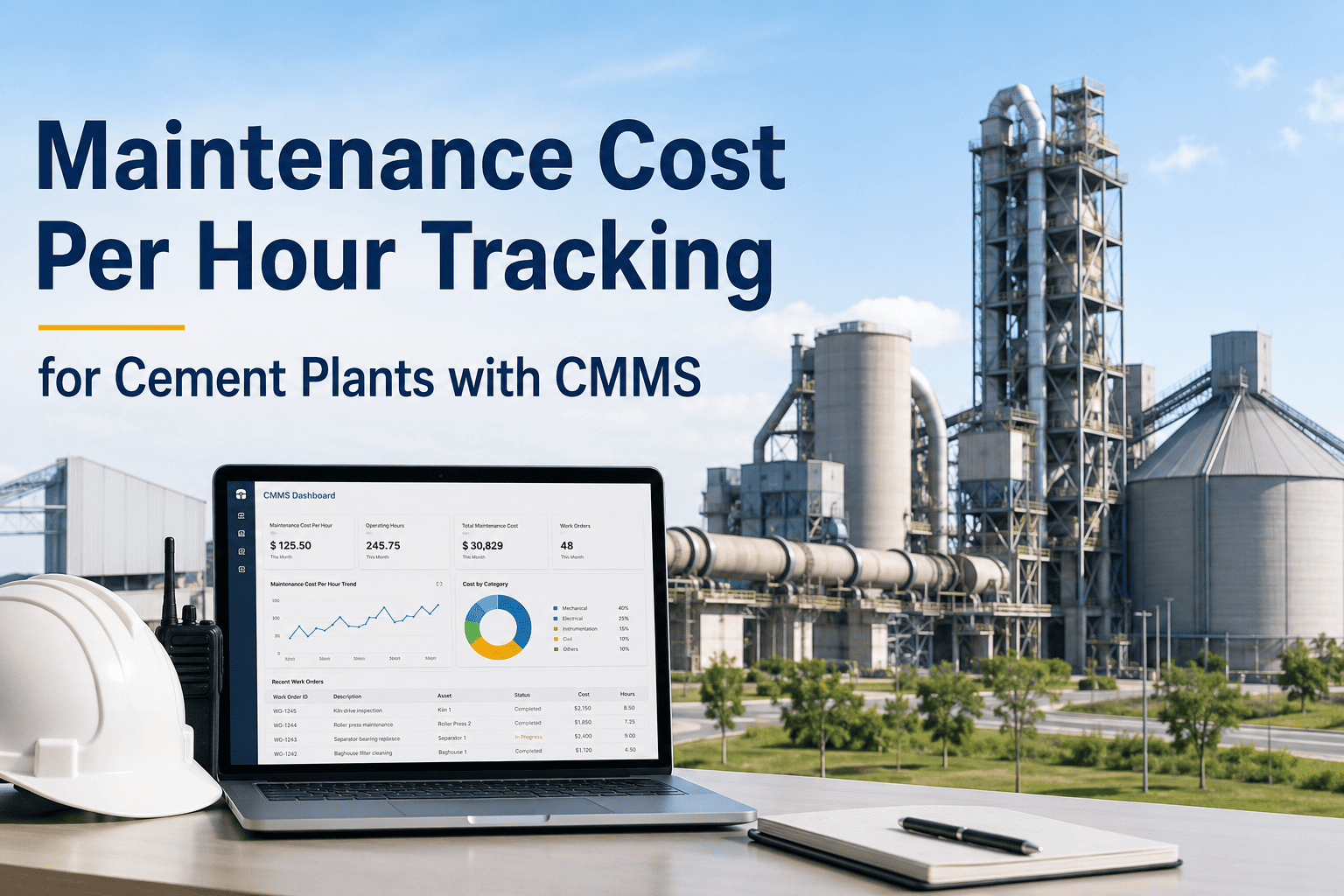
Maintenance and operating expenses consume 15-25% of total cement production costs, yet 55% of that budget typically drains into emergency reactive repairs that cost 4-6 times more than planned interventions when accounting for production losses, quality impacts, and contractor mobilization. A single major unplanned kiln stop costs an average of $273,000 when all cascading impacts are properly calculated, while plants deploying structured budget management achieve 18-25% maintenance cost reductions within the first year. The 2024 State of Industrial Maintenance Report revealed that 84% of maintenance teams retained or increased their budgets, signaling a strategic shift from viewing maintenance as a cost center to recognizing it as a performance driver directly tied to uptime, efficiency, and safety. Energy costs comprising 30-40% of production expenses make equipment efficiency a budget imperative, where every percentage point of kiln availability translates directly to bottom-line impact. Forward-thinking cement operations now sign up for digital maintenance management that transforms budget planning from annual spreadsheet exercises into continuous cost optimization with real-time visibility across every asset and work order.
The Hidden Multiplier: True Cost of Unplanned Maintenance
Most cement plant finance teams track only direct repair costs, capturing the labor hours and parts invoices that appear on purchase orders. The full economic impact of an unplanned equipment failure multiplies by 4 to 6 times when production losses, quality deviations, expedited shipping, contractor premiums, and downstream scheduling impacts are properly allocated. Industry benchmarking data shows the average cost of downtime across industrial operations reaches $125,000 per hour, with cement kiln stops among the most expensive given continuous process requirements and refractory thermal cycling considerations. Understanding this cost multiplier transforms how maintenance managers justify preventive investments and communicate budget requirements to plant leadership who can schedule a cost analysis consultation to quantify their specific exposure.
Maintenance Budget Allocation Framework
Conventional cement plant operations allocate an average of 55% of maintenance budgets to emergency reactive work, leaving insufficient funding for reliability improvements and predictive technologies that would reduce future emergencies. Best-in-class operations invert this ratio, targeting 70-80% planned preventive work with reactive emergency spend dropping to 20-25% of total budget. This shift doesn't happen overnight but follows a structured progression as preventive programs mature and equipment reliability improves. Plants implementing digital work order management and predictive analytics achieve the transition within 12-18 months, with the freed emergency budget funding precision planned maintenance, condition-based part replacement, and continuous improvement projects.
Critical Equipment Budget Priorities
Not all cement plant equipment carries equal budget weight. Kiln systems typically command 35-45% of total maintenance investment given their continuous operation requirements, refractory costs, and production-critical status. Grinding circuits including raw mills, cement mills, and vertical roller mills consume 20-30% of maintenance budgets through liner replacements, gearbox overhauls, and drive system maintenance. Material handling systems, pollution control equipment, and auxiliary systems divide the remaining allocation. Understanding these proportions enables meaningful benchmarking against industry standards and identifies areas where spending deviates from expected patterns, and plants can request a budget benchmarking consultation to compare their allocation against top performers.
Annual Budget Planning Cycle
Effective maintenance budget planning follows a structured annual cycle that begins 4-6 months before the fiscal year starts. The process integrates equipment condition assessments, production forecasts, planned shutdown schedules, and historical spending patterns to build a comprehensive budget that survives executive scrutiny. Plants relying on simple percentage increases from prior year budgets consistently underperform compared to those using data-driven zero-based budgeting approaches. Digital maintenance management systems provide the historical cost data, equipment performance trends, and work order analytics that transform budget planning from guesswork into evidence-based forecasting. Maintenance leaders can request a budget planning demonstration to see how automated reporting supports the annual cycle.
Key Performance Indicators for Cost Control
What gets measured gets managed. Effective maintenance cost control requires tracking specific KPIs that reveal spending efficiency, not just total expenditure. Maintenance cost per ton of clinker produced normalizes spending against production volume, enabling meaningful month-to-month and year-to-year comparisons regardless of operating rates. Planned maintenance percentage tracks the shift from reactive to proactive spending. Mean time between failures (MTBF) for critical equipment validates that maintenance investments actually improve reliability. Plants achieving top-quartile performance consistently track 8-12 KPIs monthly with automated reporting from their digital maintenance management platforms demonstrated in personalized sessions.
Take Control of Your Maintenance Budget
Track spending in real-time, eliminate emergency cost overruns, and build data-driven budgets with Oxmaint's maintenance management platform designed for cement plant operations.