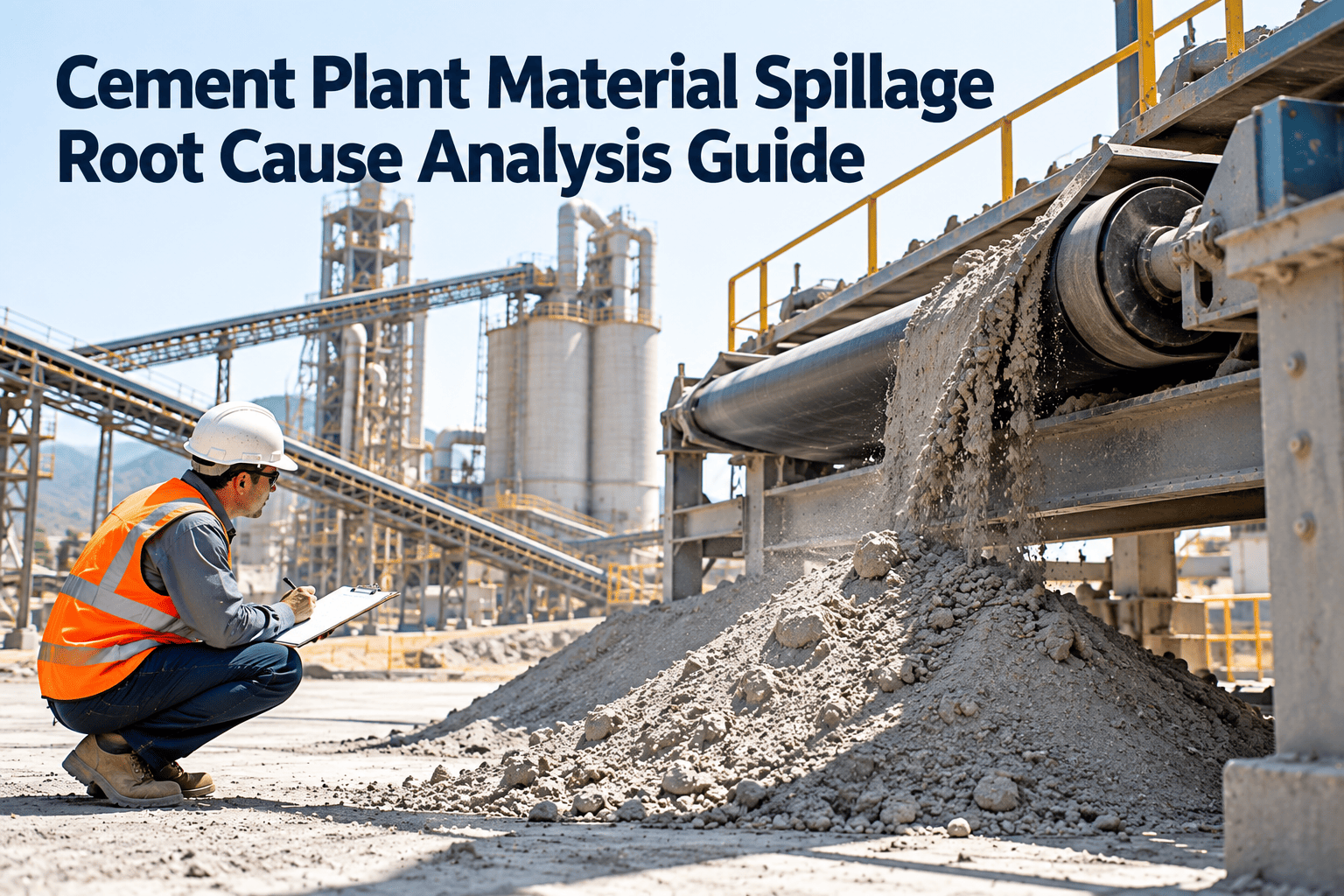
Walk the length of almost any cement plant conveyor gallery and you will find the same three or four transfer points buried in spilled clinker, raw meal, or fly ash, week after week, no matter how often the cleanup crew clears them. That repetition is the clue. Spillage that keeps reappearing at the same chute or skirt board is not a housekeeping failure — it is a maintenance signal that nobody has traced back to its actual mechanical cause.
Find the Chute That Keeps Spilling and Fix It for Good
Recurring conveyor spillage is almost always traceable to belt misalignment, worn skirt seals, failed scrapers, or overloaded chutes. OxMaint turns every cleanup event into a logged, photographed, root-cause-linked record so chronic spill points get eliminated instead of swept away.
Why Spillage Is Never Just About the Mess
Every kilogram of clinker dust or raw meal that escapes the belt is paid for twice: once as lost product, and again as labor to shovel it back or haul it away. A third, quieter cost follows close behind as spilled material buries idlers, abrades the belt edge, and accelerates the exact mechanical wear that caused the spill in the first place.
Left unmanaged, spillage compounds into safety exposure as well — slip and trip hazards near walkways, respirable dust above regulatory thresholds, and in enclosed galleries, a documented contributor to conveyor belt fires when friction meets accumulated fines.
The Four Mechanical Causes Behind Most Spillage
Nearly every chronic spill point in a cement material handling circuit traces back to one of four root causes, each with its own inspection signature.
Belt Misalignment at Loading Zones
Material lands off-center on the belt, overloading one skirt edge. Check tracking idlers and loading chute centerline alignment during every weekly round.
Worn or Missing Skirt Board Seals
Rubber skirting compresses and hardens over time, opening a gap at the load zone. Measure seal-to-belt contact pressure, not just visual presence.
Degraded Belt Scrapers
A scraper blade with inadequate contact leaves carryback on the return belt, which drops off along the entire return run and accumulates at the tail pulley.
Overloaded or Undersized Chutes
Transfer chutes sized for a lower tonnage than current throughput cause material to bounce and overshoot the belt centerline at every load.
Before and After: What a Root-Cause Fix Actually Changes
The difference between a plant that manages spillage reactively and one that eliminates it is rarely a bigger cleanup crew. It is whether the fix addresses the mechanical cause or just the symptom on the floor.
The Safety and Compliance Side of Chronic Spillage
Beyond lost material and belt wear, unmanaged spillage creates real exposure that shows up on inspection reports long before anyone connects it back to a chute liner or a skirt seal.
Accumulated dust around walkways and transfer points is a documented slip and fall hazard, and in enclosed galleries handling clinker or raw meal, settled fines also carry a combustible dust housekeeping obligation that inspectors check independently of general good order. A belt running against spilled material at the tail pulley generates friction heat that has been cited as a contributing factor in a meaningful share of conveyor fire incidents industry-wide.
None of these risks require a catastrophic event to matter. A near-miss near a spill point that never gets formally reported is often the clearest sign that the reporting process itself has too much friction, not that the plant has no problem worth reporting.
When Spillage Signals a Bigger Process Change
Not every spill point is a maintenance issue alone. A chute that ran clean for years and suddenly starts spilling after a throughput increase is often undersized for the new tonnage, not simply worn.
Reviewing production records alongside the spillage history helps separate mechanical wear from a genuine capacity mismatch, since a resized chute or an added impact bed solves a design problem that no amount of seal replacement will fix on its own.
Stop Cleaning the Same Chute Every Week
OxMaint links every spillage finding to the source asset, tracks corrective work orders to completion, and builds the history that shows reliability engineers exactly where to spend the next repair budget.
Inspection Frequency and Cleanup Cost Benchmarks
Across a mid-size plant running a dozen conveyors, structured inspection consistently outperforms reactive cleanup on both labor cost and belt life.
| Inspection Point | Frequency | What to Check |
|---|---|---|
| Belt tracking and loading zone alignment | Weekly | Centerline of load stream against belt centerline |
| Skirt board seal condition | Weekly | Contact pressure and wear along full seal length |
| Primary and secondary scraper blades | Weekly | Blade-to-belt contact and carryback on return run |
| Chute liner and impact bed condition | Monthly | Wear pattern, liner thickness, impact point deflection |
| Idler condition under transfer points | Monthly | Material buildup, bearing temperature, roll freedom |
| Full gallery spillage history review | Quarterly | Ranked report of chronic points against corrective actions taken |
Plants running structured weekly inspection programs typically spend four to six times less on labor and belt repairs than plants that clean up spillage only after it accumulates, since the underlying cause is closed before it compounds.
A Practical Spillage Elimination Checklist
Use this sequence when a chronic spill point is identified, rather than dispatching a cleanup crew alone.
- Photograph the spill location and note the shift, tonnage, and material type at the time.
- Check belt tracking and loading centerline alignment before assuming the seal is at fault.
- Measure skirt seal contact pressure across the full length, not just at the visible gap.
- Inspect scraper blade wear and carryback on the return belt at the same point.
- Log the finding against the specific asset so repeat events are visible in the history.
- Schedule the corrective repair and verify the fix during the next production run, not just at handover.
How OxMaint Supports a Spillage Elimination Program
OxMaint's mobile CMMS standardizes spillage inspection across every belt line and keeps the record tied to the asset, not to memory or a paper log that gets lost between shifts.
Mobile Inspection Checklists
Technicians log spillage findings with photos directly from the conveyor gallery, tagged to the exact chute or skirt seal asset.
Root Cause Linking
Every cleanup and repair record ties back to the source asset, building a searchable history of chronic spill points across the plant.
Preventive Maintenance Scheduling
Skirt seal, scraper blade, and idler replacement are scheduled ahead of failure instead of after a spill event triggers a reactive work order.
Ranked Reporting
Dashboards rank conveyors and transfer points by spillage frequency and labor cost, so budget goes to the highest-impact repair first.
Conveyor Spillage: Frequently Asked Questions
What is the most common cause of recurring conveyor spillage?
How can we tell if a spill point is a chute problem or a belt problem?
Why does spillage accelerate belt wear beyond the visible mess?
Does OxMaint help identify which conveyor spills most across the plant?
How do we get started tracking spillage at our plant?
Eliminate Chronic Spill Points Instead of Sweeping Them Up
A structured, root-cause-linked spillage program pays for itself in reduced cleanup labor, longer belt life, and fewer safety near-misses along the gallery.