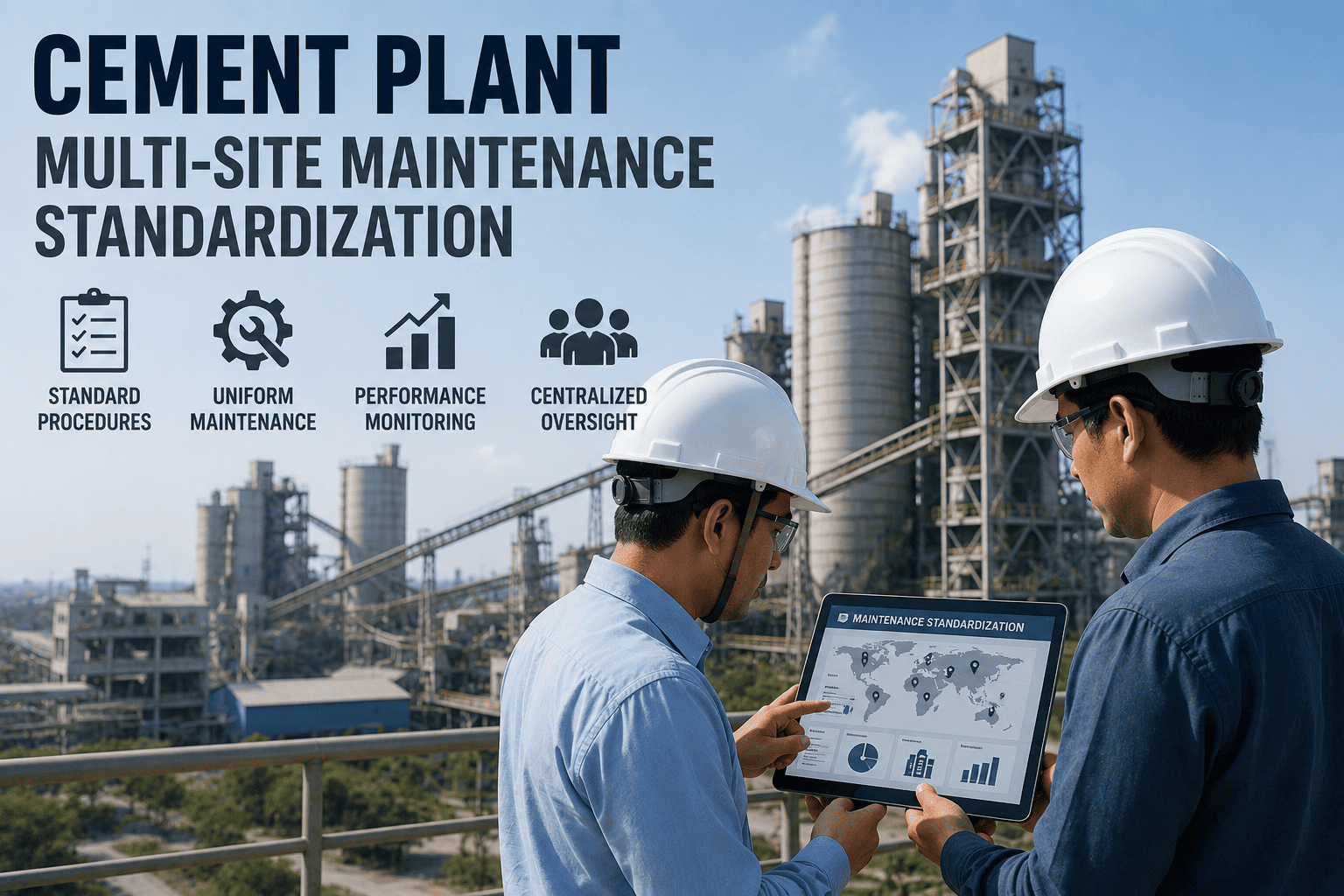
Running five cement plants often means running five different maintenance cultures — different PM intervals for the same VRM model, different inspection checklists, different definitions of "critical asset." Corporate reliability teams end up comparing KPIs that were never calculated the same way twice. Standardizing maintenance across sites isn't about forcing identical processes everywhere; it's about giving every plant the same structure to work within while keeping local flexibility. OxMaint is built for exactly that, and the patterns below come from cement groups that have already made the shift.
Multi-Site Cement Maintenance
One Maintenance Standard, Every Plant in the Group
Standardize PM plans, KPIs, inspections, and dashboards across cement plants without losing what makes each site unique.
The Hidden Cost of Inconsistent Maintenance Across Sites
When each plant builds its own PM program independently, corporate loses the ability to compare performance, share best practices, or move technicians between sites without a steep learning curve.
Same equipment, different PMs
Plant A greases a kiln support roller weekly. Plant B does it monthly with the same OEM equipment. Neither side knows which approach is actually correct.
Unreliable group-level KPIs
If MTBF is calculated differently at every site, comparing plant performance at the quarterly review becomes a guessing exercise, not a decision tool.
Slow technician transfers
A skilled technician moved between plants has to relearn the local system instead of contributing from day one.
Four Pillars of a Standardized Maintenance Program
1
Shared asset taxonomy
Every kiln, mill, and fan across the group is classified the same way, so a "critical" tag means the same thing whether you're in Rajasthan or Tamil Nadu.
2
Common PM templates with local tuning
A master PM template per equipment type is shared group-wide, with each site allowed to adjust intervals based on local duty cycles and history.
3
One KPI definition, many dashboards
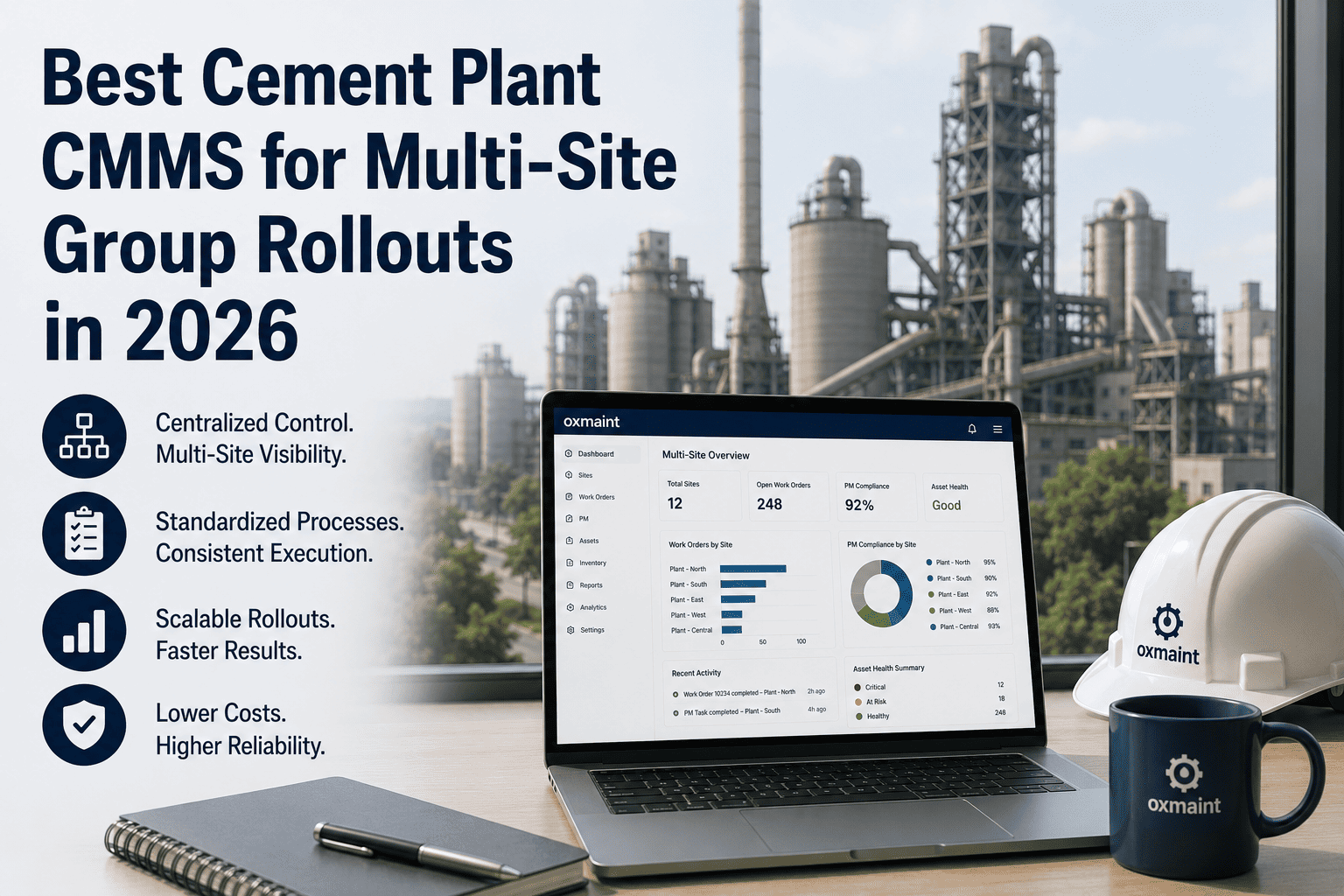
MTBF, MTTR, and PM compliance are calculated identically at every site, then rolled up into a single comparable group dashboard.
4
Centralized visibility, local ownership
Corporate gets a live view across all plants while site managers retain full control over day-to-day scheduling and execution.
See how OxMaint rolls out a shared maintenance structure across every plant in a cement group — without forcing a one-size-fits-all process on sites with different equipment ages and duty cycles.
How a Group-Wide Rollout Typically Plays Out
Standardization rarely succeeds as a single big-bang rollout. Cement groups that get it right move in phases, building trust at each step before expanding scope.
Phase 1
Pilot at one plantStandard asset hierarchy and PM templates are built and tested at the most cooperative site first, surfacing gaps before wider rollout.
Phase 2
Expand to similar plantsSites with comparable equipment adopt the same templates with minor interval adjustments based on their own failure history.
Phase 3
Group dashboard goes liveCorporate reliability teams get a single comparable view of PM compliance, downtime, and cost across every site in the rollout.
Phase 4
Continuous benchmarkingBest-performing sites become the new baseline, and underperforming plants get targeted support based on what the data actually shows.
Who Owns What in a Standardized Program
Standardization fails fast when roles are vague. A clear split between corporate and site-level responsibility keeps the program moving without turning every decision into a committee meeting.
Corporate Reliability Team
Owns the master asset taxonomy, KPI definitions, and group-wide dashboard. Sets the floor that every plant must meet.
Plant Maintenance Manager
Owns local scheduling, technician assignment, and interval tuning within the shared template structure.
Site Technicians
Execute and close work orders using the same checklist format regardless of which plant they're working at.
What Usually Derails a Standardization Effort
Risk 1
Rolling out to every plant simultaneously instead of proving the model at one site first
Risk 2
Letting site managers opt out of KPI definitions, which quietly breaks group-level comparison again
Risk 3
Treating the rollout as a one-time IT project rather than an ongoing process with ownership
Frequently Asked Questions
Will standardization force every plant to follow identical PM intervals?
No. The goal is a shared structure, not identical numbers. Each plant keeps the ability to adjust intervals based on local duty cycles, raw material variation, and equipment age, while still reporting against the same KPI definitions group-wide.
OxMaint supports this local flexibility by design.
How long does a group-wide rollout usually take?
Most cement groups complete a pilot plant in four to six weeks, then expand to additional sites over the following two to three months depending on how many plants are involved and how different their existing systems are.
What happens to the data each plant already has in spreadsheets?
Historical work order and PM data is typically migrated during the pilot phase so plants don't lose years of failure history.
Book a session to walk through what a migration from your current system would look like.
Can site managers still customize their own dashboards?
Yes. Local dashboards can be tailored to what each plant manager needs day to day, while the underlying data still rolls up consistently into the group-level view that corporate uses for cross-plant comparison.
Does this work for plants with very different ages of equipment?
Yes, this is one of the most common scenarios. A shared asset taxonomy and KPI definition still applies even when one plant runs decade-old kilns and another runs a recently commissioned line, since the comparison is on performance, not equipment vintage.
Bring Every Plant Onto One Maintenance Standard
Give corporate a single source of truth and give every site manager the local flexibility they need to run their own plant well.