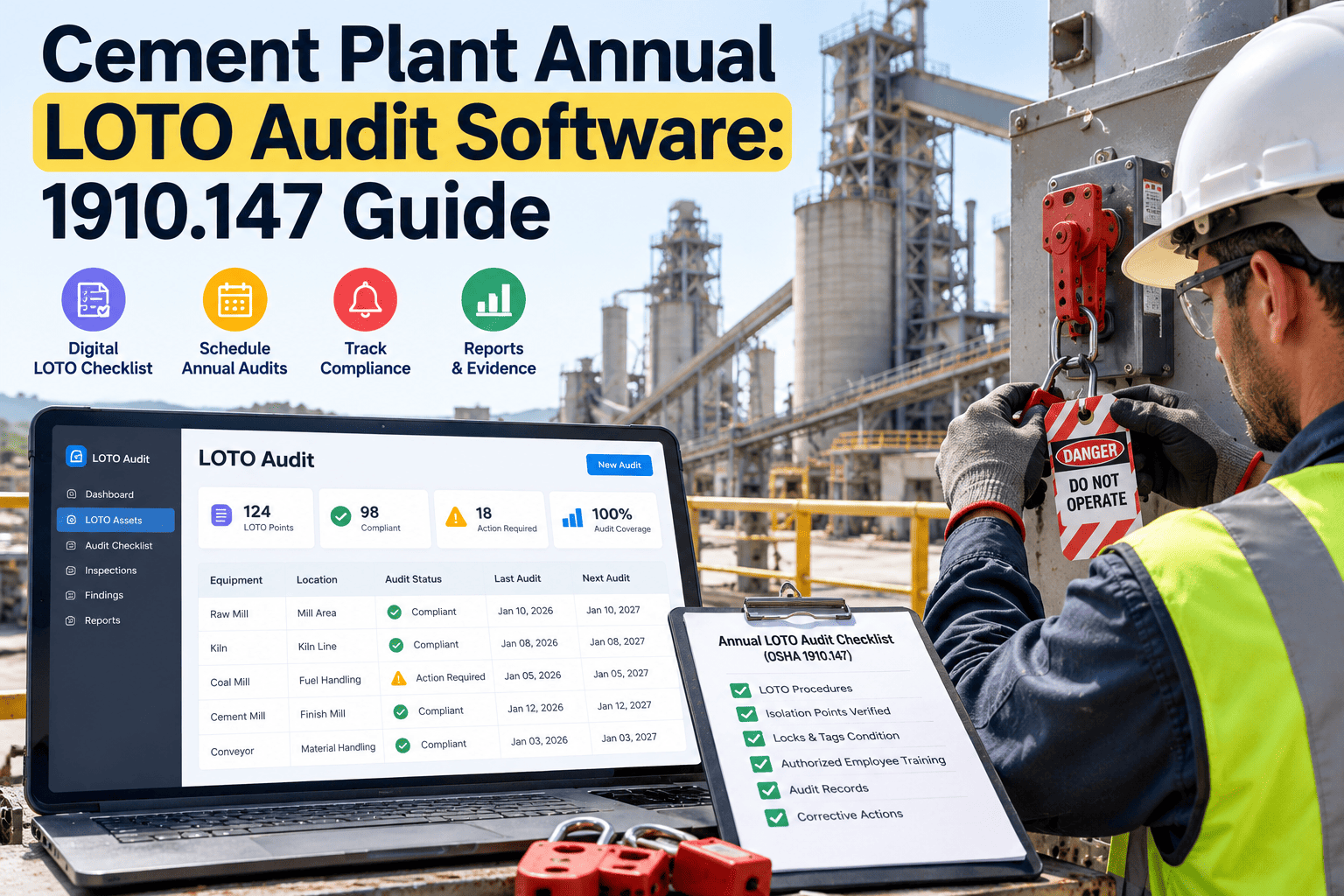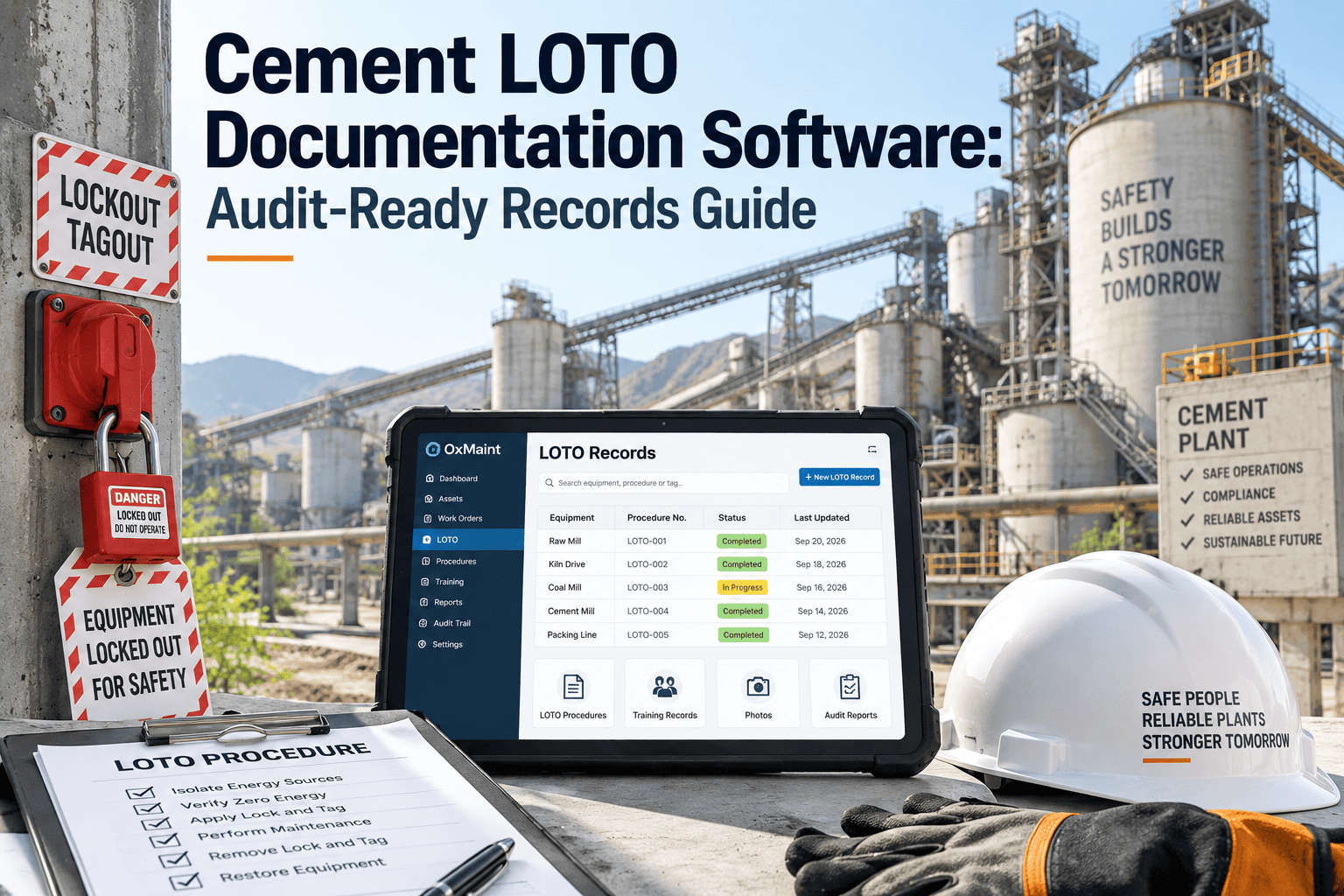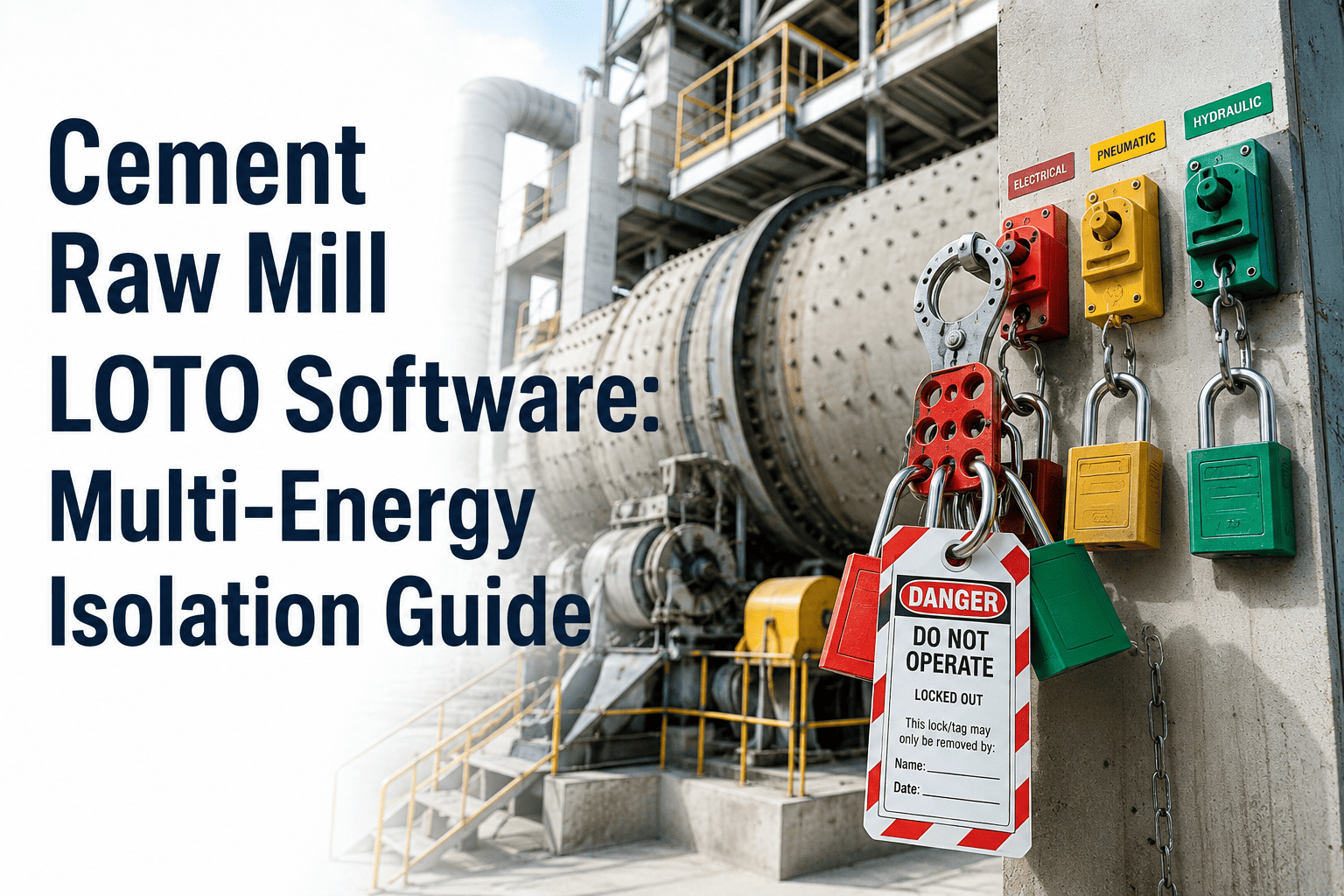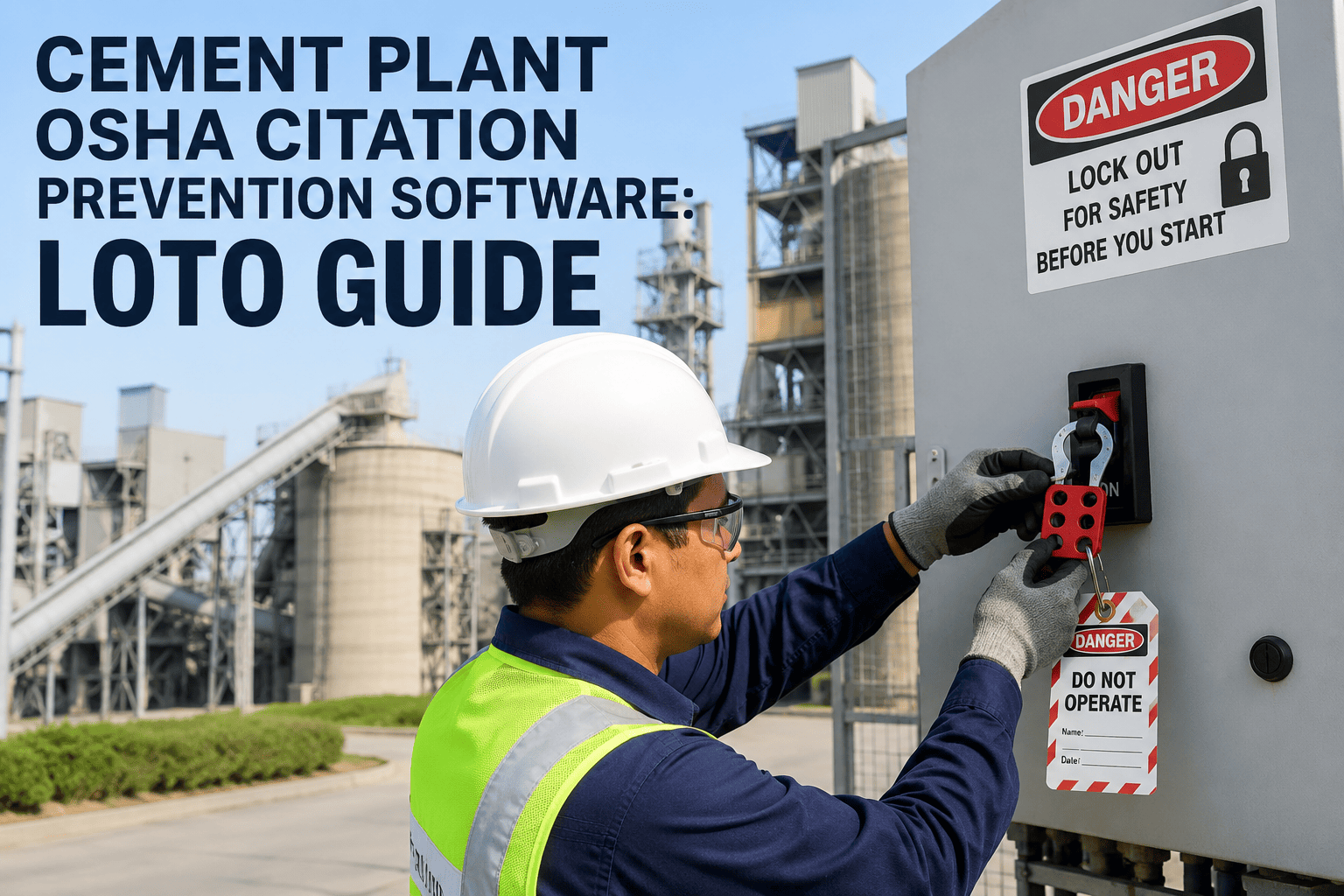
Lockout/tagout failures are the single most common reason cement plants end up on an OSHA citation report, and the paperwork gap is almost always the same one: a generic energy control policy with no machine-specific procedure for the kiln drive, raw mill, or crusher that actually got serviced. OSHA's Control of Hazardous Energy standard, 29 CFR 1910.147, sits inside the agency's Top 10 most-cited list year after year, with thousands of citations issued annually and serious penalties reaching into the tens of thousands of dollars per violation, per machine. Cement plants are especially exposed because a single facility can carry hundreds of isolation points across kilns, mills, coolers, and conveyors, and every one of them needs its own documented procedure, its own annual inspection record, and its own trained authorized-employee list. When an inspector walks in, they are not looking for good intentions — they are looking for dated, signed, machine-specific proof. This guide breaks down exactly which LOTO sub-clauses OSHA cites most, what each citation costs, and how a digital maintenance system turns undocumented lockout work into audit-ready evidence before the inspector ever asks. If you want to see how that evidence trail builds itself automatically, you can start a free trial and import your plant's isolation points today.
OSHA CITATION PREVENTION · CEMENT PLANT LOTO
Is your kiln's lockout file the reason your plant gets a citation this year?
Lockout/Tagout, 29 CFR 1910.147, has ranked inside OSHA's Top 10 most-cited standards for over a decade, and it is the most-cited standard tied directly to maintenance activity. Cement plants run hundreds of isolation points across kilns, raw mills, coolers, crushers, and conveyors — and every single one needs a machine-specific procedure, a signed periodic inspection, and a trained authorized-employee record an inspector can pull on demand.
WHY CEMENT PLANTS GET CAUGHT
A LOTO citation is almost never one machine — it is every machine like it
OSHA inspectors do not stop at the equipment that triggered the visit. Once a lockout gap is found on one conveyor or one mill, the inspection routinely widens to every similar asset on site, because a missing procedure on one machine usually means the same procedure is missing on all of its siblings across the plant.
One inspection, many citations
A plant with 40 uncontrolled isolation points can face 40 separate serious citations from a single walkthrough, because OSHA cites per machine, not per finding.
Penalties compound daily
Failure to fix a cited gap by the abatement deadline adds a further daily penalty on top of the original citation, so an unresolved finding keeps getting more expensive.
Repeat findings escalate fast
A violation OSHA has cited before at the same or a related facility is treated as repeat, moving the exposure from a few thousand dollars to over $165,000 per machine.
Fatalities carry criminal exposure
A willful violation connected to a worker death can lead to criminal referral, not just a financial penalty — a risk no maintenance budget line item can absorb.
THE FOUR GAPS OSHA CITES MOST
Where cement plant LOTO programs actually fall apart
The sub-clauses of 1910.147 that draw the most citations are not obscure technicalities — they are the everyday paperwork gaps that build up when lockout is treated as a habit instead of a documented, machine-specific record.
No machine-specific procedure — 1910.147(c)(4)
The most-cited sub-clause of the entire standard. A generic plant-wide lockout policy does not satisfy OSHA if the raw mill, kiln drive, and bucket elevator each have different energy sources, isolation points, and sequencing steps that are never written down individually.
Undocumented training — 1910.147(c)(7)
Authorized employees must be trained on every procedure they perform lockout under, and that training has to be refreshed whenever equipment or process changes. No sign-off record is treated the same as no training at all.
Skipped periodic inspection — 1910.147(c)(6)
Each energy control procedure requires an annual inspection, performed by someone other than the person using the procedure, with deviations documented and corrected. Plants that skip this step have no defense once the file is requested.
Incomplete application steps — 1910.147(c)(5)
Notification, shutdown, isolation, lockout device application, stored-energy release, and verification of zero energy state must all happen in sequence. Skipping the verification step is one of the most common findings during a live audit.
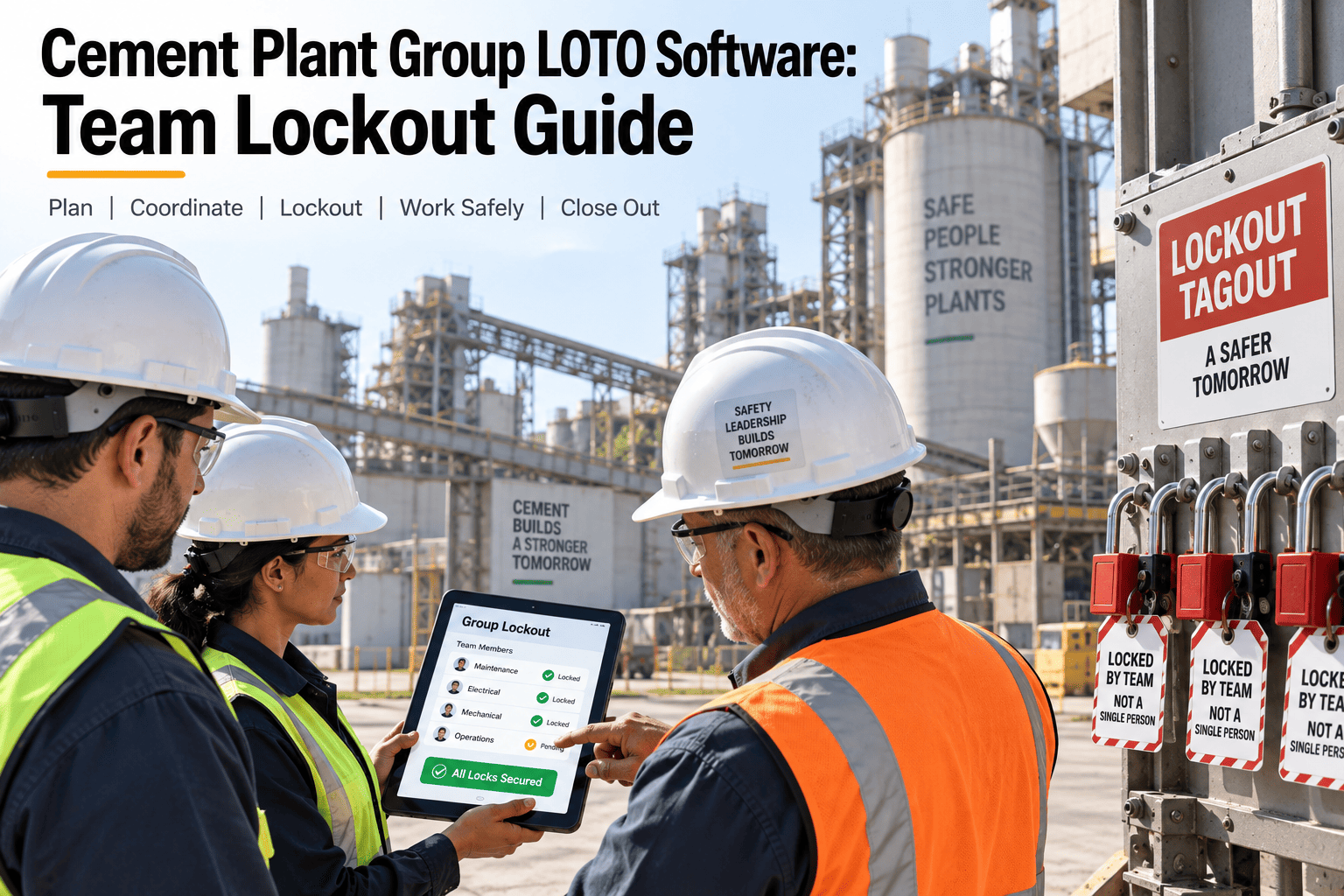
No group lockout procedure
Kiln shutdowns and mill overhauls routinely involve multiple crews working on the same equipment simultaneously. Without a documented group lockout procedure, individual crew locks disappear and unexpected re-energization risk climbs sharply.
No contractor LOTO integration
Outside crews servicing crushers or conveyors during a shutdown window need to be integrated into the plant's own energy control program, with locks and verification tracked exactly the same way as an internal technician's.
WORKED EXAMPLE · PENALTY MATH
What one undocumented kiln isolation point can actually cost
Penalty exposure does not move in a straight line — it climbs a curve, and a documentation gap that looks minor on paper can turn into six figures once repeat and willful classifications are applied.
CITATION EXPOSURE FORMULA
E = N × P × M
Where N = number of isolation points without a documented procedure, P = penalty class applied per machine, and M = the multiplier OSHA applies once a violation is reclassified repeat or willful. Run 25 undocumented isolation points across a kiln and raw mill line at the serious penalty rate, and the exposure clears $400,000 before a single repeat classification is even applied.
25 machines × $16,550 serious rate ≈ $413,750 exposure
| Documentation State | Citation Risk | Penalty Range | Likely Classification |
|---|---|---|---|
| Fully documented, dated, signed | Low | None expected | Compliant |
| Generic policy, no machine-specific steps | High | Up to $16,550 per machine | Serious |
| Same gap found in a prior inspection | Severe | Up to $165,514 per machine | Repeat |
| Gap tied to a near-miss or injury | Critical | Up to $165,514 + criminal referral risk | Willful |
Stop finding out about LOTO gaps during an OSHA visit
Every isolation point in your plant should already have a dated, signed, machine-specific record before an inspector ever asks to see one. That is a documentation problem, and it has a documentation fix.
THE AUDIT-READY CADENCE
The LOTO record cycle that survives a surprise inspection
A defensible LOTO program is not a binder pulled together once a year — it is a rolling cycle of verification, training, and inspection that keeps every isolation point current between audits.
Lock and verification check at shift handover
Every active lockout is verified against the machine-specific procedure and logged, so a partial or expired lock never carries silently into the next shift.
Authorized employee refresher and sign-off
Technicians re-confirm they know the current procedure for the equipment they lock out, and the sign-off is timestamped so training gaps never sit undocumented for months.
Periodic inspection on a rotating asset schedule
A rotating quarter of the plant's isolation points gets a full 1910.147(c)(6) inspection by someone outside the crew that uses the procedure, closing the standard's most commonly missed requirement.
Full procedure review during the shutdown window
Every machine-specific procedure is reviewed against current equipment configuration, contractor scope for the shutdown is folded into the group lockout plan, and outdated procedures are retired.
HOW OXMAINT CLOSES THE GAP
Turn undocumented lockout work into an OSHA-ready record automatically
The difference between a plant that passes an inspection and one that gets cited is almost never the safety intent of the technicians on the floor — it is whether the paperwork behind their work actually exists when it is asked for.
Isolation point asset mapping
Every kiln, mill, crusher, and conveyor gets its own asset record with linked energy sources and isolation points, so a procedure maps to an exact machine, not a general area.
Digital permit-to-work and lockout log
Technicians open a digital lockout permit against the machine-specific procedure, complete the verification steps in sequence, and the record timestamps itself automatically.
Periodic inspection scheduling
Annual inspections under 1910.147(c)(6) are auto-scheduled per procedure and assigned to a qualified person outside the crew, closing the sub-clause OSHA cites most after documentation.
Training record tracking per employee
Authorized and affected employee training is tracked per procedure and per person, with automatic flags when a process change should trigger a refresher.
Group and contractor lockout support
Shutdown-scale group lockout tracks every crew and every contractor lock against the same equipment record, so nothing gets missed when dozens of workers touch one machine.
Exportable audit trail
Every lockout, inspection, and training record is timestamped and exportable in one report, so when an inspector asks for LOTO evidence, it is minutes away, not a scramble through binders.
We had generic lockout tags but no machine-specific procedures, and it showed the moment an inspector asked for our kiln drive isolation record. After digitizing LOTO in OxMaint — asset-level procedures, scheduled periodic inspections, and a training log we can actually export — our last audit closed with zero findings.
FREQUENTLY ASKED
Cement plant LOTO citations — straight answers
Why is lockout/tagout the standard cement plants get cited under most?
Cement plants run hundreds of isolation points across kilns, mills, and conveyors, and 1910.147 requires a documented, machine-specific procedure for every one. A generic plant-wide policy does not meet that bar, which is why documentation gaps drive most citations. Book a demo to see how the gap gets closed.
How much can a single LOTO citation actually cost?
A serious citation can reach $16,550 per machine, and a repeat or willful citation can reach $165,514 per machine, with an added daily penalty for any gap left unfixed past the abatement deadline. A plant with dozens of undocumented isolation points can face six-figure exposure from one inspection.
What is the single most common LOTO documentation gap?
Missing machine-specific energy control procedures under 1910.147(c)(4). Most cited plants have a general lockout policy but no written procedure identifying the exact energy sources and isolation points for each individual machine.
How often does OSHA require periodic inspection of LOTO procedures?
At least annually, performed by someone other than the employee who uses the procedure, with any deviations documented and corrected before the procedure is used again. Skipped inspections are one of the most frequently cited sub-clauses.
Can a CMMS actually reduce OSHA citation risk?
Yes — by generating machine-specific procedures per asset, scheduling periodic inspections automatically, tracking training per employee, and exporting a timestamped audit trail on demand. Start a free trial to map your plant's isolation points this week.
Get your plant's LOTO program audit-ready before the next inspection
Map every isolation point, schedule every periodic inspection, and export a complete audit trail in one place — before an inspector ever has to ask for it.