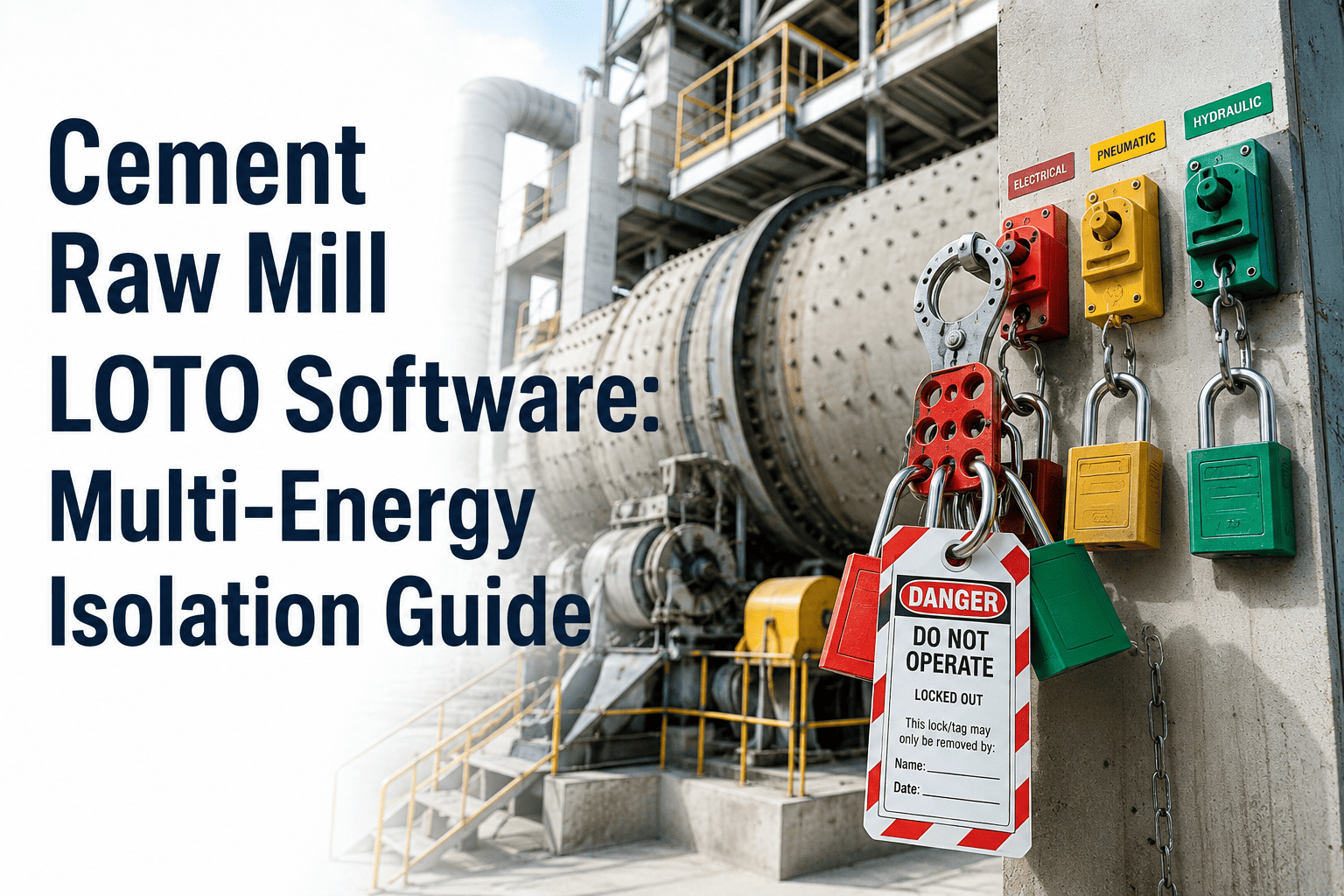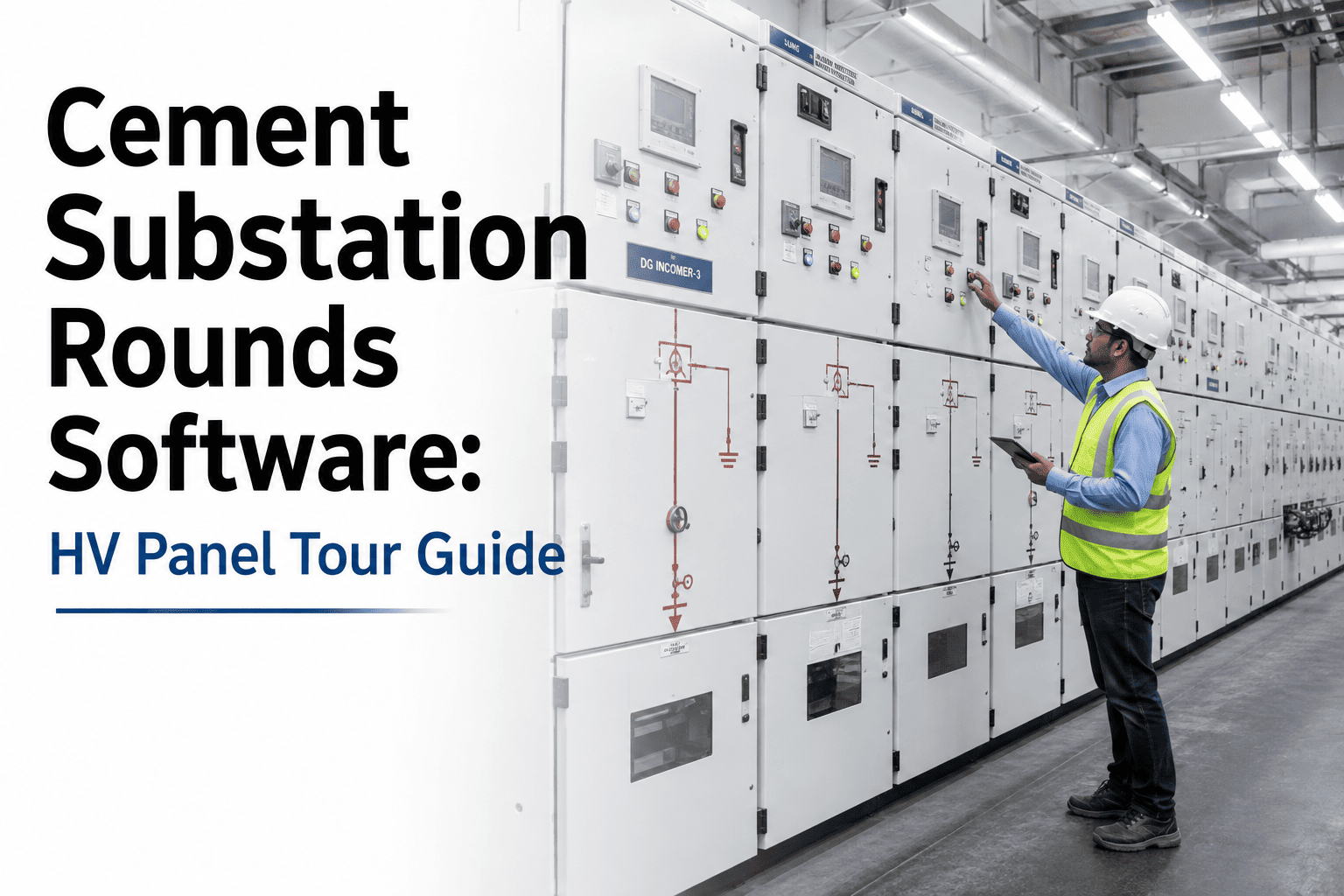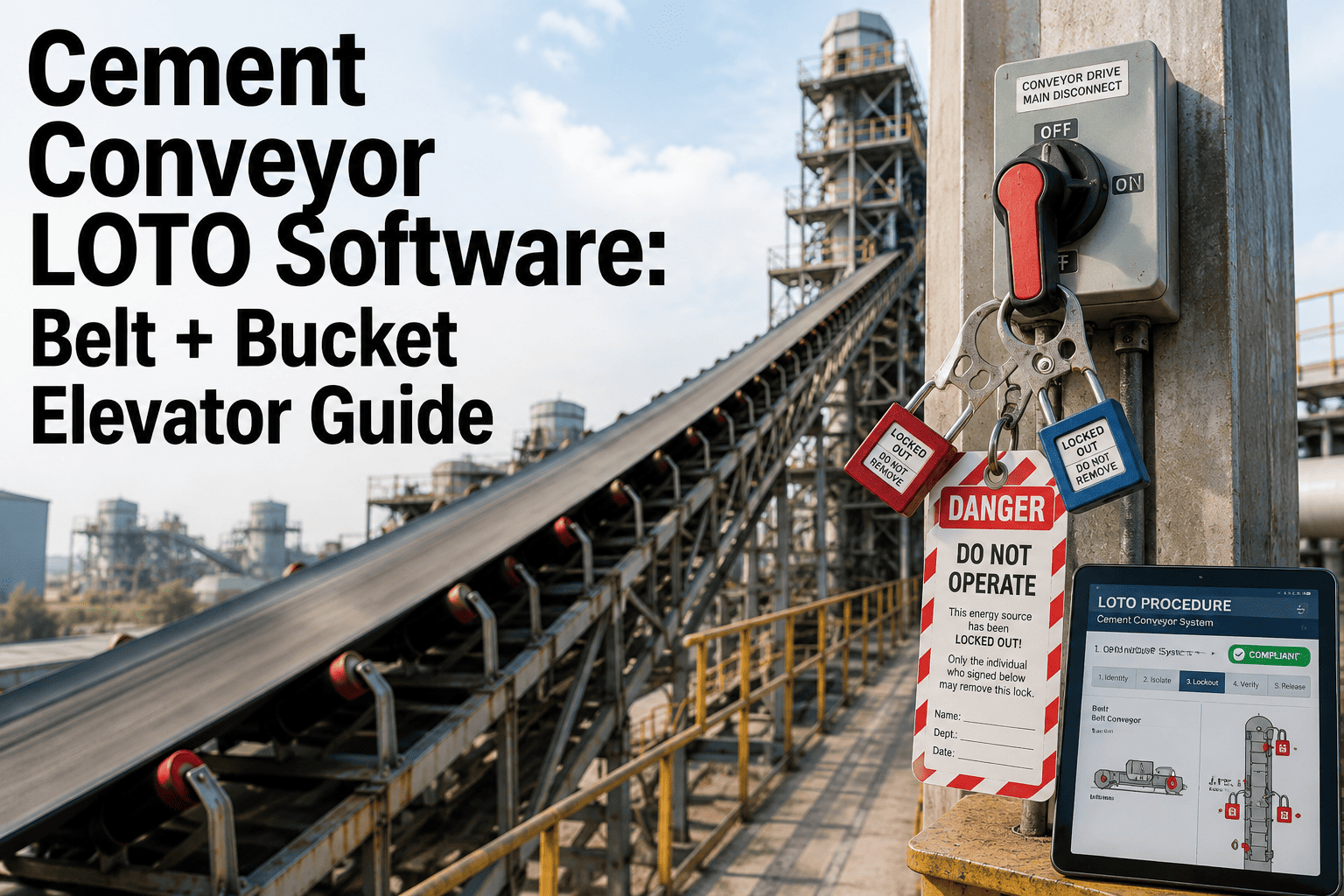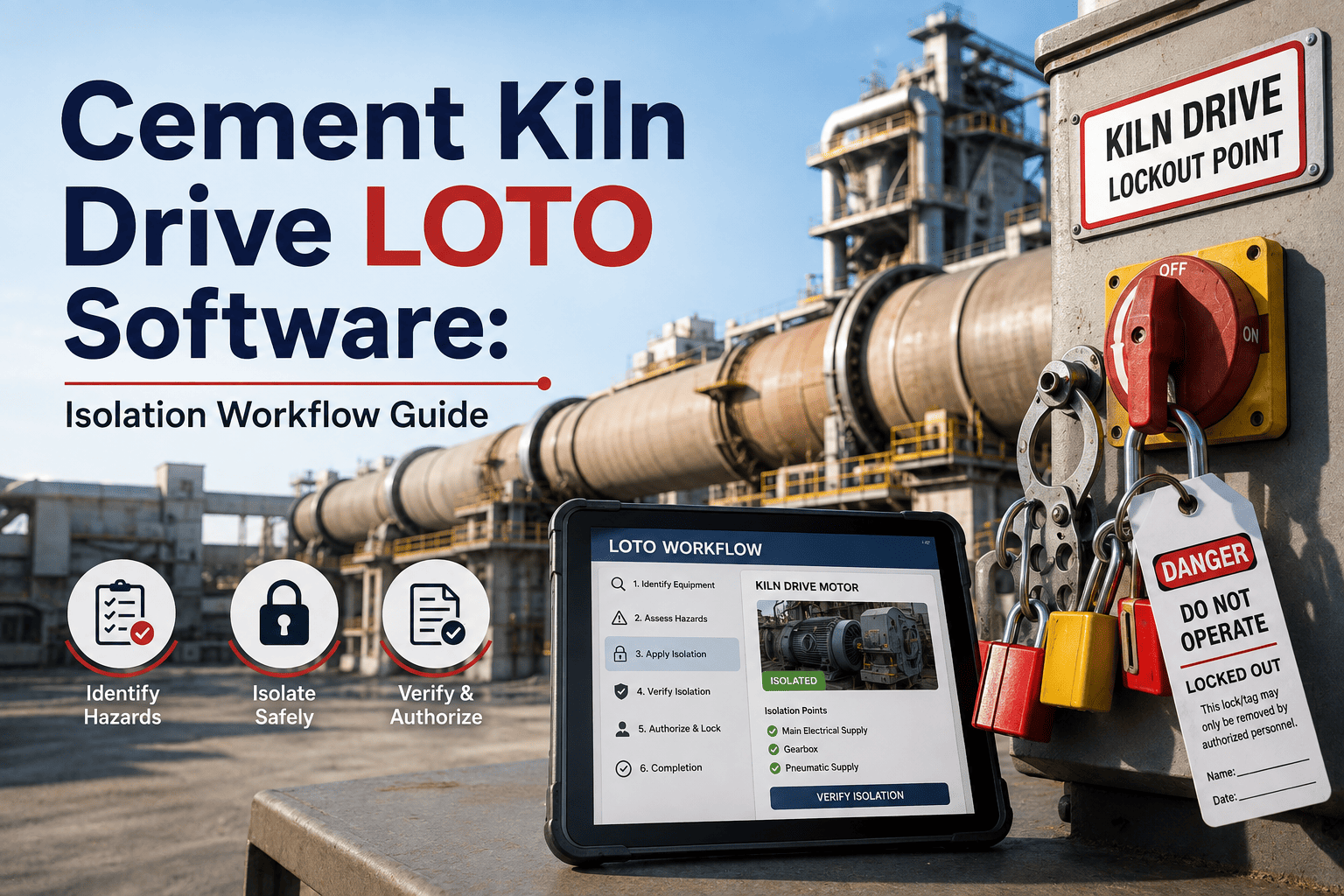
A cement plant's electrical backbone runs through 11kV switchgear, motor control centers, and substation transformers that keep kilns, raw mills, and coal grinding circuits running around the clock. When a technician opens an MCC bucket or steps into a substation cubicle without verified isolation, the incident energy involved can exceed the protection limit of any arc-rated suit on the shelf. Most cement plants still track lockout points, permits, and isolation verification on paper registers that nobody cross-checks in real time, and that gap is exactly how a missed isolation point turns into a fatality investigation. OxMaint's cement plant LOTO software digitizes every high-voltage isolation step, from MCC bucket to 11kV switchgear to substation transformer, so verification, grounding, and permit sign-off happen on a phone before a single hand touches a panel. Book a demo to see how your plant's HV isolation records look once they are enforced instead of assumed.
The Voltage Levels You're Actually Isolating
A single cement plant carries four distinct voltage classes on the same site, often within a hundred metres of each other. Instrumentation loops sit next to 11kV switchgear rooms, and a technician moving between a control panel and a kiln drive substation is moving between hazard categories that demand completely different isolation, testing, and PPE decisions. Treating them as one generic "electrical LOTO" procedure is where plants lose track of what actually needs to happen at each point. A crusher feeder and a main incoming substation breaker share the word "electrical" and almost nothing else — different fault current, different arc flash boundary, and a very different consequence if the isolation step gets skipped.
The 6-Step HV Isolation Sequence
Every credible high-voltage isolation procedure follows the same underlying logic, whether it is written on paper or enforced by software: find every energy source, tell everyone affected, physically isolate, lock and tag each point, prove the equipment is dead, then issue the permit. The difference between a plant with zero incidents and one with a near-miss file is not the sequence — it is whether every step actually gets verified, recorded, and checked before the next one starts. On a kiln drive substation shutdown, that sequence can involve a dozen isolation points across three separate panels, and a single one left unverified is enough to undo everything that came before it.
Isolation Points by HV Equipment Type
An 11kV switchgear panel does not isolate the same way a kiln drive motor does, and a substation transformer carries stored energy risks that an MCC bucket never sees. Below is how the primary isolation points, stored energy, and verification requirements differ across the equipment a cement plant electrical crew touches every week. Written procedures that don't distinguish between these five categories tend to default to the least demanding one, which is precisely the wrong direction for a crew about to work on a kiln drive HV motor or a live substation transformer.
| Equipment | Voltage Class | Primary Isolation Points | Stored Energy Risk | Verification Required |
|---|---|---|---|---|
| MCC Bucket — Mill/Fan Feeder | 415V – 690V | Feeder breaker, bus isolator, control fuse | Capacitor discharge, motor backspin | Voltage test plus zero-speed check |
| 11kV Switchgear Panel | 11kV | Circuit breaker racked out, isolator, earth switch | Trapped charge on cable, induced voltage | Rated HV tester, earth switch closed |
| Substation Transformer | 11kV / 33kV | HV isolator, LV breaker, neutral earth link | Residual magnetism, oil temperature | Both-side isolation, portable earths |
| Kiln Main Drive HV Motor | 6.6kV / 11kV | Motor breaker, VFD isolator, brake circuit | Rotational inertia, DC link capacitors | Zero-RPM confirmation, capacitor bleed |
| Cable Feeder / RMU | 11kV | Ring main unit switch, cable earth switch | Charged cable capacitance | Earth switch engaged, tested both cores |
We used to keep our HV switchgear lockout log in a hardbound register in the substation room. Nobody could tell you, without walking over and checking, whether a panel that had been locked out on the night shift was still locked out three shifts later. Since we moved isolation and permit sign-off onto OxMaint, every lock, every voltage test, and every permit closure is timestamped against the asset. Our internal safety audit went from finding gaps every quarter to finding none.Head of Electrical Maintenance, Integrated Cement Plant
Four Ways Paper LOTO Fails on HV Panels
Paper-based lockout procedures do not fail because people are careless. They fail because paper cannot enforce anything — it can only record what someone claims happened. On high-voltage equipment, where the margin for error is measured in milliseconds and thousands of degrees, that gap between what was written and what was actually verified is where incidents come from. Each of the four failure modes below shows up again and again in cement plant incident investigations, and each one is preventable once a system, rather than a form, is responsible for enforcing the sequence.
Why HV LOTO Programs Break Down During Shutdowns
Most HV LOTO failures don't happen on a normal Tuesday. They happen during a planned kiln shutdown or an annual substation overhaul, when a dozen isolation activities are running in parallel, contractor crews are on site alongside in-house electricians, and the pressure to get the line back up compresses every step in the sequence. That is exactly when a paper register stops working — nobody has time to walk to the substation room, find the right page, and cross-check who has locked what. A digital system that shows every open isolation point, every outstanding lock, and every permit status on one screen is what keeps a 48-hour shutdown from turning into the moment your electrical safety program actually gets tested.
The same pressure applies to smaller, more frequent jobs. A mill motor trips, maintenance is called to check the MCC feeder, and the temptation is to skip a step because "it's a quick check." High-voltage equipment does not distinguish between a quick check and a scheduled overhaul — the isolation, the lock, and the verification either happened or they didn't. Building a program where the software enforces the sequence regardless of how urgent the job feels is what turns a written policy into something crews actually follow under time pressure.
What Digital HV LOTO Connects To
A digital lockout system earns its place only if it plugs into the systems your electrical team already relies on. OxMaint links isolation procedures directly to the asset data, drawings, and study results that would otherwise sit in a filing cabinet or a separate spreadsheet no one checks before issuing a permit. None of these connections require ripping out the systems your team already trusts — OxMaint sits on top of your existing single-line diagrams, arc flash study, and control system data instead of asking you to rebuild them.