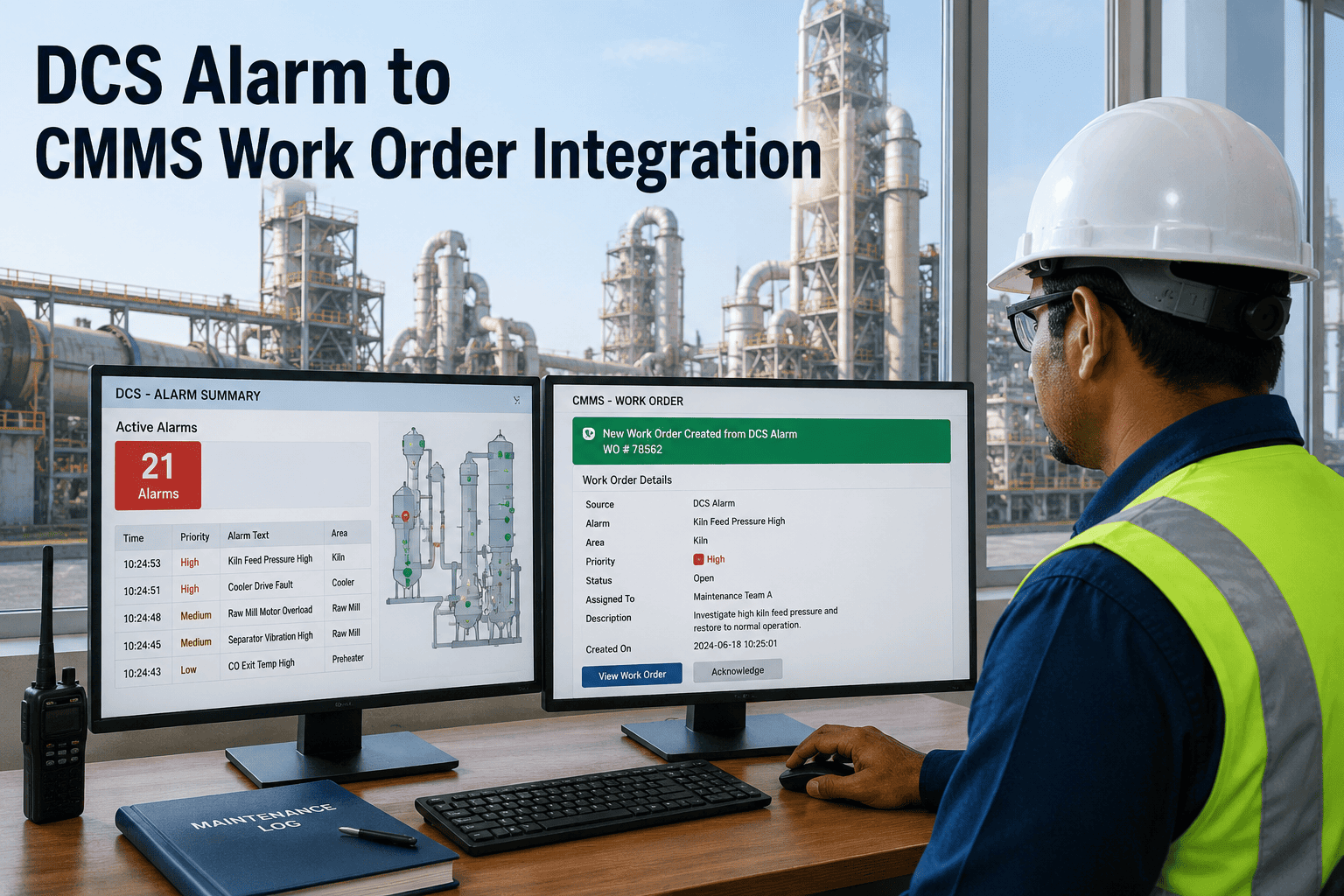
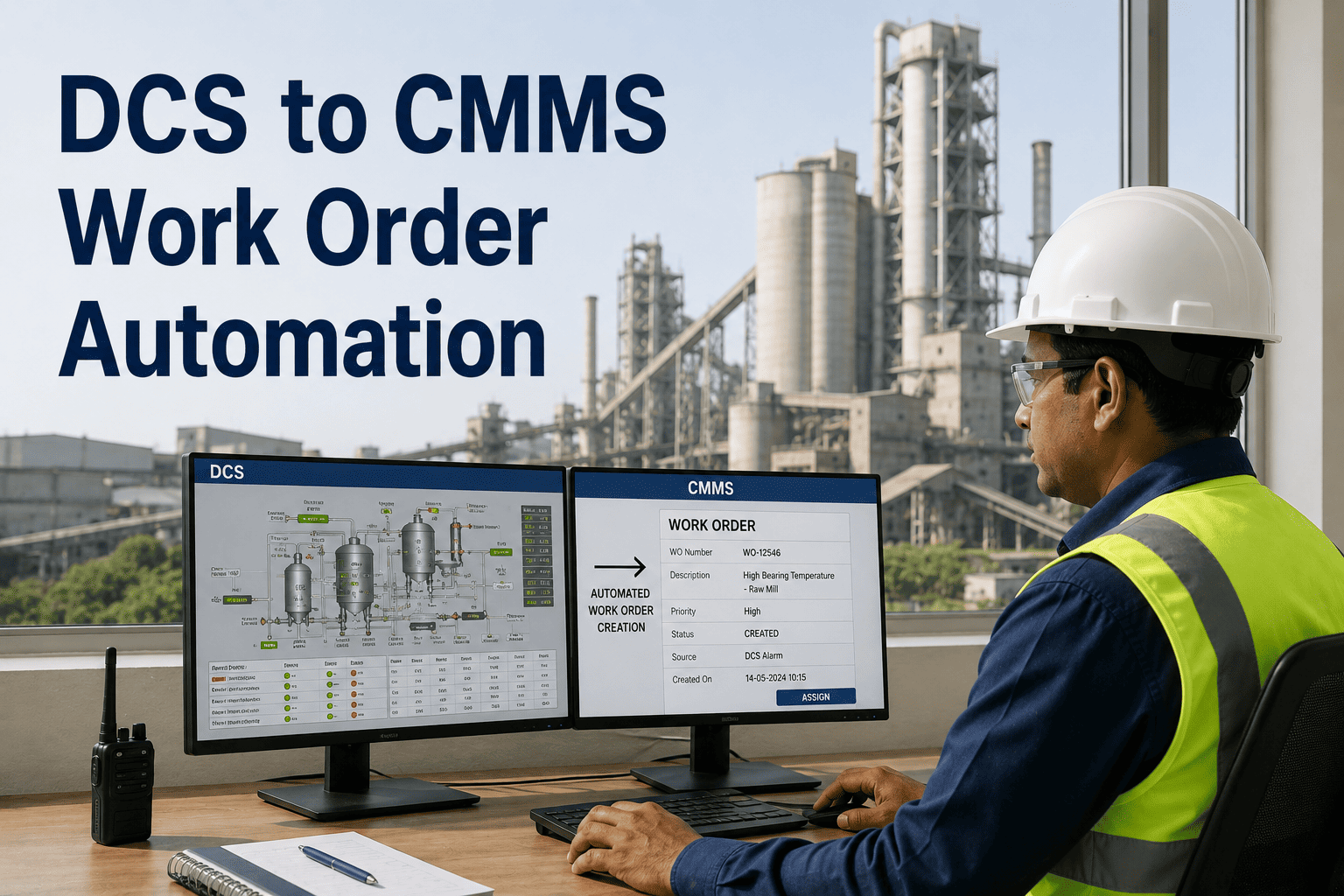
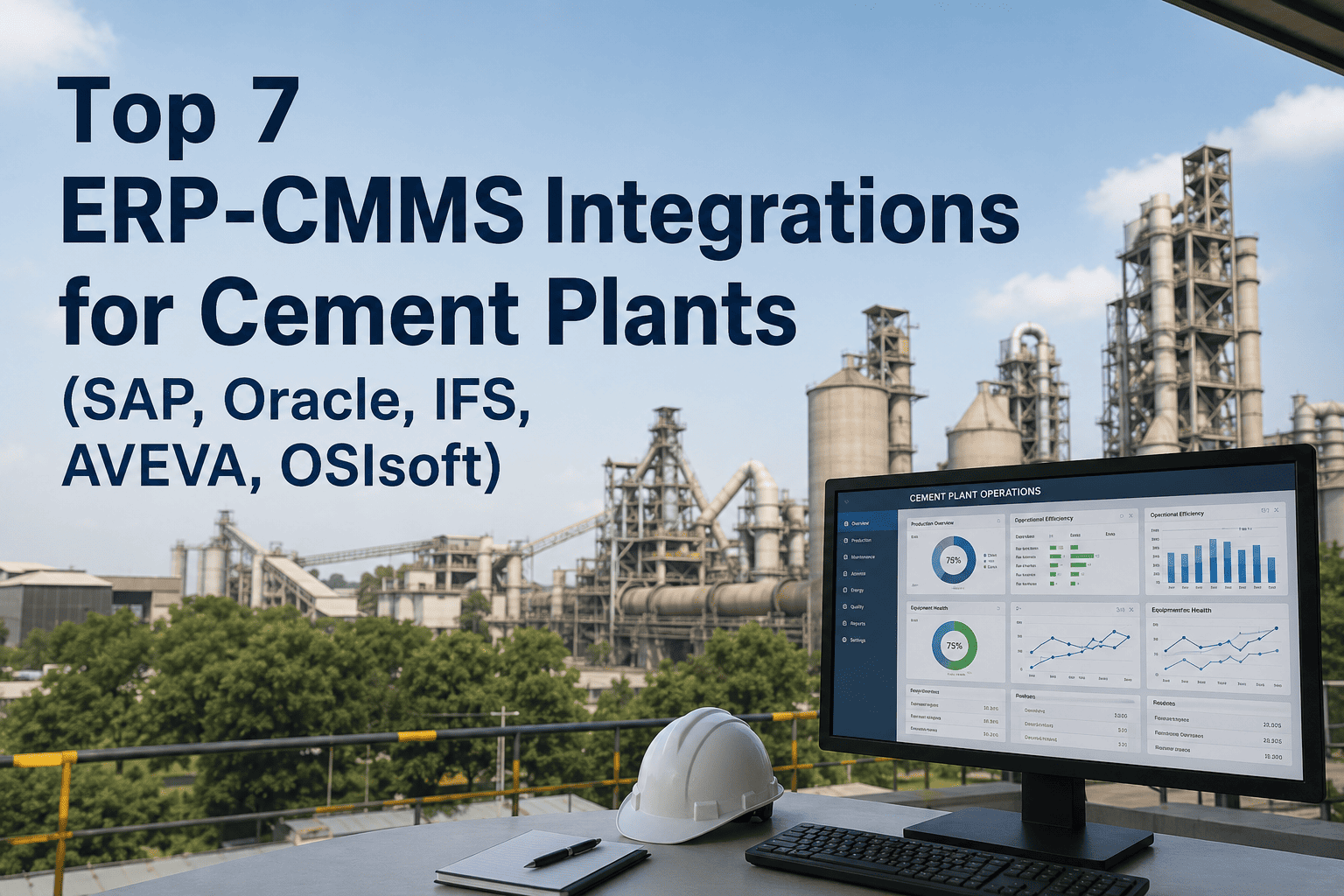
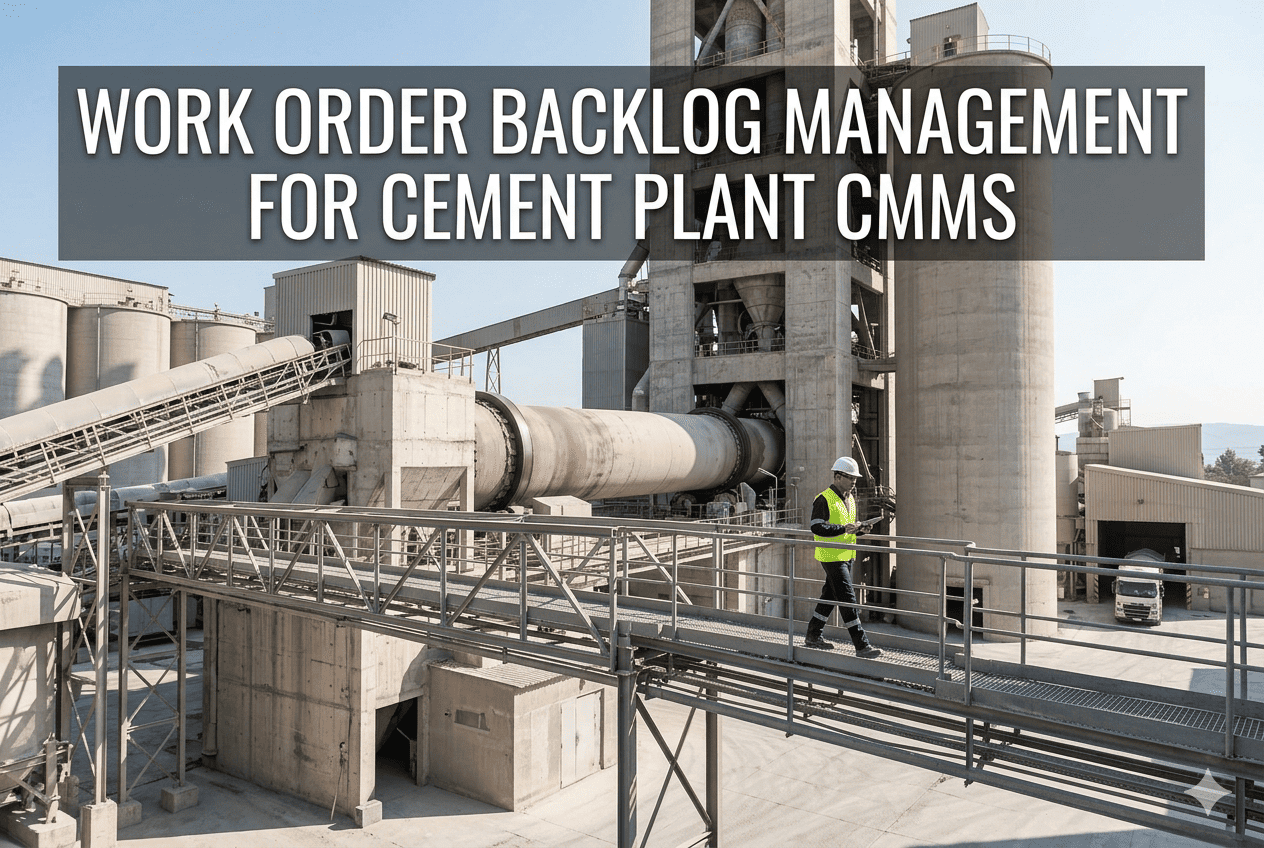
For cement manufacturers running SAP PM or Oracle EAM as enterprise systems, the question is not whether to use a dedicated maintenance platform — it is how to make both systems work together without duplicating data or creating competing records. Oxmaint's ERP integration layer synchronizes work orders, equipment master records, and MRO inventory between your ERP and the plant-floor CMMS, so reliability engineers get the operational depth they need while finance and procurement keep their single system of record. This guide covers every integration point in detail.
ERP Integration · Cement Industry
SAP PM and Oracle EAM Integration With CMMS
Work order sync, equipment master alignment, MRO inventory flow, and data architecture decisions — the complete integration guide for cement plant operations teams.
$890K
Average annual savings from eliminating duplicate data entry between ERP and CMMS at a multi-kiln cement plant
4.2 Hrs
Reduction in work order processing time when ERP and CMMS are bidirectionally integrated
The Integration Problem
Why Cement Plants Run Two Systems — and What That Costs
SAP PM and Oracle EAM are powerful enterprise platforms designed for financial control, procurement, and reporting. They are not designed for the operational reality of a cement plant maintenance team — mobile work order access in a dusty environment, real-time vibration data attachment, technician-level procedure walkthroughs, and sensor-triggered work order creation. Plants that run only SAP PM often find that technicians bypass the system entirely, logging work on paper. Plants that run only a field-facing CMMS lose visibility into cost and inventory at the enterprise level. The solution is integration — and the data flows must be defined correctly from the start.
01
Duplicate Data Entry
Technicians log work in the field CMMS. Supervisors re-enter the same data into SAP PM for cost accounting. Average cement plant wastes 6–9 technician-hours per week on duplicate entry that bidirectional integration eliminates entirely.
02
Inventory Discrepancy
MRO parts consumed in the field are recorded in the CMMS. Inventory adjustments in SAP MM or Oracle Procurement are updated hours or days later — creating stockout risks, excess safety stock, and audit discrepancies that take finance teams significant time to reconcile monthly.
03
Equipment Master Drift
Equipment records in SAP and the field CMMS diverge over time as assets are replaced, modified, or renamed differently in each system. When a maintenance engineer needs failure history for a capital replacement decision, they cannot trust either system to have the complete picture.
Integration Architecture
Oxmaint Integration Data Flows — SAP PM and Oracle EAM
| Data Object |
Direction |
SAP PM |
Oracle EAM |
Sync Frequency |
| Work Orders |
Bidirectional |
PM Orders (PM01/PM02/PM03) sync with Oxmaint work orders; labor confirmations return to CO |
Work Requests and Work Orders sync with Oxmaint; actuals post back to project accounting |
Real-time via API |
| Equipment Master |
ERP → Oxmaint |
SAP Equipment Master (IE01/02) is source of record; Oxmaint assets reference SAP equipment numbers |
Oracle Asset Numbers are source of record; Oxmaint inherits asset attributes on creation |
Daily sync + on-change |
| MRO Inventory |
Bidirectional |
SAP MM materials sync to Oxmaint inventory; goods issues from Oxmaint post to SAP 261 movement type |
Oracle Inventory items sync to Oxmaint; material transactions post back to Oracle via API |
Real-time on transaction |
| Purchase Requisitions |
Oxmaint → ERP |
Parts requests from Oxmaint create SAP PR in MM module with correct cost center and plant |
Parts requests create Oracle iProcurement requisitions routed to approvers |
On-demand from work order |
| Cost Postings |
Oxmaint → ERP |
Labor hours, parts consumption, and contractor costs post to SAP CO cost center from completed work orders |
Work order actuals post to Oracle Project Costing on work order closure |
On work order close |
| Functional Locations |
ERP → Oxmaint |
SAP Functional Location hierarchy mirrors plant structure in Oxmaint asset registry |
Oracle Asset Group hierarchy maps to Oxmaint circuit and equipment groupings |
On-change sync |
See the Integration Live in 30 Minutes
Oxmaint's integration team will walk through your SAP PM or Oracle EAM configuration and show exactly how data flows work for cement plant environments.
Work Order Sync
How Work Order Data Flows Between Systems
1
SAP PM Order created by planner (or auto-generated by Oxmaint predictive alert) with equipment number, operation steps, and cost center
2
Oxmaint receives PM Order via RFC or REST API, creates corresponding mobile work order with procedure, parts list, and asset history visible to technician
3
Technician completes work in Oxmaint — records labor time, parts consumed, failure mode, and photos
4
Oxmaint posts time confirmations (IW41), goods issues (MIGO 261), and order completion status back to SAP PM automatically on work order close
1
Oracle EAM Work Order or Oxmaint predictive alert creates a synchronized work request in both systems with asset number, priority, and requested date
2
Oxmaint converts the work request to an executable work order with full technician context — procedures, parts reservation from local inventory, vibration or temperature trend data if sensor-triggered
3
Technician executes and completes work in Oxmaint mobile, logging all actuals and failure information at the asset level
4
Oracle EAM receives completion confirmation, actual labor hours, material transactions, and failure codes via REST API — project costing updated automatically
MRO Inventory
Inventory Integration — Eliminating the Stockout and Overstock Problem
MRO inventory management is where the gap between ERP and field CMMS creates the most direct financial pain for cement plants. Kiln gearbox bearings, mill liner segments, and ID fan blade sets are high-cost, long-lead items — getting the reorder point wrong in either direction means either an emergency procurement at 3x cost or capital tied up in slow-moving stock. Oxmaint's inventory integration creates a single real-time inventory view that updates both systems on every transaction.
Real-Time Stock Consumption
When a technician issues parts from a work order in Oxmaint, the goods movement posts to SAP MM or Oracle Inventory instantly — no end-of-day batch, no reconciliation lag. Plant stores always reflect actual stock on hand.
Automatic Reorder Triggering
Oxmaint monitors stock levels against minimum quantities defined per asset criticality. When a critical spare drops below the reorder point, Oxmaint creates a purchase requisition directly in SAP or Oracle — routed to the correct buyer with approved vendor pre-populated.
Cross-Plant Inventory Sharing
For multi-plant cement groups, Oxmaint's network inventory view shows stock at all sites simultaneously. Before raising an emergency PO for a kiln bearing, maintenance managers can check whether another plant has one in stock — inter-plant transfers saved an average of $218K per year in the multi-site case study.
Expert Reviews
Integration Outcomes From Cement Plant Operations Leaders
We had been running SAP PM and a separate mobile CMMS as two completely independent systems for four years. Every month, our finance team spent three days reconciling the two — and we still had $340,000 in inventory variances that nobody could explain. The Oxmaint SAP integration closed every data gap. Now work order costs post to SAP CO automatically on closure, inventory transactions are real-time, and our monthly close takes one morning instead of three days. The reconciliation problem is simply gone.
Book a demo to see the SAP integration specifically.
We run Oracle EAM across three cement plants in West Africa. The challenge was always that our plant teams could not use Oracle as a field tool — the interface is not practical for technicians in plant conditions. Oxmaint gave us the field execution layer we needed, and the Oracle integration meant our asset masters, work history, and costs all stayed in one system for corporate reporting. Our Oracle data quality has actually improved since we deployed Oxmaint because technicians now record failure information properly in a tool that works for them, and it flows to Oracle automatically.
Measured Outcomes
Integration Performance — Before and After Metrics
| Metric |
Before Integration |
After Oxmaint + ERP Integration |
Impact |
| Monthly inventory reconciliation time |
3.2 days (finance team) |
0.5 days automated |
-84% effort |
| Work order data completeness in ERP |
61% (manual entry gaps) |
99.4% (automated sync) |
+38 pts |
| Time from work completion to cost posting |
3–5 days (batch entry) |
Immediate on WO close |
-97% |
| Emergency purchase orders from stockouts |
34 per year |
9 per year |
-74% |
| Technician time on data entry per shift |
47 minutes |
11 minutes |
-77% |
| Equipment master accuracy (ERP vs field) |
74% match |
99% match (synced) |
+25 pts |
Common Questions
What Integration Teams Ask Before Going Live
Which system is the system of record for equipment master data — SAP, Oracle, or Oxmaint?
In Oxmaint's standard integration architecture, the ERP system remains the system of record for equipment master data. SAP equipment numbers or Oracle asset numbers are the master identifiers — Oxmaint assets reference these IDs and inherit attributes through the sync. Changes to asset specifications, criticality classifications, or functional location assignments made in Oxmaint can optionally write back to the ERP, but the governance model and write-back rules are defined during implementation to match your plant's data ownership policies. This approach protects your existing ERP data investment while giving field teams the operational depth they need.
Book a demo to review the data governance model.
Can Oxmaint handle the SAP plant-company code-cost center hierarchy across multiple cement facilities?
Yes. Oxmaint's SAP integration is built for multi-plant SAP environments and correctly handles the plant-company code-cost center-functional location hierarchy across all facilities. Work orders created or closed in Oxmaint reference the correct SAP plant code and cost center for each facility automatically, based on the Oxmaint site configuration. Labor confirmations and goods issues post to the correct plant's CO objects without manual plant code selection by technicians. Plants running SAP S/4HANA and older SAP ECC installations are both supported by the Oxmaint integration connector.
How long does the SAP PM or Oracle EAM integration project typically take to complete?
Most SAP PM integrations for a single cement plant complete in 6–9 weeks. Oracle EAM integrations typically run 7–10 weeks due to Oracle's API configuration requirements. Multi-plant integrations covering 3–8 sites are phased — the first plant completes in the standard timeline, with each additional plant taking 2–3 weeks using the proven configuration as a template. The timeline is driven primarily by ERP configuration access and IT approval processes on the client side, not by Oxmaint implementation effort. Oxmaint's integration team provides a detailed project plan during the scoping phase with milestones tied to your IT department's capacity.
Will the integration affect our SAP production environment during go-live?
Oxmaint's integration is designed for zero-impact go-live. The initial configuration and testing occurs in your SAP quality/staging system before any production connection is made. API connections to SAP production are read-only during the validation phase — write-back of work order confirmations and goods movements is enabled only after end-to-end testing is approved by your SAP basis and maintenance teams. Most cement plants run a 2-week parallel period where both manual posting and automated integration run simultaneously, confirming data accuracy before the manual process is retired.
Sign up free to access the integration technical specification document.
Unify Your ERP and Field Maintenance Data
See How Oxmaint Integrates With SAP PM and Oracle EAM for Cement Plants
Stop reconciling two systems manually every month. Oxmaint's bidirectional ERP integration keeps work orders, inventory, and costs synchronized in real time — so your finance team has accurate numbers and your technicians have tools that actually work in the plant.