Preheater tower rounds are the least standardized inspection routine on most cement kiln lines, and it shows in the outage reports. A single blockage event inside the cyclone string can shut down clinker production for eight to thirty-six hours and cost a plant anywhere from $180,000 to $650,000 once lost output and emergency clearing labor are counted. Most of those events trace back to coating buildup or a hot spot that a technician actually walked past on a prior round — it just never got logged, trended, or escalated before it choked the tower. This guide walks through the five zones a proper preheater round has to cover, the buildup and pressure signals that separate a routine check from an escalation, and the CMMS structure that turns a paper clipboard tour into a trend line your reliability team can act on before the tower chokes. Start Free Trial and put your first digitized cyclone round on the schedule this week.
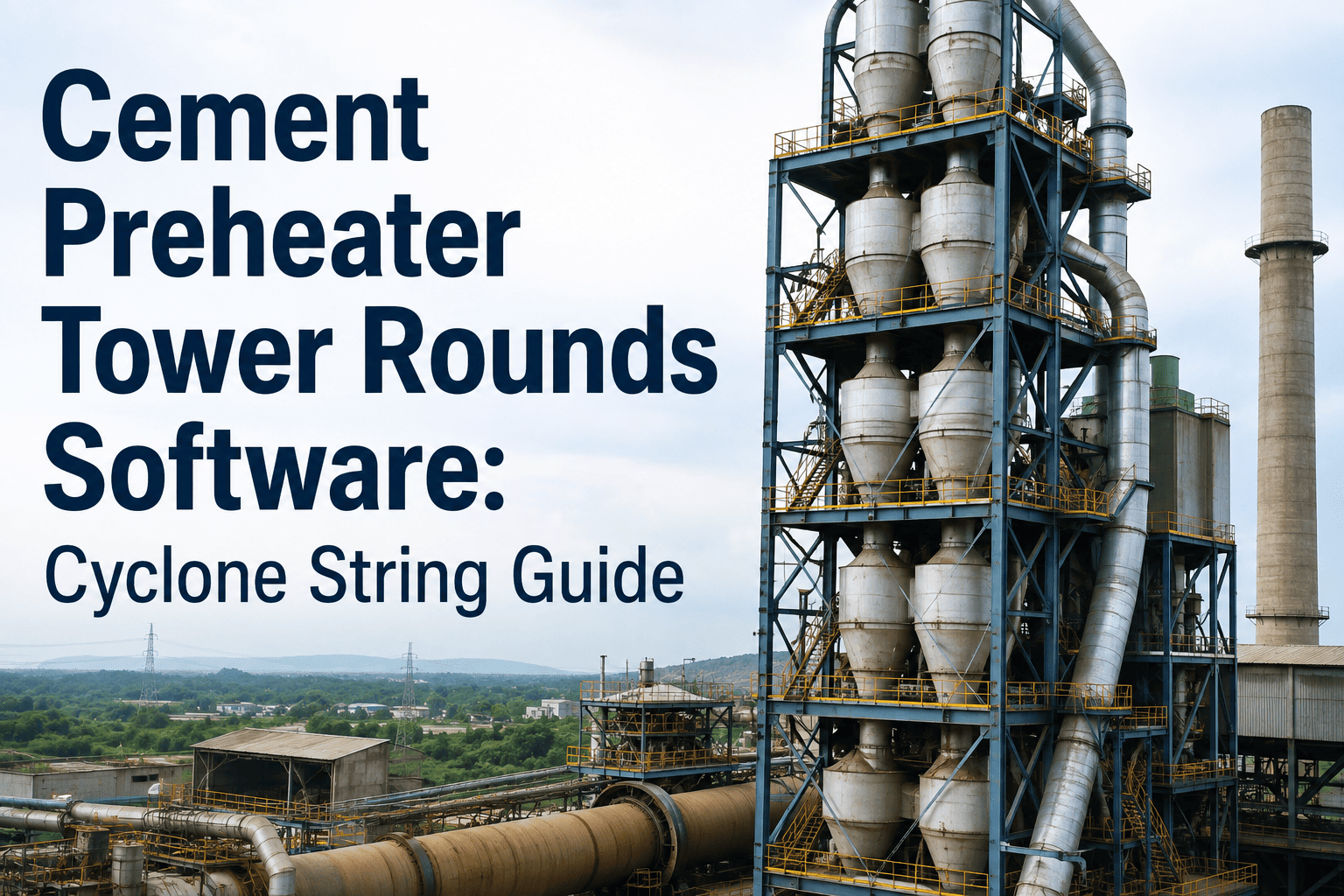
PREHEATER TOWER ROUNDS · CYCLONE STRING GUIDE
Is your last preheater round sitting in a notebook nobody trends?
Coating buildup in cyclone stages three and four can grow 5 to 15 millimeters a week in high-alkali raw mixes, restricting gas flow within three to six weeks of the first sign going unnoticed. A round that only checks the box, instead of trending the signal, is how a routine inspection turns into an emergency shutdown.
THE TOWER, ZONE BY ZONE
Five zones, five failure modes — the round has to cover all of them
A preheater tower is not one asset, it is a 60 to 100 meter stack of distinct zones, each with its own temperature range, wear pattern, and buildup risk. A round that treats the whole tower as one checklist item misses exactly the zone where the next blockage is forming, and by the time the problem is visible from the control room it has usually been building for weeks. Here is the descent, top to bottom, that a proper round follows.
Upper cyclone stages (1–2)
MODERATE RISKLower temperature zone, but the entry point for feed distribution and gas flow. A round here checks dip tube condition, inlet duct coating, and gas distribution symmetry — problems that start at the top cascade into every stage below, so an inspector who skips this zone is effectively guessing at the root cause of anything found further down the tower.
Mid cyclone stages (3–4)
CRITICAL RISKThe highest-temperature exchange zone and where over 60 percent of blockage events originate. Alkali and sulfur condensation forms crusty deposits on cyclone walls fast, and this is the zone where pressure delta trending matters most between rounds, since a buildup problem here restricts the highest-value gas-solid heat exchange area in the entire tower.
Riser ducts and downcomers
HIGH RISKThe connective tissue between stages. Buildup here restricts gas velocity and can drive ID fan power consumption up by as much as 12 percent before a full blockage even forms. Asymmetric flow and unusual vibration are the earliest warning signs, and both are easy for a rushed round to dismiss as normal tower noise until the pattern is actually logged and compared week over week.
Calciner vessel
MODERATE RISKHandles roughly 60 percent of total calcination at gas temperatures near 850 to 880°C. A round checks feed pipe positioning, flap valve condition, and air cannon function, since a spreading mechanism failure channels meal to one side of the duct instead of dispersing it evenly, which quietly forces incomplete calcination into the kiln sintering zone below.
Kiln inlet and lower cyclone
CRITICAL RISKThe hottest, highest-consequence zone in the tower. Coating and ring formation here can force an unplanned kiln stop within hours. A round checks shell temperature scans and visual coating condition, since this is where thermal shock risk is highest if a blockage is cleared reactively instead of caught early enough to plan the cleaning around a scheduled stop.
WHAT A ROUND SHOULD ACTUALLY CATCH
Four signals that separate a routine check from an escalation
Walking past a cyclone and glancing at a gauge is not a round — it is a habit. A round that actually prevents a blockage looks for four specific signals, logs them against the zone, and compares them to the last reading instead of just the current one.
Coating buildup thickness
Visual and where possible measured coating thickness on cyclone walls and cone. A 10mm reading this week against a 4mm reading last week is the trend that triggers a cleaning work order, not the absolute number alone — a static high reading that has held steady for months is a very different risk profile.
Pressure delta (ΔP) trend
A sustained pressure drop increase of 5 percent or more above baseline across a cyclone stage is one of the earliest reliable indicators of restricted gas flow, often showing up days before any visible or thermal sign appears — which is exactly why it needs its own trend line, not a one-off gauge reading.
Air cannon firing check
Verify every air cannon position fires on schedule at correct pressure. A single failed solenoid valve in a buildup-prone stage is often the one variable standing between a routine cleaning cycle and an emergency shutdown, which is why cannon checks belong on the same round as the buildup reading, not a separate PM cycle.
False air and seal leakage
Cracked expansion joints and unsealed inspection doors let cold air into the gas stream. Every 1 percent increase in false air raises oxygen readings roughly 0.5 percent and wastes fuel long before it contributes to a blockage, so checking seal condition on the round pays for itself in fuel savings even in a quiet week.
Stop losing round data to a clipboard nobody reviews
See how a digitized round captures coating thickness, ΔP readings, and air cannon checks against every zone, automatically, every time.
ROUND FREQUENCY BY ZONE
How often each zone actually needs to be walked
Not every zone needs the same round frequency, and treating them all the same either wastes technician time on stable zones or leaves buildup-prone zones under-checked. This is a starting frequency table most plants can adapt to their own raw mix chemistry.
| Zone | Inspection Method | Frequency | Escalation Trigger |
|---|---|---|---|
| Upper cyclones (1–2) | Visual + thermal scan | Weekly | Coating over 10mm or hot spot 50°C above baseline |
| Mid cyclones (3–4) | ΔP trend + visual | Daily to twice weekly | ΔP 5%+ above baseline sustained 24 hours |
| Riser ducts | Visual poke-hole + ΔP | Weekly | Asymmetric flow or new vibration signature |
| Calciner vessel | Thermal scan + O2 check | Daily | Temperature swing over 5°C or O2 deviation |
| Kiln inlet / lower stage | Visual + shell temp scan | Daily near campaign end | Shell hot spot or ring indication |
CMMS CONFIGURATION
How a CMMS turns preheater rounds into a trend line, not a notebook
The gap between a plant that catches buildup early and one that clears an emergency blockage is rarely the equipment or the technician's judgment — it is whether last week's round reading was anywhere the reliability team could see it this morning. Most plants already collect the right data on paper; they just never turn it into a trend anyone reviews before the next shift starts. Here is the structure that closes that gap.
Zone-based round routes
Build the round as a fixed route through all five tower zones with a digital checklist per stop, so no zone gets skipped when a technician is short on time or working an unfamiliar shift, and every route completion is logged automatically against the schedule.
Buildup and ΔP trend logging
Every coating thickness reading and pressure delta value is logged against the zone's own history, so a slow week-over-week climb shows up as a trend line instead of disappearing into a stack of individual paper sheets that nobody cross-references against last month's reading.
Auto-generated work orders
When a round reading crosses an escalation threshold — coating thickness, ΔP, or shell temperature — a work order is generated automatically and routed to the right crew instead of waiting for someone to notice the number on a spreadsheet days later.
Photo evidence per zone
Technicians attach timestamped photos directly to each zone's checklist entry, giving reliability engineers a visual record of coating progression instead of relying on a written description weeks after the fact when the exact shade and texture are hard to recall accurately.
Air cannon and seal PM tracking
Solenoid valve tests, cannon pressure checks, and expansion joint seal inspections are scheduled and tracked against the same zone asset record used for buildup rounds, so preventive tasks and reactive escalations live in one place.
Shutdown readiness export
Every round, trend, and repair action across every zone is timestamped and exportable, so when refractory or cleaning scope needs to be locked in for the next shutdown, the data is one report away instead of a week of digging.
"
We used to find out about stage four buildup when the ΔP alarm was already screaming. After digitizing our rounds by zone and trending coating thickness against pressure delta, we now catch it two to three weeks earlier and clear it during a planned stop instead of an emergency one. We have not had an unplanned blockage stop in over a year.
FREQUENTLY ASKED
Preheater tower rounds — straight answers
How often should preheater tower rounds be done?
Buildup-prone mid cyclone stages and the calciner typically need daily to twice-weekly checks, while upper cyclones and riser ducts can run on a weekly cycle. Adjust frequency upward if your raw mix runs high alkali or sulfur content.
What actually causes cyclone blockages?
Alkali and sulfur condensation forms crusty coating on cyclone walls and riser duct surfaces, most aggressively in stages three and four. Left untrended, buildup of 5 to 15mm a week can restrict gas flow within three to six weeks.
How much does an unplanned preheater blockage really cost?
Most events run between $180,000 and $650,000 once lost clinker output and emergency clearing labor are added together, with eight to thirty-six hours of production lost per event. Book a Demo to see how early trend detection compares against that cost.
Can rounds catch buildup without manual poking or entering hot zones?
Yes. Visual checks, thermal scans, and pressure delta trending from outside the vessel catch the great majority of buildup before it requires manual clearing, which keeps technicians out of high-heat poke-hole work in the first place.
How does a CMMS make preheater rounds more reliable than a paper checklist?
It routes the round by zone, logs every reading against its own history so trends are visible instead of buried, and auto-generates a work order the moment a reading crosses threshold. Start Free Trial to set up your first zone-based round.
Turn your next preheater round into data your team can actually act on
Zone-based checklists, buildup and ΔP trending, and auto-escalation work orders — set up before your next tower tour.
Free 14-day trial · No credit card