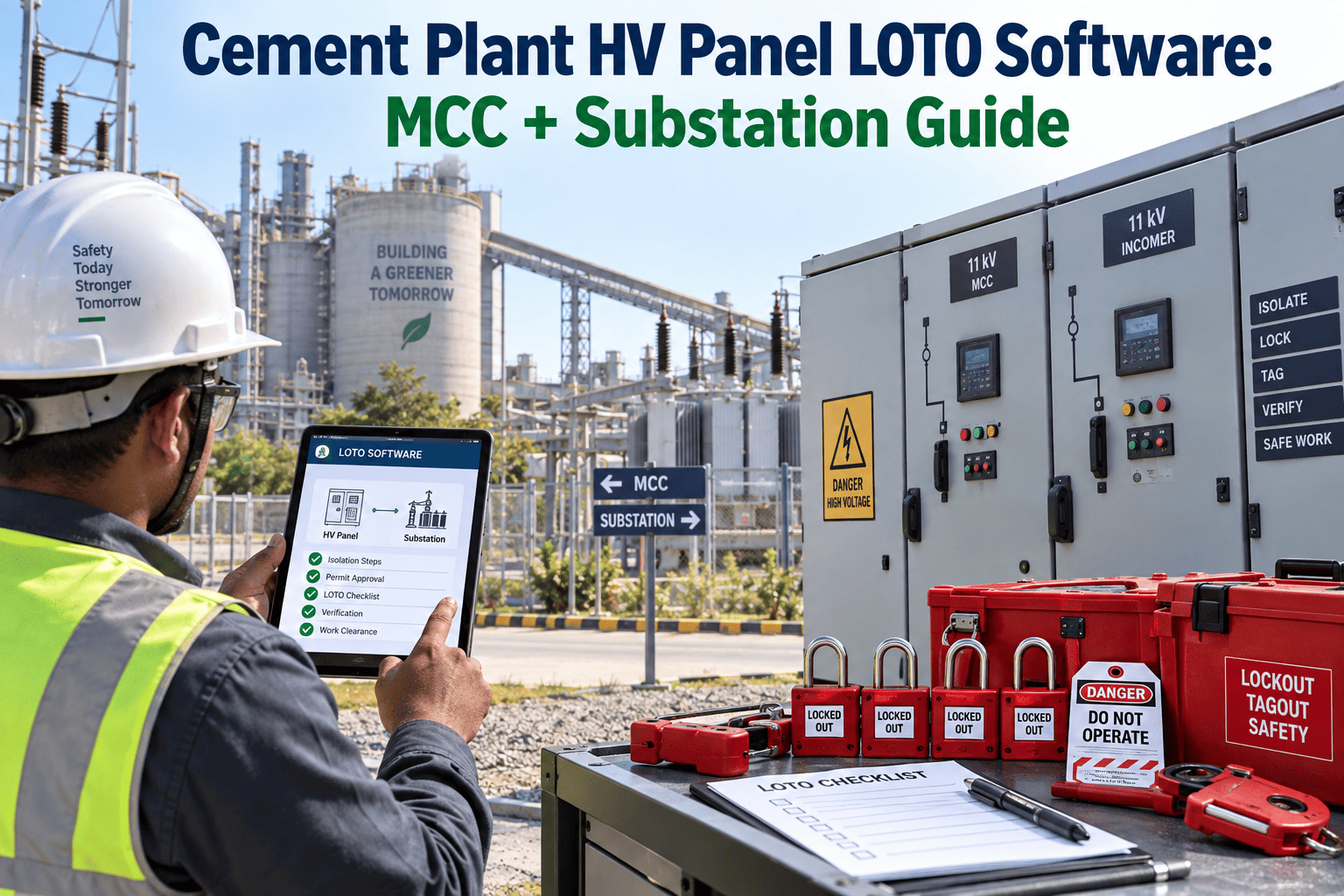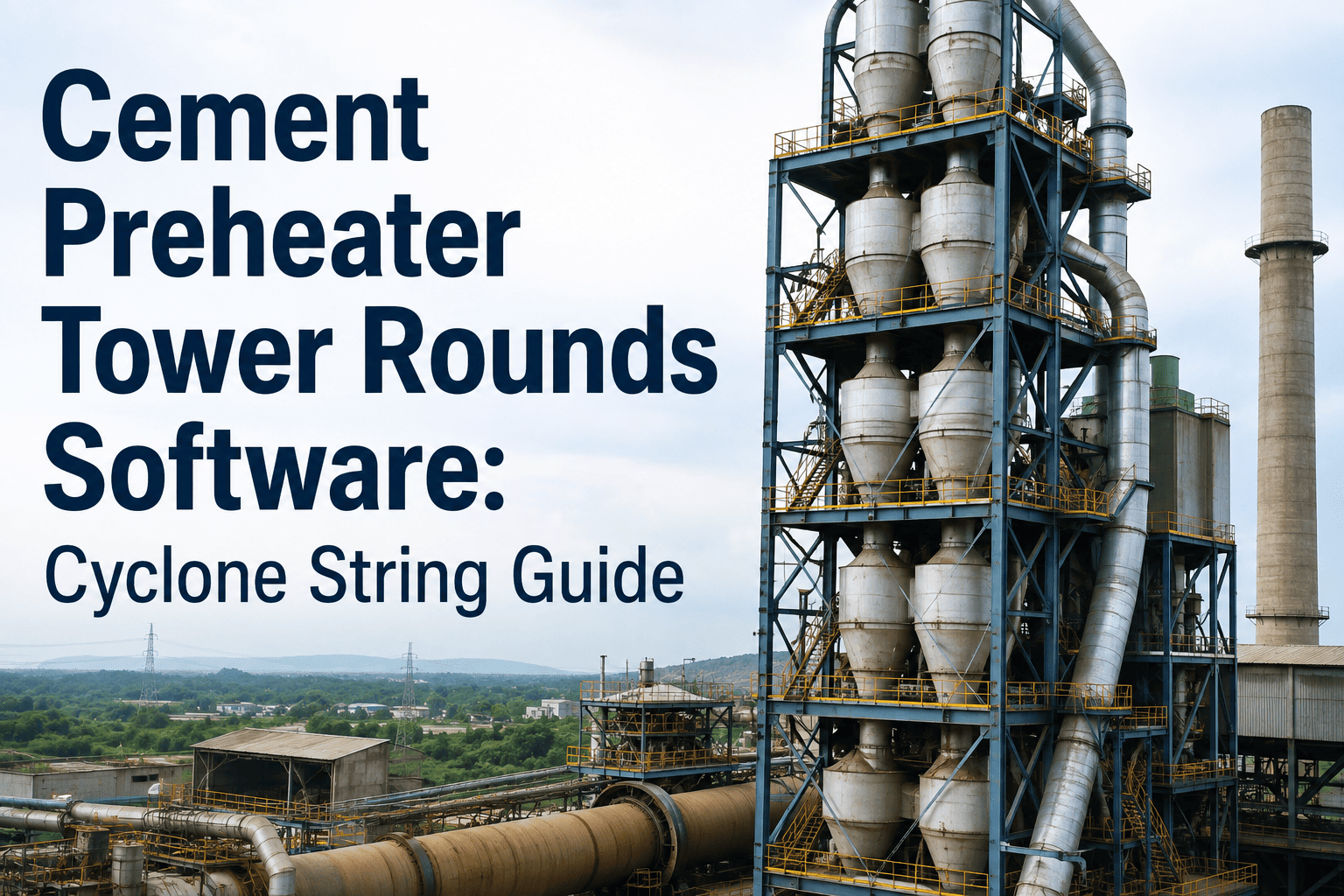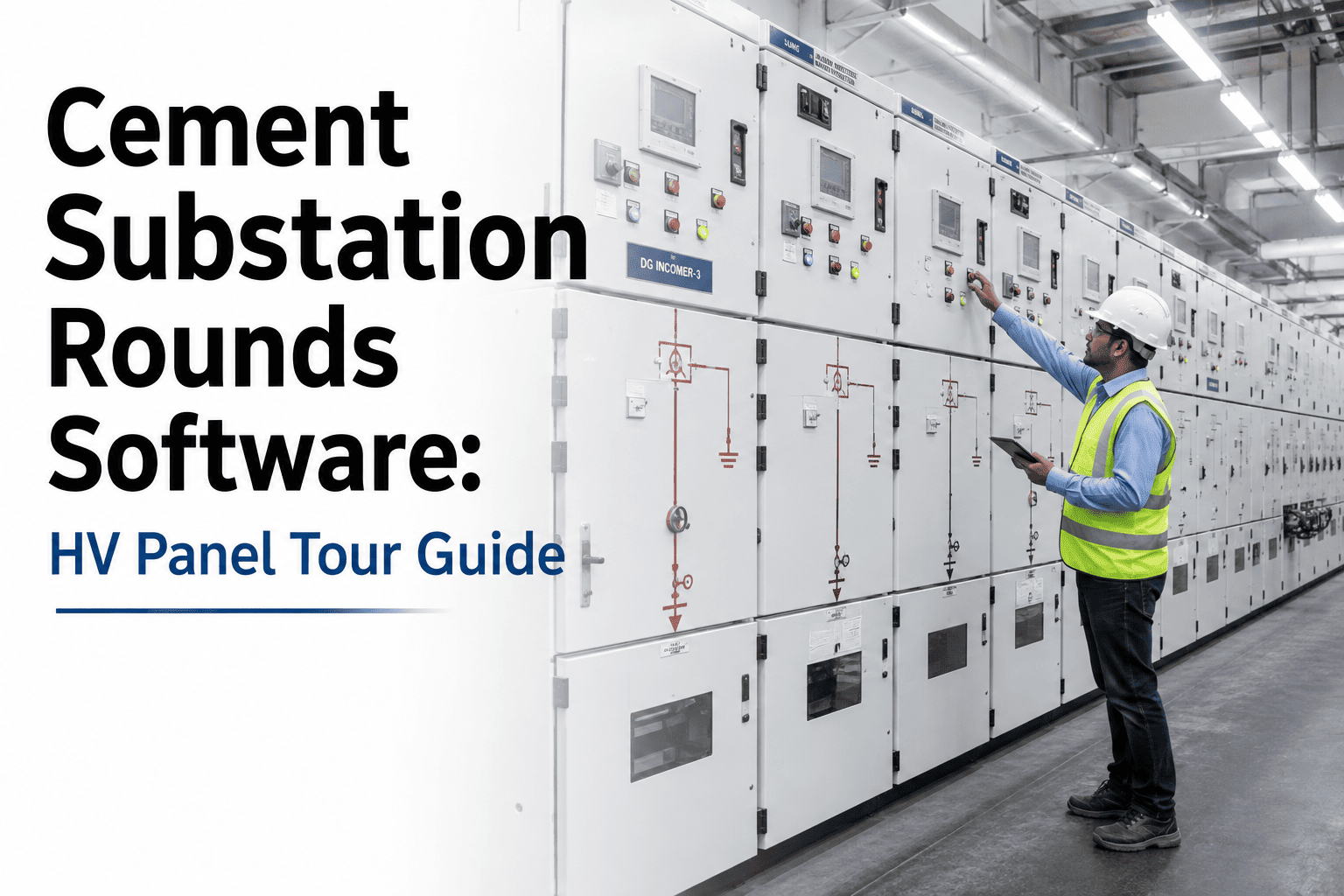
Every cement plant runs on a walking route that most people never think about — the daily substation round that carries an operator past the main receiving substation, the transformer yard, every MCC room, and the 11kV distribution boards that feed the kiln, mills, and crushers. A ten-degree rise above rated operating temperature at a single bus joint can cut that joint's insulation life in half, and the only way anyone finds out before it fails is if the round actually happens, is actually thorough, and actually gets logged somewhere that isn't a paper clipboard hanging on a nail. Most plants still run this route from memory, checking whatever an operator remembers to check that shift. The plants that don't get burned run it as a fixed sequence of stops, each with its own checklist, feeding straight into a CMMS. See what a structured substation round looks like — Start Free Trial and build your plant's tour route today.
One walking route covers your entire cement plant's electrical backbone — if it's run right
From the 66–132kV grid connection at the main receiving substation down to the 11kV boards feeding individual motor circuits, every stage of that cascade carries a failure risk that's invisible to the eye and obvious to an infrared camera. A single loose lug or overheating splice can take down an entire production line, not just one panel.
Four stops, one route — what the round should actually cover
A substation round isn't a single checklist, it's a sequence. Each stop on the route carries a different voltage class, a different failure mode, and a different set of checks — and skipping the order is how items get missed under time pressure.
Main receiving substation
HV bus bars, gantry connections, and incoming grid supply. Check oil levels and bushing condition on power transformers, verify breaker status, and scan bus joints for thermal anomalies.
Transformer yard
Oil-immersed step-down transformers feeding each production circuit. Inspect for leaks, check breather silica gel color, and log winding and oil temperatures against baseline.
MCC rooms
Vertical and horizontal bus sections, breaker and contactor buckets, overload relay setpoints against motor FLA. Check for debris, moisture, and contamination inside each section.
11kV & LV distribution
Final distribution boards feeding kiln, mill, and crusher motor circuits. Verify lug torque, grounding continuity, panel door seals, and required safety signage at every board.
The temperature deltas that separate normal from a work order
An infrared scan is only useful if the round applies a consistent threshold. These are the delta-T bands used across HV bus joints, breaker terminals, and phase-balanced circuits — provided the equipment is carrying enough load for the reading to be valid.
| Inspection Point | Minimum Load | Normal Delta-T | Priority Threshold | Action |
|---|---|---|---|---|
| HV bus joints & gantry | 60–80% rated | Under 10°C above ambient | Over 10°C above ambient | Priority corrective work order |
| MCC bus & cable terminations | 40% rated | Under 10°C above ambient | Over 10°C above ambient | Priority corrective work order |
| Breaker / contactor phases | 40% rated | Within 15°C of other phases | Over 15°C phase difference | Flag for corrective action |
| Power transformer bushings | 60–80% rated | Stable vs baseline trend | Sustained upward drift | Schedule oil & winding test |
The same walking route, two very different outcomes
The route doesn't change. What changes is whether a finding turns into a tracked work order or gets buried in a logbook nobody revisits until the audit.
Paper clipboard round
A tick-box sheet gets filled in from memory, findings live in a drawer, and a hot spot noted last month has no trend to compare against. Follow-up depends entirely on someone remembering to chase it.
CMMS-driven round
Each stop's checklist is fixed, thermal images attach to the asset record, delta-T breaches auto-generate a work order, and every prior reading is one tap away for trend comparison.
Turn your substation round into a route the CMMS runs with you.
Fixed stops, fixed checklists, thermal readings logged against every asset — and a work order the moment a delta-T crosses the line.
What an inspector actually wants to see on file
An electrical round isn't just a reliability task — it's the paper trail behind arc flash safety, LOTO compliance, and every audit standard the electrical program answers to.
Breaker status, lug torque, and grounding continuity verified against NFPA 70B monthly requirements.
Arc flash incident energy labels current and matched to the latest IEEE 1584 study on file.
LOTO isolation steps documented and signed off by a qualified electrical worker on every work order.
Room-level safety items — rubber mats, fire extinguisher tags, exit signage, and door sealing — checked every round.
Thermal image, severity classification, and ambient conditions stored against the specific asset, not a shared folder.
Trend history across every prior round, so a slow drift is visible long before it becomes a priority finding.
Cement plant substation rounds — answered
How often should a cement plant substation round be run?
Direct visual and instrument checks — breaker status, lug torque, grounding continuity — are typically run monthly at minimum, with critical circuits checked more often. Infrared thermography runs on an annual cycle at most facilities.
Why does a panel need to be under load for a thermal scan to work?
A loose connection or resistive fault only generates detectable heat when current is flowing through it. Most procedures require at least 40% of rated load, with 60–80% recommended for high-value transformer inspections.
What temperature difference between phases should trigger a work order?
A phase running more than 15°C hotter than the other two on the same breaker or contactor is the widely used trigger for a corrective work order, since it's the most reliable sign of a single-phase connection problem.
What should be included in an MCC room round beyond thermal scanning?
Housekeeping and safety items matter just as much: debris and moisture inside sections, rubber mats at switchgear, current fire extinguisher tags, lighting, and required room signage. Book a Demo to see a full MCC round checklist.
How does a CMMS turn a substation round into an auditable record?
Each stop's checklist, thermal image, and reading is logged against the specific asset with a timestamp and technician sign-off, and any delta-T breach auto-generates a work order. Start Free Trial to build your plant's route.
Stop running the substation round from memory.
Fixed stops, digital checklists, and thermal trend history for your entire electrical backbone — from the main substation to the last 11kV board.
Free 14-day trial · No credit card