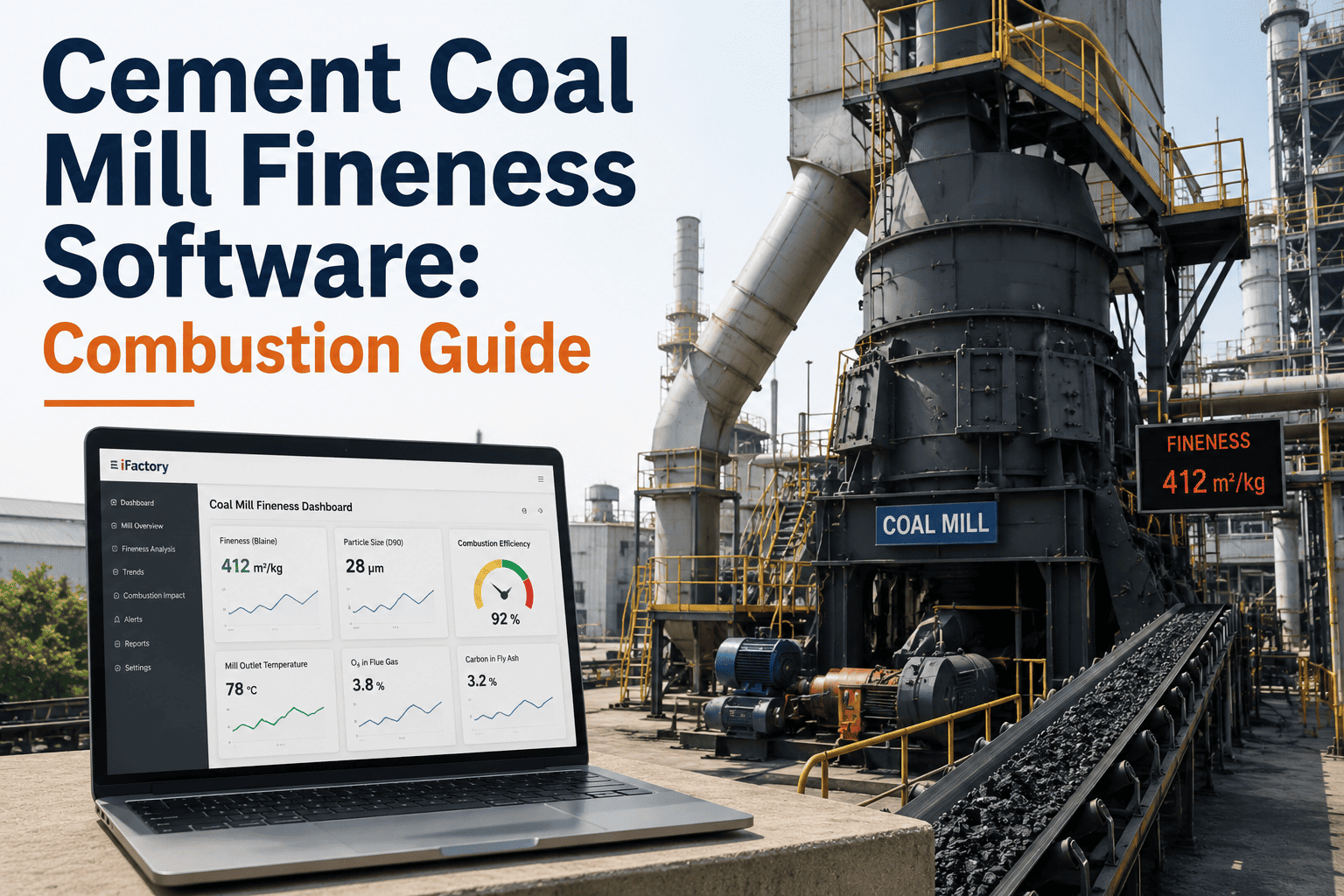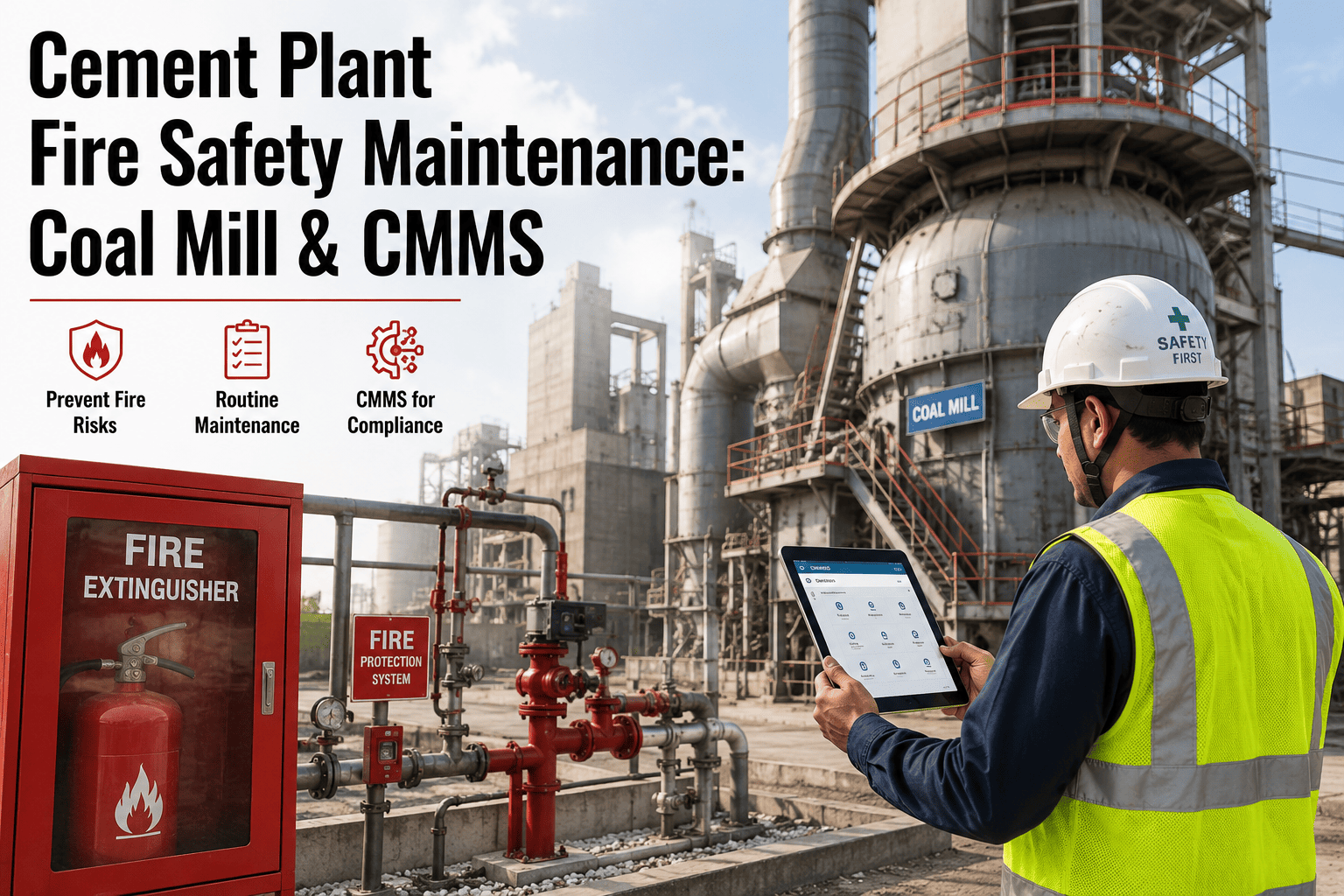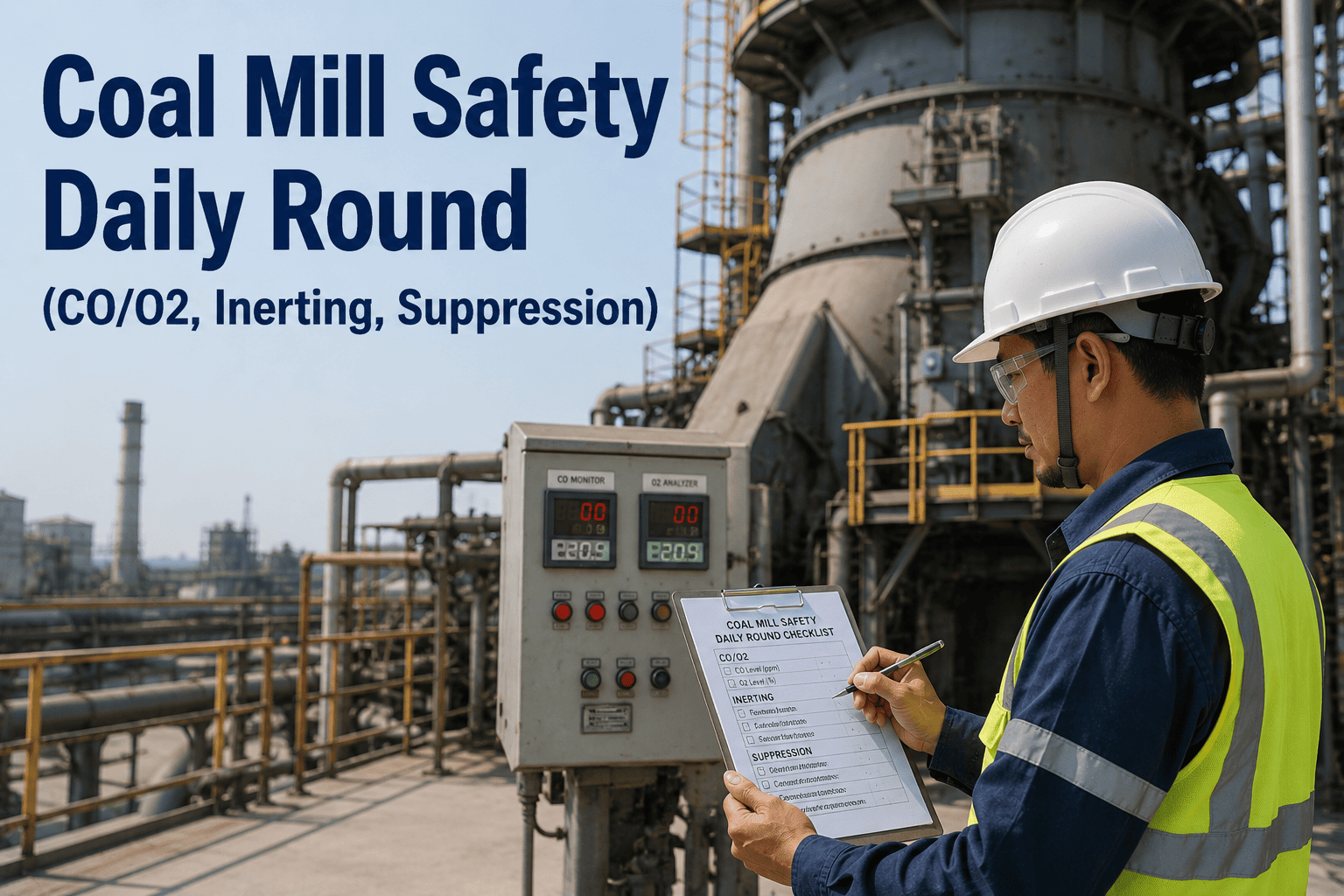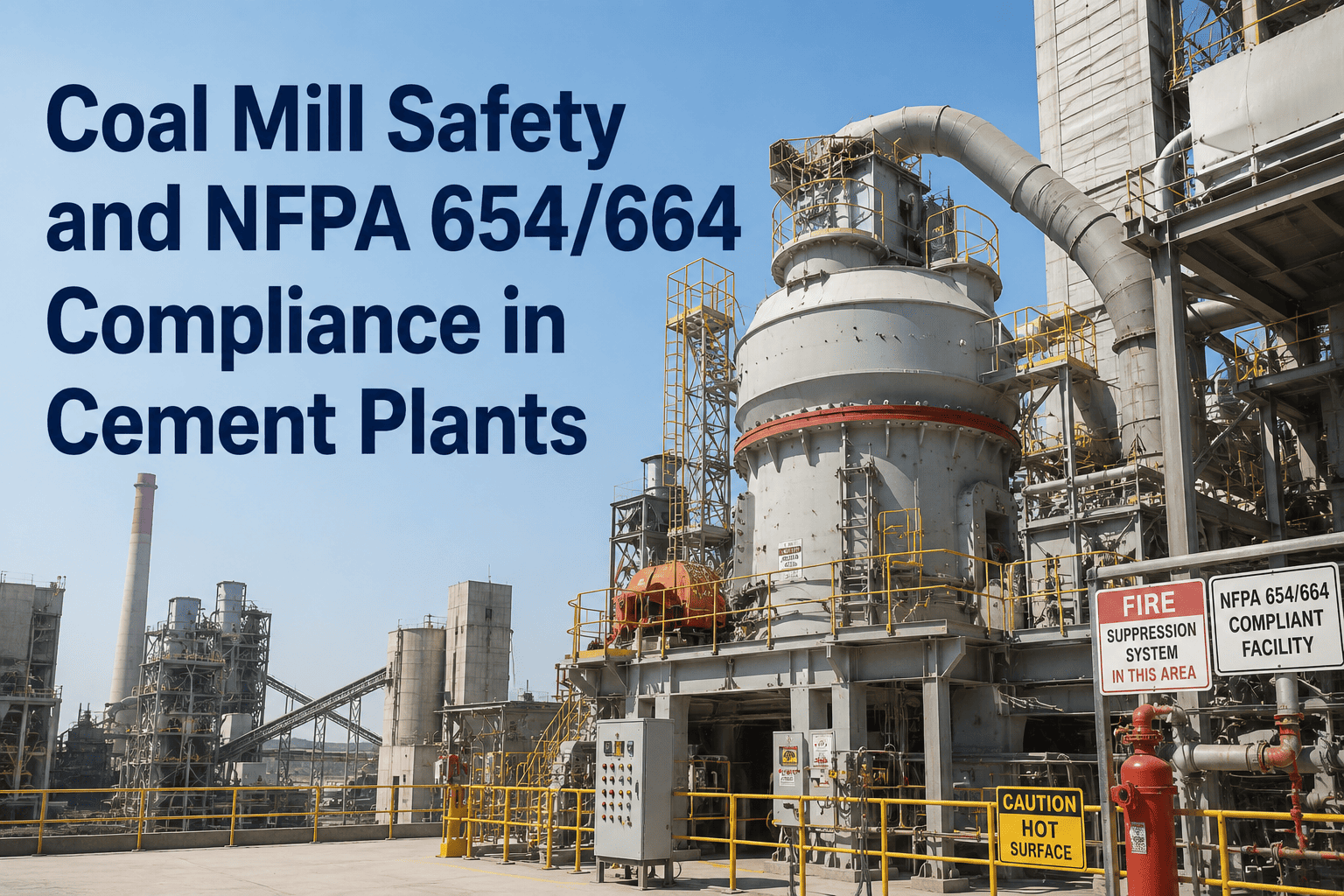
Pulverized coal suspended in air inside a mill circuit needs only three things to become a deflagration: fuel, oxygen, and an ignition source. All three are present in a coal mill by design, which is why the operator round on this piece of equipment carries more consequence than almost any other inspection walk in a cement plant. A missed CO reading or a skipped inerting check is not a paperwork gap — it is a live safety exposure, and the record of that round needs to hold up under both an emergency response and a regulatory audit.
Coal Mill Safety Rounds
Fire and explosion prevention starts with the round that never gets skipped
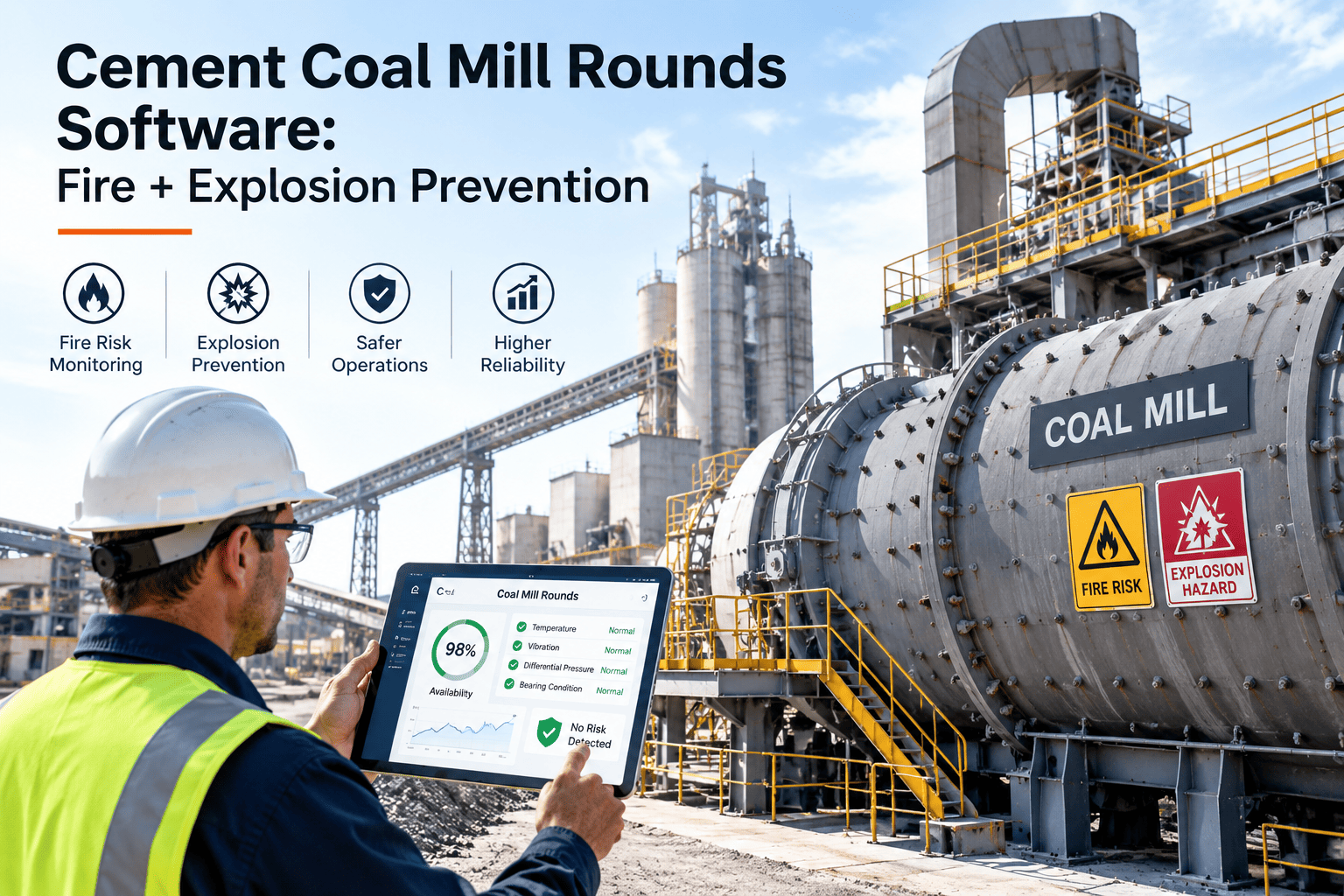
OxMaint digitizes the coal mill safety tour — CO trending, mill outlet temperature, O2 concentration, and inerting system checks — so every reading is timestamped, threshold-checked, and escalated automatically the moment it drifts toward a hazardous condition.
Why the coal mill round is different from every other inspection walk
Most rounds in a cement plant look for wear, leaks, or noise. A coal mill round is looking for the early signature of a smoldering fire — and that signature shows up in gas readings minutes to hours before any visible sign of trouble. Treating this round with the same casual cadence as a general equipment walk is where plants lose their earliest warning window.
Fuel
Coal dust suspended in air inside the mill, classifier, ducting, and bag filter — present continuously during grinding.
Oxygen
Ambient O2 concentration inside the circuit. Explosive risk rises sharply once O2 climbs toward the limiting oxygen concentration for coal dust.
Ignition Source
A hot surface, static discharge, tramp metal spark, or an existing smolder that has gone undetected inside the mill body.
Remove any one of the three and ignition becomes impossible — which is exactly why inerting systems target oxygen while round-based monitoring targets early detection of the other two. No single control is meant to carry the whole burden; inerting, venting, suppression, and the operator round are layered protections designed to catch what the others miss.
The three readings that matter most on every coal mill round
CO
Carbon monoxide trend
CO is the earliest detectable sign of smoldering coal, often appearing well before any temperature sensor registers a change. A CO reading that deviates upward from baseline — even without crossing an alarm setpoint — is worth flagging.
°C
Mill outlet temperature
Outlet temperature is typically controlled well below the coal's ignition temperature. A steady drift upward from the normal operating setpoint signals a drying process or hot spot that needs investigation before it escalates.
O2
Oxygen concentration
Inerting gas keeps in-circuit oxygen below the limiting oxygen concentration for the coal being ground. A reading that climbs toward that threshold means the inerting system needs immediate attention, not a note for the next shift.
Incident Timeline
How a coal mill fire actually develops — and where a round intervenes
Industry incident reviews consistently describe the same pattern: an early, measurable signal appears hours before the event, and the gap between detection and escalation is where prevention lives.
Hours before
CO begins trending upward from baseline as a smolder starts somewhere in the circuit, often in a low-flow zone like a duct elbow or bag filter hopper.
30–90 minutes before
Mill outlet temperature begins to drift, and O2 readings may shift if the inerting system is under-delivering relative to the developing hot spot.
Minutes before
Readings cross alarm thresholds. This is the last reliable window for a controlled shutdown, inerting boost, or forced isolation before conditions become unmanageable.
Ignition
Without intervention, a suspended dust concentration and an ignition source combine — investigators have documented events escalating from smolder to deflagration in well under two minutes.
Turn your coal mill round into an automatic early-warning system
See how OxMaint converts a CO or O2 reading crossing threshold into an immediate work order and supervisor alert — not a note in a logbook.
The coal mill PM schedule a CMMS should be running in the background
Rounds catch the day-to-day drift. A structured PM schedule behind them, aligned to NFPA 85 and NFPA 654 guidance on combustible dust and coal pulverizing systems, keeps the underlying safety systems themselves in working order.
| PM Task | Cadence | Why It Matters |
|---|---|---|
| CO and O2 analyzer function test | Weekly | An uncalibrated analyzer means the round is recording a number nobody can trust |
| Mill outlet temperature transmitter check | Monthly | Drift in the sensor delays the earliest reliable temperature-based warning |
| Inerting valve stroke and flow test | Monthly | An inerting system that can't deliver rated flow fails exactly when it's needed most |
| Bag filter and ductwork housekeeping | Weekly | Dust accumulation outside the mill creates a secondary fuel source for a fire to spread |
| Explosion venting and suppression inspection | Quarterly | Passive protection systems only work if they were verified to be in service |
| Full circuit safety audit | Quarterly | A cross-check of every sensor, valve, and vent against the mill's design basis |
What a digitized coal mill round looks like in practice
A paper logbook records a number. A digital round record does more — it compares that number to a threshold the moment it's entered and decides whether the shift keeps moving or an escalation starts. That distinction is what separates a compliance exercise from an actual safety system.
Structured numeric entry, not free text
CO, O2, and temperature readings are entered as numbers against defined fields, not scribbled into a logbook margin where trends are impossible to spot later.
Threshold-triggered work orders
A reading that crosses a pre-alarm threshold generates a maintenance notification automatically. A reading that crosses a critical threshold escalates directly to an emergency work order and supervisor alert.
Round completion visibility
Shift supervisors see in real time whether the coal mill round has actually been walked and logged, rather than discovering a gap when reviewing the log at the end of the week.
Trend history by sensor point
CO and temperature readings are stored against the specific measurement point over time, so a slow drift across multiple shifts is visible instead of buried in individual, disconnected entries.
Vertical roller mills vs. ball mills: does fire risk differ?
Most cement plants grind coal in either a vertical roller mill or a ball mill, and while the fire triangle is identical in both, the operating characteristics that create risk are different enough that a round checklist should reflect the specific mill type.
Vertical Roller Mill
- Shorter material residence time reduces the window for a smolder to develop inside the mill body itself
- Hot gas drying air means outlet temperature control is a primary safety parameter to watch on every round
- Fine coal can accumulate on the mill table during a trip, requiring a documented restart inspection before resuming feed
Ball Mill
- Longer residence time and larger internal volume mean more suspended dust is present at any given moment
- Bearing and trunnion temperatures need equal attention alongside gas readings during the round
- Mill stoppages under load create a higher risk of localized hot spots forming inside a static coal bed
Housekeeping: the fuel source rounds catch that sensors can't
Gas analyzers monitor conditions inside the circuit. They say nothing about coal dust that has escaped the circuit and settled on structural steel, cable trays, or the floor around the mill — and that accumulated dust is a documented contributor to secondary explosions once a primary event occurs.
Accumulation depth checks
A housekeeping round should flag dust layers above a defined depth threshold on horizontal surfaces near the mill, ducting, and bag filter, since even a thin layer across a large area can fuel a secondary explosion.
Duct and casing leak points
Visible dust streaming from a duct seam or casing gasket is both a housekeeping issue and a sign that negative pressure inside the circuit may not be holding where it should.
Bag filter differential pressure
A bag filter running outside its normal differential pressure range can indicate blinding or damage that affects both dust collection efficiency and fire risk inside the filter housing.
Ignition source housekeeping
Rounds should also confirm that hot work permits, smoking restrictions, and static grounding on conveyors and chutes near the coal circuit are being followed, since ignition sources are as much a housekeeping issue as accumulated dust.
Building a coal mill safety round into a shift routine that actually gets followed
The best checklist in the world doesn't prevent a fire if it gets skipped during a busy shift. Getting consistent completion out of a coal mill round is as much about workflow design as it is about which readings are on the list.
Fix the interval to the shift clock
Tying the round to a specific time within each shift, rather than "sometime during the shift," makes a missed round visible immediately instead of at the next audit.
Keep the checklist to the readings that matter
A round with thirty low-value line items trains operators to move through it quickly without real attention. A focused checklist centered on CO, O2, temperature, and housekeeping keeps the round meaningful.
Make completion visible to the next shift
A supervisor dashboard showing which rounds were completed on time — and which readings trended upward — turns the round into a handover briefing instead of a filed record nobody reviews.
Close the loop on every escalation
When a reading triggers a work order, the operator who logged it should be able to see what action was taken, reinforcing that the round drives a real response rather than disappearing into a queue.
Global standards a coal mill safety program typically references
Depending on the plant's location and insurer, coal mill fire and explosion protection is shaped by a mix of overlapping standards. A round-based monitoring program should be built to satisfy whichever combination applies to your site.
| Standard | Primary Focus | Relevance to Rounds |
|---|---|---|
| NFPA 85 | Boiler and combustion systems, including pulverizer safety | Defines interlock and safety instrumentation requirements the round verifies are functioning |
| NFPA 654 | Combustible dust prevention and housekeeping | Sets the inspection and housekeeping cadence rounds are built around |
| ATEX (EU) | Equipment and protective systems for explosive atmospheres | Governs equipment rating in zones where round-based housekeeping checks apply |
| IS 3595 (India) | Fire and explosion protection in coal grinding and firing systems | Provides prescriptive guidance on inerting and venting for regional facilities |
What happens after an escalation: the response sequence
Detecting a rising reading is only half the safety system. What happens in the minutes immediately after an escalation determines whether the plant is looking at a controlled intervention or a much bigger problem — and that sequence should be defined in advance, not improvised under pressure.
01
Alert reaches the right people
A threshold breach notifies the shift supervisor and the on-call reliability engineer simultaneously, not just the operator who logged the reading.
02
Confirmation reading taken
A second reading confirms the trend rather than a sensor glitch, following a defined verification step built into the emergency work order.
03
Inerting or shutdown decision
Based on plant procedure, the confirmed trend triggers either an inerting boost, a controlled mill trip, or both, following the documented emergency response sequence.
04
Incident record closed out
The full sequence of readings, actions, and outcomes is stored against the asset, giving the reliability team a documented near-miss to review rather than a verbal account.
Frequently asked questions
How often should a coal mill safety round be walked?
Most cement plants run CO and O2 checks on a fixed shift-based cadence, often every two to four hours during operation, with a full circuit review at shift change. The exact interval should follow your plant's documented fire safety program and NFPA 654 guidance.
What CO level should trigger an escalation?
Alarm thresholds vary by mill design and coal type and should be set by your process safety team, but the principle holds everywhere: any sustained upward trend from baseline deserves attention well before the reading reaches a hard alarm setpoint.
Can OxMaint integrate with existing CO and O2 analyzers?
OxMaint captures readings from manual round entries and can incorporate sensor data feeds where available, converting either source into the same threshold-triggered work order logic. Book a demo to review your existing instrumentation.
Does digitizing rounds replace the inerting and suppression systems?
No. Physical inerting, venting, and suppression systems remain the primary protection layer. Digital rounds ensure those systems are inspected on schedule and that operator readings trigger a response fast enough to matter.
How does this help with NFPA 654 audit readiness?
Every round, PM task, and threshold escalation is timestamped and stored against the coal mill asset, giving your team a searchable record of inspection intervals, housekeeping checks, and inerting verifications for any audit period requested.
Protect Your Coal Mill Circuit
Close the gap between a rising CO reading and a response
OxMaint turns every coal mill round into structured, threshold-checked data — so early warning signs trigger action instead of getting logged and forgotten.
Free trial available · No credit card required