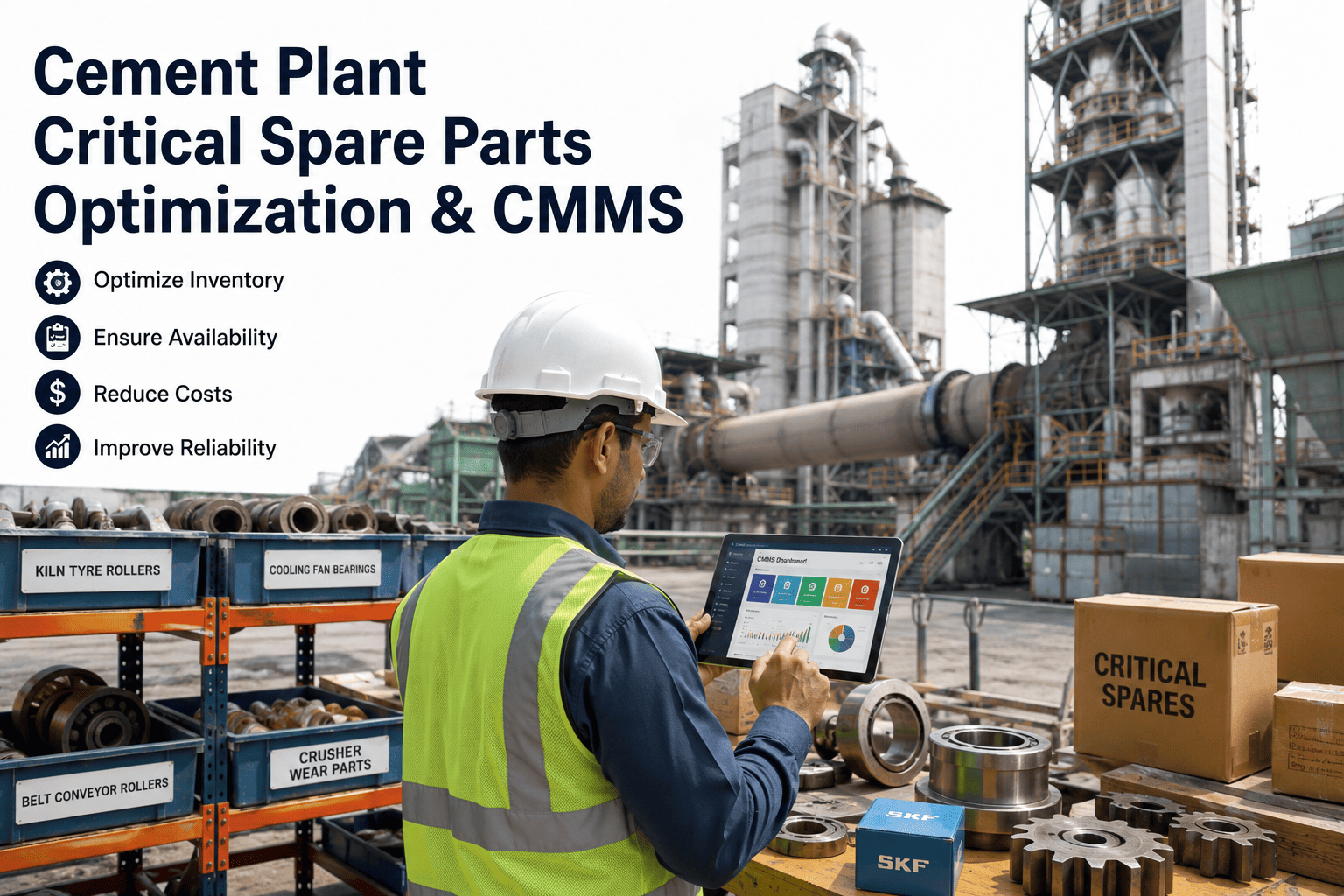
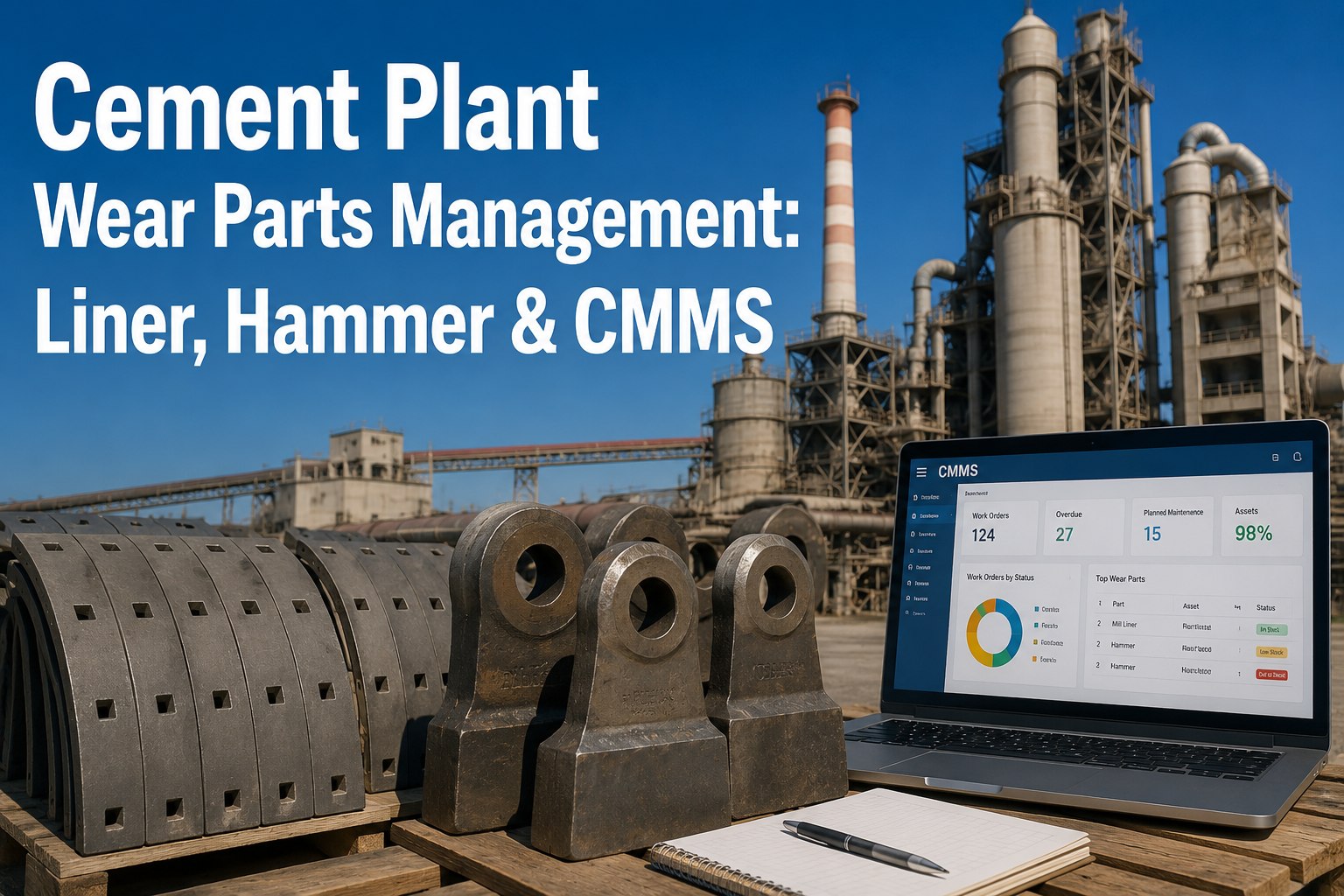
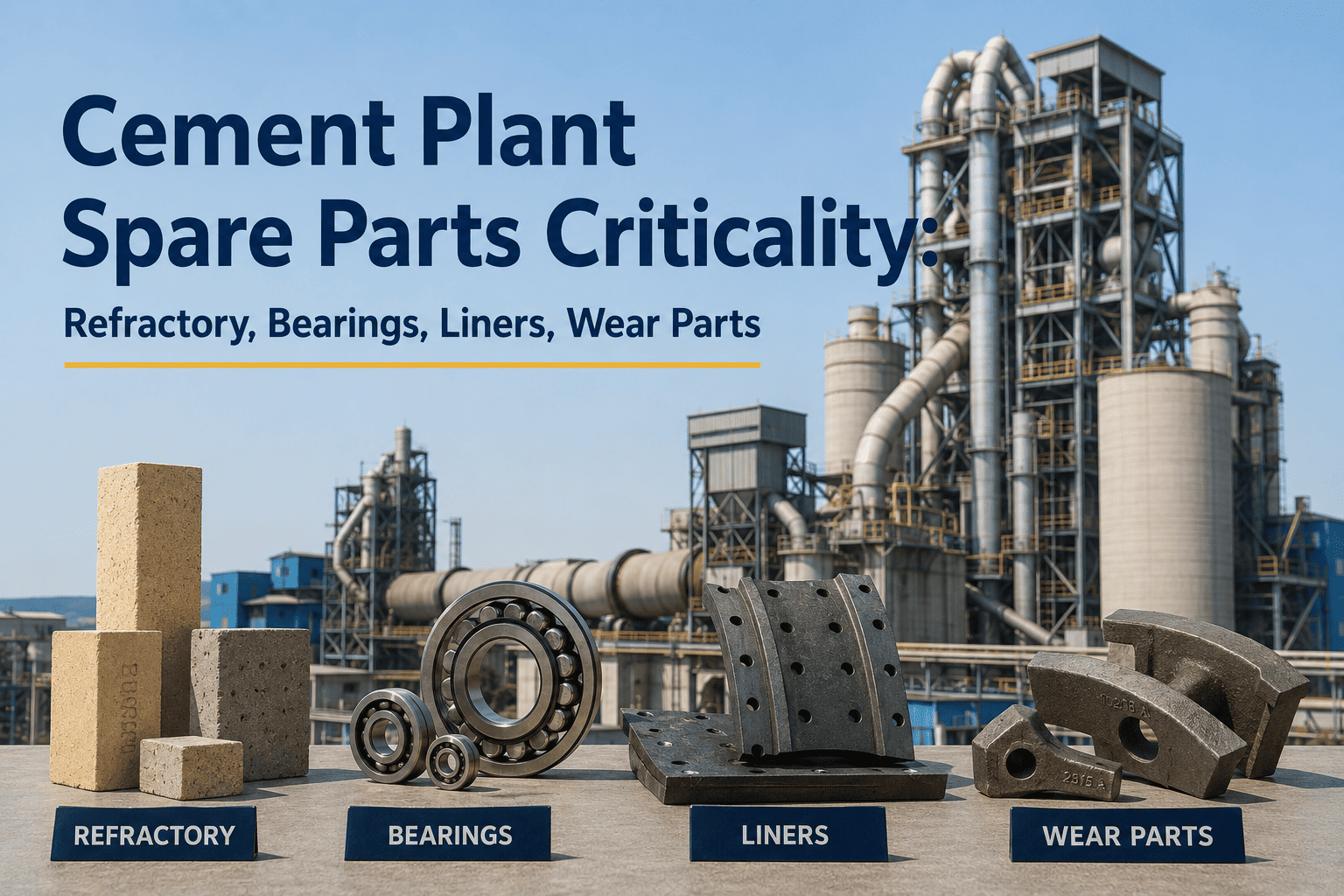
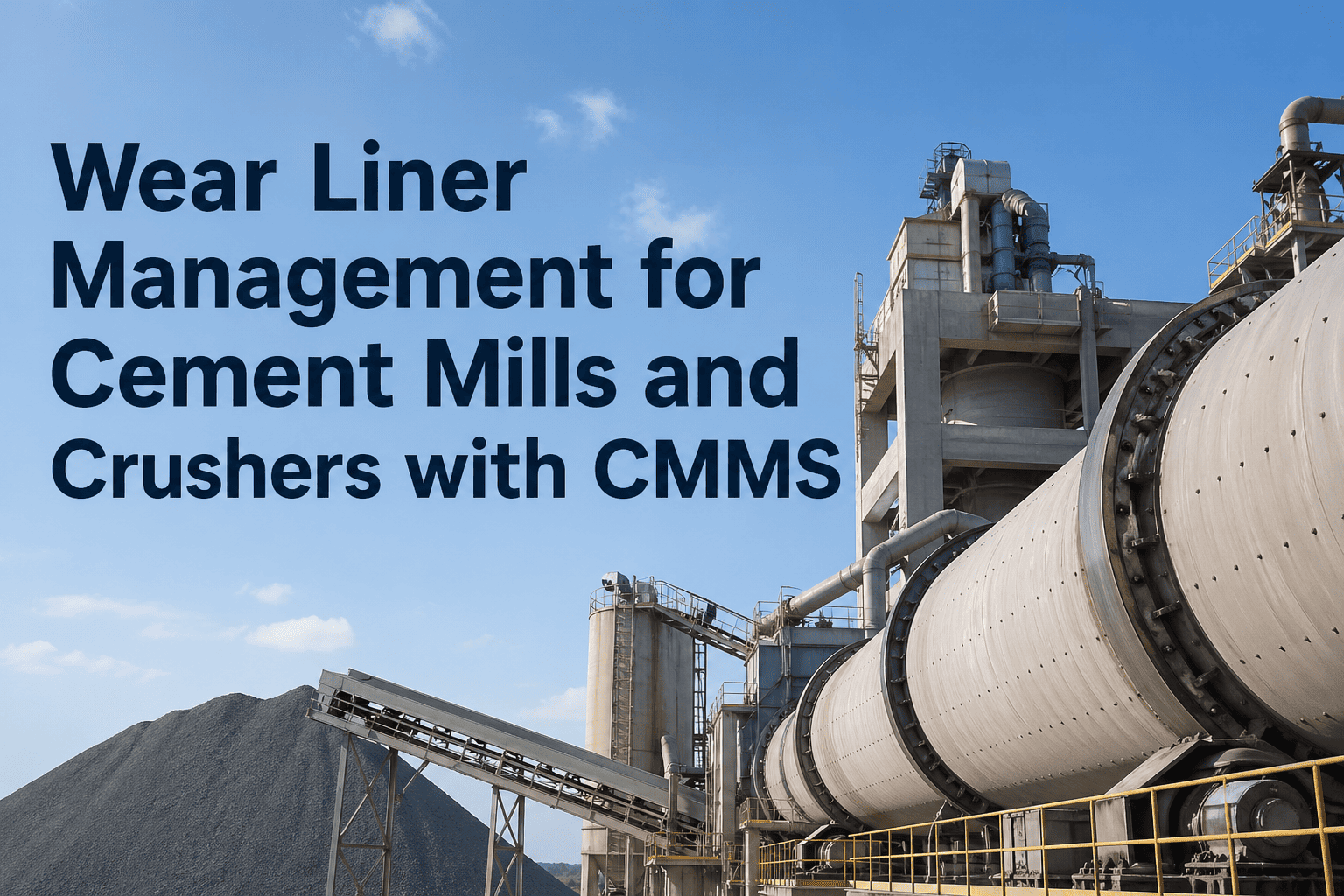
Every cement plant knows the drill — a worn crusher liner goes unnoticed until throughput drops, motor load climbs, and suddenly you're scheduling an emergency shutdown in the middle of peak production. Liner wear is gradual, invisible to the naked eye during normal operation, and devastatingly expensive when it causes unplanned downtime. The average cement crusher liner replacement takes 6 to 12 hours of lost production — time that costs plants anywhere from $15,000 to $60,000 per event. OxMaint's CMMS gives your maintenance team a structured, data-driven way to track liner wear progression, plan replacements before failure, keep spare liners in stock, and close the loop between field inspection and the work order queue. If your current process is clipboard-based, this page will show you what a modern liner tracking program looks like — and how quickly you can build one. Start a free OxMaint trial or book a demo to see liner tracking live.
Cement Plant CMMS · Crusher Maintenance
Crusher Liner Wear Tracking with CMMS
Stop discovering worn liners at failure. OxMaint tracks wear progression, triggers replacement work orders at the right interval, and keeps your spare inventory aligned — so crusher downtime becomes a planned event, not a crisis.
6–12 hrs
lost per unplanned liner replacement
3x
longer liner life with systematic wear tracking
40%
reduction in spare parts holding costs
Why Liner Wear Goes Undetected Until It's Too Late
Crusher liners wear from the inside out — the damage accumulates in millimeters per shift, invisible until the material size distribution changes or the motor starts drawing excess current. By then, replacement is urgent, not planned.
01
No Wear Baseline
Without recorded thickness measurements at installation and subsequent intervals, there is no reference point to know how fast a specific liner is wearing or how much life remains.
02
Inspection Data Stays on Paper
Field technicians record wear readings in notebooks or on forms that never reach the planner. No trend. No alert. No connection to the spare parts store.
03
Spares Ordered Reactively
When a liner fails, the stores team discovers there is no replacement in stock. Lead time for manganese liners can be 4 to 8 weeks — forcing extended downtime or costly emergency sourcing.
04
No Link to Downtime Cost
Without connecting liner condition to production loss data, management cannot see the financial case for investing in proactive replacement — so the reactive cycle continues.
What OxMaint Tracks for Crusher Liners
| Parameter |
What It Tells You |
OxMaint Action |
| Liner thickness (mm) |
Remaining wear life vs. OEM minimum |
Trend chart + alert when threshold crossed |
| Tonnes crushed since install |
Material volume index for wear rate |
Auto-calculated from production data |
| Motor current draw |
Indirect indicator of worn geometry |
Deviation alert against baseline |
| Product size distribution |
Coarsening signals liner wear |
Linked inspection checklist item |
| Spare liner stock level |
Readiness for planned replacement |
Reorder point trigger to procurement |
| Replacement history |
Actual vs. predicted liner life |
AI model refinement over time |
See exactly how much liner wear is costing your plant — before the next failure.
OxMaint connects inspection data, spare parts stock, and production records in one view. No spreadsheets. No surprises.
The OxMaint Liner Wear Lifecycle
1
Install and Baseline
At installation, record liner thickness, OEM minimum thickness, expected life in tonnes, and linked spare stock. This becomes the zero-point for all subsequent wear tracking.
2
Periodic Inspection Readings
Technicians log thickness measurements and visual condition via mobile app — data syncs immediately to the asset record without leaving the field.
3
Wear Rate Calculation
OxMaint calculates current wear rate in mm per 1000 tonnes and projects remaining liner life — giving planners a specific replacement window, not just a status.
4
Spare Parts Alert
When projected replacement date falls within your lead time buffer, OxMaint alerts procurement to confirm stock availability — so the liner is on site before it's needed.
5
Work Order Generation
At the planned replacement point, OxMaint auto-generates a work order with liner specs, crew assignment, safety procedures, and estimated downtime — pre-scheduled, not reactive.
Liner Wear vs. Downtime: Understanding the Cost Curve
Planned Replacement
Scheduled during low-demand window
Spare liner confirmed in stock
Crew allocated and prepared
Downtime: 4–6 hours
No secondary damage to bearings or drive
Reactive Replacement
Failure during peak production
Emergency spare sourcing (4–8 week lead)
Unscheduled crew callout
Downtime: 12–36 hours or more
Often damages mantle, shell, or bearings
Frequently Asked Questions
How does OxMaint collect wear measurement data from the field?
Technicians use the OxMaint mobile app to enter thickness readings, photos, and condition notes directly at the crusher during scheduled inspections. Data syncs to the asset record in real time — no manual transfer or re-entry required.
Try it free.
Can OxMaint track different liner types across multiple crushers?
Yes. Each crusher asset carries its own liner configuration — primary, secondary, tertiary — with separate wear limits, inspection intervals, and spare part links. You can manage a fleet of 10 or 50 crushers from the same dashboard.
How does liner tracking connect to spare parts inventory?
OxMaint links each liner asset to a spare parts record. When projected replacement falls within your lead time buffer, the system triggers a stock check alert — and if stock is below minimum, it raises a procurement request automatically.
See a demo of the parts flow.
What if our wear data is currently in spreadsheets?
You can import historical wear data from Excel or CSV into OxMaint during setup. This immediately gives the AI model historical context to improve replacement interval predictions from day one rather than starting from scratch.
How long does it take to see results?
Most cement plants complete the initial liner asset setup and first inspection cycle within two weeks. Measurable improvement in planned vs. reactive replacements typically appears within the first quarter of active use.
Your next liner failure is already wearing into shape. Get ahead of it.
OxMaint turns inspection readings into replacement plans, spare parts alerts, and work orders — automatically. Start free today, no credit card needed.