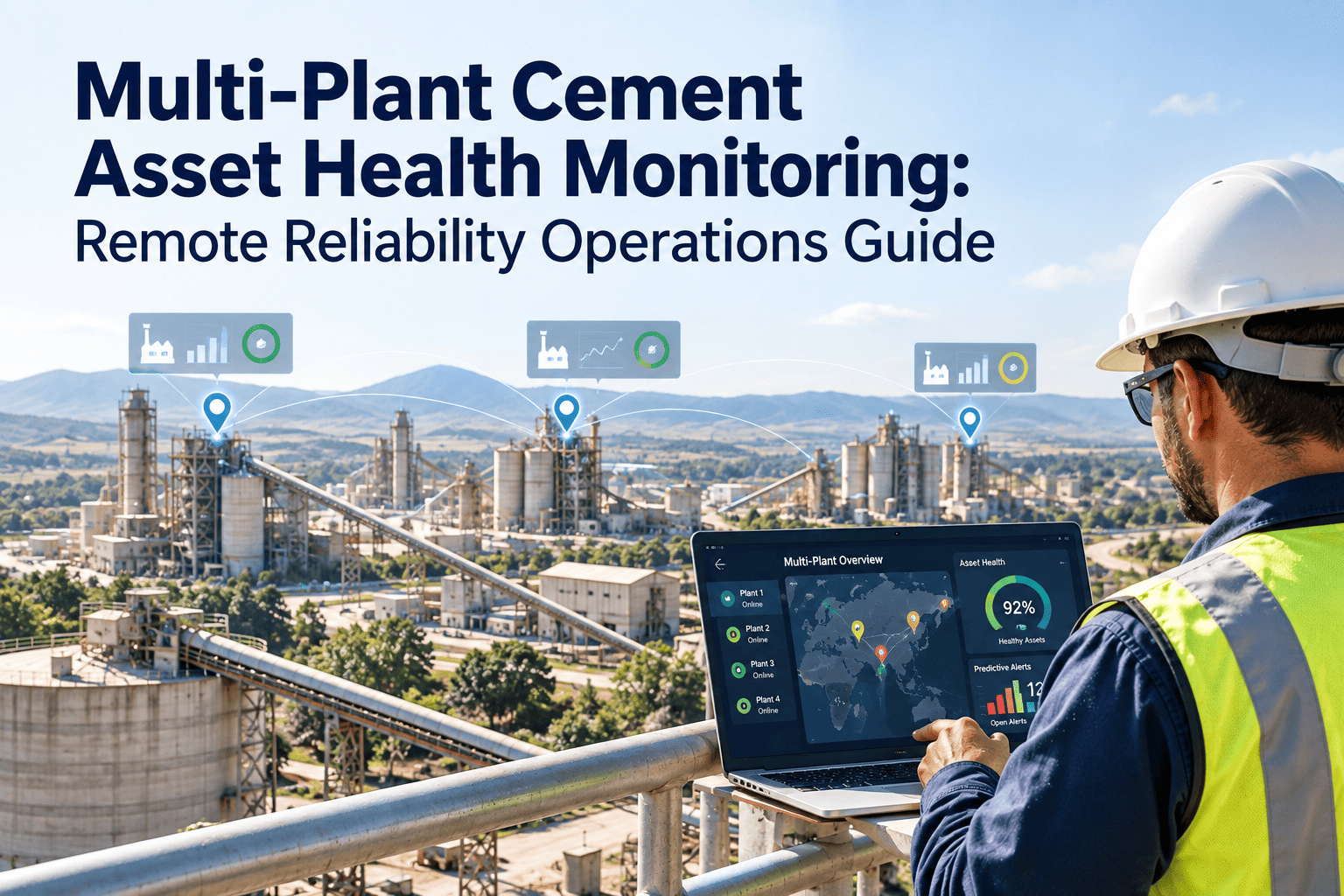
A digital twin for cement plant maintenance is not a 3D model for its own sake — it's a running condition score for every critical asset, built from the vibration readings, thermal scans, inspection rounds and work order history your plant already generates. Instead of waiting for a kiln drive or raw mill bearing to fail, the twin flags when remaining useful life is dropping and a shutdown should be planned around it, not forced by it. Book a demo to see a live digital twin built from one of your own critical assets, or start a free trial to connect your first data source today.
A Running Condition Score for Every Critical Asset
OxMaint builds a digital twin from vibration, thermal, inspection and work order data — so condition and remaining useful life are visible before failure, not after.
What Feeds a Cement Plant Digital Twin
A twin is only as accurate as the data behind it. OxMaint combines four data streams most plants already collect, instead of requiring a separate sensor rollout to get started.
Sample Remaining Useful Life Estimates by Asset
| Asset | Health Score | Estimated RUL | Recommended Action |
|---|---|---|---|
| Kiln Drive Gearbox | 82% | 1,600 hrs | Continue monitoring |
| Raw Mill Main Bearing | 78% | 940 hrs | Plan replacement next shutdown |
| ID Fan Bearing | 65% | 410 hrs | Schedule within 2 weeks |
| Clinker Cooler Drive | 48% | 120 hrs | Prioritize for immediate inspection |
| Cement Mill Pinion | 88% | 2,100 hrs | Continue monitoring |
Plan Shutdowns Around Remaining Useful Life — Not Around Failures
See condition and RUL for kiln, mill and fan assets in one view, built from data your plant is already collecting.
From Raw Signal to Shutdown Decision
A digital twin doesn't need to be perfect on day one to be useful. Even a simple condition score that combines existing vibration routes with inspection findings gives planners a much better basis for shutdown timing than waiting for a failure to set the schedule.
Frequently Asked Questions
Do we need new sensors installed before building a digital twin?
How accurate is the remaining useful life estimate?
Can the digital twin trigger a work order automatically?
Which cement plant assets benefit most from a digital twin?
Does the twin replace condition monitoring vendors we already use?
Know an Asset's Condition Before It Tells You the Hard Way
Combine vibration, thermal, inspection and repair data into one condition score per asset, with remaining useful life estimates that drive shutdown planning.