A rotary kiln burner rarely fails all at once. Long before an operator sees a flameout alarm, the flame has already spent weeks drifting — lengthening, shortening, lifting off the nozzle, or rolling toward the refractory — while burning zone temperature, NOx, and free lime quietly move out of spec. Kiln burner flame stability monitoring turns that slow drift into a measurable, trackable signal instead of a surprise, and this guide walks through why flames destabilize, what the early warning signs look like, and how a structured monitoring and maintenance program keeps a cement kiln inside its combustion window across a full campaign. If you want to see how connecting combustion, draft, and mechanical data on one CMMS changes that picture, the platform sections below cover exactly how it works.
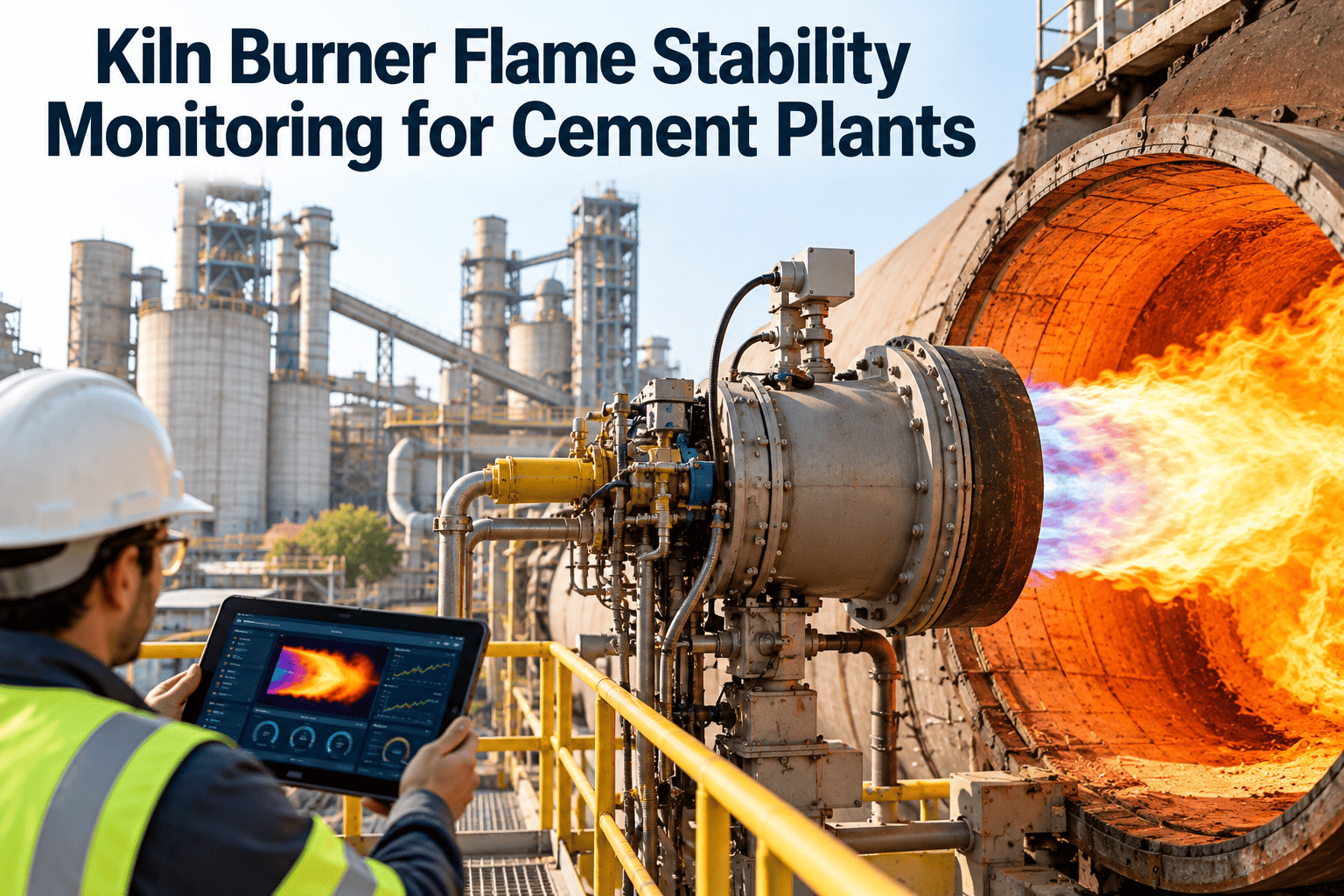
Kiln Burner Flame Stability Monitoring for Cement Plants
Detect flame lift-off, roll, and combustion drift weeks before they show up as clinker quality rejects, refractory damage, or an emergency burner pull — by tying flame behavior to the maintenance data that actually explains it.
Why flame instability is a maintenance signal, not just a process one
Process engineers tune fuel and air ratios to manage flame shape, but a large share of the drift they are compensating for actually starts in mechanical condition — a worn burner tip, a drifting damper actuator, a leaking kiln seal, or a plugged pilot line. None of these show up on a process trend until the flame has already been unstable for days.
Alternative fuel calorific value, moisture, and particle size vary shot to shot, changing flame length and ignition point even when firing rate is held constant.
Primary air fan wear, damper actuator backlash, and burner channel erosion change swirl and momentum, letting the flame roll or lift off the nozzle.
Kiln inlet and outlet seal leakage pulls false air into the burning zone, diluting oxygen at exactly the point flame shape is most sensitive to it.
Shifts in Lime Saturation Factor, Silica Ratio, or grindability change heat demand and burnability, forcing the flame to work outside its designed profile.
Because combustion, draft, and material flow are tightly coupled inside a rotary kiln, a disturbance in any one of these areas propagates through the whole system within minutes — which is exactly why isolated process trends catch the symptom long after the mechanical root cause first appeared. Instrumentation intended to catch these disturbances early is itself exposed to the harshest conditions in the plant: radiant heat, thermal cycling, and dust loading age flame sensors and gas analyzer probes faster than almost any other instrument in the facility, which means the monitoring system needs its own maintenance record just as much as the burner it watches.
Volatile recirculation compounds the problem further. Sulfur, chlorine, and alkalis cycling between the kiln and preheater build up on coating and cyclone surfaces over weeks, then release in bursts that shift gas-phase chemistry and destabilize the flame independent of anything the burner operator has done. Without a maintenance record tying these cycles to combustion trends, the same instability gets re-diagnosed from scratch every time it recurs.
Reading the early signals before a flameout or a coating collapse
Operators and control room staff typically notice these signs first, usually days to weeks before a burning zone problem forces intervention. Trended together, they narrow down which system is driving the instability.
| Signal Observed | Likely Root Cause | Typical Lead Time |
|---|---|---|
| O2 / CO swings at the kiln inlet | Air-fuel ratio drift, damper actuator wear, or false air ingress | Days before burning zone temperature deviates |
| Flame "dancing" or lengthening on camera | Burner tip erosion, fuel particle size change, or swirl loss | 1–3 weeks before clinker free lime drifts out of spec |
| Rising NOx or SO2 during volatile cycles | Alkali/sulfur/chloride recirculation and raw mix variability | Weeks, tied to coating and cyclone build-up cycles |
| Irregular hood pressure or secondary air flow | Cooler grate wear, ID fan condition, or seal leakage | 2–4 weeks before repeated flame roll events |
| Nuisance alarms from gas analyzers | Sensor fouling or drift from dust loading in sampling lines | Ongoing — masks real instability if unaddressed |
The five monitoring points that catch instability early
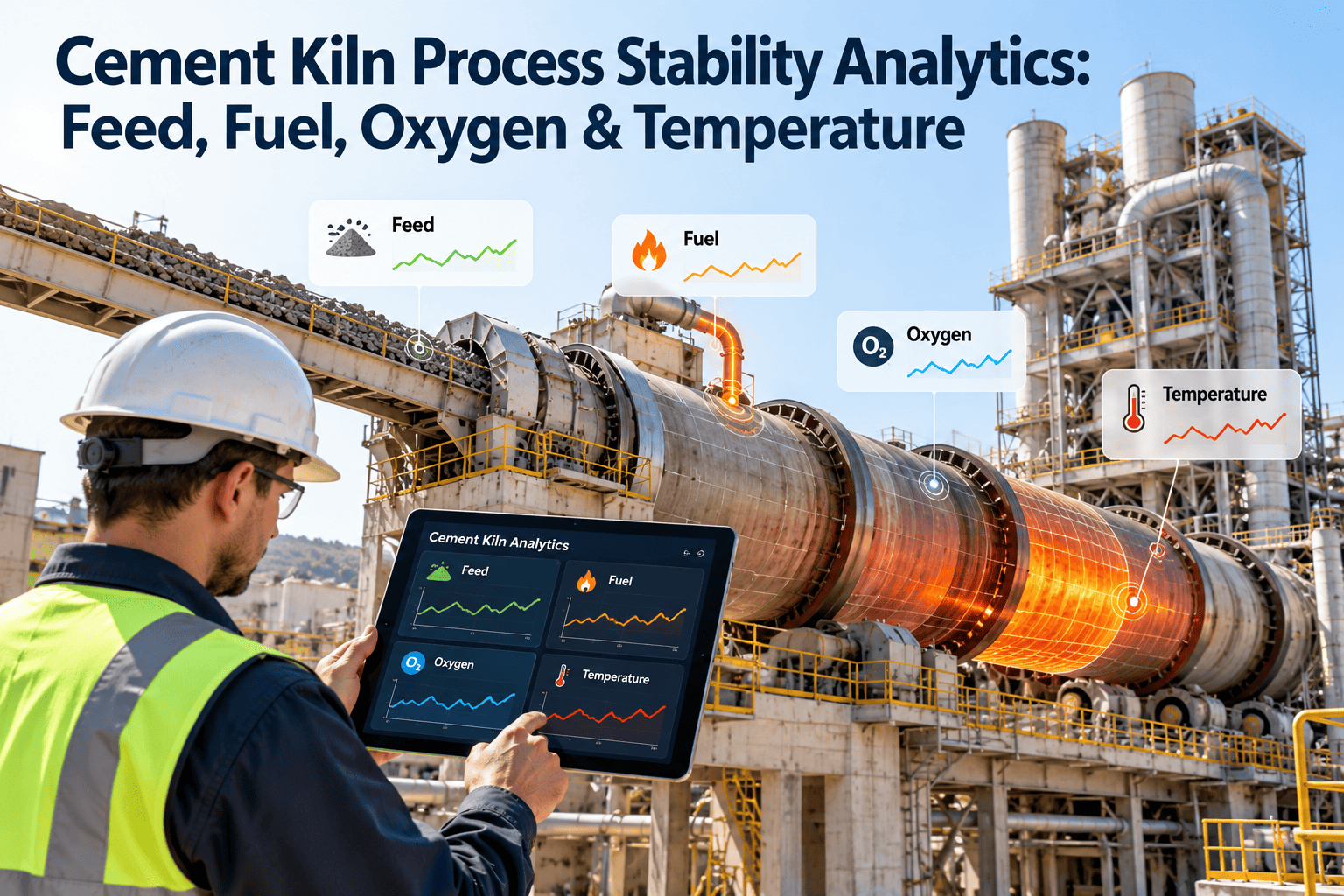
A flame stability program does not depend on one instrument. It layers several data sources so that when one signal is ambiguous — as flame shape often is, since it fluctuates even under stable conditions — the others confirm what's actually happening, rather than sending an operator to adjust a damper based on a single noisy reading.
Protecting refractory and shell life through flame position control
A stable flame does more than hold clinker quality steady — it protects the single most expensive component in the kiln system. Refractory brick in the burning zone is engineered to sit inside a coating layer that the flame itself helps maintain; when the flame rolls, lengthens unpredictably, or impinges directly on the shell, that coating erodes unevenly and the brick underneath is exposed to thermal cycling it was never designed for.
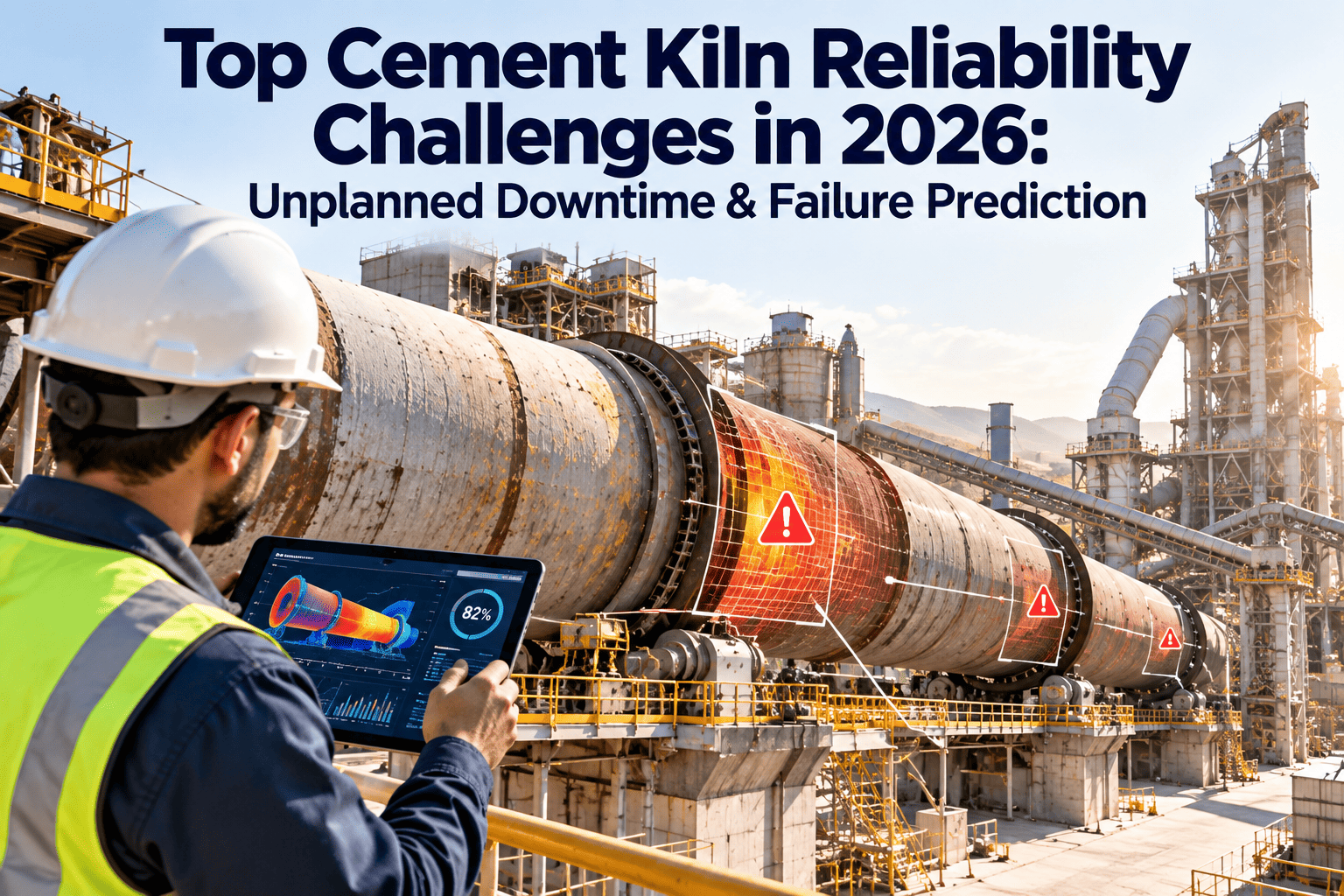
The financial stakes make the case on their own. A single unplanned burning zone reline runs into seven figures once refractory material, crane mobilization, and lost production are added together, and the difference between a planned reline at the end of a campaign and an emergency one triggered by shell hot-spots is frequently measured in months of avoidable downtime. Flame position monitoring, paired with shell scanning where it's available, gives a maintenance team the lead time to correct burner alignment before the coating damage becomes structural.
Emissions compliance rides on the same flame stability data
NOx, CO, and SO2 limits are not just an environmental reporting obligation — they are a direct readout of how well the flame is holding its designed shape and temperature profile. A flame that repeatedly rolls toward the kiln shell or lifts off the burner tip drives CO spikes during the transition, and each excursion has to be logged, explained, and in many jurisdictions reported to a regulator within a fixed window.
Plants that treat combustion monitoring purely as a quality function tend to discover their compliance exposure only after an exceedance report is already filed. Linking burner and seal condition data to the same emissions trend closes that gap, because a maintenance team can act on the mechanical cause before the next exceedance rather than explaining the last one.
Where flame monitoring technology is heading
Thermal and RGB flame cameras with automated shape analysis are increasingly common on new burner installations, replacing the operator's visual judgment through a sight glass with a quantified, trendable signal. Statistical shape tracking — logging flame length, position, and lift-off frequency over time — filters out the normal frame-to-frame flicker of a diffusion flame and isolates genuine drift.
The other shift is correlation rather than isolated sensing. A flame camera alone tells an operator the flame looks different; only when that signal sits next to burner wear history, seal inspection data, and fuel mix records does it explain why — which is the difference between adjusting a damper repeatedly and fixing the component actually causing the drift.
A worn burner tip won't show up on this week's quality report
Oxmaint ties flame, draft, seal, and burner inspection data to one combustion baseline per kiln, so a stability issue becomes a scheduled work order instead of an emergency burner pull.
Building a burner and combustion maintenance workflow
Most plants already inspect burners — the gap is usually in how that inspection data connects back to combustion trends. A structured workflow closes that gap in four steps.
- Step 1 Baseline burner geometry, tip wear, and channel condition at the start of each campaign, and log it against the fuel mix the kiln is designed to run.
- Step 2 Schedule fixed-interval inspections for burner tips, pilot igniters, damper actuators, and kiln seals, independent of whether flame trends look stable that week.
- Step 3 Trend draft pressure, O2/CO, flame camera output, and NOx together on one asset record per kiln so a deviation in any one is checked against the others automatically.
- Step 4 Convert a confirmed deviation into a work order with the specific inspection point attached, so the maintenance crew knows what to check first instead of re-running the whole burner.
Reactive burner management versus a monitored combustion program
What a combustion-aware CMMS actually tracks
Oxmaint brings flame camera output, draft and gas analyzer trends, and burner inspection records into one asset hierarchy per kiln, so combustion drift is visible the week it starts.
What plants report after closing the combustion data gap
Cement plants that connect burner, seal, and combustion trend data on one platform consistently report the same pattern: fewer emergency burner pulls, steadier free lime, and refractory campaigns that run closer to their designed length.
Frequently Asked Questions
Stop chasing flame symptoms — trace them to source
Oxmaint connects combustion trends to burner, seal, and analyzer condition, so your team catches flame instability at its mechanical root instead of after a quality report. Free trial, no credit card required.