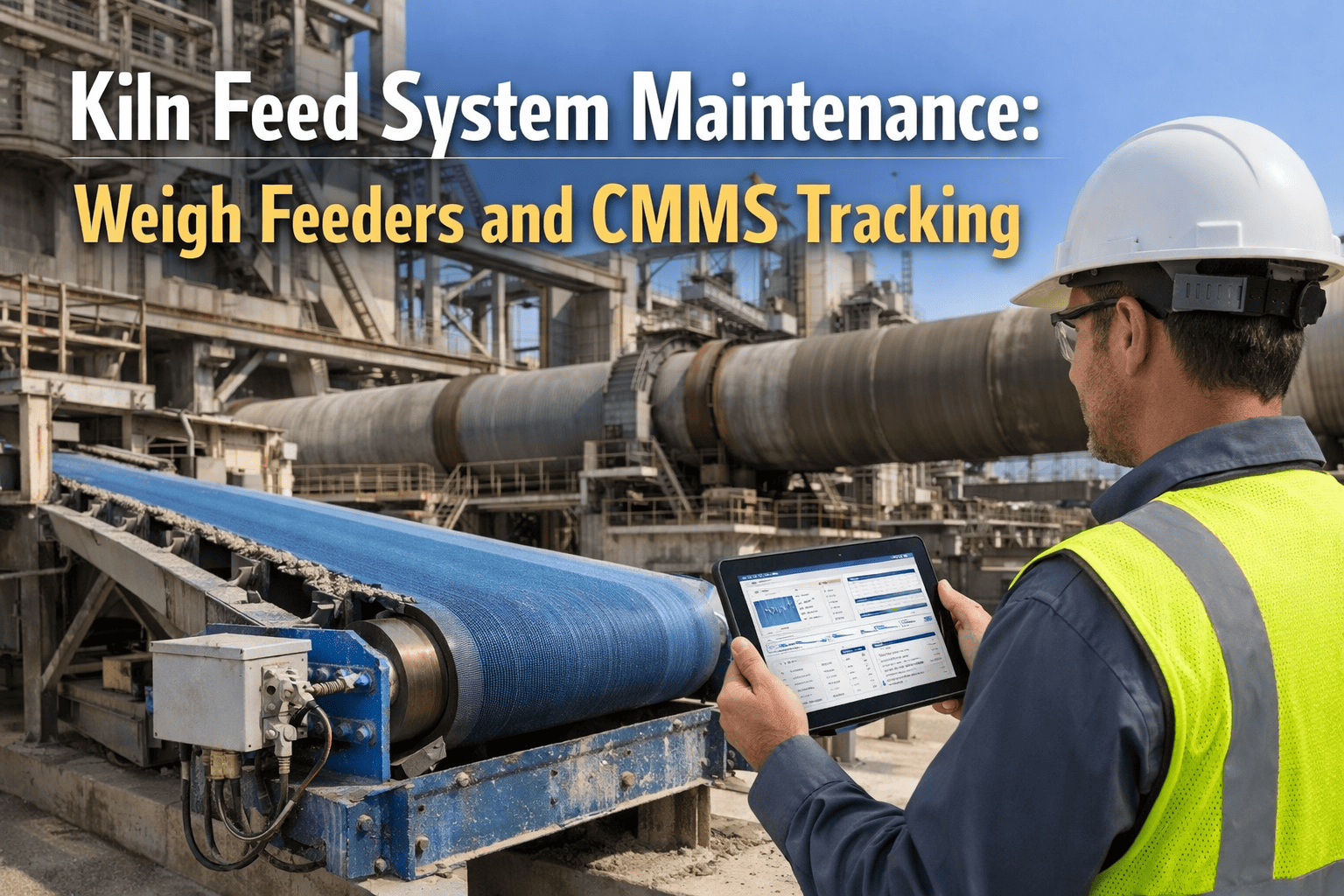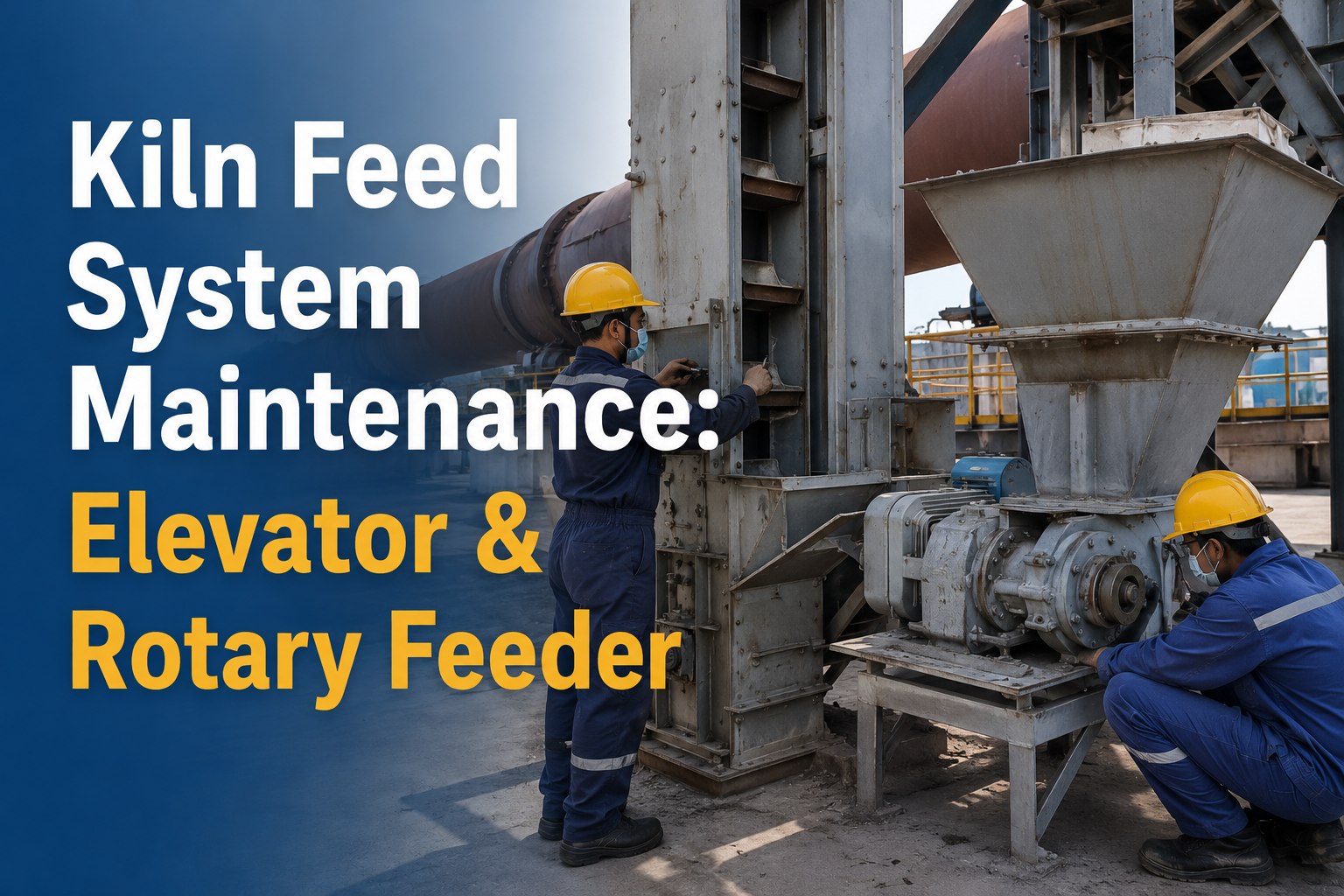
The kiln feed system is the single most consequential choke point in a cement plant — when the feed elevator trips or the rotary feeder wears past tolerance, the kiln starves within minutes and clinker production drops to zero. Plant reliability teams that follow a disciplined kiln feed system maintenance plan routinely hold feed-rate stability above 98% and extend elevator chain life beyond 36 months. This guide breaks down the four levers that matter most: bucket elevator PM, rotary feeder wear management, belt weigher calibration, and the CMMS backbone that ties every inspection, work order, and spare together. If you want to operationalize it this quarter, you can Start Free Trial and load your asset register the same afternoon.
What does one unplanned kiln feed stop cost your plant per minute?
A single bucket elevator jam or rotary feeder seizure can drop a 5,000 TPD kiln line in under eight minutes. Plants that formalize feed-system PM recover 15–22 hours of lost production per year and stabilize feed rate above 98%.
Why the kiln feed system is the line's #1 trip risk
Industry stoppage data from 40+ integrated cement plants shows that feed-system faults account for roughly 28% of all unplanned kiln stoppages — more than any other single subsystem. The failures cluster in three predictable places.
"On a 5,000 TPD line, every hour of feed-system downtime costs roughly $8,400 in lost clinker — before you count refractory thermal-cycle damage."
— Worked benchmark based on 40 plant studies, 2023Bucket elevator & rotary feeder PM checklist
A tiered PM routine — daily walkdown, weekly inspection, and monthly measurement — catches 80% of elevator and rotary-feeder failures before they escalate. Use these tasks as the backbone of your CMMS schedule.
Shift Walkdown
- Inspect elevator boot for material buildup and water ingress
- Listen for chain slip, bearing knock, or VFD fault alarms
- Verify rotary feeder amperage is within baseline ±5%
- Confirm feed-silo level and aeration pressure are nominal
- Log feed-rate setpoint vs. actual on the shift report
Inspection Round
- Measure elevator chain elongation against install baseline
- Grease head and boot bearings per OEM lube chart
- Check rotary feeder vane-to-housing clearance (target ≤1.5 mm)
- Inspect bucket bolts and replace any missing or loosened
- Vibration-read drive motor and gearbox — trend in CMMS
- Verify belt weigher span calibration with test chain
Deep PM & Calibration
- Ultrasonic-thickness rotary feeder housing at four quadrants
- Torque-check all coupling and guarding fasteners
- Full belt-weigher calibration (material or master-weight)
- Inspect elevator take-up tension and tracking
- Thermography motor, gearbox, and feeder drive end
- Review 30-day feed-rate variance; trigger work order if >2%
| Component | Failure Mode | PM Interval | Alarm Trigger |
|---|---|---|---|
| Elevator chain | Elongation >2% | Weekly | Slip trip or tension drop |
| Rotary feeder vanes | Wear >1.5 mm clearance | Weekly | Amp swing >10% |
| Belt weigher | Span drift | Monthly | Setpoint deviation >2% |
| Feed silo aeration | Blockage / low pressure | Daily | Pressure <0.4 bar |
| Boot discharge chute | Buildup / bridging | Shift | Level switch trip |
Formulas that govern feeder life and feed-rate accuracy
Two calculations dominate kiln feed reliability: rotary-feeder wear rate and belt-weigher deviation. Tracking them weekly lets you predict vane replacement and re-calibration windows instead of reacting to them.
C0 = initial vane-to-housing clearance (mm), Cn = measured clearance at week n, T = operating hours. Flag for vane replacement when Wr × remaining life ≤ 200 hours of scheduled run.
A = actual feed mass (test chain or master weight), S = scale-reading mass. Re-calibrate when |D%| exceeds 0.5% on two consecutive weekly checks.
A quarterly timeline for stabilizing kiln feed rate
Reliability gains compound when you sequence the work. This 12-month roadmap, drawn from plants that moved from reactive to predictive feed-system maintenance, shows where each lever pulls.
Baseline & CMMS setup
Load all feed-system assets into CMMS, set PM frequencies, photograph install-baseline clearances, and establish belt-weigher master-weight reference. Target: 100% asset coverage, 0 overdue PMs.
Wear trending begins
Weekly ultrasonic thickness on rotary-feeder housing, weekly chain elongation logs, weekly weigher span checks. First deviation alerts fire. Expect 30–40% drop in unplanned feed trips.
Predictive replacement
Schedule first condition-based vane and chain replacements using wear-rate formula. Reduce emergency parts spend by an estimated 25%. Feed-rate variance tightens to ±1.5%.
Optimize & sustain
Tune PM intervals using 9 months of data, integrate silo-aeration and VFD signals into CMMS alerts, and lock the feed-system OEE gain. Most plants reach 98%+ feed-rate stability here.
Stop losing kiln hours to feed-system failures you can predict.
OxMaint turns your elevator, rotary feeder, and weigher data into scheduled work orders — before the kiln trips.
Kiln feed system maintenance — answered
The five questions plant reliability managers ask most often when formalizing a kiln feed maintenance program.
How often should I calibrate the belt weigher on the kiln feed line?
Run a test-chain span check weekly and a full material or master-weight calibration monthly. If deviation exceeds ±0.5% on two consecutive weekly checks, re-calibrate immediately and inspect the belt tension, idler alignment, and load-cell wiring before the next run.
What clearance triggers rotary feeder vane replacement in a cement plant?
Replace vanes when vane-to-housing clearance reaches 1.5 mm or when amp swing exceeds 10% of baseline. Most plants running raw mix and kiln feed see 16–20 months of vane life; abrasive hot-meal service can cut that to 10–12 months. Track the wear rate weekly and schedule replacement before remaining life drops below 200 hours.
How does a CMMS reduce kiln feed downtime specifically?
A CMMS like OxMaint auto-generates PM work orders from meter readings, vibration trends, and weigher-deviation alerts — so the right technician arrives with the right parts before a trip occurs. Plants using OxMaint report 25–30% fewer unplanned feed stops in the first six months. You can Start Free Trial and import your asset list today.
What are the warning signs of bucket elevator chain failure?
Watch for chain elongation beyond 2% of install length, intermittent VFD slip trips, unusual boot bearing temperature, and visible bucket-bolt loosening. Weekly elongation measurement and monthly take-up tension checks catch the failure 4–8 weeks before a catastrophic drop, giving you a planned shutdown window.
How long does a typical kiln feed maintenance program take to show ROI?
Most integrated cement plants see measurable feed-rate stability gains within 60–90 days of CMMS go-live, and full ROI — counting recovered production hours and reduced emergency parts spend — within 4–6 months on a 5,000 TPD line. Want a tailored timeline? Book a Demo and we will model it against your stoppage data.
Put your kiln feed system on autopilot.
Schedule PMs, trend feeder wear, calibrate weighers, and stop feed trips before they start — all in one CMMS built for cement plants.
Free 14-day trial · No credit card