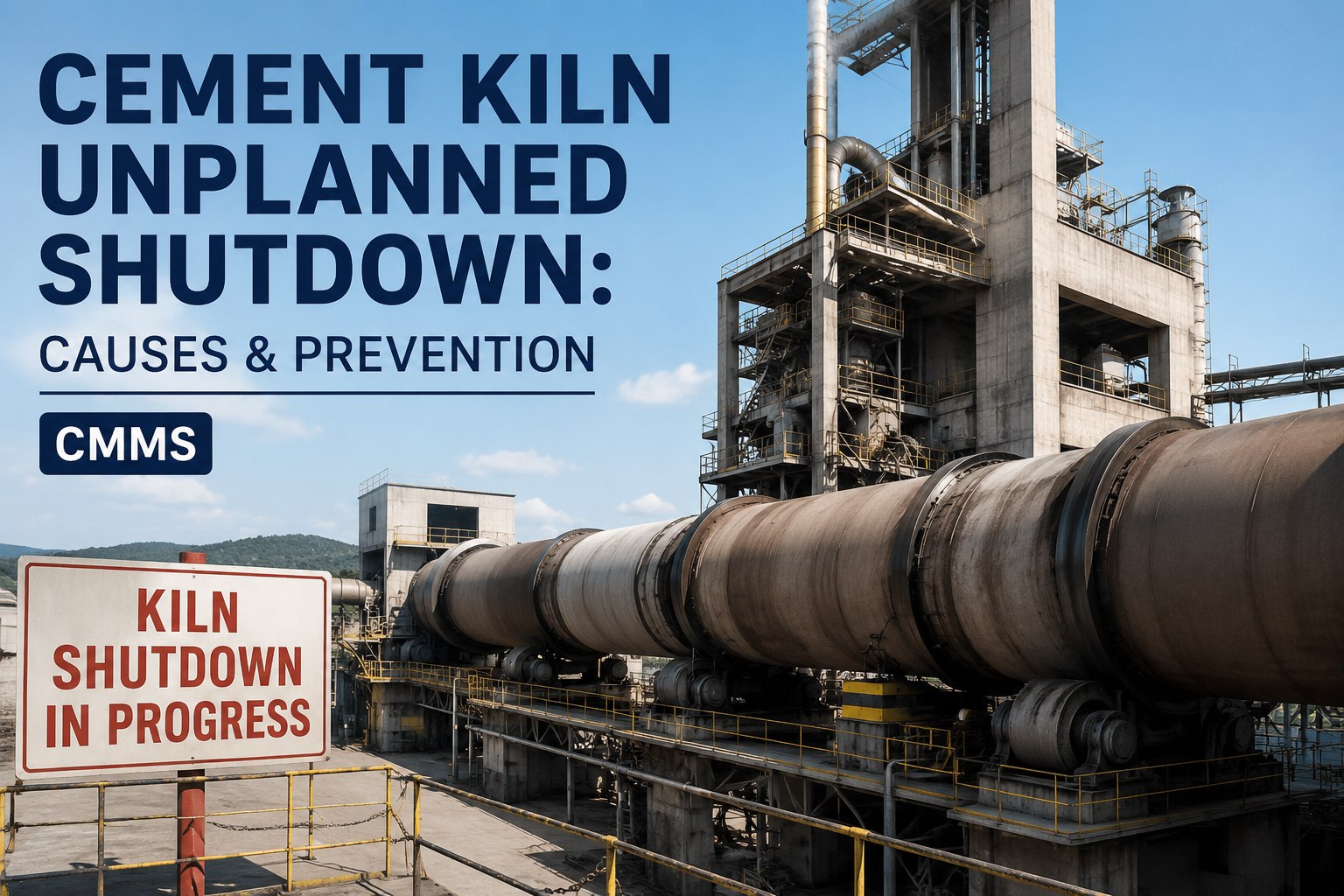
A single unplanned kiln refractory failure triggers a chain reaction no cement plant can afford. Production stops across the entire clinker circuit, emergency contractors mobilize at premium rates, and refractory replacement costs run 3.2 times higher than a planned reline campaign. Industry data shows these events typically last 6 to 14 days, costing between $1.8M and $3.6M in lost clinker production per occurrence — before counting the emergency procurement and labor premium. Yet most cement plants still manage refractory campaigns in spreadsheets, plan reline schedules from supplier estimates rather than actual wear data, and handle shutdown permits and safety authorizations through disconnected paper processes. OxMaint brings refractory inspections, shutdown repair planning, spare material procurement, and safety permit workflows into a single connected system — so every reline campaign is planned, scoped, and executed with engineering precision instead of reactive urgency. Sign up free to start your first refractory campaign in OxMaint today.
Shutdown Planning · Kiln Maintenance
Kiln Refractory Maintenance Planning Software
Plan refractory inspections, shutdown repairs, spare brick procurement, and LOTO permits in one OxMaint workflow — so every campaign runs on time, in scope, and within budget.
The Cost of Getting It Wrong
What an Unplanned Refractory Failure Actually Costs
6–14
Days
Average unplanned shutdown duration for a kiln refractory failure
$1.8M–$3.6M
Lost Production
Per unplanned kiln refractory event — clinker output only
3.2×
Cost Premium
Emergency refractory replacement vs. planned reline campaign rates
3–5
Extra Days
Added by scope creep in plants without a structured shutdown control process
What OxMaint Manages
One Platform for Every Step of a Refractory Campaign
6M
6 Months Before Shutdown — Campaign Scope Definition
OxMaint triggers a scope-lock phase gate based on shell temperature trend data and previous campaign wear records. Refractory zones requiring replacement are identified from actual condition data — not from supplier default schedules. Long-lead brick and castable procurement is initiated automatically.
3M
3 Months Before — Inspection Planning and Permit Prep
Inspection work orders are created and assigned for every zone flagged in scope. Safety permit templates — LOTO, confined space entry, hot work — are pre-populated with equipment details and assigned to the responsible engineer for review and authorization.
2W
2 Weeks Before — Materials Staging and Crew Assignment
Brick kits, castables, and anchor systems are verified against purchase orders and staged to site. Crew assignments are finalized in the shutdown schedule. OxMaint flags any long-lead items at risk of late delivery with supplier SLA tracking.
LIVE
During Shutdown — Real-Time Progress Tracking
Mobile work order completion lets field crews close tasks as they finish. Reliability engineers see live critical path progress on the shutdown dashboard. Additional scope found during the reline can be logged as a change order — flagged for approval before it affects the schedule.
END
Post-Campaign — Wear Records and Forecast Update
Every zone's brick thickness at replacement and campaign end-of-life data is recorded in the kiln asset record. OxMaint updates the wear-rate model and recalculates the next campaign endpoint — improving CapEx forecast accuracy with every campaign completed.
Plan Smarter. Reline Less. Stop Fewer Times.
Move from Spreadsheet Refractory Planning to a Connected Campaign Workflow
OxMaint gives your reliability engineers a single place to manage every refractory campaign task — from the first inspection work order to the post-reline wear record. Every step is tracked, every permit is filed, every part is staged.
Feature Breakdown
What Reliability Teams Actually Use in OxMaint
Condition-Based Reline Scheduling
OxMaint calculates campaign endpoints from actual zone wear rates and shell temperature trends — not fixed supplier intervals. Plants using this method extend refractory campaign life by 30% while eliminating unplanned relines.
Safety Permit Workflow Automation
LOTO, confined space, and hot work permits are pre-populated from asset records and routed to approvers automatically. Every permit is timestamped, linked to its work order, and stored in the compliance record.
Long-Lead Material Procurement Triggers
Specialized kiln bricks and castables require 8–16 weeks of procurement lead time. OxMaint triggers purchase orders at the correct planning horizon based on the shutdown date — eliminating last-minute procurement delays that derail campaigns.
Scope Change Control
Every scope change discovered during a shutdown is logged as a controlled change order in OxMaint — evaluated against remaining time, materials, and critical path before approval. Scope creep, which adds 3–5 days on average to uncontrolled campaigns, is eliminated.
CapEx Forecasting and Reporting
Campaign cost actuals — labor hours, material consumption, contractor invoices — are recorded against the work order and rolled into a campaign cost report. Finance teams get defensible refractory CapEx forecasts instead of estimates from memory.
SAP PM and Oracle EAM Integration
Refractory work orders, parts consumption, and labor hours sync bidirectionally with SAP PM and Oracle EAM — zero double entry, full audit trail, and campaign history accessible in your ERP environment.
Common Questions
What Shutdown Planners Ask Before Starting
How far in advance should we start planning a major kiln refractory reline?
Major annual relines require planning to begin 6 months in advance to allow scope definition, long-lead procurement, and permit preparation. OxMaint enforces this with phase-gate triggers based on your planned shutdown date.
Book a demo to see the phase-gate setup for your next campaign.
Can OxMaint manage both the refractory campaign and mechanical shutdown work at the same time?
Yes. OxMaint manages all trades — refractory, mechanical, electrical, instrumentation — on a single shutdown schedule. The kiln reline sits on the critical path and the platform tracks its progress against all dependent tasks in real time.
How does OxMaint handle safety permit compliance during the shutdown?
Every confined space entry, LOTO, and hot work permit is created, routed for approval, and closed directly in OxMaint. All permit records are linked to their work orders and stored in the asset compliance history — accessible for audits at any time.
Sign up free to see permit workflows in action.
What is the typical kiln refractory campaign duration for a mid-size cement plant?
Major annual relines typically run 12–18 days depending on kiln size, refractory scope, and available crew. OxMaint clients average 12–14 days by enforcing critical path discipline and real-time scope change control throughout execution.
Plan Every Campaign With Precision
Start Your Next Refractory Campaign in OxMaint — From Scope to Reline Record
Cement maintenance teams use OxMaint to replace scattered spreadsheets and paper permit books with a connected campaign workflow. Every task tracked. Every permit filed. Every wear record stored. Every campaign better than the last.