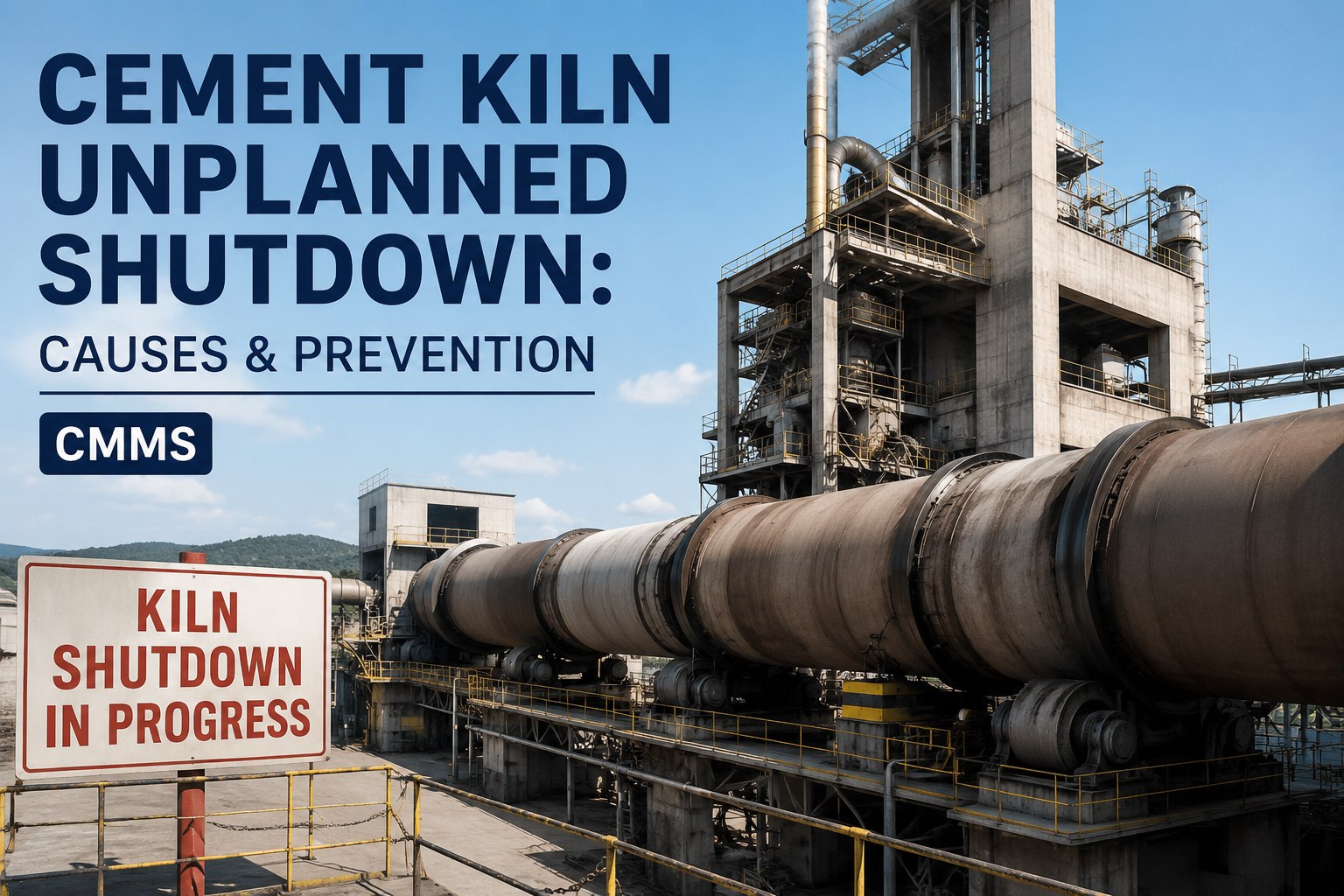
Cement kiln unplanned shutdown is the single most consequential downtime event in a cement plant — every unexpected stop typically costs six figures in lost production, fuel, and labor. A kiln that goes down for 24 hours can burn through $150,000–$500,000 in revenue, scrap refractory, and emergency repair costs before the flame is even relit. The compounding effect of refractory failure, girth gear damage, bearing seizure, and ring formation can erode plant OEE below 60% if left unchecked. A CMMS-driven reliability program targets the root causes of kiln downtime and reduces unplanned stops year over year. Start Free Trial to see how predictive maintenance scheduling works in practice.
What would one fewer unplanned kiln stop save your plant this quarter?
A single 48-hour unplanned shutdown on a 4,000 TPD kiln can erase $1.2M in clinker revenue. Oxmaint CMMS turns the four leading failure modes — refractory, girth gear, bearing seizure, and ring formation — into predictable, scheduled interventions.
Why an unplanned kiln stop is the most expensive hour in your plant
Cement kilns operate continuously at 1,400°C+. Once the line stops, every minute compounds — lost clinker, wasted fuel, refractory thermal shock, and emergency crew callouts stack faster than any other asset class.
The four causes behind 85% of unplanned kiln stops
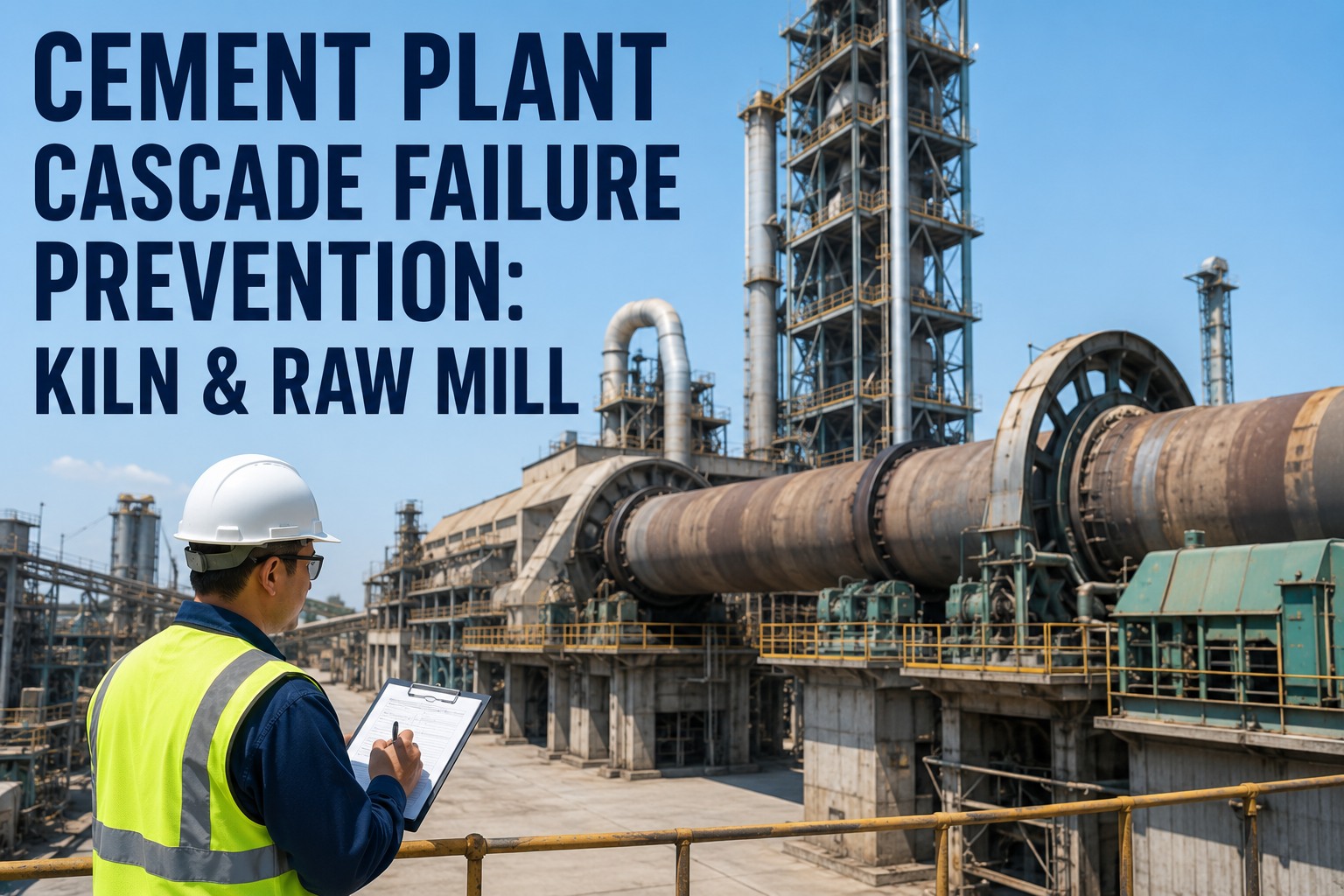
Industry reliability data from 200+ cement plants shows that refractory failure, girth gear damage, bearing seizure, and ring formation account for the overwhelming majority of unscheduled kiln downtime. Each has a distinct signature — and a distinct prevention path.
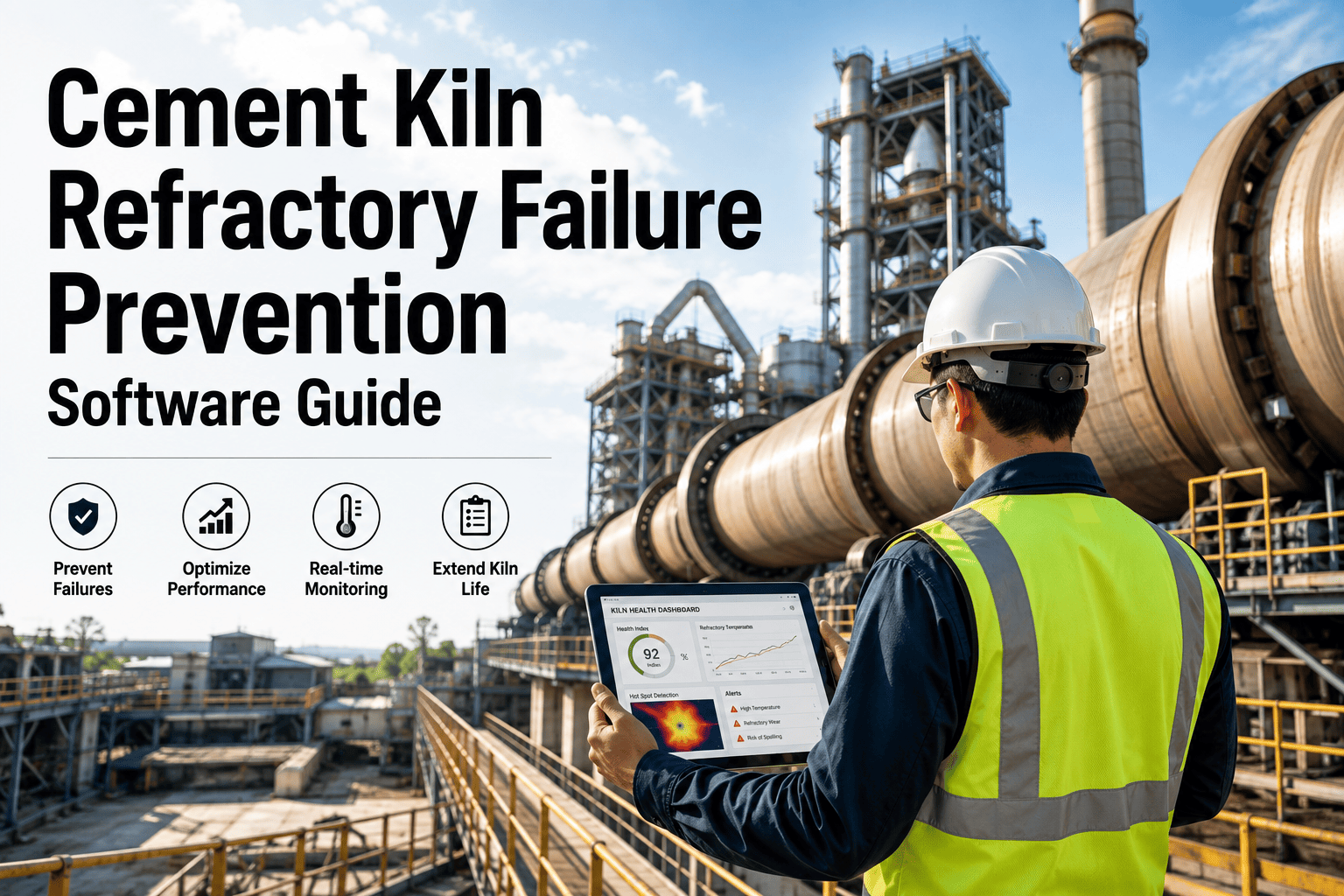
Brick lining spalls, hot-face erosion, and coating instability let the kiln shell reach 400°C+ within hours. A single red-spot event forces an emergency stop and typically scraps 20–60 tonnes of brick. Thermocouple trending + shell-scan integration in the CMMS catches hot zones 2–4 weeks before failure.
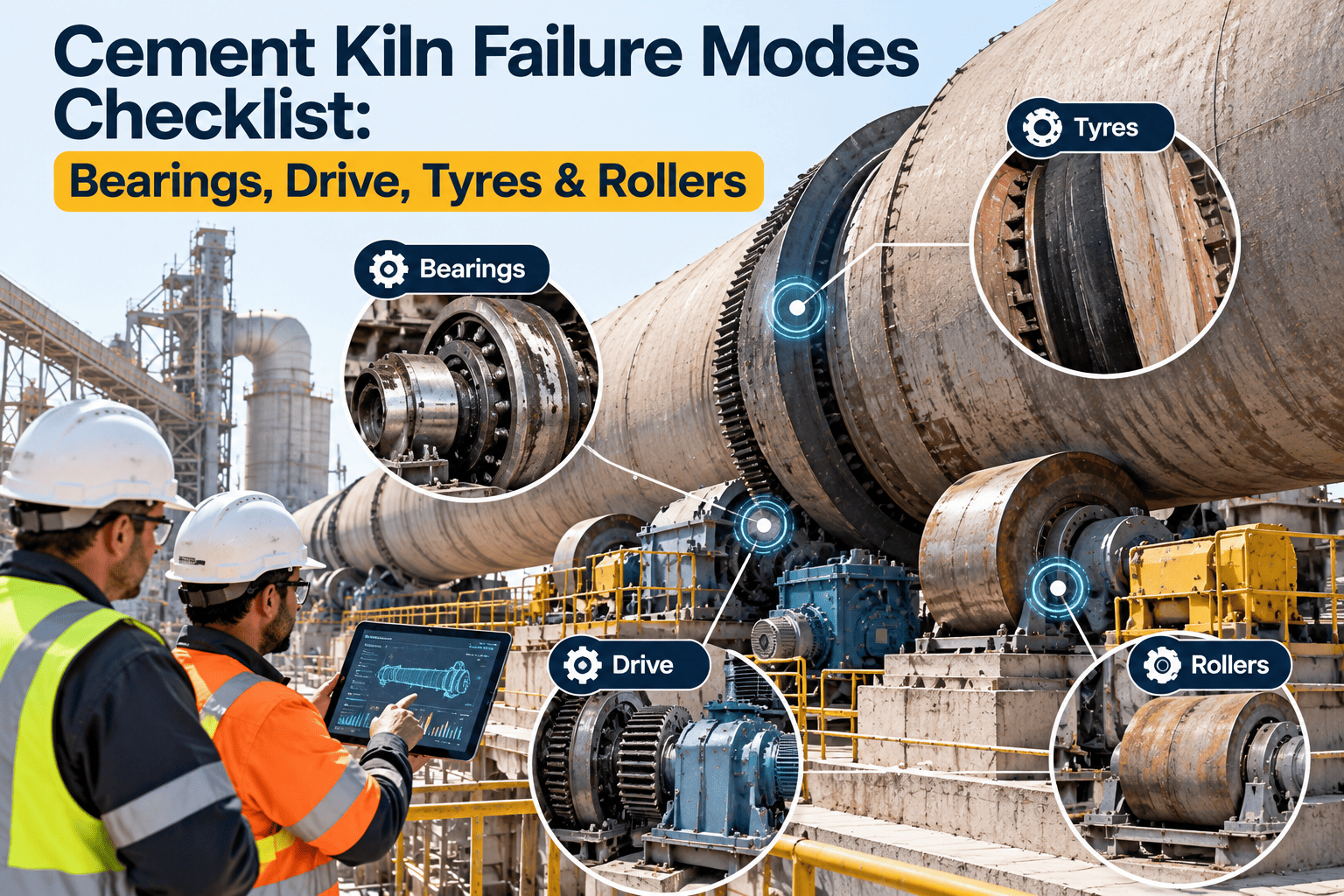
Backlash drift, pitting, and lubrication starvation on the girth gear create vibration signatures long before tooth fracture. Once a tooth shears, the kiln is down 5–9 days for a partial gear reversal or full replacement. Vibration analysis scheduled through the CMMS every 30 days typically catches pitting at stage 1.
Tire and roller bearing seizure is catastrophic — a seized roller can crack the kiln shell. Root causes are lubrication breakdown, misalignment, and water ingress. Oil analysis + temperature trending at 15-minute intervals, auto-routed to work orders, prevents 9 out of 10 seizure events.
Sulfur-alkali rings and snowball formations choke kiln flow and force stops for manual cleaning. They build over days — detectable through draft-pressure delta, feed-rate deviation, and exit-gas temperature drift. The CMMS triggers a kiln-condition alert when three sensor thresholds breach simultaneously.
From reactive firefighting to predictive kiln reliability
A CMMS does not just log work orders — it converts sensor data, inspection rounds, and failure history into a forward-looking maintenance schedule. The shift is measurable within one kiln operating cycle (~90 days).
| Reliability Dimension | Reactive (No CMMS) | CMMS-Driven Program |
|---|---|---|
| Unplanned stops per year | 8–14 events | 2–4 events |
| Mean time to detect failure | At failure point (0 hours warning) | 2–4 weeks lead time |
| Refractory brick life | 8–10 months | 12–15 months |
| Girth gear vibration checks | Quarterly, paper log | Monthly, auto-scheduled + trended |
| Bearing oil analysis cadence | Reactive — after high temp | Every 30 days, auto work order |
| Kiln OEE | 55–65% | 78–85% |
| Annual downtime cost | $2.8M – $4.5M | $650K – $1.2M |
From CMMS go-live to measurable kiln reliability gains
A structured rollout — aligned to ISO 55000 asset management principles — delivers first measurable reductions in unplanned kiln stops within one operating quarter.
Asset & Criticality Mapping
Register the kiln, support rollers, girth gear, drive train, and cooler as criticality-A assets. Import 24 months of failure history. Set up sensor integration (shell scan, vibration, oil analysis, draft pressure).
PM & PdM Schedule Build
Build preventive maintenance routes for refractory inspection, gear lubrication, and bearing temp checks. Configure predictive triggers — vibration ISO 10816 thresholds, oil particle count >64/19/16, shell temp delta >35°C — to auto-generate work orders.
First Reliability Review
Run the first MTBF/MTTR review. Plants typically catch 2–3 incipient failures (a pitting gear, a trending roller bearing, an early ring formation) that would have caused unplanned stops. Adjust thresholds and inspection cadence.
Year-Over-Year Reduction Target
By month six, the average cement plant reports 40–60% fewer unplanned kiln stops versus the same period prior year. Refractory life extends by 2–4 months and girth gear vibration alerts become the dominant stop-prevention signal.
The kiln shutdown prevention checklist your CMMS should automate
Every item below should exist as a recurring, auto-scheduled work order or condition-based trigger inside Oxmaint — not a paper checklist taped to a control room wall.
Refractory Health
- ✓ Shell temperature scan trended hourly, alert at >370°C
- ✓ Coating stability index reviewed each shift
- ✓ Brick thickness ultrasonic check every 30 days
- ✓ Red-spot emergency protocol linked to work order
Girth Gear & Drive
- ✓ Vibration analysis (ISO 10816) every 30 days
- ✓ Backlash & tooth contact pattern quarterly
- ✓ Lubricant spray-bar flow verified weekly
- ✓ Pinion alignment laser check every 6 months
Bearings & Lubrication
- ✓ Oil sample analysis every 30 days (ISO 4406)
- ✓ Roller bearing temp trended at 15-min intervals
- ✓ Grease re-lubrication route per OEM hours
- ✓ Water-ingress check on splash guards weekly
Ring Formation Watch
- ✓ Draft-pressure delta monitored continuously
- ✓ Exit-gas temperature drift alert at ±15°C
- ✓ Sulfur/alkali ratio checked in raw mix daily
- ✓ Feed-rate deviation trigger at >3% sustained
A 4,000 TPD plant cut unplanned kiln stops by 58% in one year
A mid-size single-kiln cement plant in South Asia deployed Oxmaint CMMS across its kiln line. Within 12 months, unplanned stops dropped from 11 events per year to 4.6 — saving an estimated $2.1M in downtime cost and extending refractory campaigns by 3.5 months.
"Oxmaint caught a girth gear pitting signature six weeks before it would have sheared a tooth. That single alert paid for three years of the platform. We went from 11 unplanned kiln stops to under 5 in one operating cycle."
Stop the next unplanned kiln shutdown before it starts
Deploy Oxmaint CMMS and turn refractory, girth gear, bearing, and ring-formation risks into scheduled, predicted interventions — not six-figure surprises.
Cement kiln unplanned shutdown — your questions answered
What is the average cost of an unplanned cement kiln shutdown?
A single unplanned stop on a 4,000 TPD kiln typically costs $300,000–$500,000 per 24–48 hour event, combining lost clinker revenue, refractory thermal-shock scrap, emergency labor premiums, and wasted restart fuel. Plants running without a CMMS average 8–14 such events per year — a $2.8M–$4.5M annual exposure that structured prevention can cut by more than half.
Which failure mode causes the most unplanned kiln downtime?
Refractory failure leads at roughly 38% of unplanned stops, followed by girth gear and pinion damage (~21%), bearing seizure on tires and support rollers (~14%), and ring or ball formation (~12%). The remaining ~15% includes drive failures, cooler issues, and fuel-system faults. A CMMS addresses all four major modes through condition-based triggers and scheduled PM routes.
How does a CMMS prevent refractory failure specifically?
Oxmaint integrates shell-scan thermocouple data, trends hot-zone temperatures hourly, and auto-generates inspection work orders when any zone exceeds 370°C or shows a sustained 15°C drift. Plants using this approach typically extend refractory brick life from 8–10 months to 12–15 months and catch red-spot precursors 2–4 weeks before they force an emergency stop. You can Book a Demo to see the refractory trend module live.
How quickly can a cement plant see results after deploying a CMMS for kiln reliability?
Most plants complete asset registration, sensor integration, and PM schedule build within 30–60 days. The first reliability review at day 90 typically identifies 2–3 incipient failures that would have caused unplanned stops. By month six, plants report 40–60% fewer unplanned kiln events versus the prior year, with a payback period averaging 10–14 weeks on the platform investment.
Can Oxmaint CMMS integrate with existing kiln sensors and SCADA systems?
Yes. Oxmaint connects to vibration analyzers, oil particle counters, shell-scan thermocouples, draft-pressure transmitters, and exit-gas temperature sensors via standard industrial protocols. Condition thresholds — such as ISO 10816 vibration limits or ISO 4406 cleanliness codes — are configured per asset and automatically generate work orders when breached, closing the loop between detection and preventive action. Start Free Trial to test the integration workflow.
Cut unplanned kiln stops by 50% in your next operating cycle
Join cement plants that have turned six-figure shutdowns into scheduled maintenance. Oxmaint CMMS gives you the predictive triggers, PM routes, and reliability analytics to keep the kiln running.
Free 14-day trial · No credit card